


Shopify Headless Commerce: What It Is and Why It Matters
Shopify headless allows businesses to design unique customer experiences while keeping Shopify’s reliable system for payments, products, and inventory. Here’s your ultimate guide.
Online shopping has undergone significant changes in recent years. Shoppers now expect fast and seamless experiences across devices instead of just basic storefronts. This shift has fueled the rise of solutions that separate the customer-facing design from the backend system. By doing so, businesses gain flexibility to improve experiences without disrupting core operations.
Shopify, one of the world’s leading eCommerce platforms, has embraced this approach through headless commerce. It allows businesses to have unique storefronts beyond Shopify’s built-in themes, while still using its reliable backend for transactions and inventory management.
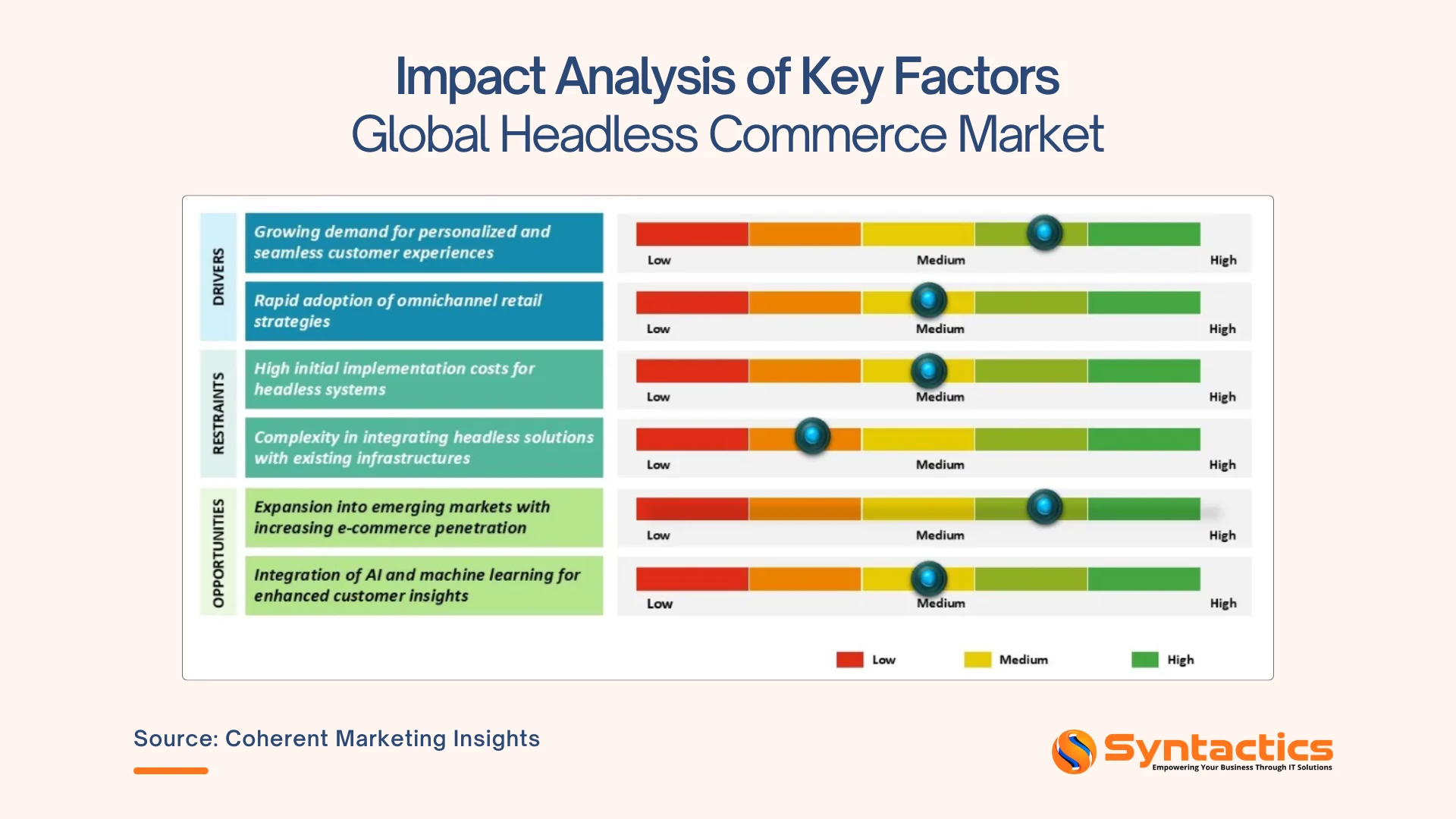
Source: Coherent Marketing Insights.
Key Takeaways
- Shopify headless separates the frontend and backend, allowing businesses to design unique customer experiences while keeping Shopify’s reliable system for payments, products, and inventory.
- Headless architecture offers flexibility, enabling storefronts to be built with modern frameworks like React, Vue, mobile apps, and third-party platforms.
- Businesses gain faster site performance and improved customization, resulting in smoother shopping experiences that meet modern customer expectations.
- Headless commerce is ideal for growing brands, especially those needing advanced customization, multichannel experiences, or more control than traditional Shopify themes allow.
TABLE OF CONTENTS
- Key Takeaways
- What Is Shopify Headless Commerce ?
- Traditional Shopify vs Headless Architecture
- 5 Essential Benefits for Businesses
- How Shopify Enables Headless Commerce
- Key Technologies for Implementation
- SEO and User Experience (UX) Considerations in Headless Stores
- Who Should Go Headless?
- Getting Started with Shopify Headless Commerce
- Conclusion
- FAQs About Shopify Headless Commerce
What Is Shopify Headless Commerce?
Shopify’s headless commerce means separating the backend that handles products and payments from the frontend, which customers see and use. Traditional Shopify combines both sides using its themes. In contrast, a headless approach uses Shopify for the backend while the frontend can be built with tools like React, Vue, Next.js, or mobile apps.
With this setup, it gives your business greater freedom in designing customer experiences, while benefiting from Shopify’s reliability in managing transactions and security. According to Headless Commerce vs Traditional Commerce, merchants that adopt a headless approach often generate online revenues exceeding $100 million. As such, it highlights its potential for high-performing stores.
Traditional Shopify vs Headless Architecture
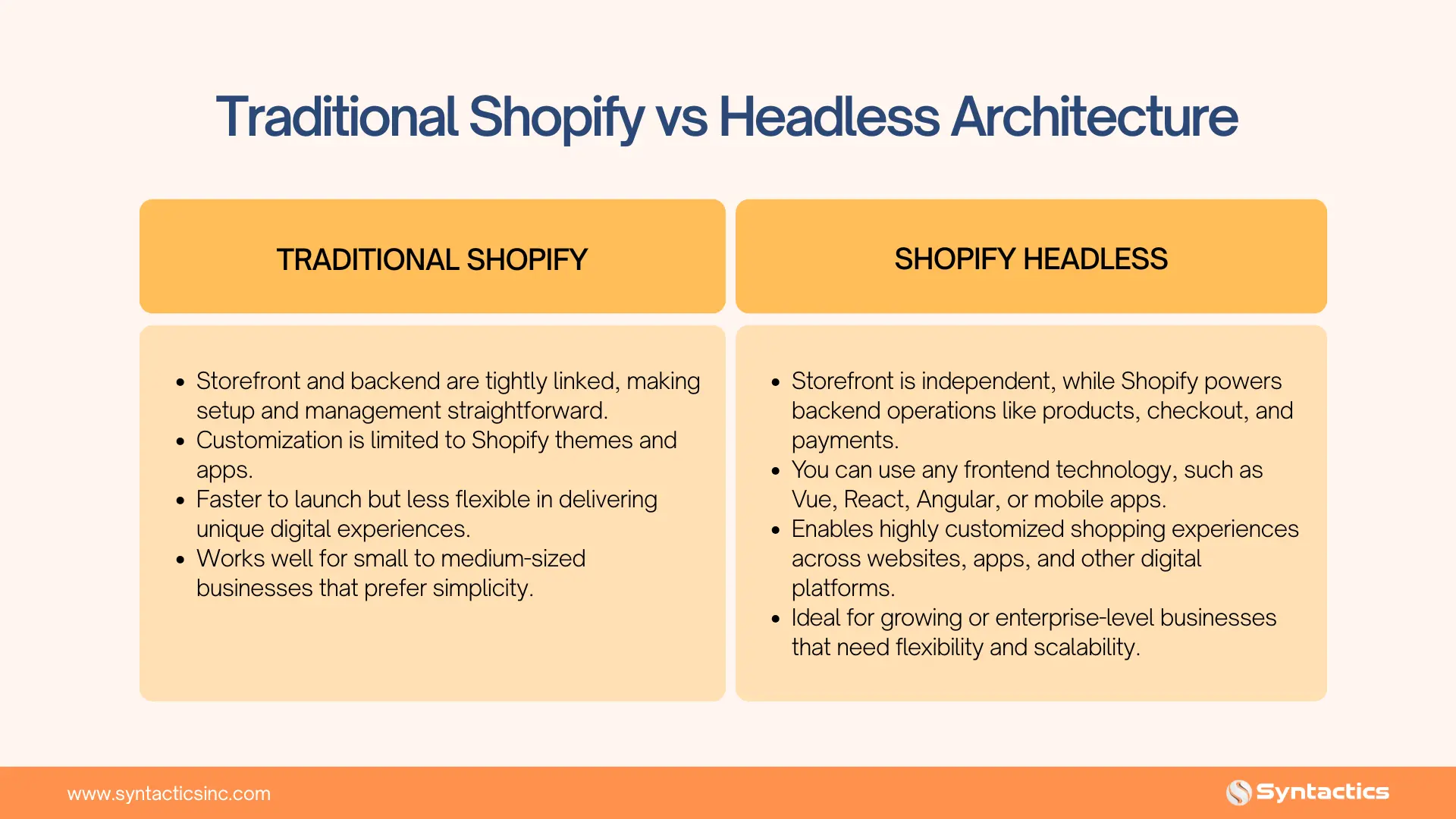
For a clearer picture, think of a traditional Shopify store as a furnished apartment, where you can redecorate, but the layout remains fixed. Meanwhile, Shopify headless is more like purchasing land, giving you full control over the design and structure of your store.
5 Essential Benefits for Businesses
Adopting Shopify headless commerce can provide your business with several benefits that directly enhance customer experience and strengthen performance:
1. Faster Performance
Headless storefronts use modern web technologies, like static site generation and Progressive Web Apps (PWAs), to deliver smoother experiences. This approach can optimize page speed and increase conversions. In fact, Jobera reports that adopting headless commerce can lower website load times by up to 20%.

2. Greater Design Freedom
Your business isn’t limited to Shopify’s templates, so you have the freedom to design storefronts that better represent your brand identity. According to Website and UX Design Statistics, 38% of users leave a website if its design or content looks unattractive. As such, highlighting the value of a polished and customized storefront.
3. Omnichannel Selling
Going headless enables your business to expand beyond websites. With the same backend, it can power mobile apps, smart devices, and kiosks, while keeping your orders and inventory in one place.
4. Room for Growth
As traffic increases and product catalogs expand, Shopify headless allows your business to scale efficiently. With this, it’s best to integrate with third-party tools for analytics, Customer Relationship Management (CRM), and marketing for a smoother approach.
5. Future-Ready Setup
Technology changes quickly, and separating the frontend from the backend makes it easier to adapt. This way, you can update your site’s design or functionality without disrupting the entire system.
How Shopify Enables Headless Commerce
Shopify has developed the following tools and infrastructure to make headless commerce solutions achievable for businesses of all sizes:
- Hydrogen: A React-based framework built by Shopify that helps developers create custom storefronts quickly. It includes ready-made components like product pages, shopping carts, and checkout flows.
- Oxygen: Shopify’s global hosting platform for Hydrogen storefronts. It ensures security and reliability for businesses at scale.
- APIs (Storefront API, Admin API, Checkout API): These connect Shopify’s backend to any frontend framework or third-party system, enabling businesses to pull product data and manage inventory seamlessly across different platforms.
Key Technologies for Implementation
A successful headless architecture for your eCommerce store relies on several modern technologies, such as:
- GraphQL: Shopify’s Storefront API uses GraphQL, which allows developers only to request the data they need, improving performance and efficiency.
- JAMstack: A development model that uses JavaScript, APIs, and Markup to deliver secure, high-speed sites.
- React – A popular JavaScript library for creating interactive user interfaces, also the foundation for Shopify’s Hydrogen framework.
- Content Management System (CMS) Integrations: Tools such as Contentful, Sanity, or WordPress (as a CMS only) allow marketers to manage content without constant developer support.
SEO and User Experience (UX) Considerations in Headless Stores
From an SEO perspective, faster load times improve search rankings, while full control over URLs and site structure enhances optimization. BrowserStack indicates that 40% of visitors will leave a website if it takes longer than 3 seconds to load. Thus, headless CMS integrations also let marketers publish SEO-rich content with greater efficiency.
Developers also play a critical role in SEO success by configuring website sitemaps, schema markup, and redirects to ensure search engines index content properly. At the same time, customers benefit from smoother navigation, faster interactions, and personalized experiences such as custom recommendations or localized content.
Who Should Go Headless?
Not every business requires headless commerce solutions. Here are indicators that going headless may be the right path for your business:
Outgrowing Standard Templates
You require unique designs or advanced functionality beyond what Shopify’s themes can provide. With Headless, it lets you fully customize the front end to match your brand vision.
Selling Across Multiple Platforms
A single Shopify backend website and smart devices supports omnichannel growth. This ensures a consistent shopping experience no matter where your customers interact.
Having Developers or Agency Support
A reliable software development company can handle the technical side of implementation. This way, their expertise minimizes errors and ensures your store runs smoothly.
Scaling Rapidly
High traffic or international expansion requires an architecture that can adapt quickly. Headless solutions are built to handle spikes in demand and support future growth.
Prioritizing Performance Improvements
Faster sites increase conversions and overall customer satisfaction. A headless approach also makes it easier to integrate optimization tools that keep performance high.
In a nutshell, small businesses with straightforward requirements may find traditional Shopify sufficient. Meanwhile, growth-focused and enterprise-level companies can benefit most from going headless.
Getting Started with Shopify Headless Commerce
One of the secrets to a successful Shopify website is ensuring your headless setup balances performance with design flexibility. Here’s how you can implement it:
- Start by clearly understanding your goals and deciding how flexible you want your store’s design and functionality to be.
- Set up Shopify as your backend to efficiently manage products, payments, and orders.
- Connect a custom frontend built with frameworks like React or Next.js. In this way, it gives you more control over speed, design, and customer experience.
- Plan ahead for SEO, content management, and integrations so your store looks great and performs smoothly.
Conclusion
A well-executed Shopify headless setup creates faster, more engaging shopping experiences that can drive customer satisfaction and business growth. However, making the most of this approach requires the right strategy and technical expertise.
By working with experienced professionals, you can build a flexible Shopify platform that combines standout design with reliable performance. With the right approach, your store can scale smoothly and keep delivering the experiences your customer needs.
Syntactics, Inc. a trusted ecommerce web design agency in the Philippines, helps businesses create Shopify headless solutions that balance creativity, performance, and scalability.

FAQs About Shopify Headless Commerce
What is headless commerce?
Headless commerce separates an online store’s front end from its back end, giving businesses more flexibility for design and functionality. With this approach, it allows brands to deliver faster, personalized shopping experiences across different devices and platforms.
What are the headless limitations of Shopify?
Shopify headless setups often require more development resources and ongoing maintenance. They may also need extra configuration for SEO and integrations.
How to create a headless Shopify store?
Start by connecting Shopify’s backend with a custom frontend framework like React or Next.js. Developers then integrate APIs to handle products and customer data. Once designed and tested, your store can deliver a fast, flexible shopping experience. To explore how we can build one for you, get in touch with us!

About Xenia Labis
Related News:




2 Ways to Create a WordPress Website







Comment 0