


Do You Need an AI Solutions Architect? Signs Your Web Project Is Ready
Many businesses begin using AI through chatbots, content generators, or workflow automation tools. As adoption grows, managing separate AI applications becomes more challenging than implementing them. An AI solution architect helps connect your systems, data, and processes into a unified framework that supports long-term growth.
According to the U.S. Census Bureau, 17-20% of businesses are using AI in their operations, and 20-23% expect to use it within the next six months. This shows that many organizations are expanding beyond small AI experiments. Rather than adding another AI tool, the next step is creating an architecture that allows your technology to work together efficiently.
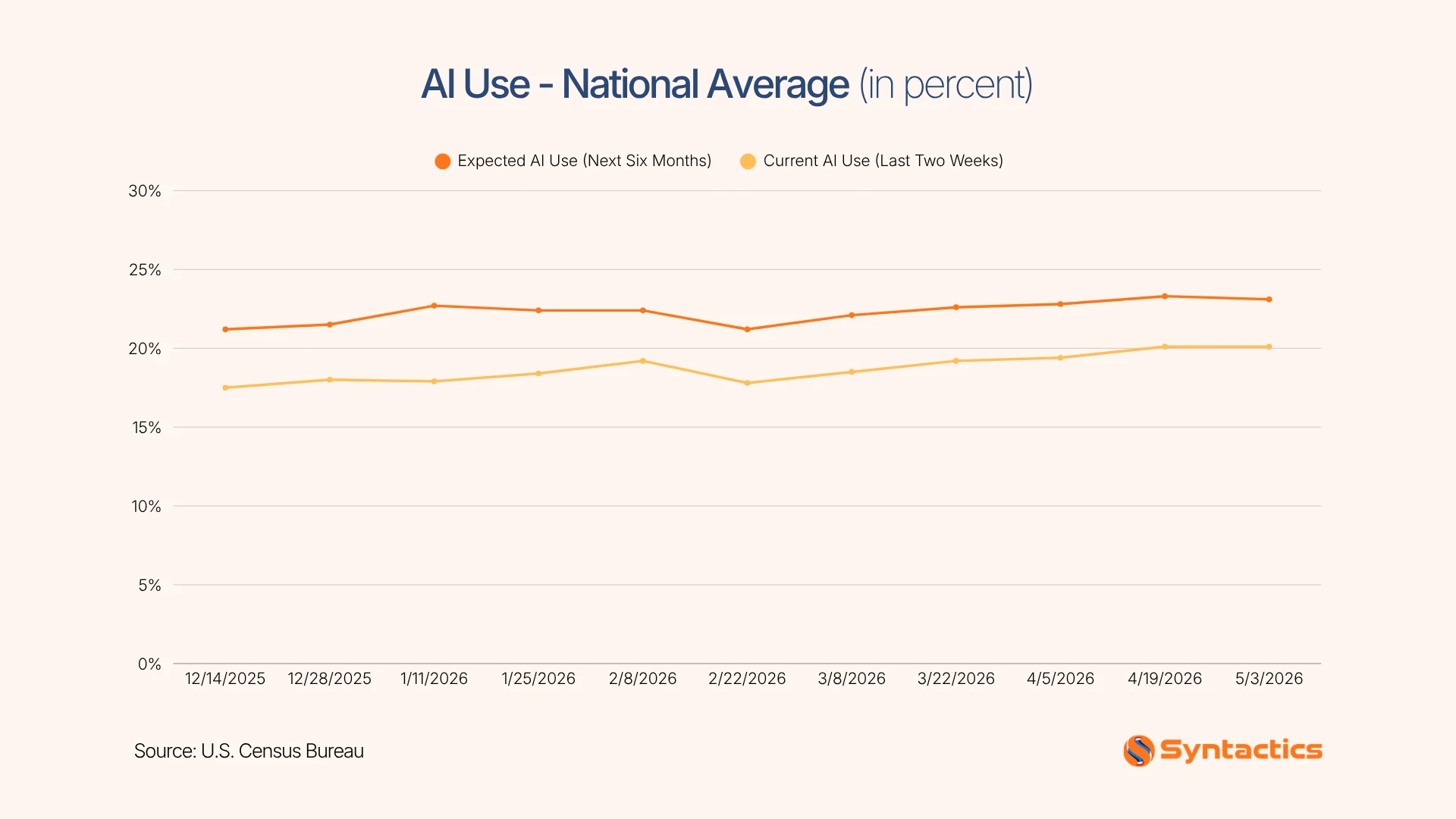
Source: U.S. Census Bureau
Key Takeaways
- 6 in 10 small-business workers who save time using AI reinvest those time savings into more and better work (U.S. Chamber of Commerce).
- Connected AI systems deliver more value than isolated tools.
- Repetitive manual work often signals opportunities for AI integration.
- Legacy platforms can limit what AI can accomplish.
- An AI solution architect connects business objectives with technical implementation.
You Have AI Tools, But Nothing Is Connected
Many businesses adopt AI one solution at a time. You may have a chatbot answering customer inquiries, another platform generating marketing content, and a separate tool producing reports. Each application performs its own function, but they often operate independently.
As more tools are introduced, disconnected systems can create duplicate work, inconsistent data, and fragmented customer experiences. Employees may then spend valuable time moving information between applications instead of focusing on higher-value work.
The problem extends beyond individual tools. Salesforce’s 2026 Connectivity Report found that 50% of AI agents operate in isolated silos instead of working within a multi-agent system. This can contribute to disconnected workflows and redundant automations, highlighting the value of connecting AI applications.
If you’re also investing in website design in the Philippines, integrating AI with your website and business systems can deliver greater value than standalone tools.
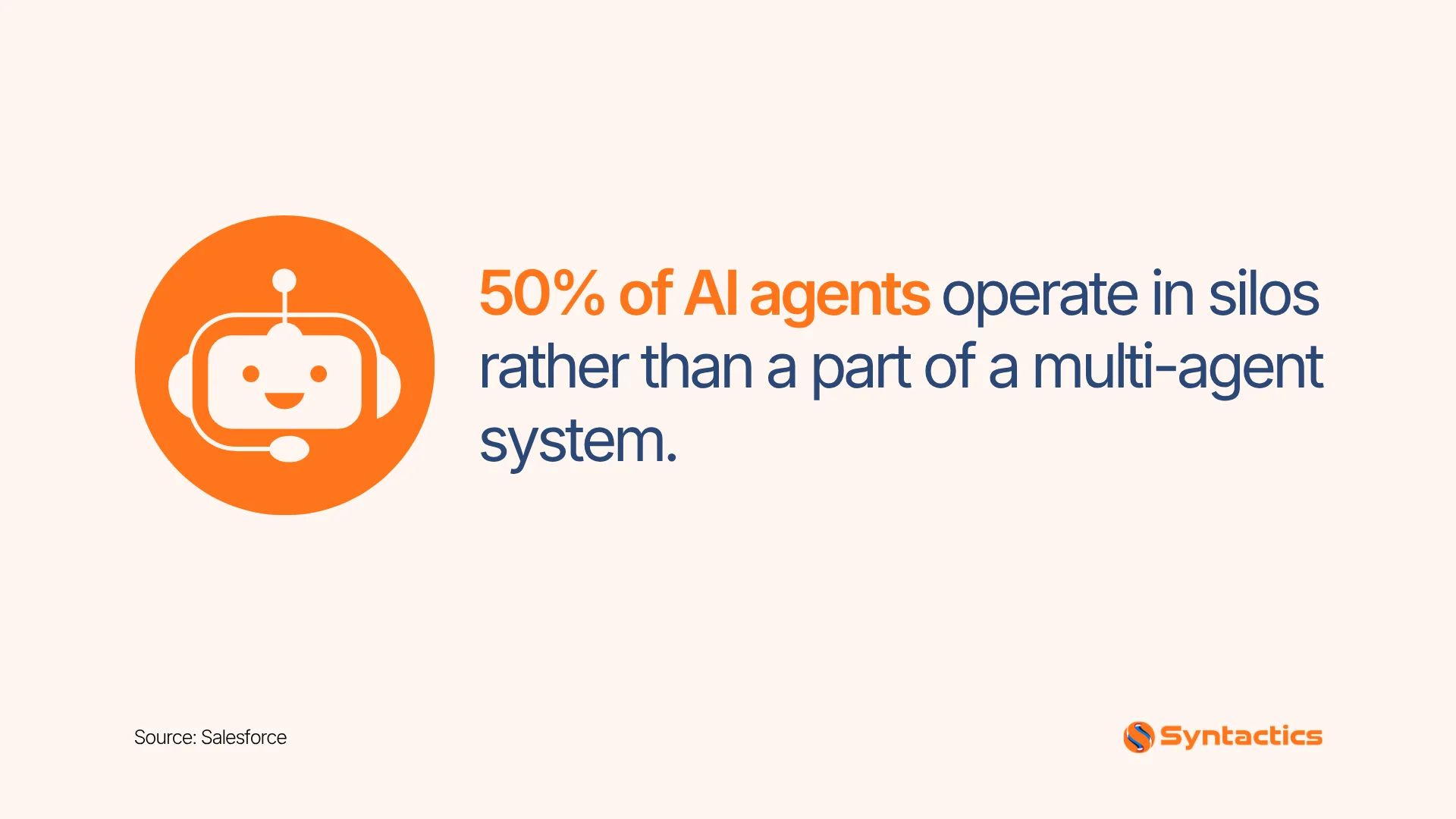
Source: Salesforce
Your Team Is Buried in Repetitive Manual Work
Another sign appears when employees spend much of their day completing repetitive administrative tasks. Copying information between systems, preparing recurring reports, approving routine requests, and updating multiple databases consume time that could be spent on more strategic work.
AI can automate many of these activities, but isolated tools rarely improve the entire workflow. U.S. Chamber of Commerce Foundation research found that 6 in 10 small-business workers who save time using AI reinvest those time savings into more and better work. This suggests that the value of AI extends beyond completing individual tasks.
When you connect AI to the right business processes, employees can redirect saved time toward higher-value responsibilities. An AI solution architect reviews your existing processes, identifies where automation creates the greatest value, and designs workflows that reduce repetitive work across your organization.
Your Systems Were Not Built to Support AI
Before expanding your AI initiatives, evaluate whether your existing technology can support them. Many organizations continue using legacy platforms that lack modern APIs, cloud connectivity, or flexible data structures. These limitations prevent AI applications from accessing the information they need, reducing the value of your investment.
Even advanced AI platforms deliver limited results when they can’t communicate with your existing systems. Even advanced AI platforms deliver limited results when they can’t communicate with your existing systems. Dun & Bradstreet’s 2026 AI Momentum Survey found that only 5% of organizations say their data is adequately ready to support their AI initiatives. This highlights why your existing data infrastructure deserves attention before you expand AI capabilities.
Review whether your current environment includes:
- API integrations
- Secure cloud connectivity
- Centralized data access
- Scalable databases
- Modern security practices
An experienced web developer in the Philippines can identify technical limitations that affect both your website and future AI integrations, helping you plan improvements before they become larger development challenges.
You Are Moving From a Pilot to Production
A successful AI demo can prove that an idea works, but production introduces new demands. Once real users depend on the system, you need reliable integrations, secure data access, monitoring, and a clear process for handling failures.
This is where an AI solution architect can help you move beyond a promising prototype. If you’re investing in web design and development in the Philippines, an architect can plan how AI connects with your website, databases, APIs, internal tools, and customer-facing systems without treating the AI feature as an isolated addition.
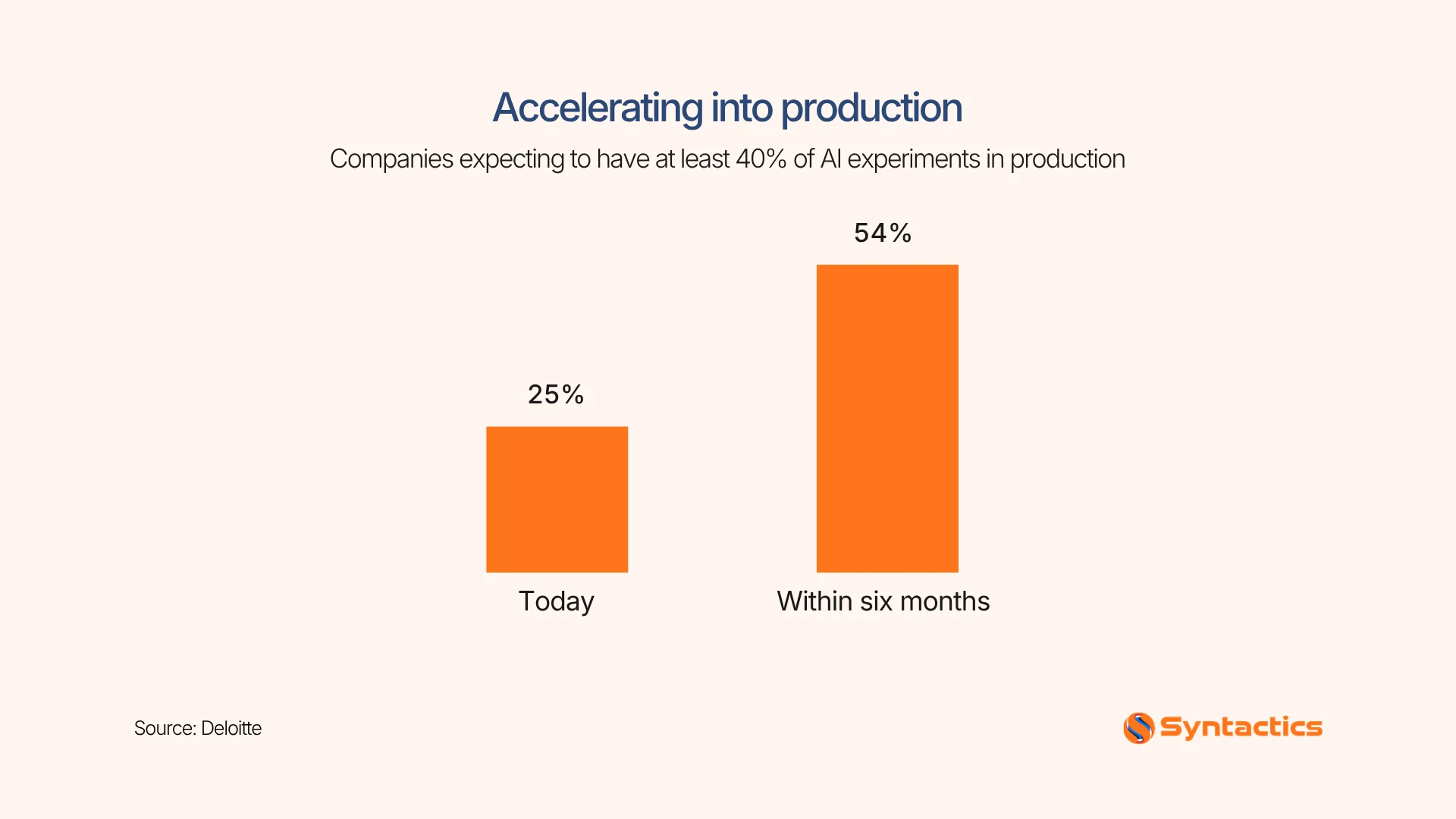
The gap between experimentation and production remains significant. Deloitte’s 2026 State of AI in the Enterprise found that only 25% of respondents have moved 40% or more of their AI pilots into production. Meanwhile, 54% expect to reach that level within the next three to six months. This highlights why a working prototype alone doesn’t guarantee a reliable production system.
Moving into production also means defining metrics for accuracy, processing time, user engagement, costs, and errors.
Source: Deloitte
You Need Someone Who Speaks Both Business and Technical Language
AI projects can become difficult when business objectives and technical decisions move in different directions. Your leadership team may focus on reducing operating costs, improving customer service, or increasing sales, while developers focus on APIs, databases, models, integrations, and infrastructure.
This is why you need someone who can connect those two perspectives. An AI architect translates business requirements into a technical plan. For example, if your goal is to reduce customer service workload, the solution may involve an AI assistant connected to your knowledge base, CRM, ticketing system, and website rather than simply adding a chatbot.
This distinction can prevent you from investing in tools that solve isolated problems without addressing the larger workflow. It becomes especially relevant when you’re investing in web development in the Philippines and want to add AI capabilities to an existing digital platform. Your technical partner needs to understand the user-facing website and the systems operating behind it.
Before development begins, ask:
- What business problem will the AI system solve?
- Which existing platforms need to connect to it?
- What information will the AI access?
- How will users interact with the system?
- How will you measure whether it delivers results?
- What happens when the AI produces an incorrect response?
Clear answers help turn an AI concept into a practical implementation plan.
Conclusion
You don’t need an AI solutions architect simply because you’ve started experimenting with AI. The need becomes clearer when disconnected tools, repetitive tasks, legacy systems, or a growing AI pilot create technical challenges.
If several signs apply, architectural planning can help you avoid costly changes later and create a clearer path for integrating AI into your website and operations.
Syntactics, Inc. can evaluate your technology and plan AI-enabled web solutions around your goals. As a trusted web development company in the Philippines, we combine web development and AI expertise to connect platforms and turn AI ideas into reliable, scalable solutions.
Get Design and Functionality
Specific to your Brand!
- Build a website that's mobile-friendly and responsive.
- Custom designs aligned with your brand.
- Optimized for SEO and user experience.
- Scalable and feature-rich solutions.
FAQs About AI Solutions Architect
What is an AI solutions architect?
An AI solutions architect designs how AI systems connect with your business goals, data, software, and existing technology. They create the technical architecture that helps AI solutions work reliably, securely, and at scale.
Can an AI solutions architect work with legacy systems?
Yes, an architect can assess legacy technology and determine how to connect it with newer AI applications. They may recommend APIs, middleware, system upgrades, or other integration approaches based on your infrastructure.
Does an AI solutions architect build the AI system?
An architect typically defines the system’s technical design rather than handling every development task personally. Developers then use that architecture to build, integrate, test, and deploy the solution.
What does an AI solutions architect consider when designing a system?
They consider factors such as data flow, integrations, security, scalability, performance, costs, and user requirements. These considerations help create an AI system that fits your existing technology and business objectives.
Can an AI solutions architect help reduce AI implementation costs?
Yes, architectural planning can identify unnecessary tools, integration issues, and technical limitations before development begins. This helps you allocate resources toward solutions that align with your actual business requirements.

About Ladymieh Naallatan
Related News:




Designing Above the Fold Websites








Comment 0