

What ChatGPT Ads Reveal About Your Competitors’ Strategy
ChatGPT ads launched in the US on February 9, 2026, and it’s now available in Canada, Australia, and New Zealand. Brands in retail, logistics, and consumer sectors are already running campaigns. This channel is active, budgets are being spent, and your competitors are participating.
The challenge isn’t that ChatGPT ads are new. It’s that you can’t see what your competitors are doing on the platform.
Here’s what the data shows about where competitors are active, which industries are spending the most, and how you can start tracking their presence before the market settles.
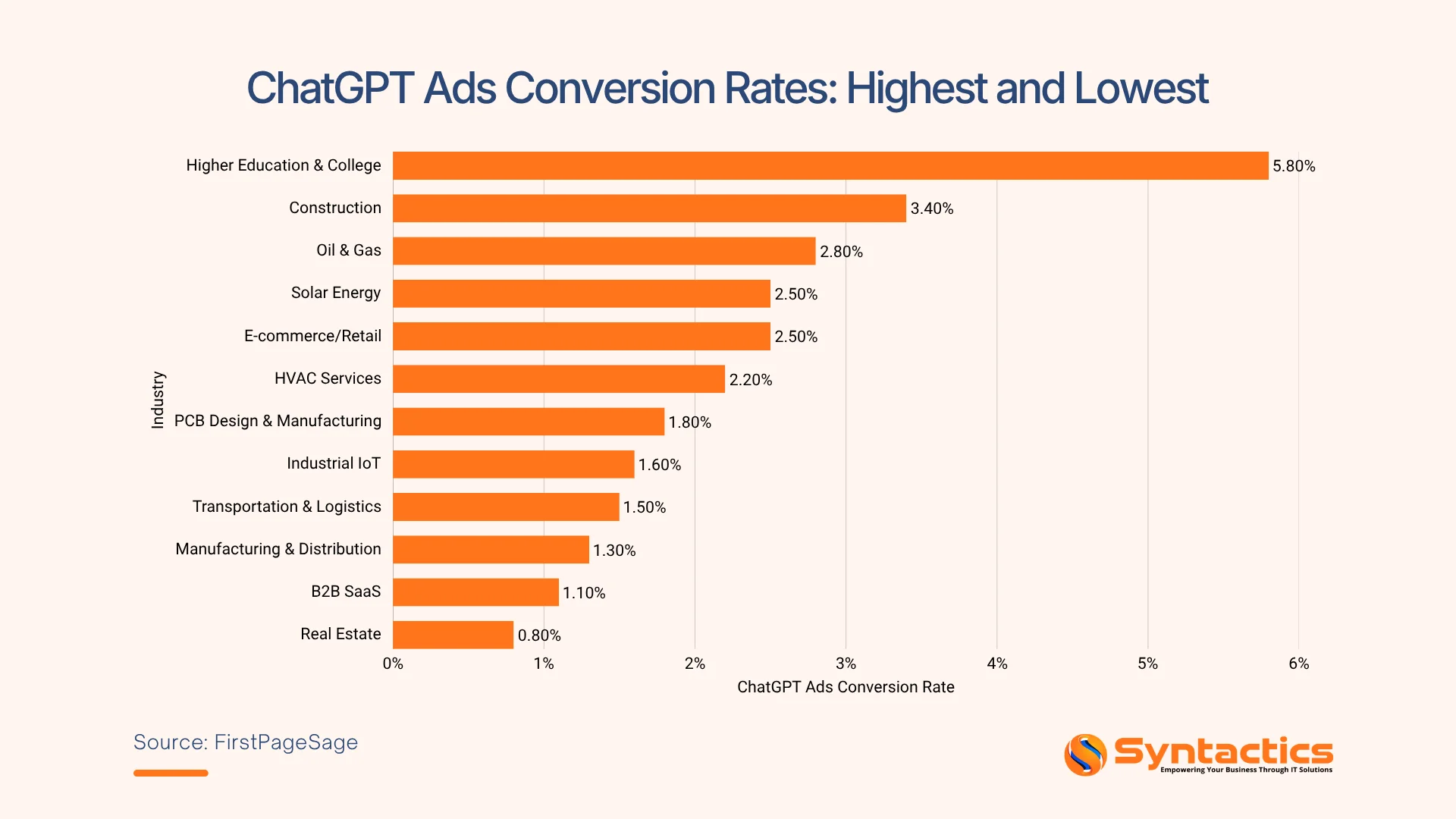
Source: FirstPageSage.
The Competitive Blind Spot ChatGPT Ads Created
With Google Ads, competitive intelligence is built into the platform. Auction Insights lets you see impression share, competitor overlap, and who is outranking you. You can view competitor ad copy, track share of voice over time, and adjust your bids as needed.
ChatGPT ad campaigns don’t offer any of these features by default.
In OpenAI’s Ads Manager, you can view your own performance data, such as impressions, clicks, CTR, and CPC. However, you can’t see the following:
- Which competitors are running ads on the same prompts
- What messaging and creative are they using
- How does your share of voice compare across your category
- Which queries trigger their ads but not yours
This issue is even bigger because ChatGPT usually shows only one ad per response. There aren’t multiple positions or a carousel, just a single slot. If a competitor takes that spot, your brand isn’t seen at all.
What Industry Data Reveals About Competitor Activity
Adthena analyzed nearly 1 million query indexes across 20 industries and five markets between March and May 2026. The results are detailed enough to help guide your strategy.
Ad Activity by Market
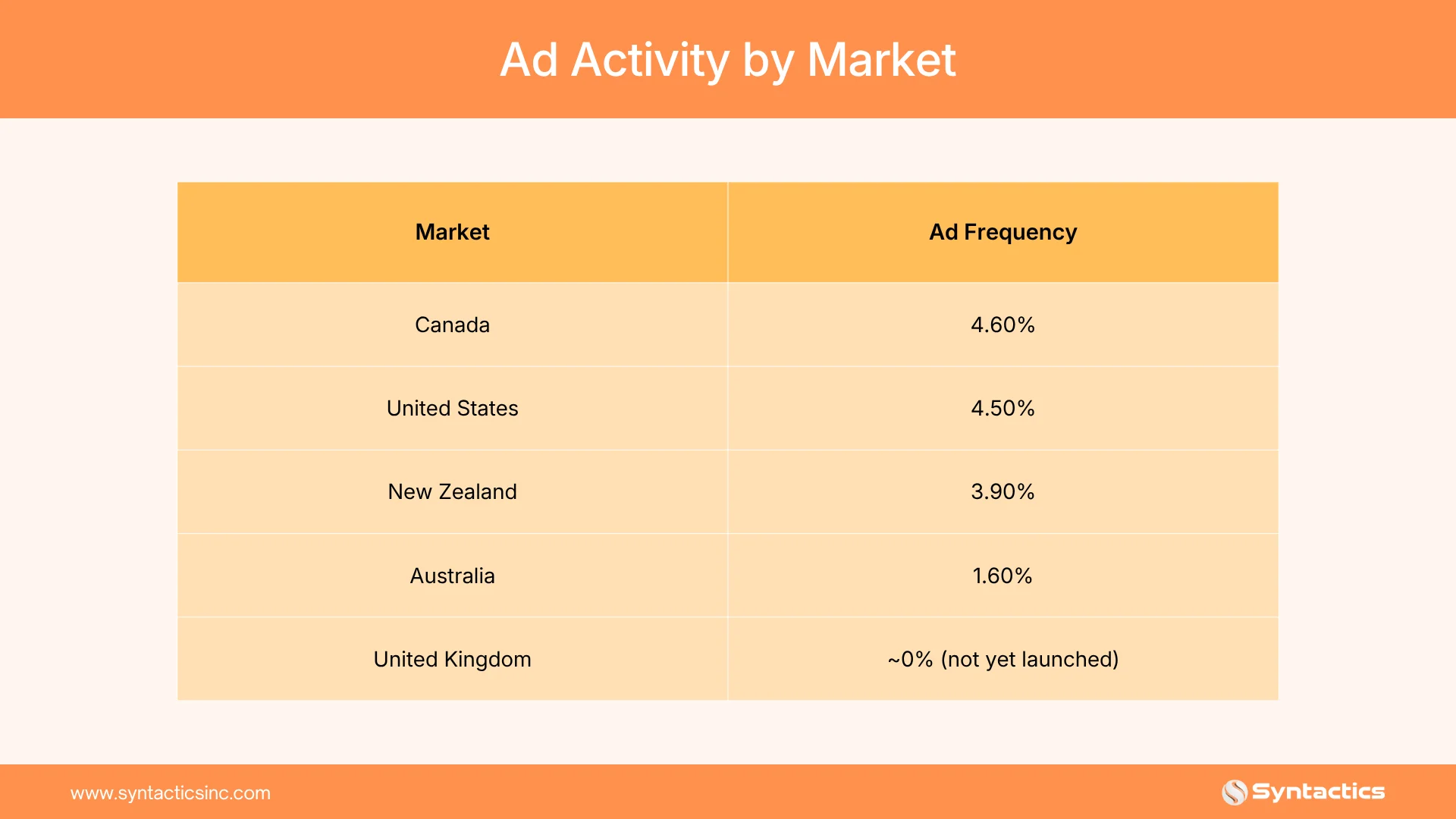
About 90% of all ChatGPT ad placements in the data come from the US. If you’re targeting Australia or the UK, US-based competitors have already spent months learning which prompts and creative work best. When those markets fully open, they’ll have a head start.
Ad Frequency by Industry
Some industries are already very active on ChatGPT ads, while others are just beginning to explore the channel.
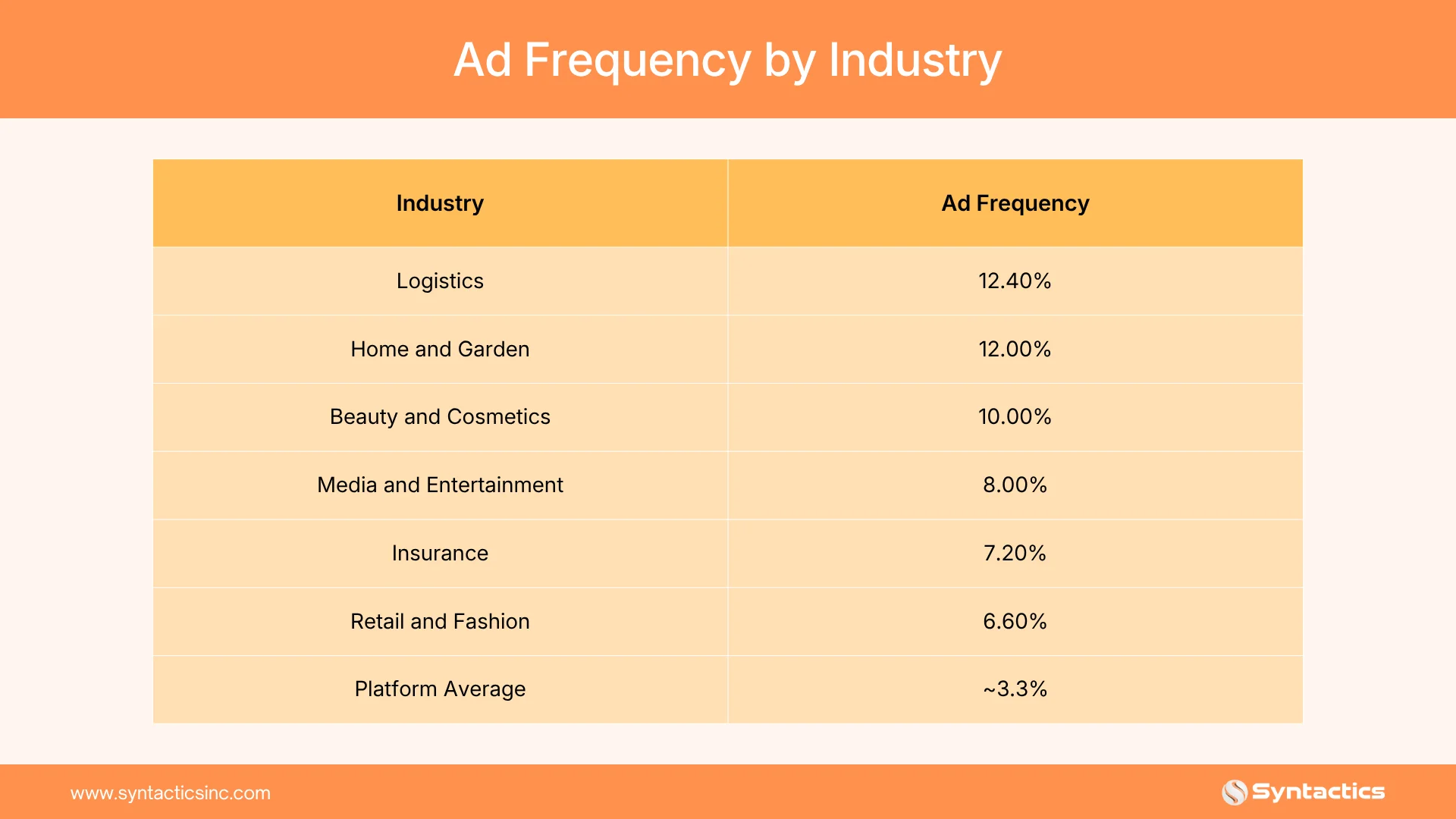
Retail and Fashion stand out. They make up 24% of US query volume but 39% of all US ad placements. Advertisers in this category are treating ChatGPT as a main channel, not just an experiment.
Restricted Categories
According to OpenAI’s updated ad policies (April 2026), sensitive conversations are still not eligible for ads. However, some restrictions on legal, medical, and financial content have been relaxed. If your industry was previously blocked, it might now be allowed. These rules will keep changing.
Why the Single-Slot Format Changes the Stakes
On Google Search, even if you’re in the third position, you can still get a good amount of traffic. The second position also brings results. There are multiple levels of visibility.
With ChatGPT, you either have the sponsored placement or you don’t appear at all. There’s no second spot.
This makes tracking your share of voice much more important than in traditional paid search. Brands that build a presence and figure out which prompts work now will be the hardest to beat later. The same thing happened with early Google Ads, and it’s happening again with OpenAI ChatGPT Ads.

How to Map Your Competitors’ ChatGPT Presence
Since there aren’t built-in competitive tools, start with a manual audit. Do this at least once every quarter.
Step 1: Build your prompt list
Identify 15–20 of your highest-intent commercial queries. Focus on:
- Category comparisons (“best [service type] for [use case]”)
- Service recommendations (“recommend a [vendor type] in [location]”)
- Problem-framing queries (“how do I find a [provider]”)
Step 2: Run each prompt through ChatGPT
For each response, write down three things:
- Which brand appears in the sponsored slot (if any)
- How the brand is described (this reflects their dominant content angle)
- Which page the response links to
Step 3: Cross-reference with Perplexity
Perplexity always cites its sources and gives you another way to see which brands have enough content authority to appear organically. This helps you spot who is leading in both paid and unpaid AI search.
Step 4: Flag the gaps
Watch for two types of opportunities:
- Contested queries, where a competitor consistently holds the slot. These show you where you need to compete.
- Uncontested queries, where no brand dominates. This is your chance to be a first mover.
What Your Competitors Reveal About Their Content and Positioning
Beyond seeing who shows up, the data gives you insight into how competitors are positioning themselves.
Messaging direction. When ChatGPT describes a competitor’s offering on its own, it uses their most consistent content. The way the AI summarizes a competitor often reveals their main brand message, sometimes more clearly than their website does.
Content gaps. If a competitor shows up for comparison queries and you don’t, it’s usually because their pages answer the question directly and yours don’t. The solution is to improve your content, not just increase your budget.
Category concentration. If your competitors are running lots of ads (see the table above), waiting too long will only make it harder to catch up. Early movers are gaining advantages in auction position, quality scores, and prompt data.
Why ChatGPT Competitive Intelligence Matters Now
Overall, the approach here is similar to any share-of-voice analysis you do for Google Ads: find where competitors are visible, where you’re missing, and which gaps are worth targeting. The difference is that ChatGPT needs manual mapping for now, and each query matters more because there’s only one slot.
Syntactics, Inc. offers PPC campaign management services that extend to emerging paid channels, in addition to Google and Meta. If you want help building a competitive map for ChatGPT and turning it into a campaign strategy, get in touch with our team.

Frequently Asked Questions
How do ChatGPT ads work?
ChatGPT ads show up as clearly labeled Sponsored placements below the AI’s response, separate from the answer. Targeting is contextual, based on the conversation topic rather than a fixed keyword list. Each ad includes a headline, description, image, and URL.
Advertisers manage campaigns in OpenAI’s Ads Manager with CPC and CPM bidding. Advertisers do not get access to user conversations or personal data.
Are ChatGPT ads live?
Yes. OpenAI launched ChatGPT ads on February 9, 2026, for logged-in adult users on Free and Go tiers. The channel is live in the US, Canada, Australia, and New Zealand. The UK hasn’t launched yet. Plus, Pro, Business, Enterprise, and Edu plans are still ad-free.
How much will ChatGPT ads cost?
ChatGPT ads now cost $3 to $5 per click (CPC) or $25 to $45 per 1,000 impressions (CPM), based on current benchmarks. When the platform launched in February 2026, CPM was $60 with a $200,000 minimum spend.
Both numbers dropped significantly, and the minimum spend requirement was removed when OpenAI launched its self-serve Ads Manager in May 2026. High-value sectors like SaaS and finance now see CPCs of $8 to $18.

About Jalou Batilong
Related News:





Comment 0