Black Friday and Cyber Monday (BFCM) are a critical sales opportunity for online retailers. Hence, search visibility depends on how well you prepare before shoppers start browsing. According to Adobe, the holiday shopping season is forecasted to hit $271.5 billion in 2026.
To maximize these advantages, online retailers should prioritize accurate product data, a dedicated seasonal landing page, and reliable page speed. Preparing these elements early gives search engines time to discover updated pages so shoppers find relevant products without unnecessary friction.
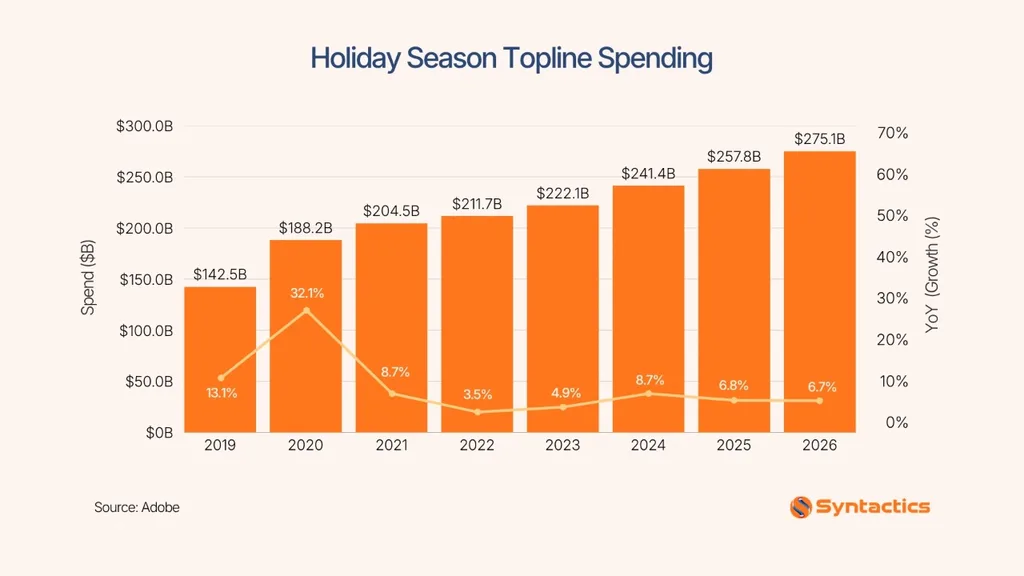
Source: Adobe
Key Takeaways
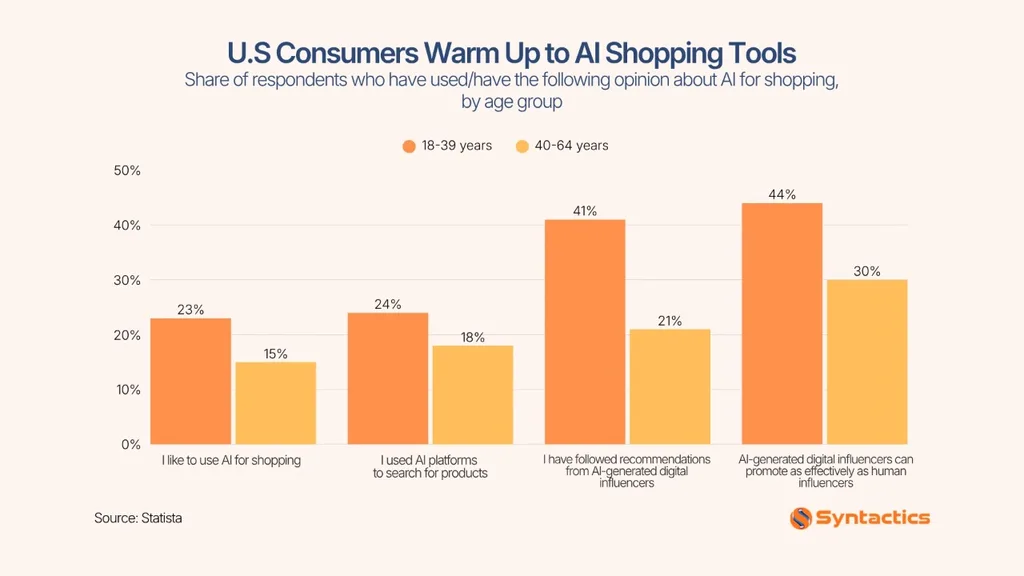
- 24% of US consumers aged 18 to 39 use AI to search for specific products. (Statista)
- Build a reusable BFCM page with a fixed URL, updated promos, delivery info, and key product links.
- Optimize product pages using accurate structured data, unique descriptions, genuine reviews, gift guides, and strong internal links.
- Synchronize product feeds with website inventory, prices, and details to minimize Merchant Center errors during peak sales.
- Improve Core Web Vitals, test mobile checkout, and track seasonal performance in Google Search Console and GA4.
Build One Seasonal Landing Page and Keep the URL
A dedicated holiday page gives shoppers one destination for seasonal offers while helping search engines discover relevant products. Here’s how you can build and maintain a seasonal landing page to rank, convert, and win e-commerce SEO:
Create a Reusable Holiday Landing Page
Publish a permanent URL, such as /black-friday-deals/, and reuse it annually. Refresh its copy, offers, and product links instead of creating a new URL every year. This approach preserves accumulated links and page history, although rankings are never guaranteed.
To keep the page accessible outside the promotional period, update expired offers and explain when new deals will appear. In addition, avoid removing the page or returning a 404 error after the seasonal period.
Optimize Navigation, Deals, and Delivery Information
Link the landing page to the homepage and main navigation when appropriate. Feature current promotions, relevant categories, clear savings, and delivery cutoff dates. Remove expired prices promptly, and ensure your link-building strategies point to an available product or an alternative.
Account for Philippine Shopping Events
If your business is based in the Philippines, you should plan around 9.9, 10.10, 11.11, and 12.12 campaigns and payday periods. An SEO specialist in the Philippines recommends preparing localized categories, promos, payment, and shipping info before each event.
Product Page Checklist
Once your seasonal destination is ready, strengthen individual product pages to turn search visibility into sales. Here’s a quick guide to keep you guided:
Implement Structured Product Data
Structured data makes your pages eligible for rich results. However, it doesn’t guarantee Google will display them. For the best outcomes, add accurate prices, currency, availability, shipping details, and return policies in your merchant listing structured data.
Improve Product Descriptions and Review Markup
Write original product descriptions by highlighting benefits, specifications, use cases, and differentiators. Avoid copying the manufacturer’s descriptions across your catalog. If eligible, implement review markup that accurately reflects genuine, visible reviews. Also, do not invent ratings or mark up reviews that shoppers cannot access.
Handle Out-of-Stock Products
Keep temporarily unavailable product URLs live when they remain useful. Make important content updates on availability, structured data, and feed, and recommend comparable products. Permanently discontinued products may warrant a relevant replacement redirect when an appropriate alternative exists.
Category and Gift Guide Pages
Category and gift guide pages help shoppers discover products based on their needs, budgets, and intended recipients. During the holiday season, optimize these pages for gift-intent searches by organizing products into relevant groups.
To make this work, include product comparisons with useful details that help shoppers make informed decisions. For example, a guide to affordable gifts could lead to:
- Relevant Product Pages: Help shoppers move directly from recommendations to individual items.
- Supporting Category Pages: Let shoppers explore more options within their preferred budget or recipient group.
- Seasonal Landing Page: Connect gift guides to your broader holiday shopping campaign and make key seasonal content easier to discover.
To strengthen internal linking for these pages, use descriptive anchor text that explains what shoppers can expect from each URL.
Product Feeds and Merchant Center
Keep your product feed consistent with each product landing page to prevent disapprovals and avoid confusing shoppers. For instance, if a feed advertises a discount that has expired, Google may flag the listing, resulting in cart abandonment.
To prevent this, automate feed updates when possible, especially if your inventory and pricing change during holidays. Google even recommends using both structured data and a Merchant Center feed to maximize AI SEO visibility in local places like the Philippines or your area.
So, before BFCM, check if your product pages and feeds consistently communicate:
- Pricing: Ensure regular prices, sale prices, and promotional details are accurate.
- Inventory: Update stock availability promptly to avoid promoting unavailable products.
- Product Information: Align titles, product IDs, and landing page URLs across your website and feed.
Lastly, use eligible Merchant Center free listings to expand product discovery with e-commerce SEO. For additional visibility during peak shopping periods, coordinate accurate product feeds with your Google Shopping Ads strategy. This keeps product details consistent across paid and organic listings for a more reliable shopping experience.
AI Shopping Visibility
Product discovery increasingly involves conversational tools, making clear, consistent product information especially valuable. According to Statista, 24% of US consumers aged 18 to 39 years old use AI to search for specific products. To make this work, include specific attributes, practical benefits, sizing details, compatibility information, and concise frequently asked questions (FAQs).
Source: Statista
Speed and Stability Under Load
Even strong search visibility can underperform when shoppers encounter slow pages or broken checkout flows. Here’s what the best SEO company in the Philippines and around the globe do to counteract these issues:
Optimize Core Web Vitals and Page Delivery
Google recommends a Largest Contentful Paint (LCP) of 2.5 seconds or less, Interaction to Next Paint of 200 milliseconds or less, and Cumulative Layout Shift of 0.1 or less for a good user experience. Compress images, use modern formats, configure caching, and consider a content delivery network (CDN).
Test Mobile Checkout and Store Performance
Test your WooCommerce or Shopify store on mobile devices, including product variants, discount codes, payment methods, and order confirmation. Load-test important templates before the first major sale.
Prepare for Updates and Unexpected Issues
Avoid unnecessary website plugin or theme changes during November. Back up the store, document rollback steps, and establish a process for responding to checkout errors, traffic spikes, and payment failures.
Week-by-Week Timeline and Tracking
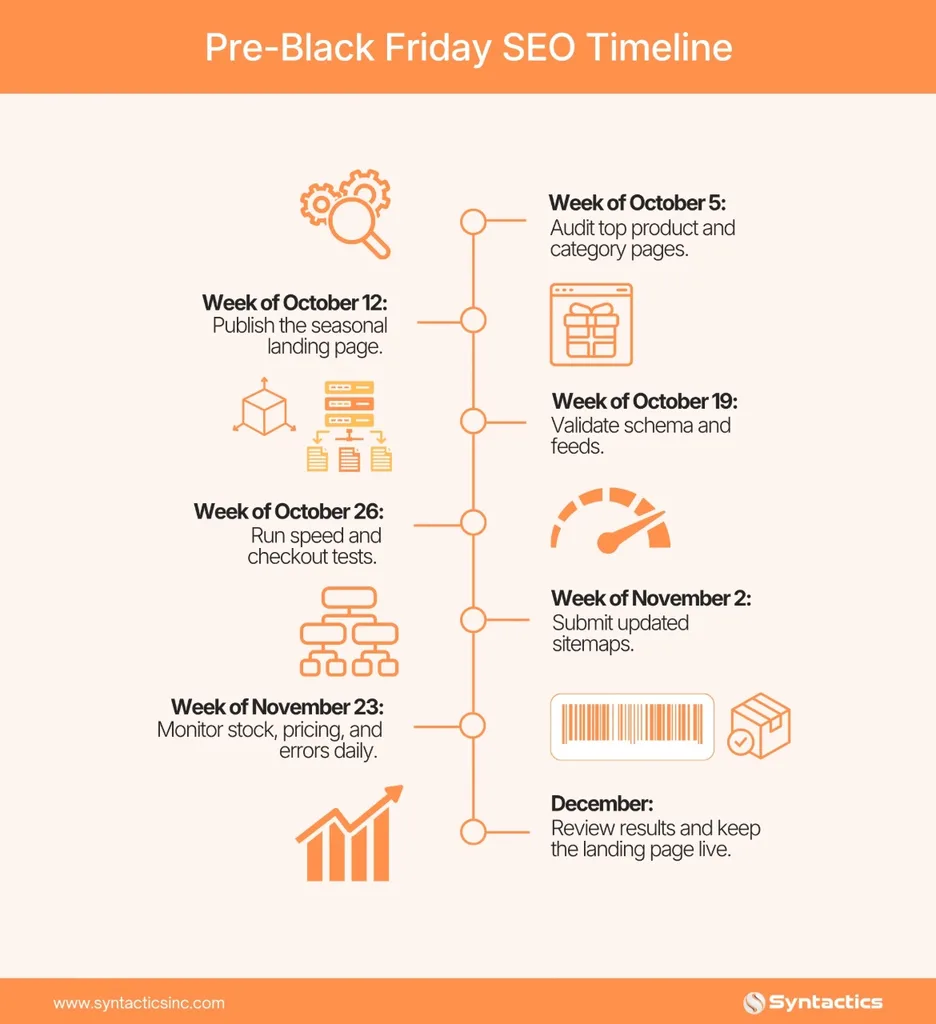
A structured schedule gives search engines and your team time to process improvements. Here’s a simple pre-BFCM SEO timeline you can follow to keep you guided:
Measure Seasonal SEO Performance
To determine your seasonal SEO performance, use Google Search Console to filter performance by URL and review product-page impressions. Then, examine landing-page sessions and tracked revenue in GA4. Lastly, compare year-over-year results while accounting for changes in promotions, inventory, and traffic sources.
Prepare Contingency Plans
If your products sell out, direct shoppers to relevant alternatives. If fulfillment slows, update delivery estimates and promotional messaging. Then, assign a staff member to monitor inventory, technical errors, and customer inquiries throughout the sale.
Conclusion
Retailers that maintain accurate details, seasonal organization, consistent product feeds, and fast site speeds keep their shoppers from leaving. These improvements work together to support search visibility and a smoother buying experience during BFCM season.
Reusable landing pages, comparisons, and reliable performance let you refine future seasonal campaigns. This comprehensive e-commerce SEO strategy, tailored to your holiday business goals, can help build lasting organic visibility.
If your online store needs to close technical gaps before peak season, consider working with Syntactics, Inc., an SEO agency in the Philippines. Our expert team helps you identify page issues, improve data and product feeds, and strengthen website performance. To earn which improvements will make the biggest difference to your store, contact our team today.

Frequently Asked Questions (FAQs)
What are the most effective SEO measures in e-commerce SEO?
Optimize product and category pages with unique descriptions, relevant keywords, structured data, and strong internal links. This approach ensures a smooth mobile shopping experience.
Should the Black Friday URL change each year?
No, keep the same URL each year to preserve links and page history. Only update the content, promotions, and product links to keep it useful year-round.
How should out-of-stock products get handled?
Keep temporarily out-of-stock product pages live, update their availability, and provide restock information when possible. Link to relevant alternatives, and redirect permanently discontinued products only when a suitable replacement or destination exists.