

Maximize ROI with Google’s Performance Max Campaigns
Digital advertising continues to scale, enabling marketers to keep pace with automation and data-driven strategies. According to EMarketer, the digital ad spend is expected to reach $460.46 billion by the year 2028. As competition intensifies, campaigns like Google Performance Max drive better profitability for businesses to market across different channels.
Instead of managing separate campaigns, you leverage AI to optimize placements, bidding, and creative combinations across Google’s ecosystem. This consolidation eliminates the inefficiencies and ensures your budget is allocated to placements that drive the most value.
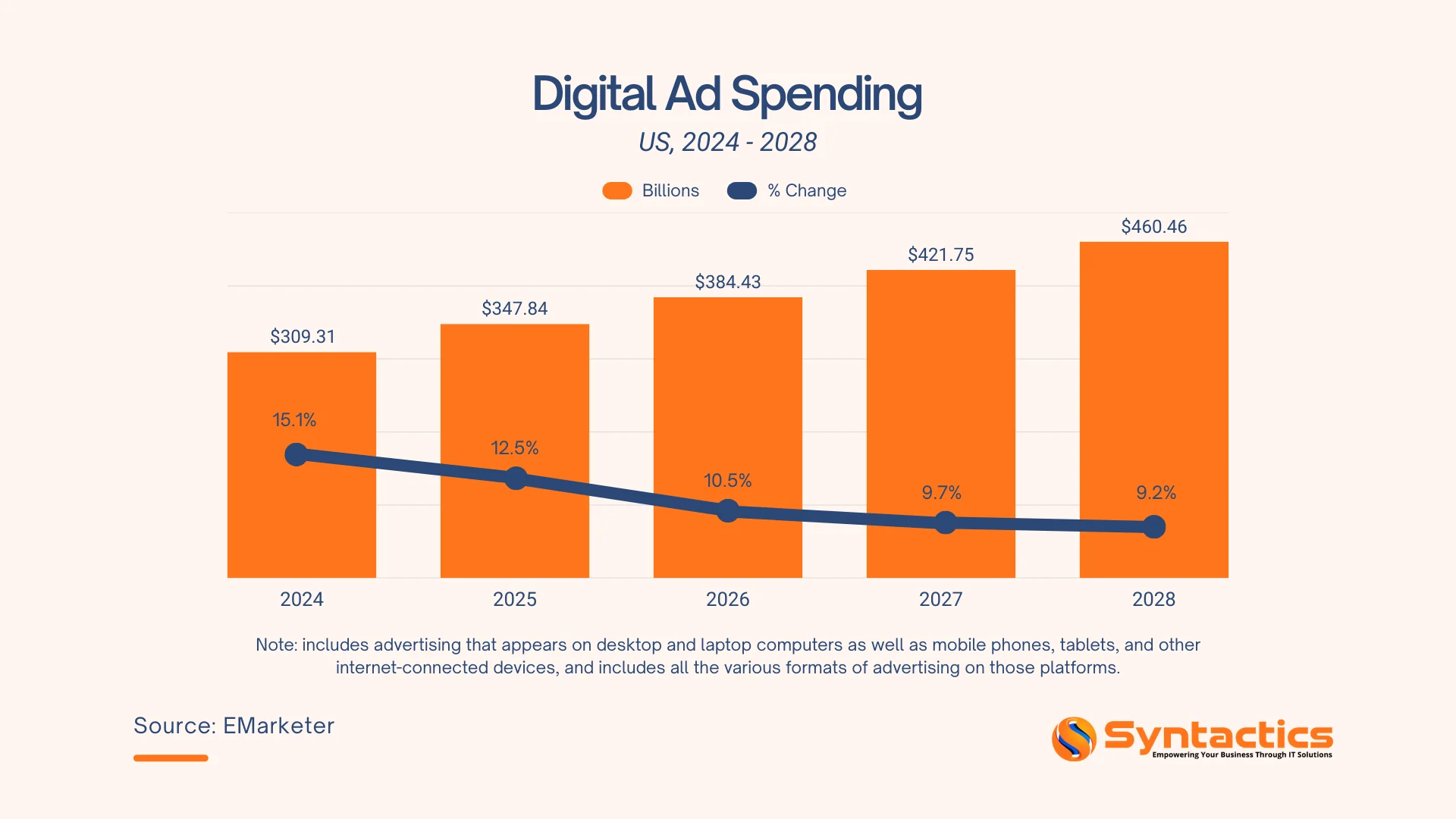
Source: EMarketer
TABLE OF CONTENTS
Key Takeaways
- Over a million advertisers use Performance Max and have improved conversions by about 10%. (DataSlayer)
- Google Performance Max lets you consolidate multiple channels instead of managing separate campaigns
- AI has a central role through features such as audience targeting, predictive modeling, smart bidding, and creative testing.
- Clear campaign objectives such as increasing sales, lead generation, website traffic, or local visits define business growth outcomes.
- A strong campaign setup determines long-term performance in delivering relevant ads.
- Monitoring high-value ad KPIs ensures campaign optimization is tied to real profitability rather than vanity metrics.
What Performance Max Really Is
Performance Max (PMax) campaigns are goal-based initiatives that use Google’s AI to serve ads across every platform from a single setup. These campaigns run across multiple placements, including Search, Display, and more. It works by having marketers provide creative assets, conversion goals, and audience signals that the algorithm uses to show your ads.
According to DataSlayer, over a million advertisers use PMax and have automatically improved their conversions by 10%. Whether it’s browsing for a new product or searching for a review, PMax campaigns effectively bridge the gap between consumer touchpoints.
How AI Optimizes Campaign Performance
According to Salesforce’s State of Marketing, 80% of marketers have adopted the use of AI in their campaigns. However, some of them still deliver generic marketing strategies.
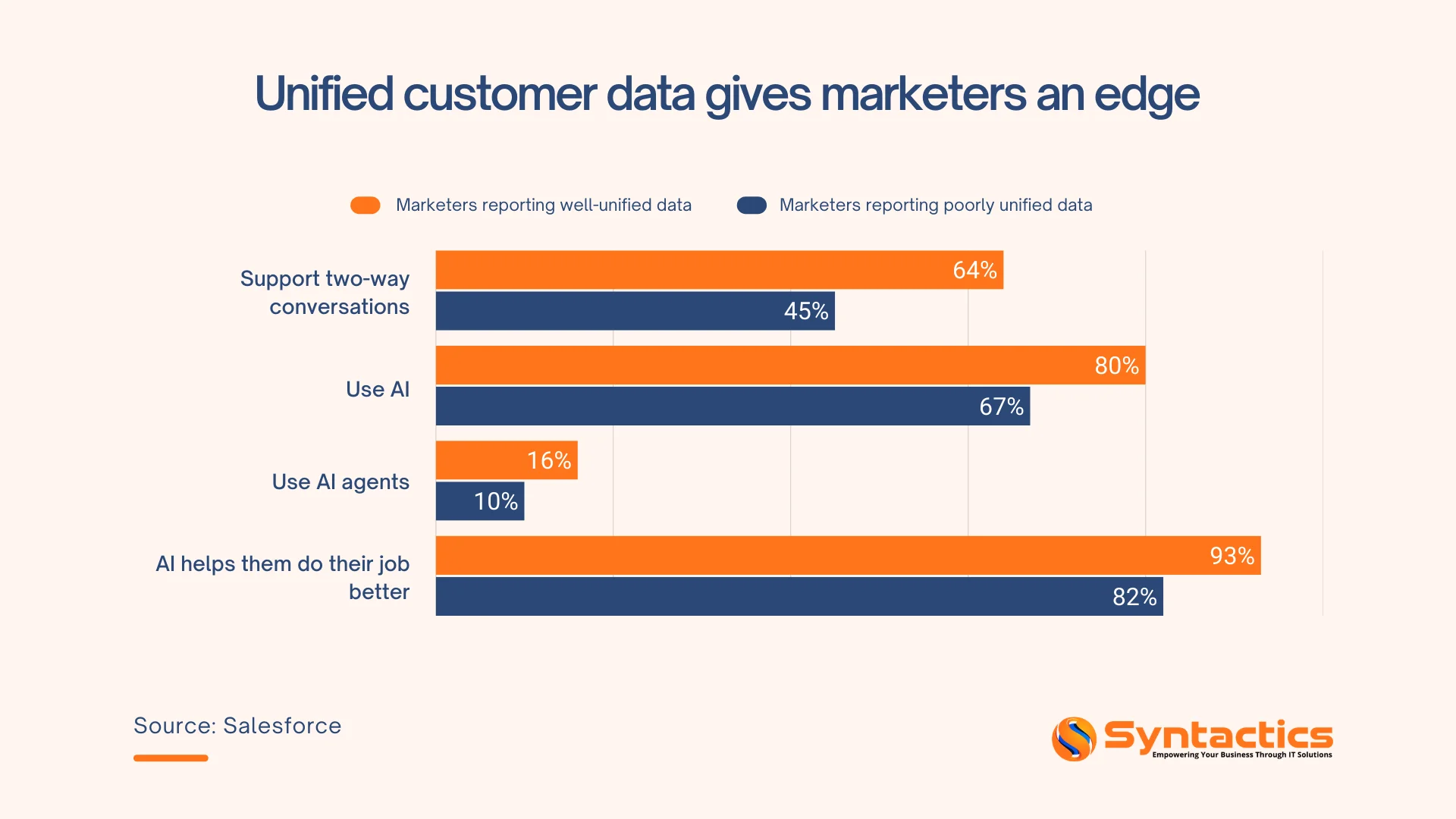
Source: Salesforce
To master performance max campaigns, here’s how you can optimize your campaign performance using AI:
AI-Driven Audience Targeting
One of the most powerful capabilities of Performance Max is its ability to identify high-intent audiences across Google’s ecosystem. The system evaluates search behavior, browsing history, device signals, and contextual data to determine which users are most likely to convert.
Smart Bidding and Budgeting
Smart bidding enables Performance Max to automatically adjust bids based on the likelihood of conversion. The system analyzes real-time user signals to determine the most efficient bid for each auction. According to Search Engine Journal, PMax campaigns drove a 13% increase in conversion value with a higher cost per conversion (CPC). This figure demonstrates its efficiency as a volume-expansion layer for advertisers.
For an additional resource, here’s how Google Ad Spend changes with adjusting budgets:
Automated Creative Asset Optimization
Another advantage of AI-driven advertising is its capability to test multiple creative combinations. Advertisers upload headlines, descriptions, images, logos, videos according to asset groups. Then, the algorithm generates different ad variations and measures which combinations drive the strongest engagement and conversions.
Cross Channel Optimization
Google Ads Performance Max campaigns show your ads across multiple platforms. Its Artificial Intelligence evaluates the best-performing ads and reallocates budgets to channels that deliver higher conversion value.
Predictive Modeling and Intent Analysis
Machine learning models used in PMax analyze billions of daily signals to predict which users are most likely to convert. These models evaluate contextual signals to determine the probability of a conversion before showing an ad.
Campaign Objectives Suited for PMax
Google Performance Max offers full-funnel optimization that aligns with your business goals. To maximize your budget, align your campaign with one of these core objectives:
- Sales: Drive transactions through your e-commerce store or app.
- Lead Generation: Capture high-quality contact information through sign-ups for newsletters, request quotes, or book consultations.
- Website Traffic: Increase overall site traffic to build brand awareness and warm up audiences for future retargeting.
- Local Store Visits and Promotions: Drive in-store traffic by highlighting store hours, directions, and local offers on Google Maps and Search.
These goals help you achieve a tailored experience with your potential and existing customers. According to a McKinsey insight, a personalized interaction increases audience satisfaction by up to 20%, which impacts revenue gains.
Setting Up a Successful PMax Campaign
Here are the following steps to set up your Performance Max ads for strong campaign performance and measurable ROI:
Define Clear Conversion Goals
Identify the conversion outcomes that drive revenue to your business. Common actions typically include purchases, qualified leads, and subscription signups. PMax heavily relies on conversion data, so accurate goal tracking enables the algorithm to optimize meaningful engagement.
Build Strong Asset Groups
Create asset groups that include multiple headlines, descriptions, images, logos, videos, and motion graphics that modernize marketing campaigns. These creative elements allow Google’s machine learning system to generate and test different ad combinations across channels.
Establish Audience Signals
Audience signals help the algorithm identify audiences from first-party customer lists, website visitors, in-market segments, or interest-based markets. Although the system will eventually discover new audiences, establishing these signals early on accelerates the learning process.
Monitor Ad Conversion and Performance
Connect conversion data from your website, ecommerce platform, or CRM system. Integrating these systems ensures that Google’s algorithm can measure revenue, lead quality, and other meaningful outcomes.
Measuring ROI and Iterating
To truly maximize Google Ads Performance Max, shift your focus from vanity metrics to these metrics that refine your campaign performance:
- Conversion Value: Instead of counting leads, track the actual dollar value each conversion brings to your business. This allows the AI to prioritize high-value customers.
- Cost Per Conversion: Monitor how much you are paying to acquire a customer. If your CPC is lower than your profit margin, adjust your budget accordingly.
- Return on Ad Spend (ROAS): Measure how much revenue a campaign generates for every dollar spent on advertising.
Common Pitfalls and Pro Tips
Even with AI automation, marketers can make mistakes that limit campaign effectiveness. Here’s what you should know about common mistakes and proven ways to avoid ad fatigue:
Insufficient Creative Assets
Providing only a few headlines, images, or videos limits the algorithm’s ability to test combinations. To counter this problem, build high-quality assets for compelling ad variations.
Weak or Inaccurate Conversion Tracking
Inaccurate lead tracking and revenue can mislead the AI, enabling advertisers to optimize campaigns for the wrong outcomes. Setting up conversion tracking prevents this problem.
Neglecting Audience Signals
While the algorithm can identify new users, ignoring first-party data or interest segments slows learning. Establishing quality audience signals improves targeting accuracy, helping you achieve higher conversion in Google Ads.
Impatience During Learning Phase
Google Performance Max campaigns require a learning period of two to four weeks. Interrupting or prematurely adjusting campaigns during this phase can prevent the AI from fully optimizing bids and placements.
Conclusion
Google Performance Max is changing the way advertisers run campaigns that maximize their ad spend across different platforms. Businesses that structure their campaigns around clear goals and reliable conversion tracking can unlock meaningful results with their features. Hence, it becomes an efficient way to direct the budget that actually generates revenue.
To fully capitalize on this opportunity, many businesses partner with experienced teams that specialize in PPC management services. At Syntactics Inc., we help businesses like yours plan, launch, and optimize data-driven advertising strategies into measurable growth engines. With deep expertise, our team ensures every ad investment delivers maximum value.
See how our advertisers help you execute high-performing campaigns and achieve stronger ROI with Google PMax Ads.

Frequently Asked Questions (FAQs)
What is performance max in Google Ads?
Performance Max is a goal-based campaign type that uses Google’s AI to optimize ads across all channels. It automates targeting, bidding, and assets to maximize conversions and ROI.
How long does Performance Max need to show results?
Most campaigns require two to four weeks of learning before the ad performance stabilizes. This period allows the AI to analyze data and optimize targeting and bids effectively.
Is Performance Max suitable for small businesses?
Yes, small businesses can benefit from its automation and cross-channel reach. It simplifies campaign management while focusing on measurable outcomes like leads or sales.

About Jalou Batilong
Related News:



The Bitdefender Patch Management Solution

How to Hire an eCommerce Web Development Company






Comment 0