


Your Roadmap to Modern Business Applications Development
Explore how business applications development can simplify operations, boost efficiency, and provide solutions tailored to your business needs.
Business applications give you a more innovative way to manage and enhance operational growth. Instead of relying on generic software, you can use tools customized to your needs to streamline processes, boost efficiency, and respond quickly to customers.
To be more specific, the application development software market is projected to grow to $511.55 billion in 2025, reflecting a CAGR of 25.6%. This shows how rapidly businesses are investing in tailored solutions.
By choosing business applications development, you get systems that scale with your company and integrate smoothly with your workflows. This means you save time, reduce complexity, and focus on serving customers while staying competitive.
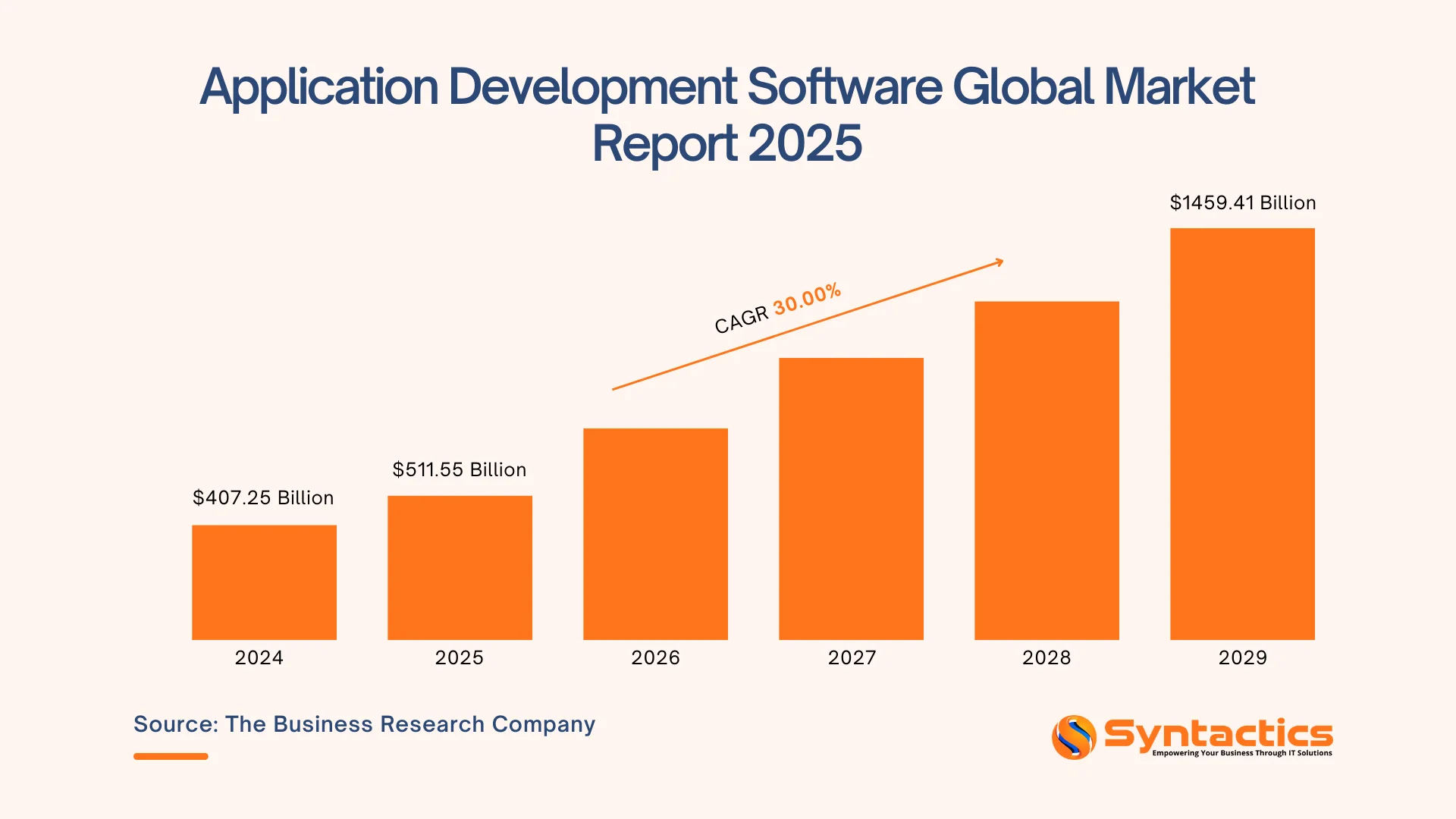
Source: The Business Research Company.
TABLE OF CONTENTS
Key Takeaways
- Business applications improve efficiency, scalability, and competitiveness.
- Benefits of business applications include smoother workflows, better collaboration, and solutions that adapt as your business grows.
- Development methods include custom, low-code/no-code, cloud-based, and hybrid approaches.
- Technologies like Laravel, React, and Node.js support speed, security, and scalability.
- Selecting an expert development partner ensures apps meet technical requirements and business goals.
Benefits of Business Application Development
According to a Slack Survey, small business owners lose an average of 96 minutes of productivity each day due to inefficiencies. This indicates that running a business often means juggling multiple tools and processes that don’t always work well together. Over time, this can slow down your team, create extra work, and make it harder to respond quickly to customers.
With business applications development, it helps you avoid those roadblocks by giving you software that fits the way you already do business. Instead of adjusting your operations to match generic software, you get applications that match your workflows, scale as you grow, and integrate smoothly with the systems you rely on.
Thus, it saves time and effort while allowing you to focus on serving customers and exploring new opportunities without being slowed down by the wrong technology.
Methods in Building Business Applications
When you build a business application, you can choose from several methods based on your goals, budget, and timeline. By understanding these options, it lets you select the approach that delivers the most value for your business.
Custom Development
Custom business app development provides you a solution built around your business’s needs. Rather than settling for generic software with features you don’t use, you can have applications designed to fit your workflows and long-term objectives. As a result, every feature works for your business, boosting productivity and efficiency.
As your company grows, the application can expand without losing functionality or requiring a completely new system. Custom-built apps also connect smoothly with your current platforms, avoiding unnecessary disruptions.
This method is ideal if your workflows are specialized or your industry requires strict compliance. It’s also a smart option if you want technology that helps your business stand out.
Low-Code/No-Code Development
Low-code and no-code platforms enable you the chance to create applications through visual interfaces rather than complex coding. These tools speed up delivery and make development more affordable. Even non-technical staff can participate in building apps, which encourages collaboration across teams.
What Enterprises Need To Know About Low-Code reported that companies using low-code platforms can build and launch applications in less than three months. This makes low-code and no-code methods especially helpful in app development for small businesses. This also helps teams manage limited budgets and short timelines while delivering solutions quickly and controlling costs.
Cloud-Based Development
Cloud-based development allows your applications to run securely online, giving you and your team access from different devices and locations. It reduces the need for heavy infrastructure while lowering upfront expenses. You also benefit from features like built-in backups and disaster recovery, which help maintain business continuity.
Scaling is also easier when your applications live in the cloud. As demand grows, you can increase capacity without major disruptions. Cloud-based apps are also an effective choice if your company has multiple branches, remote employees, or services that need constant availability. For SMEs, cloud development is also an efficient way to pursue app development for businesses without building large IT systems.
Hybrid Development
Hybrid applications let you combine web and mobile technologies into one solution that works across multiple platforms. By using a single codebase, you save on development costs and simplify long-term maintenance. Updates can be deployed faster, and users get the same seamless experience either on desktop or mobile.
This option is valuable and can reach customers and employees on different devices without spending on separate apps for each platform. Hybrid development is also a practical approach for app development for small businesses because it balances affordability with wide accessibility.
Popular Frameworks and Technologies for Business Apps
Choosing the right frameworks and technologies helps you build fast, secure, and reliable. In addition, the tools you select ensure your apps perform well today while remaining adaptable as your business needs change:
- Laravel (PHP framework): Provides a streamlined way to build secure, scalable backend systems.
- React (JavaScript library): Creates fast, responsive user interfaces that improve customer experience.
- Node.js (JavaScript runtime): Ideal for real-time solutions like chat systems, APIs, and streaming services.
- Flutter and React Native: Allows you to build mobile apps for Android and iOS using just one codebase.
- Microsoft Power Apps: A low-code option that integrates smoothly with the Microsoft ecosystem, making it effective for SMEs.
Managing the Challenges in Business Applications Development
Business application development can bring many benefits to your company but it also comes with challenges. Here’s how you can address common issues to make your project more successful:
Security Risks
IBM’s Cost of a Data Breach Report 2025 reveals that the global average breach cost is $4.4 million. So, keeping your data safe should always be a top priority. Applications storing personal, financial, and confidential data often become prime cyberattack targets. To reduce these risks, implement secure coding, encryption, audits, and regular testing.

Legacy Integration
Older systems often hold valuable data, but may not connect well with modern solutions. You can address this using APIs, middleware, or phased migration strategies that keep your business running while you update your technology.
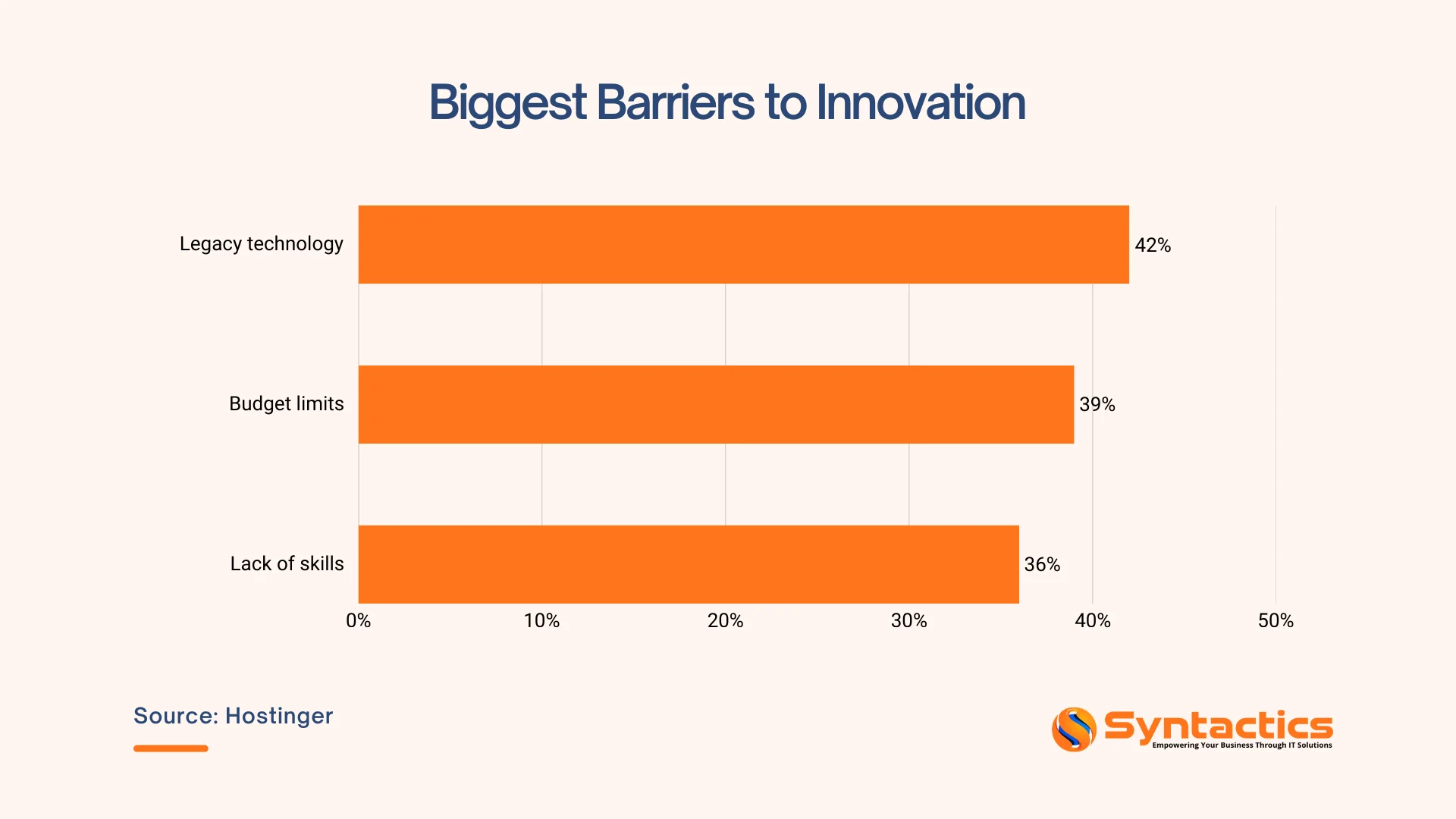
Source: Hostinger.
Budget Constraints
High-quality applications require investment, and staying within budget can be tough. However, controlling costs is possible by phasing projects, prioritizing the most critical features, or using low-code solutions for smaller needs.
User Adoption
Your app only delivers value if employees and customers use it. To facilitate adoption, create an intuitive design, provide training, and gather feedback during testing. This ensures that the final product feels practical and user-friendly.
How to Choose the Right Development Partner
Your development partner has a direct impact on your project’s success. With a skilled app development team, they can help you go from concept to launch while ensuring your business objectives are met:
- Check experience and portfolio: Review past projects, especially those in your industry.
- Look at technical skills: Ensure expertise in frameworks like Laravel, React, and Node.js.
- Evaluate support and scalability: Choose a partner who provides ongoing maintenance and updates.
- Prioritize communication: A transparent and collaborative process keeps your project on track.
Conclusion
Investing in business applications development can help you improve operations, collaboration, and overall efficiency. Different approaches give you flexibility to match your goals and resources, while careful planning ensures that security, integration, and adoption are addressed effectively.
At Syntactics, Inc., we can guide you through every stage of business application development. In fact, we provide the expertise and technical skills needed to build solutions that fit your organization. By partnering with a team that understands your objectives, you can create applications that enhance productivity and support your business’s success.

FAQs About Business Applications Development
What is business application development?
Business application development involves creating software that supports specific business functions. It helps you improve efficiency, manage workflows, and achieve business objectives.
What is a business application example?
A good example of a business app is customer relationship management (CRM) software. It helps you track interactions, manage leads, and improve customer service.
What are the six steps involved in the app development process?
The app development process includes planning, designing, developing, testing, deploying, and maintaining your application. Each step ensures that your app meets your needs and functions smoothly for users. Get in touch today to create a business application crafted for your needs!

About Xenia Labis
Related News:
Link Building Best Practices and Strategies


How to Do SEO on WordPress Blogs: A Guide

Why is Custom Software Expensive?





Comment 0