

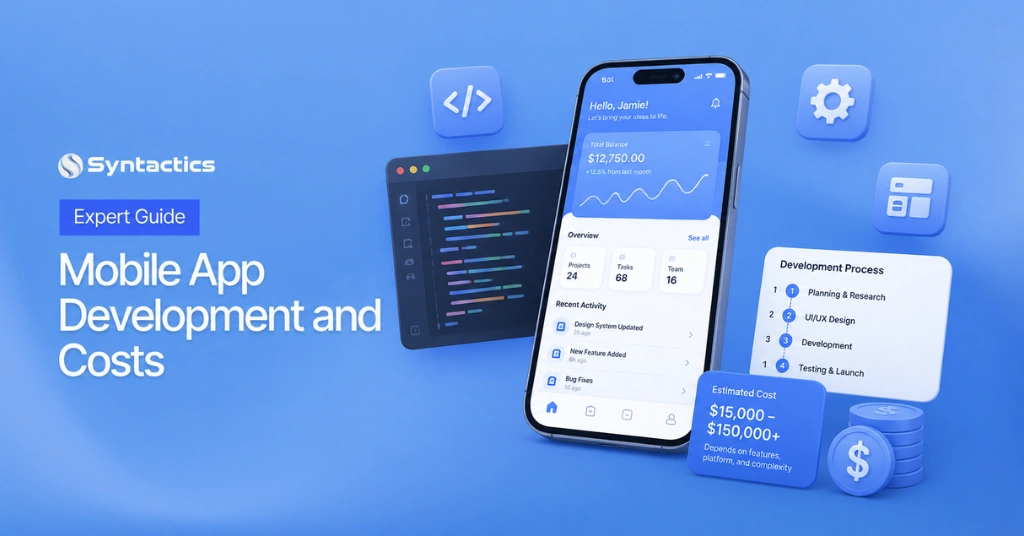
Expert Guide to Mobile App Development and Costs
A well-built mobile app keeps customers engaged, simplifies operations, and drives steady business growth. Check out our expert guide.
Mobile app development enables businesses to grow by directly reaching customers on their phones. As people rely on mobile devices to shop, book services, and manage daily tasks, an app becomes a powerful tool to reach them, strengthen relationships, and stay ahead of competitors.
Simply put, a well-built app can keep customers engaged, simplify operations, and drive steady growth for your business. No matter your company’s size, the right mobile application helps you expand your reach and deliver services in ways your customers already prefer.
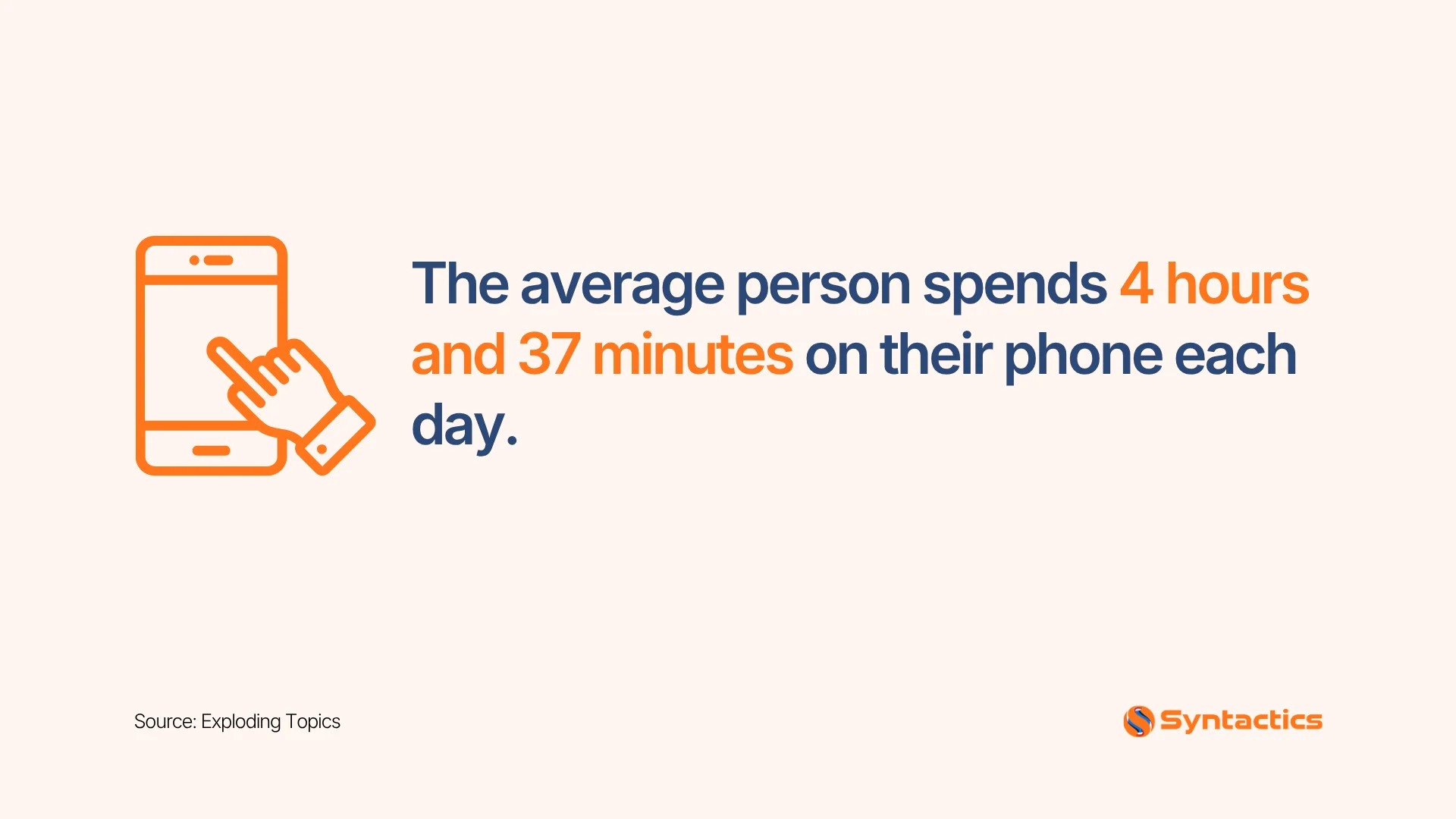
Source: Exploding Topics.
Key Takeaways
- People worldwide spent over $43.4 million on apps, in-app purchases, and subscriptions through Apple App Store and Google Play combined, indicating a strong growth in the mobile app market. [Statista]
- Choose between native and cross-platform approaches, depending on goals and resources.
- Tools like Flutter and React Native balance speed, performance, and scalability.
- Development costs depend on complexity, features, team size, and whether you outsource or hire in-house.
- A custom mobile app development company helps ensure your project runs smoothly and delivers measurable value.
TABLE OF CONTENTS
Why is Mobile App Development Important for Businesses?
When you launch a mobile application, you create a channel that’s always accessible to your customers. This visibility strengthens loyalty, supports brand recognition, and helps you keep up with shifting consumer behaviors.
Mobile apps also allow you to simplify operations within your business. Instead of depending on multiple tools that don’t connect, you can centralize tasks into one system designed around your processes. The result is faster workflows, less wasted time, and a more productive team.
Beyond internal benefits, applications help you compete. Customers expect convenience and speed, and an app meets those expectations while also giving you opportunities to collect insights about user behavior. This information alone can help you improve services, target your market more effectively, and expand your reach.
Top Tools and Frameworks for Developing Mobile Apps
There are two main approaches in developing mobile apps: native development and cross-platform mobile app development. Both have advantages, and your choice depends on goals, audience, and budget.
Native Development
Native development involves building separate apps for iOS and Android. This method uses platform-specific programming languages and tools, such as Swift or Objective-C for iOS and Java or Kotlin for Android. It also allows developers to fully leverage each device’s hardware and software capabilities, resulting in optimized performance and responsiveness.
According to a study on Native vs. Web Apps, native Android apps consume significantly less energy compared to their web counterparts. The difference was especially large in CPU and memory usage.
This efficiency leads to smoother user experiences and longer battery life, making native development the preferred choice for performance-focused applications.
Pros
- Strong performance and speed
- Full access to device features
- Reliable user experience
Cons
- Longer development time
- Higher costs since you’re building two apps
- Requires specialized teams for each platform
Overall, native apps are best for performance and advanced functionality, such as gaming, finance, or apps with complex graphics.
Cross-Platform Development
Cross-platform mobile app development uses a single codebase to create apps that run consistently on iOS and Android devices. Popular tools include Flutter and React Native. This approach saves time and reduces development costs since you don’t need separate apps for each platform.
Pros
- Faster and more affordable than native
- Easier maintenance with one codebase
- Wide device coverage
Cons
- Slightly reduced performance compared to native
- Some platform-specific features may be more complex to implement
This approach suits businesses that want to reach a broad audience quickly without doubling development costs.

Popular Tools and Frameworks
- Flutter: Developed by Google, Flutter is known for its fast rendering and flexible design options. Global brands like Google Ads and Alibaba choose Flutter for mobile app development because it allows them to deliver high-performance, visually consistent apps across platforms.
- React Native: Backed by Meta, React Native is widely adopted and integrates well with existing projects. Companies like Instagram and Facebook use it.
- Xamarin: A Microsoft product that lets you reuse C# code across platforms.
What Does It Cost to Build a Mobile App?
Mobile app development costs vary based on features, complexity, and the development team you choose. Knowing the factors that influence costs helps you make informed decisions and plan your resources effectively.
Cost Factors
The features and functionality you include in your app can impact development time and expenses. For instance, more advanced or numerous features require additional coding, design, and testing. The user experience and interface design also influence costs, as creating a customized, intuitive app takes time and expertise.
Integration needs add another layer, especially if your app must connect with existing systems or third-party services. Finally, consider maintenance and updates, since apps require ongoing improvements, security patches, and scalability adjustments.
Typical Cost Ranges
According to App Development Cost, the average price ranges for mobile app development are as follows:
- Basic Apps: $5,000 – $50,000
- Medium-Complexity Apps: $50,000 – $120,000
- Advanced Apps: $120,000 – $300,000
These ranges vary by project scope, technology choices, and vendor rates, but they provide a helpful guideline for setting expectations for your investment. For instance, an app with basic functionality may fall on the lower end of the spectrum, while an advanced app with complex functionality and integrations may fall on the higher end.
Outsourcing vs. In-House Development
You can build your app in-house or with the support of a custom mobile app development company. In-house teams provide direct control over the project but often require higher upfront costs for salaries, tools, and infrastructure.
Meanwhile, outsourcing lets you control costs efficiently while accessing skilled developers who deliver a polished app without the expense and commitment of maintaining a permanent team.
Overcoming the Biggest Mobile App Challenges
Even the best-planned mobile app development projects encounter obstacles. By anticipating these challenges, you increase your chances of success.
Security Risks
Data breaches can be expensive and harm your reputation with customers. That’s why it’s critical to protect sensitive data by implementing mobile app security best practices, including strong encryption, secure coding, and regular audits and testing.
Also, keep your app reliable by updating it regularly, controlling user access, and monitoring for unusual activity. These measures help ensure your application remains secure, trustworthy, and dependable for your users.
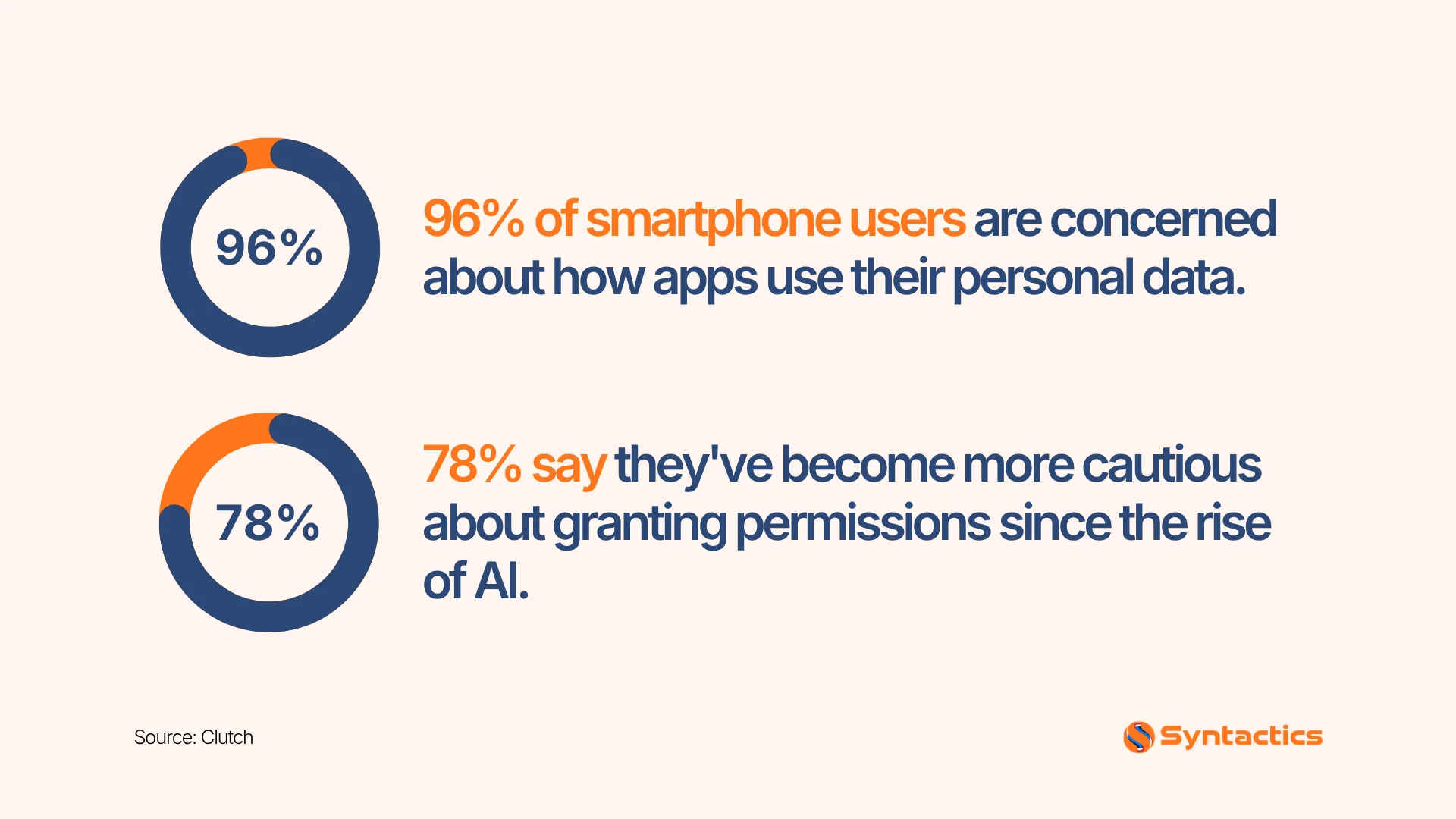
Source: Clutch.
Scaling
As your audience grows, your app should maintain performance under greater load. Fortunately, cloud-based hosting provides the flexibility to scale resources as needed. Modular coding also allows you to add new features without disrupting existing functionality. Lastly, ongoing performance monitoring helps keep the app fast, reliable, and responsive for all users.
User Retention
Getting downloads is only the first step. Keep them engaged with regular updates and smooth performance. Collecting feedback also helps you understand their needs and refine the app experience. Finally, continuous improvement helps keep users satisfied and more likely to return.
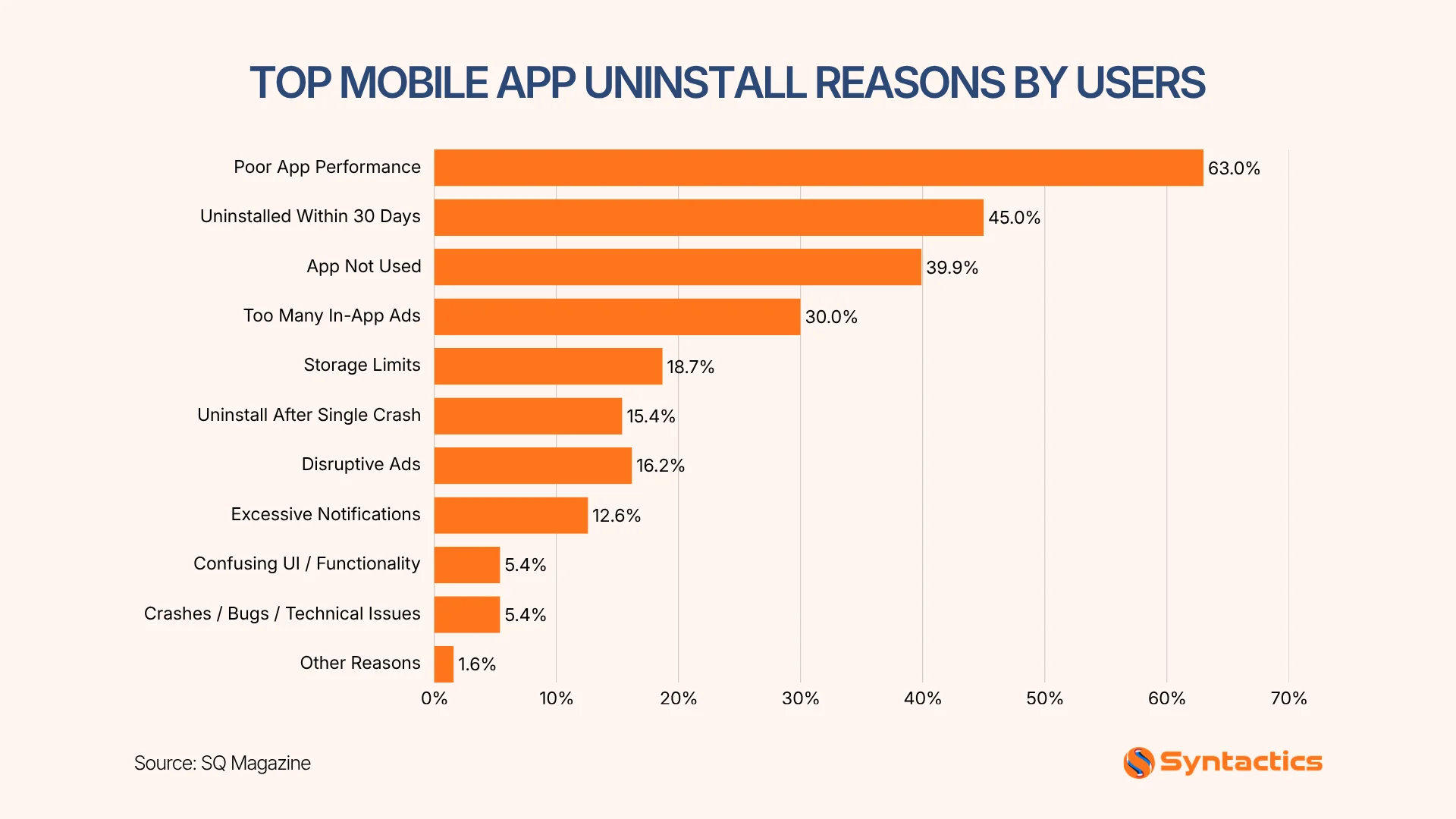
Source: SQ Magazine.
Conclusion
Investing in custom mobile app development lets you connect with customers, improve efficiency, and grow your business. With the right framework, budget strategy, and security practices, you can overcome challenges and build an application that supports your long-term goals.
By partnering with an experienced application developer in the Philippines like Syntactics Inc., you ensure a reliable, high-performing app that delivers real results. Start building your competitive advantage today.

This blog was updated on August 27, 2026.
FAQs About Mobile App Development
What is mobile app development?
Mobile app development involves creating software applications for smartphones and tablets. It involves designing, coding, testing, and deploying apps for platforms like iOS and Android.
How to design a mobile app?
Start by defining your app’s purpose, target audience, and core features. Then create wireframes and visual designs that ensure a user-friendly experience.
How to choose a mobile app development company?
Look for a company with proven experience, strong technical skills, and a portfolio of successful apps. Consider their communication, support, and ability to understand your business goals. Contact us to discuss how we can help build your ideal mobile app.

About Xenia Labis
Related News:

The Importance of Data Backups and How to Do It


Google Penalty Recovery for WordPress Websites










Comment 0