

How to Structure an “Extractable” Page Content for AI RAG Systems
Search has evolved from traditional ranking into AI-powered systems. In particular, Retrieval-Augmented Generation (RAG) is changing how information is retrieved from indexed web pages. So, instead of evaluating an entire page at once, the system extracts specific sections that directly answer a user’s question.
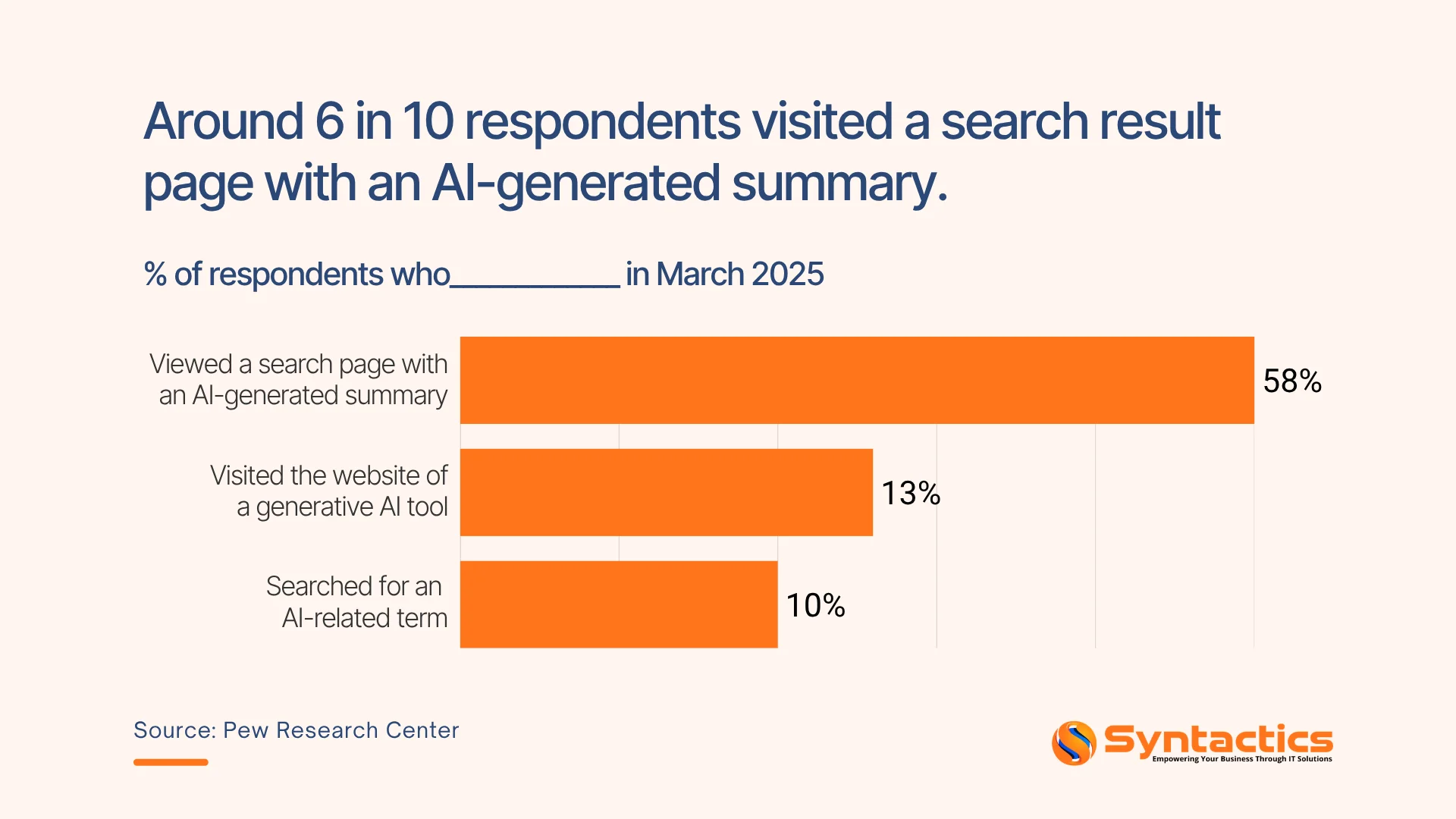
According to the Pew Research Center, about 6 in 10 users have encountered search results with AI-generated summaries. Because of this change, SEO content is more likely to be cited when pages provide clear, extractable passages that answer a query. This article guides you in structuring content that RAG systems like Gemini and ChatGPT prefer.
Source: Pew Research Center
Key Takeaways
- SEO campaigns that invest in strategic content deliver a remarkable 748% return on investment (ROI). (WordStream)
- Modern search relies heavily on Retrieval-Augmented Generation (RAG) systems like Gemini, ChatGPT, and Claude.
- Keeping concise, direct answers between 40 and 60 words increases the likelihood of your content being cited by AI engines.
- To make content more “scannable” for AI algorithms, marketers are recommended to use question-based headings that match user intent.
- AI authority indicators like research and case studies are trusted by 60% of audiences. (Ascend2)
- You can utilize traditional SEO and RAG strategies together to ensure your website remains highly visible across platforms.
Guide on Writing 40- to 60-Word Answer Passages
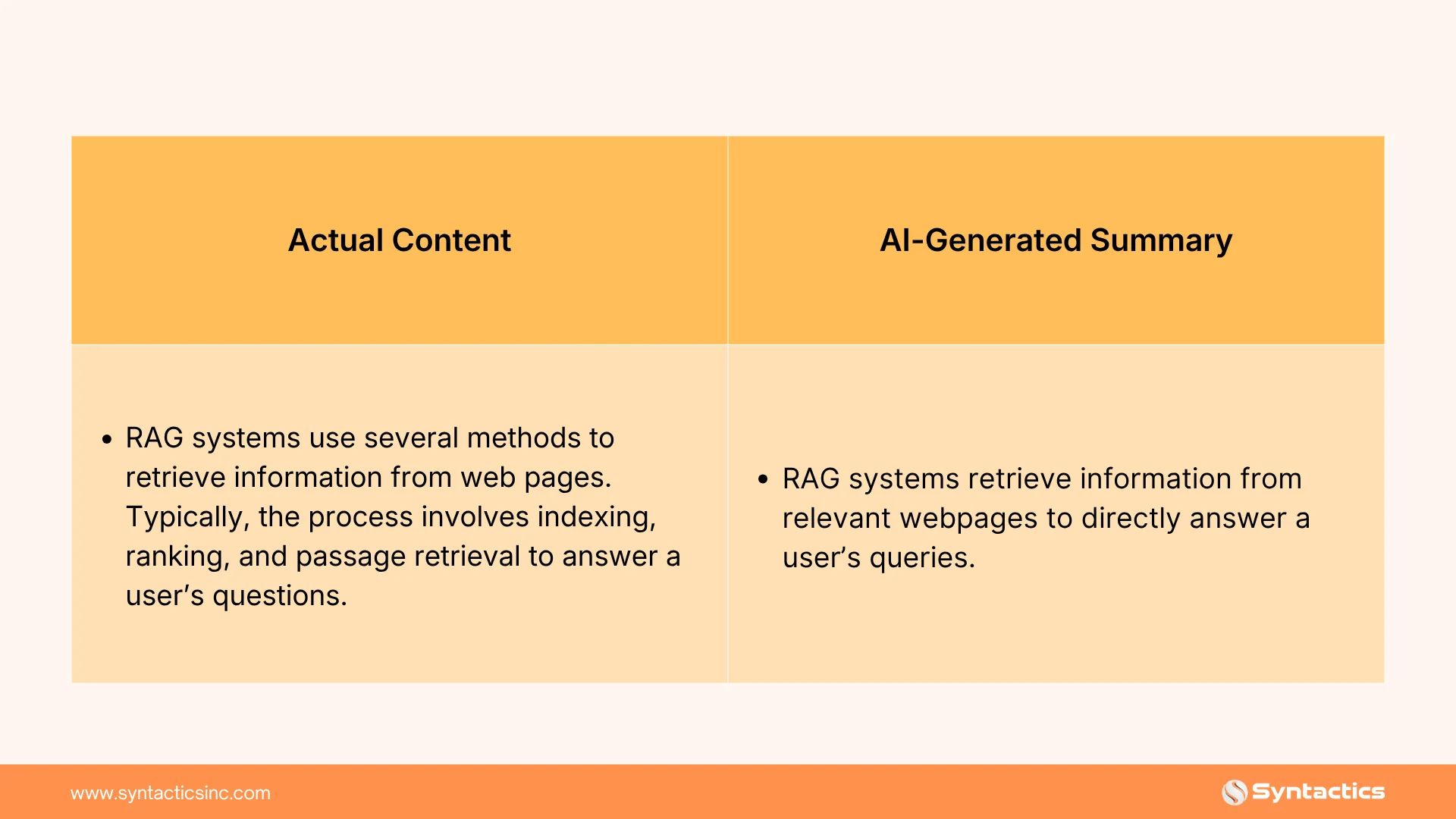
One of the most effective ways to boost your chances of being cited in search results is to create concise SEO content. They work by retrieving available data and feeding it into models like ChatGPT and Gemini to simplify the process of obtaining information. These passages respond to any queries in around 40 to 60 words.
Because of this, readers won’t need to go elsewhere to attain further context. Here’s a sample of how AI retrieves and summarizes information from your content:
According to Semrush SEO Statistics, the leading factors to a successful content and search engine strategy are its quality and value. To achieve this, here’s what you need to do:
Provide the Answer First
Most SEO content specialist in the Philippines and around the world place answers first to make it easier for AI to dissect. Although context plays an important role in giving quality information, an answer-first structure allows systems to capture information quickly. Because of seamless experience, users get inspired with content that sparks action.
Use Question-Based Headings
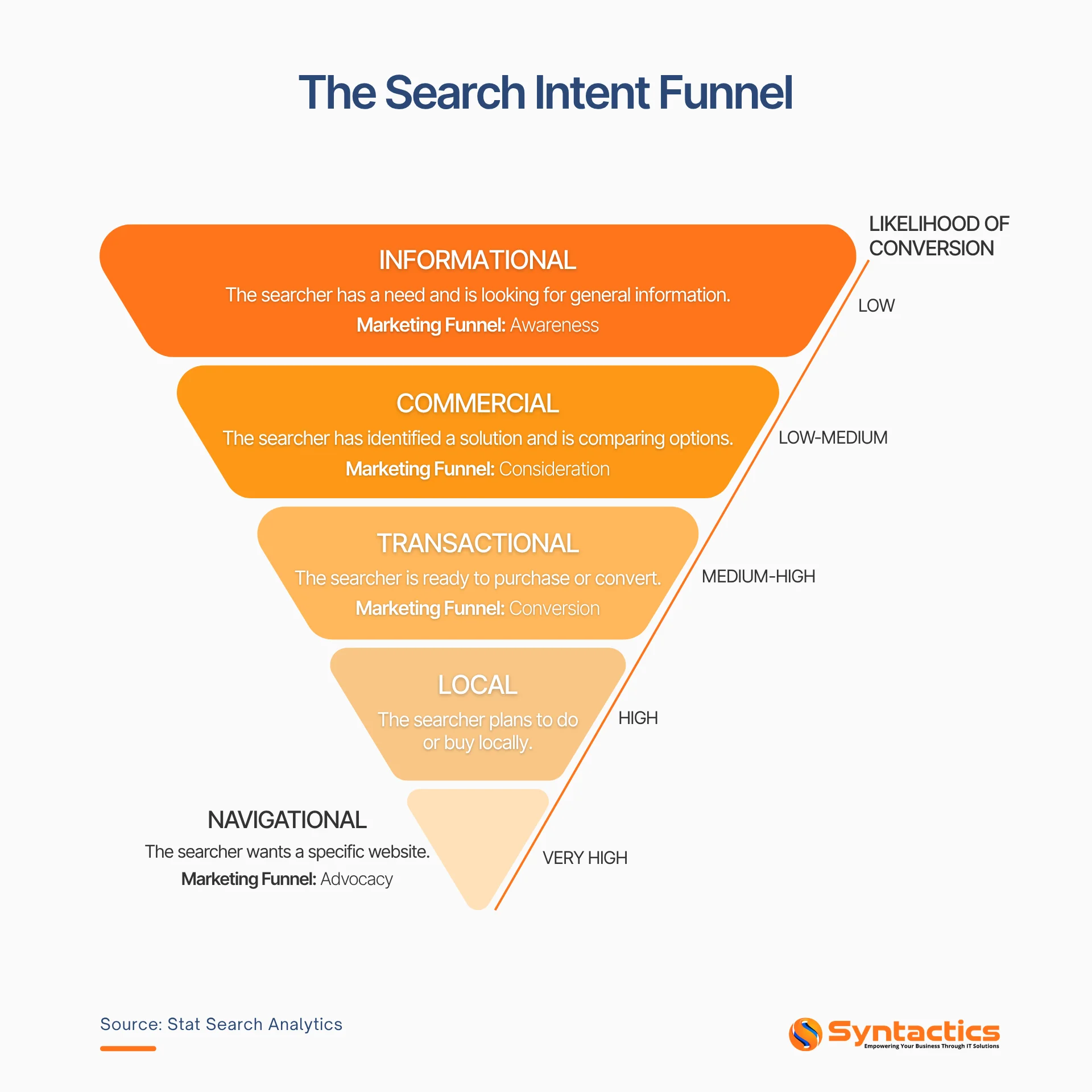
The next step is to create headings that closely match people’s search intent. Question-based headings help AI search engines like ChatGPT, Claude, and Google AI Overview understand the purpose of each section. In addition, it improves the connection between queries and content.
Here’s a straightforward infographic on the search intent funnel to help structure your content:
Source: Stat Search Analytics
Add Trust Signals to Boost Citations
Apart from a strong content structure, AI systems also look for signals that suggest credibility and authority. Adding these indicators helps your site get ranked and cited by intelligent search tools. Several factors that boost your unbeatable SEO content strategy include the following:
- Up-to-date statistics
- Expert opinions
- Research findings
- Reputable organizations
- Industry-specific examples
- Clear sources of information
For companies in the Philippines and worldwide competing in SEO rankings, incorporating authoritative sources can improve trust signals. Among them, the types of content preferred by 60% of the target audience are research and case studies (Ascend2). By prioritizing these data-driven formats, your content gets high-value insights that boost your topical authority score favorably to AI algorithms.
How to Make Your Content AI-Ready
According to WordStream, SEO campaigns that invest in strategic content deliver a 748% return on investment (ROI). Here’s how the best writing agency makes your content AI-ready for SEO:
- Structure Content with Proper Headings: Organize your page using descriptive and question-based H2 and H3 subheadings.
- Lead Content with Direct Answers: Begin every section with a clear, direct response to the heading’s question.
- Optimize Passage Length and Formatting: Keep your answers concisely between 40 and 60 words. Use short paragraphs and logical section breaks to keep context crisp.
- Provide Evidence and Examples: Contextualize responses with supporting examples, actionable details, or deeper explanations.
- Integrate Data and Authoritative References: Include recent statistics from reputable sources. Mention recognized industry entities as natural links to authoritative references.
- Maintain Topical Consistency: Ensure a single, clear focus is maintained throughout the entire content.
Implementing these optimization strategies helps improve your visibility in smart discovery engines by extracting value in information you provide.
Conclusion
ChatGPT, Google AI Overviews, and Claude use smart data retrieval systems that enhance user search experiences. Because of this, structured SEO content performs better in earning citations and increased visibility in search results. As AI-driven discovery evolves, businesses need strategies that support both traditional search engines and RAG systems.
At Syntactics Inc., we help businesses like yours amplify reach and authority in AI and SEO ranking systems. As a trusted SEO agency in the Philippines, our comprehensive services can help strengthen your content structure for optimized search performance. See how our team can prepare your website for the future of AI-powered search today!

Frequently Asked Questions (FAQs)
What is an extractable passage in AI search?
An extractable passage is a short, self-contained section that directly answers a question. AI systems retrieve and cite this information without needing surrounding content.
Is optimizing content for AI search different from SEO?
Yes, content optimization for AI search visibility differs from SEO by focusing on passage-level clarity and extractability. Meanwhile, SEO emphasizes rankings, backlinks, and performance.
Can traditional SEO and RAG optimization work together?
Yes, both strategies complement each other. SEO improves your site’s visibility, while RAG optimization increases the chances of AI citation and retrieval.

About Jalou Batilong
Related News:

How CLS Score Affects Your SEO Rankings

How to Fix Failed Custom Software Implementations
The Key Differences Between Branding And Marketing

How to Analyze LinkedIn Campaign Performance





Comment 0