


Long-Form vs. Short-Form Content: What Search Intent Needs
RankTracker’s industry data reveals that 18% of Google’s first page have less than a thousand words in content. This demonstrates a clear inclination toward matching comprehensive content with searcher expectations to stay in the rankings. It also reflects the demand for prompt answers and transactional decisions.
Understanding how long- and short-form content align with specific search intent remains relevant for an effective SEO strategy. It allows content marketers to tailor the depth, structure, and tone of their content to the audience. In this article, it explores how search intent and content length drive rankings.
TABLE OF CONTENTS
Key Takeaways
- Long-form content that has a range of 3,000 to 10,000 words generates more backlinks than short blogs. (Backlinko)
- Long-form content strengthens topical authority and supports stronger SEO performance when structured for usability and clarity.
- Content length should always align with search intent to improve rankings, engagement, and user satisfaction.
- Informational and commercial queries require deeper coverage, while navigational and transactional searches perform with concise content.
- Combining long- and short-form content supports visibility across different stages of the buyer journey.
How Search Intent Determines Content Length
Not all content is created equal when it comes to meeting searcher needs. The optimal length of a website page depends on the intended depth of a user’s query. To maximize advantages, here’s how a user’s search intent defines length, form, and content:
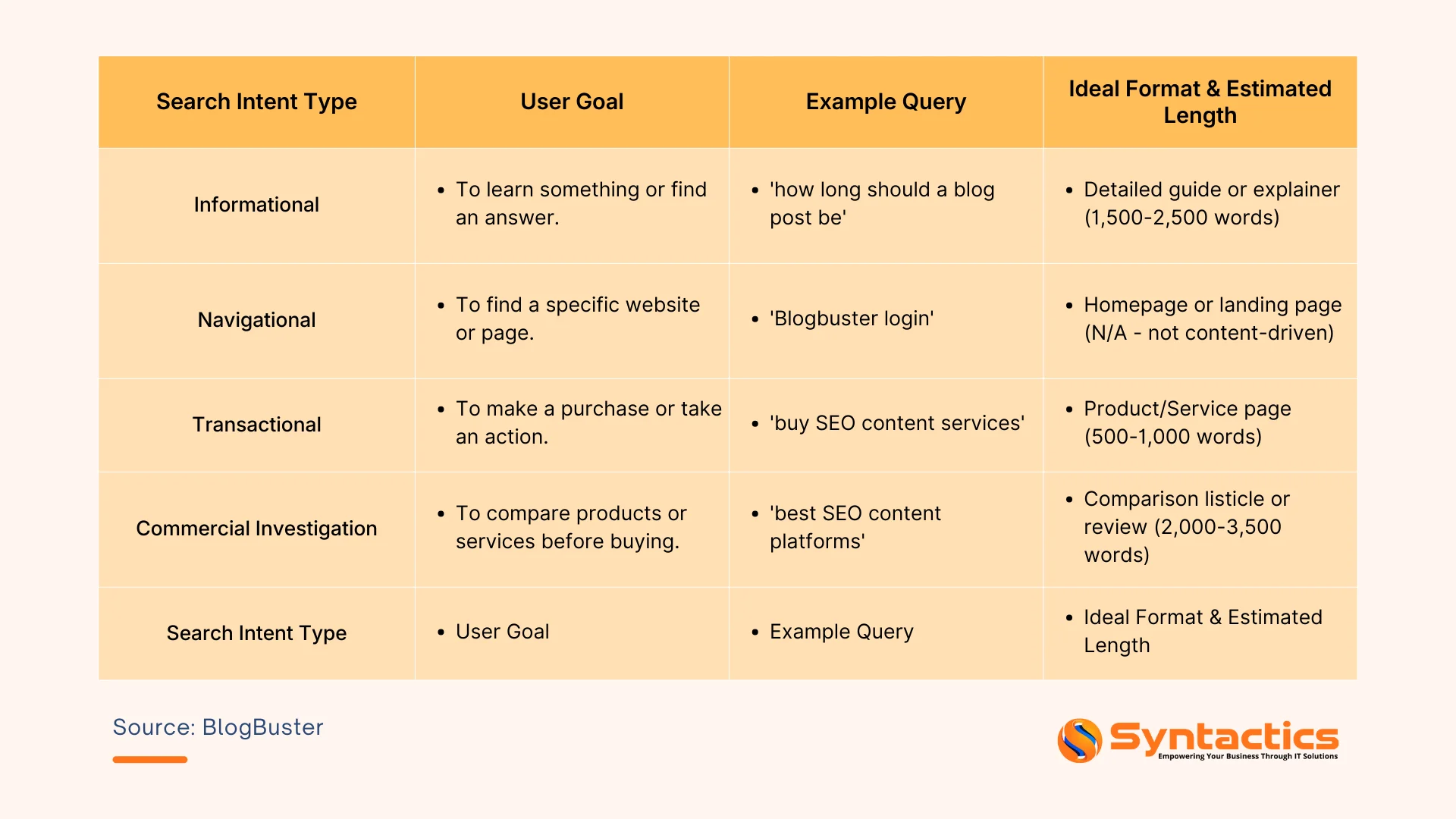
Source: BlogBuster
Informational
Searchers seeking knowledge for a product or service often require comprehensive explanations. According to Content Length Statistics 2025, the ideal word length of informative content falls within 1,500 to 2,500 words. These articles are enough to cover the topic’s concept, related questions, and subtopics that satisfy their curiosity.
Navigational
Users searching for a specific site, brand, or location want quick information without having to read lengthy explanations. Short formats consisting of 300 to 800 words perform very well, as this brevity meets user expectations by delivering context-rich answers. This formatting is also compatible with the new search visibility trends:

Commercial
When users weigh options for products and services, they search for reviews and comparisons. For this phase, long- and short-form content are optimal in providing comprehensive coverage for product and service features. Content that falls between 2,000 and 3,000 words supports informed comparison without prematurely pushing users to conversion.
Transactional
Once users are satisfied with their research, they are likely to act on their queries. Transactional intent-based search terms such as “price,” “order online,” and “book” signal a desire for action. That’s why 800 to 1,500 words are enough to cover the pricing, benefits, guarantees, and call to action without unnecessary detail.
Impact on SEO and User Experience (UX)
Both long- and short-form content influence SEO strategies and user experience. Here’s how:
Search Engine Optimization (SEO)
Search engines favor content that fulfills user intent through engagement signals. Backlinko’s industry data reveal that longer content shows a measurable performance in earning backlinks. It also gives publishers more opportunities to address related subtopics, answer secondary questions, and establish topical authority.
In contrast, short-form content rarely attracts backlinks but performs better when users seek quick answers or immediate actions.
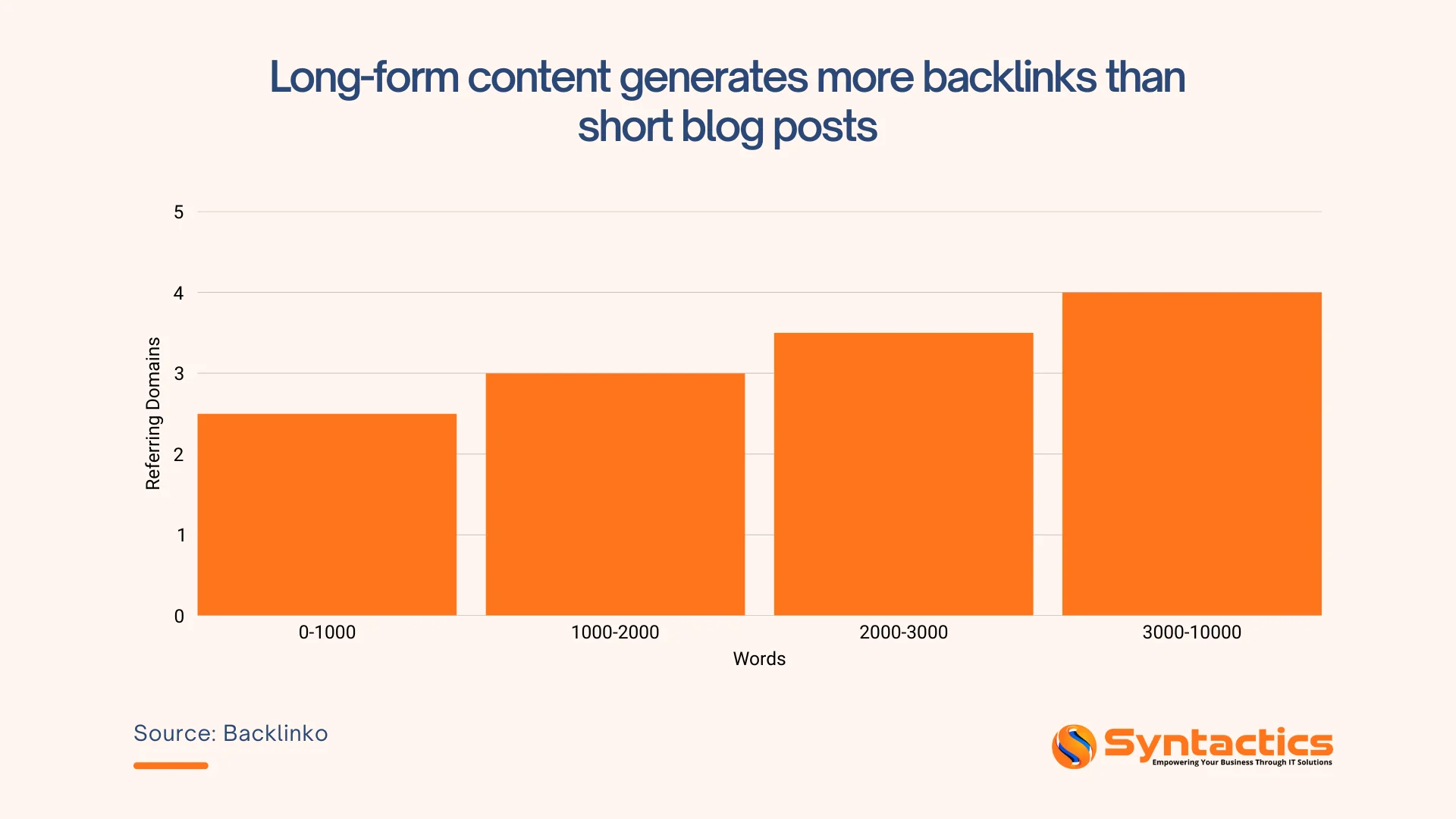
Source: Backlinko
User Experience (UX)
User experience in SEO combines design, content, and technicalities to satisfy website visitors and search engine algorithms. According to Google, its ranking system heavily favors websites with good page experience through the following characteristics:
- Strong Core Web Vitals
- Secure Connection
- Mobile-Friendliness
- Limited Ad Distraction
- Absence of Intrusive Interstitials
- Clear Content Hierarchy
These signals reduce bounce rates and boost engagement, telling Google your site provides high-quality information to the query. In practical applications, a tech company achieved SEO growth by implementing on-page fixes. These simple changes improved their visibility during algorithmic updates.
When to Use Long-Form vs. Short-Form Content
Here’s where you can take the most advantage of your long- and short-form content:
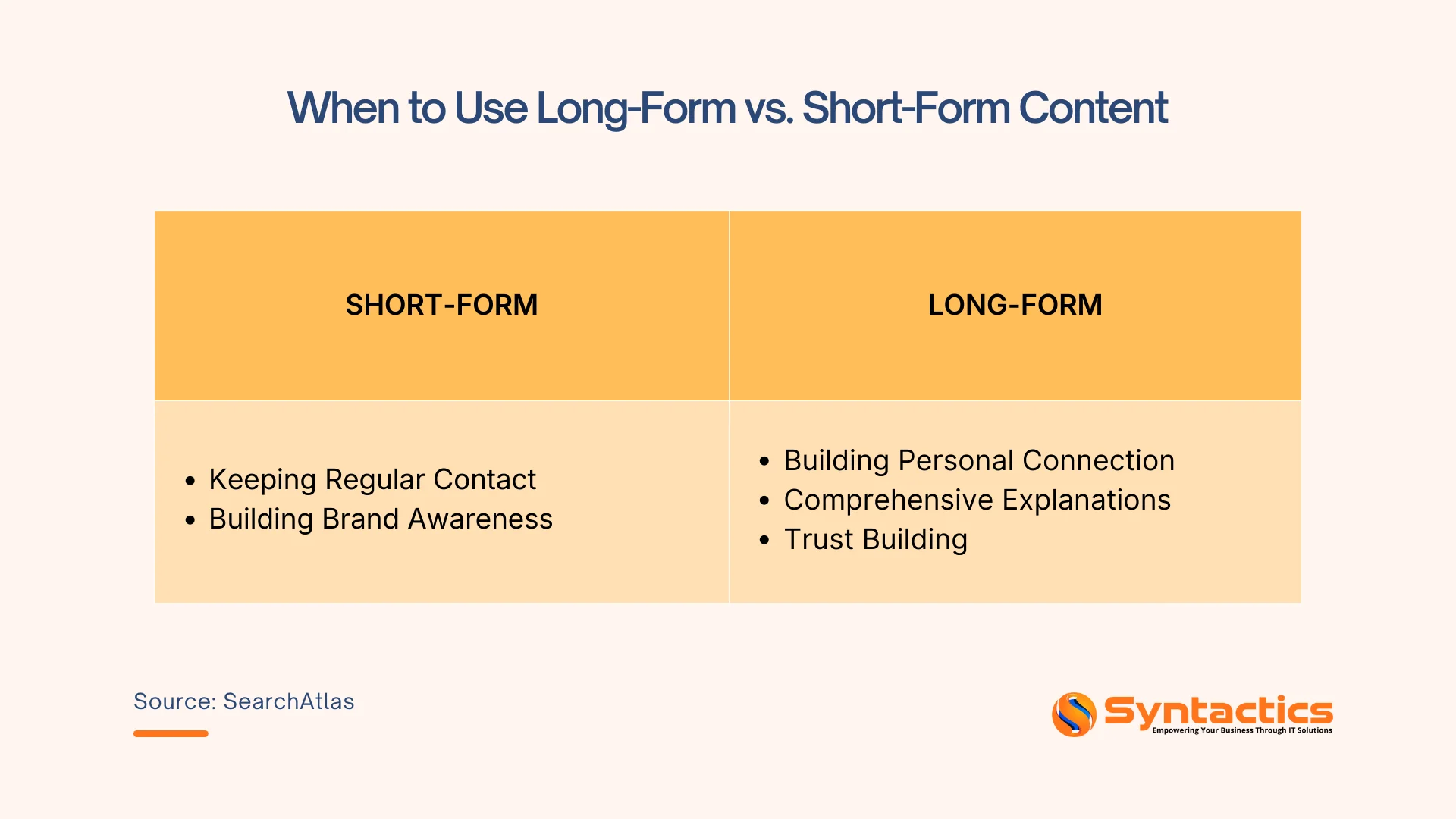
Source: SearchAtlas
Best Practices for Combining Both
Here are standard content practices for search intent optimization:
Structure Content Around Intent
Use long-form pillar articles to cover broad topics and link shorter pieces to address specific subquestions. This unbeatable content strategy helps search engines index high-value content while allowing users to quickly access precise answers.
Optimize Engagement Signals
Keep users engaged by including interactive elements, clear headings, and concise summaries in long-form content. Scannable structures especially benefit mobile users by helping them find answers efficiently.
Align Form and Content to Search Intent
Evaluate whether the length and format of each piece match the audience’s needs. When each asset complements the others, you create a content ecosystem that maximizes engagement, usability, and SEO performance.
Repurpose Content Across Channels
Break down sections of long-form guides into short posts, emails, or social snippets that attract attention and drive traffic to detailed resources. Repurposing maximizes reach while maintaining alignment with user intent.
For more tips, here are content repurposing techniques that we use:
Conclusion
Matching content with search intent can influence how search engines evaluate your site’s content relevance through user engagement. When business websites use long- and short-form content, they create clearer pathways for discovery and compete more effectively by delivering relevant information.
Turn your intent-driven insights into growth with the help of a partner who understands both strategy and execution. Syntactics Inc., an SEO services provider in the Philippines, helps organizations like yours optimize content for visibility. See how optimal content length can support your long-term SEO goals, get in touch with us today!

Frequently Asked Questions (FAQs)
How long is short-form content?
Short-form content ranges from 300 to 800 words and focuses on answering a single question or providing a quick guide to a specific action.
Is long-form content better for SEO?
Long-form content is preferred for SEO support in terms of topical depth and attracts more backlinks when it aligns with search intent.
How do I determine whether to use long‑form or short‑form content for a specific topic?
To know the appropriate content length, match long-form to research-driven topics and short-form to transactional or navigational needs.








Comment 0