

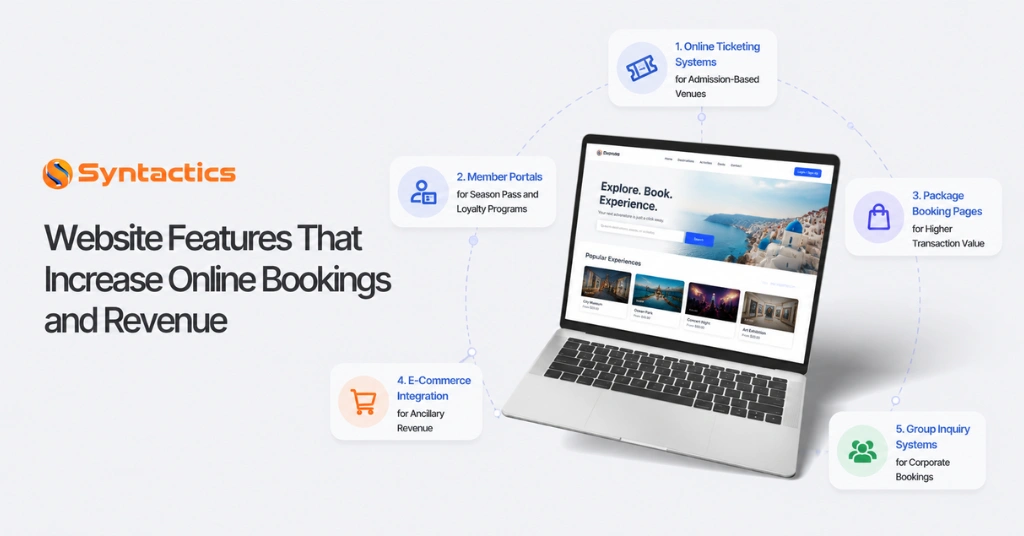
5 Website Features That Increase Online Bookings and Revenue
Your website features work directly for your recreational tourism venue, capturing as much of its revenue potential as possible online. Integrated booking engines, e-commerce, and member portals give you the tools. The right development choices turn your site from a passive brochure into an active revenue channel.
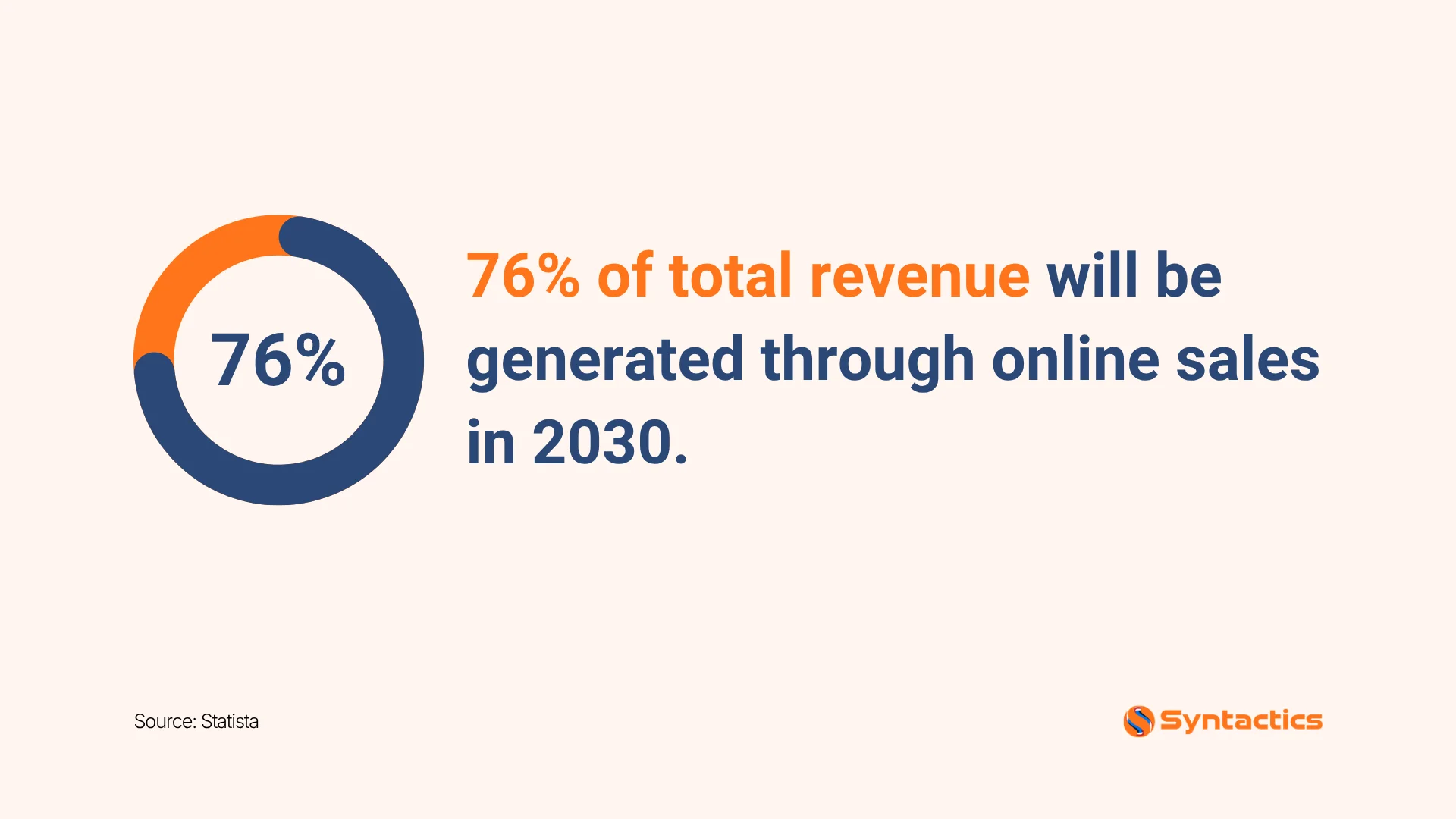
Recreational tourism is growing fast, and so is the revenue behind it. Statista projects the market will hit USD 1.07 trillion in 2026, with online channels accounting for 76% of total revenue by 2030.
For recreational tourism operators, that number tells a clear story: the majority of your future revenue will flow through digital infrastructure. How much of it actually reaches you depends largely on how well your website is built to receive it.
If your website doesn’t support these features, you’re missing out on online bookings and revenue. For a complete overview of running a recreational tourism business, check out our management guide.
 Key Takeaways
- Online ticketing systems make it easier for guests to book and help you catch impulse purchases before visitors change their minds.
- Member portals help boost season pass renewals by letting guests manage their accounts on their own, without needing to communicate with your staff.
- Package booking pages with one-step checkout make it simple for guests to purchase bundles, thereby raising your average transaction value.
- Adding e-commerce options at checkout lets you earn additional revenue from guests ready to buy more.
- Structured group inquiry forms help you respond faster, so you don’t lose corporate bookings to competitors who reply more quickly.
- Direct booking features help you rely less on OTA commissions and keep more profit from each reservation.
5 Website Features Behind Each Revenue Model
1. Online Ticketing Systems for Admission-Based Venues
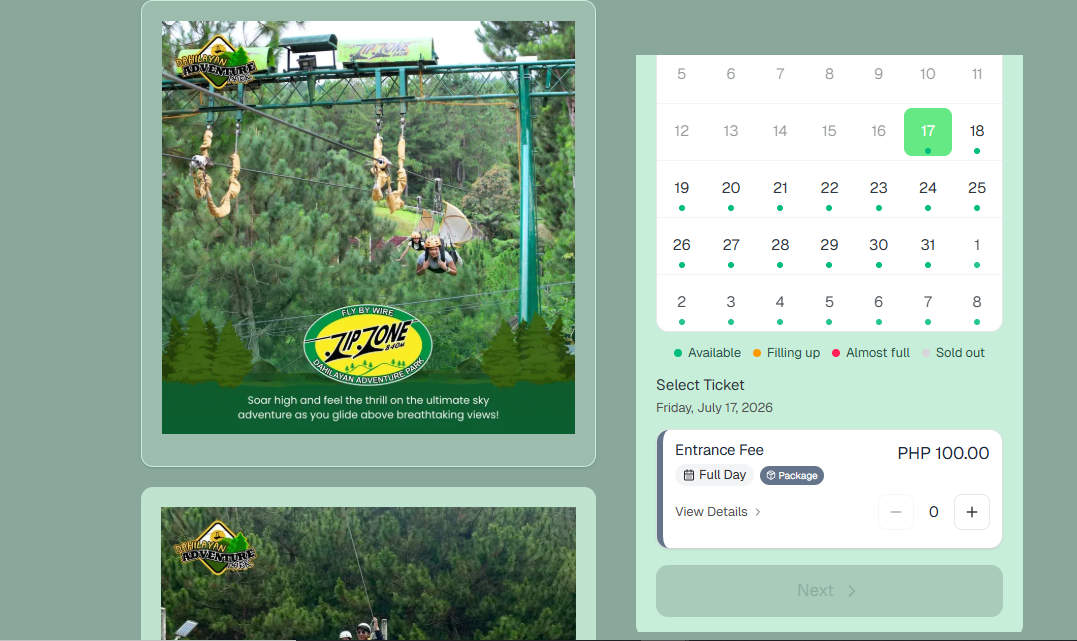
Admission-based venues generate revenue per visit through single tickets, family bundles, and group rates. For adventure parks, water parks, and theme parks, this is the primary income source, and an integrated online ticketing system is what makes it work at scale.
An online ticketing system with clear prices, visible availability, and quick checkout helps you keep impulse bookings. If visitors run into problems while booking, they often give up. The fewer steps between deciding to visit and booking, the more likely guests are to complete their purchase.
Source: Dahilayan Adventure Park.
2. Member Portals for Season Pass and Loyalty Programs
Membership programs turn one-time visitors into repeat customers. Direct bookings increased from 20% to 29%, thanks in part to loyalty and membership programs that encourage guests to return to your website rather than OTAs. This approach works well for recreational tourism too.
A member portal lets guests manage their passes, see their visit history, get special offers, and renew on their own. Phone and email renewals add steps for both sides. Thus, a self-service portal shifts that workload off your staff. Guests handle their own renewals and updates, freeing your team to focus on the visitor experience instead of manual paperwork.
3. Package Booking Pages for Higher Transaction Value
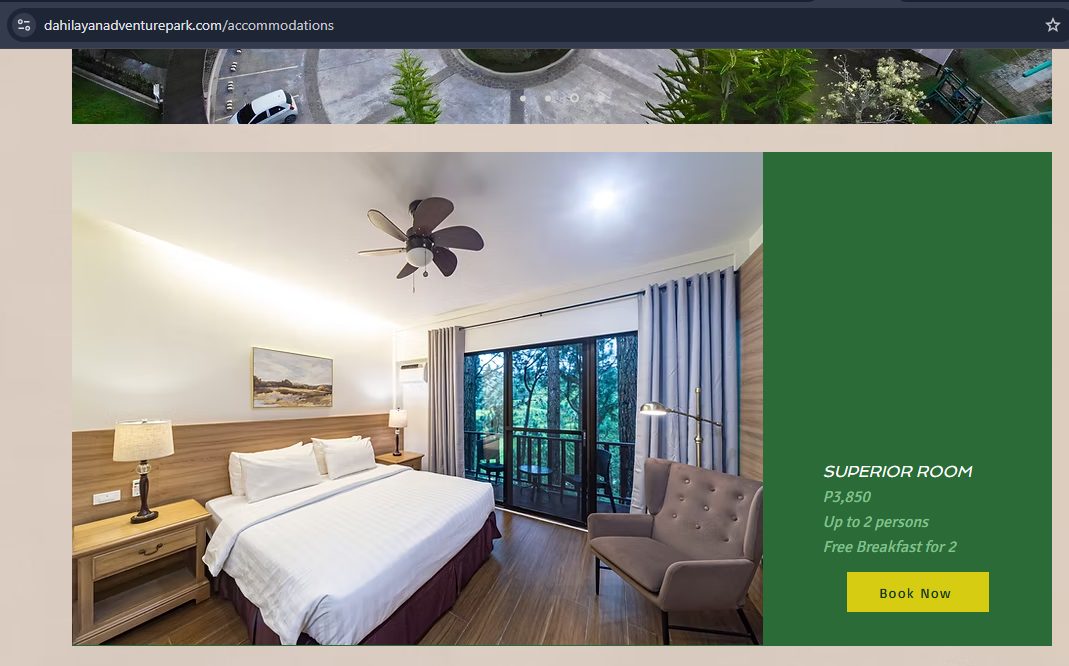
Combining access, activities, food and drink, and accommodation into a single package can greatly increase your average sale. This model works especially well for wellness retreats, eco-lodges, and adventure venues with many activities.
SiteMinder’s Hotel Booking Trends study found that direct bookings averaged $519 per transaction, while OTA bookings averaged $320. Package pricing is a big reason for this difference. When guests book directly on your website, you keep the full value of the bundle without paying commission.
A dedicated packages page with clear descriptions, high-quality imagery, and a single-session checkout lets guests select, customize, and pay for a bundle without leaving your site. The fewer steps between interest and payment, the more revenue you capture.
Source: Pinegrove Mountain Lodge.
4. E-Commerce Integration for Ancillary Revenue
Ancillary revenue includes everything beyond your main admission or package price, like food and drinks, merchandise, equipment rentals, photography, and premium extras. These add-ons help you earn more per visitor without raising ticket prices.
Revenue from hotel add-on services is projected to grow by 10% each year. Recreational tourism venues that offer gift vouchers, online merchandise, and add-on bookings can earn more from guests who plan their visits in advance.
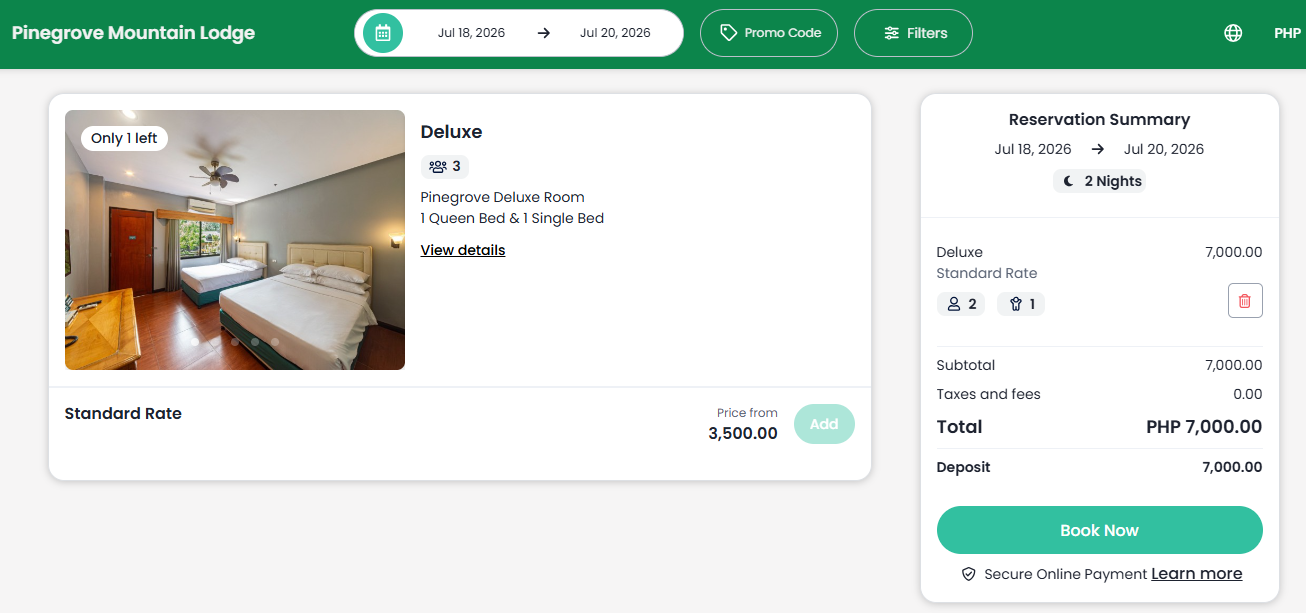
Adding e-commerce options directly into your booking process, as optional add-ons at checkout, is the best way to sell extra items. While a separate online store can work, offering add-ons during booking helps you catch guests who are ready to buy.
Source: Pinegrove Mountain Lodge.
5. Group Inquiry Systems for Corporate Bookings
Group and corporate bookings generate high per-booking revenue and are less weather-dependent than individual admissions. Direct bookings are increasing as travelers and corporate buyers shift toward supplier websites over OTAs, particularly for group arrangements where customization matters.
A group booking page with a detailed inquiry form that asks for group size, date preferences, and special needs helps you respond faster and avoid delays. If you use a generic contact form, you risk losing bookings to competitors who reply more quickly.
Source: Statista.
Why Your Website Architecture Determines Your Revenue Ceiling
Each revenue model listed above needs a website that can support it. A simple site with just information and a phone number won’t drive revenue. It’s more like a brochure that makes visitors work harder to book with you.
The website features that turn each revenue model into real online income include:
- Integrated booking and ticketing: handles admissions, packages, and add-ons in a single flow
- Member portal: manages season passes, renewal, and member-exclusive access
- E-commerce functionality: sells vouchers, merchandise, and ancillary items online
- Group booking forms: structured inquiry capture for corporate and group clients
- Mobile-optimized checkout: captures impulse bookings from mobile research sessions
- Secure payment integration: multiple payment methods with fast, trusted checkout
These features don’t work well on a generic template site. Each one needs to be built for your specific venue, booking process, and guest experience.
Direct Booking vs. OTA Dependency
In 2024, OTAs generated $94 billion in revenue, underscoring how much recreational and tourism venues pay in commissions to third-party platforms. Every booking you get from an OTA costs you more than a direct booking.
A website solely designed to support your revenue streams, with booking, package sales, membership management, and add-ons, helps you grow direct revenue over time. Investing in good web development pays off because you keep more profit from each direct booking.
For hotels and hospitality venues specifically, our guide on hotel website design for AI and Google covers how search and AI visibility compound the gains in direct bookings.
 Conclusion
Every revenue stream for a recreational tourism venue needs a matching website feature to work online. Without the right setup, these streams won’t reach their full potential. With the right foundation, your website can become your most reliable source of revenue.
If your current website is not built to handle bookings, memberships, packages, and group inquiries in one place, a purpose-built web design and development solution is the fastest way to close that gap. Syntactics, Inc. designs and develops websites for recreational tourism businesses, built to help you rank in search, convert visitors into guests, and generate revenue from day one.
Get Design and Functionality
Specific to your Brand!
- Build a website that's mobile-friendly and responsive.
- Custom designs aligned with your brand.
- Optimized for SEO and user experience.
- Scalable and feature-rich solutions.

Frequently Asked Questions
How do recreational tourism venues make money?
Most recreational tourism venues use several ways to make money: admission fees, memberships or season passes, experience packages, additional sales such as food and merchandise, and group or corporate bookings. The most successful venues mix these models to avoid seasonal dips and increase revenue per visitor over time.
Does my tourism venue website need an online booking system?
Yes. By 2030, 76% of travel revenue is expected to come from online channels. If your venue doesn’t have an online booking system, you’ll have to rely on phone calls, emails, or third-party platforms for reservations. These methods add extra steps, delays, or commission fees that a good booking system on your own website can remove.
What website features help recreational tourism venues increase revenue?
The most important features are integrated ticketing and booking, package buying, add-ons at checkout, a member or season pass portal, a detailed group inquiry form, and a mobile-friendly checkout. These features let all your main revenue streams work online, so guests don’t have to call, email, or leave your site to finish a booking.
How does a purpose-built website differ from a template site for tourism venues?
A template site is made for general businesses. A custom tourism website is built around your unique booking process, guest experience, and revenue streams. It integrates with your ticketing system, enables package customization, supports additional sales, and is designed for your audience’s devices and needs. This difference has a significant impact on how much revenue your site generates.

About Joan Malata
Related News:





Comment 0