


How to Get Your Hotel Website Found on AI and Google
If travelers can’t find your hotel on Google or in AI-generated recommendations, it means your website isn’t set up for how search works today. Get noticed on both traditional search and AI platforms with the right web design, content structure, and technical setup working together.
More than half of travelers now use AI for planning trips, which is twice as many as last year. Statista also found that almost 80% of travelers use AI to book and plan their holidays. This means that AI tools like ChatGPT, Perplexity, and Google AI Overviews are now where booking decisions begin.
This shift is both a challenge and an opportunity for hotels. If you update your website for AI and search visibility, travelers who don’t search by name are more likely to find you. If you don’t, your hotel will be harder to find, no matter how great it is.
If you want a full overview of managing a recreational tourism business, check out our complete guide to recreational tourism management.
 Why Your Hotel Website is the Starting Point
AI search tools and Google look at your website first before checking anywhere else. Your website is the only digital space you truly own and control. Listings on Online Travel Agencies (OTAs), social media, and review sites are just borrowed space. Your website lets you clearly show what your hotel offers, who it’s for, and why people should book.
Most hotel websites were built for old search habits and not today’s AI-powered discovery. Static pages with generic text, slow loading, missing structured data, and booking flows that send visitors away are hard for AI systems to find and don’t do well in regular search either.
SEMrush says that structured data helps your site show prices, ratings, and availability right in Google’s results. AI systems prefer websites that are well-structured, accurate, and easy for machines to read, rather than sites that just look good but lack real information.
What AI Search Tools Actually Look For
AI tools don’t look at websites like people do. They read structured data, understand how your content is organized, and check for consistency across different platforms. Hotels that show up in AI recommendations usually do three things right.
1. Structured and Specific Website Content
If your property descriptions are too generic, AI tools can’t use them. When someone asks ChatGPT for a boutique hotel in a certain area with specific amenities, AI matches that request to the details on your site. Vague or templated descriptions and missing amenity details make it less likely for your hotel to show up.
McKinsey travel AI research found that 54% of travelers now use AI primarily for general research. This includes asking specific questions like ‘pet-friendly boutique hotel with late checkout near the city center’ rather than simply ‘hotels in [city].’ Your website needs to answer these detailed questions to show up in results.
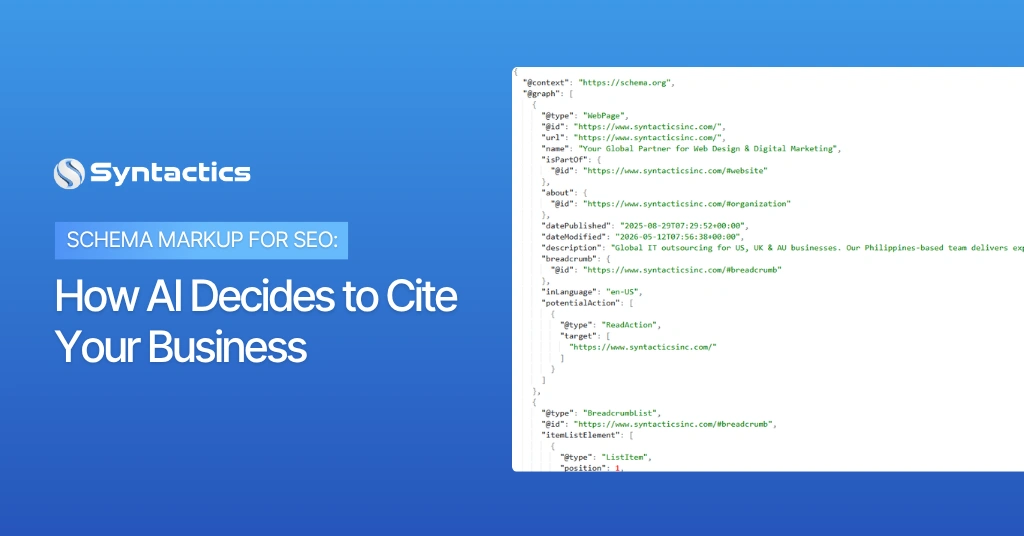
2. Schema Markup and Structured Data
Schema markup is a technical tool that helps search engines and AI better understand your website’s content. It affects 13% of Google searches, and that share is growing. Hotels without proper schema are invisible in those results, no matter how good their content is.
For hotel websites, the most important schema types are:
- Hotel schema (name, address, star rating, amenities, check-in and check-out times)
- Room schema (room types, descriptions, pricing)
- Review schema (guest ratings and review count), and
- FAQPage schema (answers to common pre-booking questions).
SchemaApp reported that schema markup helps LLMs understand content, reinforcing its value specifically for AI search visibility.
3. Consistent Information Across All Platforms
AI systems compare your website with your listings on OTAs, Google Business Profile, and review sites. If your room descriptions, prices, or amenity lists are inconsistent or outdated, travelers lose confidence and your property drops in the rankings.
So, every place your hotel is listed should have the same accurate, up-to-date information as your website.
What a Search and AI-Ready Hotel Website Looks Like
An AI-ready hotel website is more than just good content. It needs the right technical setup, smart design choices, and built-in booking features from the start. Here’s what that looks like in practice.
- Mobile-first design: Most people research travel on their phones. If your site doesn’t work well on mobile, you’ll lose visitors before they even see your content.
- Fast load times: Page speed matters for both Google rankings and AI visibility. If your hotel site loads slowly, you’ll lose bookings before they even begin.
- Clear content hierarchy: Use H1, H2, and H3 headings based on how travelers search, not just how your team organizes information.
- Dedicated FAQ section: AI tools pull FAQ-style content to answer traveler questions. If your hotel doesn’t have a structured FAQ, you’re missing an easy way to get cited.
- Direct booking integration: AI tools are starting to highlight hotels that let travelers book directly. If you send visitors off your site to book, you risk losing both the booking and valuable data.
- High-quality visual content: Photos and videos linked to specific amenities and room details help AI tools understand your site and give travelers the visuals they need to feel confident booking.
Comparison: Old vs. AI-Ready Hotel Website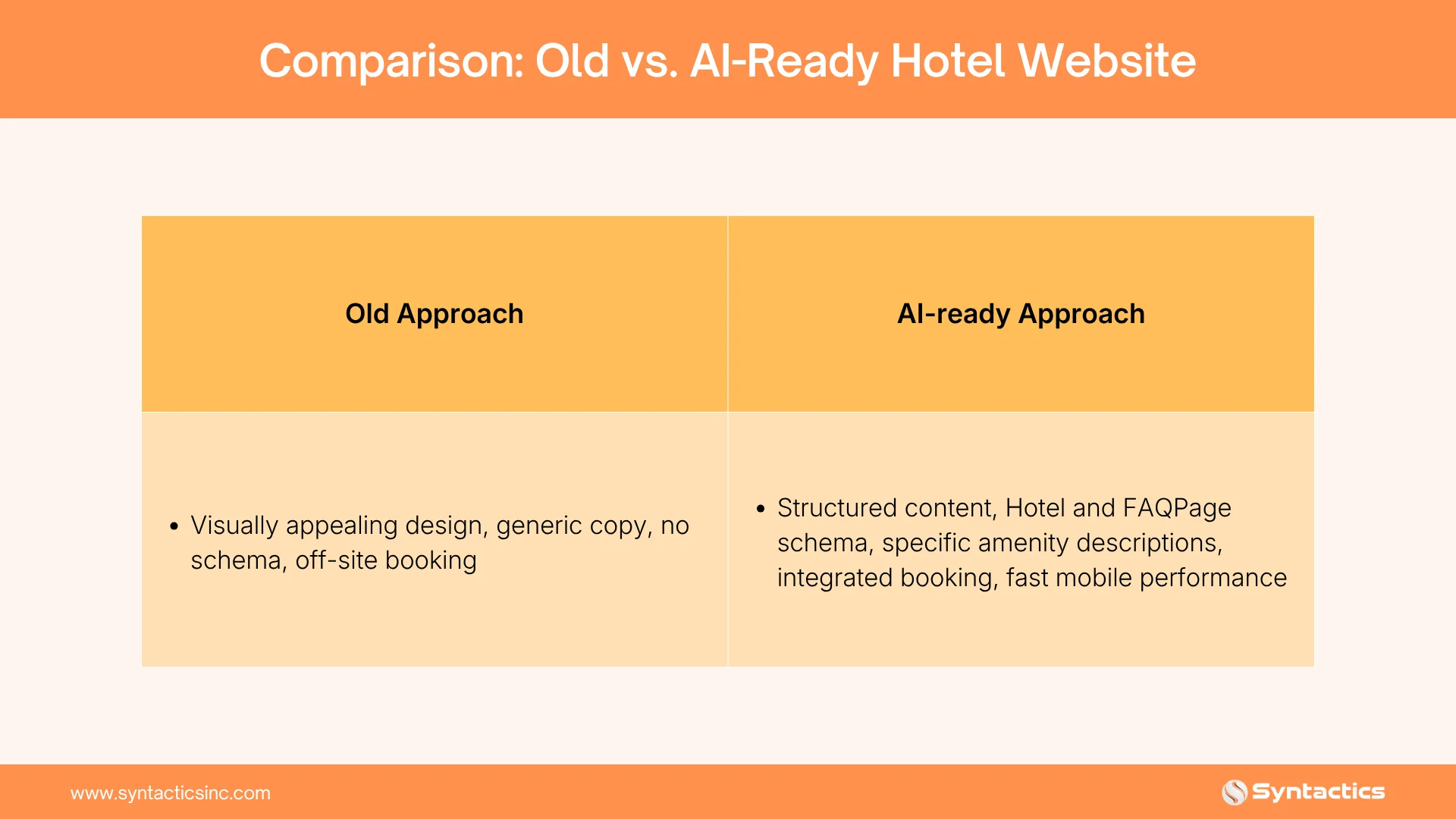
The difference isn’t just about looks. It’s technical, and it directly affects whether AI tools can read, understand, and recommend your hotel.
The Direct Booking Advantage
Each booking made through an OTA costs you 15 and 30% in commission. A website built for search and AI visibility helps you rely less on OTAs by attracting travelers directly and converting them on your own site.
This isn’t about avoiding OTAs. They help you reach more people than most independent hotels could on their own. The point is to have a website strong enough to turn search and AI traffic into direct bookings, instead of sending guests to a platform that charges you commission.
If your website is not doing that yet, we can help.
At Syntactics, Inc., we design and develop hotel and hospitality websites that get found on both traditional search and AI platforms. From schema markup implementation to mobile-optimized design and direct booking integration, we build the web design and development foundation your property needs to get found and win more bookings. Let us know if you would like to talk about your project.
Get Design and Functionality
Specific to your Brand!
- Build a website that's mobile-friendly and responsive.
- Custom designs aligned with your brand.
- Optimized for SEO and user experience.
- Scalable and feature-rich solutions.

Frequently Asked Questions
Why is my hotel not showing up in AI search results?
AI tools like ChatGPT and Google AI Overviews give priority to hotels with structured website content, schema markup, and consistent information everywhere. If your hotel isn’t showing up in AI recommendations, it’s usually because of generic content, missing schema, inconsistent OTA listings, or a website that’s not easy for machines to read.
What is schema markup, and does my hotel website need it?
Schema markup is code you add to your website that tells search engines and AI tools exactly what your hotel offers. It includes your name, address, star rating, room types, amenities, and reviews. It can lead to 30% more local impressions. Without schema, your website is much harder for AI systems to read and recommend.
How does web design affect hotel bookings?
Web design has a big impact on how many visitors turn into bookings. If your site loads slowly, sends people off-site to book, or is hard to use on mobile, more visitors will leave. A well-designed hotel website keeps people on your site, builds trust with visuals and reviews, and makes booking quick and easy.
What is the difference between traditional SEO and AI visibility for hotels?
Traditional SEO focuses on ranking in Google’s ten blue links through keywords, backlinks, and technical optimization. AI visibility focuses on surfacing in AI-generated answers through structured data, specific, accurate content, and consistent information across platforms. Both matter and both depend on the same foundation: a well-built, technically sound hotel website.

About Ladymieh Naallatan
Related News:




New Google PageSpeed Insights Features









Comment 0