


Recreational Tourism Management: A Strategic Guide for Industry Leaders
Recreational tourism is travel driven by leisure, fun, and hands-on experiences. This includes places such as adventure parks, theme parks, outdoor activity centers, sports facilities, wellness retreats, and ecotourism spots. Running a recreational tourism business involves managing safety, guest experience, marketing, and revenue to create a venue that keeps visitors coming back.
In 2026, the global recreation market was valued at $1,806.94 billion and is expected to grow to $2,239.91 billion by 2030, with an annual growth rate of 5.5%. Adventure tourism alone could reach $1.93 trillion by 2034. This means there are more opportunities than ever for recreational tourism operators, but competition is also increasing.
Running a recreational tourism business today means meeting higher visitor expectations than ever before. Success depends on having a strong online presence and handling everything from safety rules to staff management. This guide explains each of these areas in detail.
Whether you are starting an adventure park, expanding a wellness retreat, or improving a theme park, the ideas in this guide will help. We also explain how digital infrastructure can help your venue grow, even if you already have a great product.
What Is Recreational Tourism?
Recreational tourism is travel focused on leisure, entertainment, and active experiences, not business or cultural reasons. What sets it apart is that people travel mainly to take part in or enjoy a recreational activity, such as white-water rafting, visiting a theme park, going to a yoga retreat, or watching a sporting event.
This sector includes many types of venues and business models. Some recreational tourism businesses attract visitors from far away, while others focus on local or regional guests. The most successful ones usually serve both groups.
Types of Recreational Tourism Venues
Knowing which category your venue fits into is important before planning your operations or marketing. Each type has its own rules, visitor types, ways to make money, and digital needs.
Adventure Parks and Outdoor Activity Centers
These venues are built around physical challenge and adrenaline. Examples include zip lines, ropes courses, climbing walls, white-water activities, and outdoor centers with a variety of activities. Safety certification is the main concern. Attracting visitors depends a lot on photos, videos, and easy online booking.
Theme Parks and Amusement Centers
This category ranges from large-scale regional theme parks to family entertainment centers, trampoline parks, and escape room chains. These businesses require significant investment and focus on encouraging visitors to return. They rely on good ticketing systems, event planning, and group bookings.
Sports and Fitness Tourism Facilities
Sports tourism includes both participation-based and spectator-based travel. This includes golf resorts, marathon events, cycling routes, and sports training camps. Most visitors are adults with higher incomes and a strong interest in sports.
Wellness Retreats and Spa Tourism
Wellness tourism is about traveling to improve physical health, mental well-being, and overall balance. Main venues include yoga retreats, spa resorts, and meditation centers. This area has grown significantly as more travelers seek health, relaxation, and leisure.
Eco-Tourism and Nature-Based Recreation
Eco-tourism destinations operate in natural environments with a commitment to minimal environmental impact and community benefit. Wildlife sanctuaries, nature reserves, and eco-friendly glamping sites attract travelers who care about sustainability and often check these credentials before booking.
Core Pillars of Recreational Tourism Management
To run a successful recreational tourism venue, you need to manage five key areas that all work together. If one area is weak, it can hold back the others.
Safety and Regulatory Compliance
Safety is the most important part of any recreational tourism business. Failing to meet safety rules can lead to serious business and legal problems.
The exact rules for your venue depend on your country, the activities you offer, and your visitors. Still, some main standards apply to most businesses in this field.
- ASTM International and EN 15567 set the most widely referenced standards for challenge course and adventure park operations.
- Local and national government licensing requirements typically cover venue construction, ride safety, food handling (if applicable), and public assembly.
- Staff certification requirements vary by activity. First aid certification is generally mandatory for all guest-facing roles. Activity-specific certifications (e.g., rope access, lifeguarding, wilderness first responder) are required for high-risk activities.
- Public liability insurance is essential and should cover all activities offered, including those with inherent risk.
Create a compliance calendar that tracks when certifications expire, inspections are due, and reviews are needed. This helps you avoid missing anything important and keeps your operations running smoothly.
Guest Experience and Visitor Satisfaction
A visitor’s experience starts before they arrive at your venue. It begins when they find your website, read reviews, or see your social media. Every contact shapes what they expect and whether they decide to book.
On-site, the key drivers of guest satisfaction are consistent across recreational tourism types:
- Staff engagement and communication quality
- Physical environment: cleanliness, signage clarity, accessibility
- Activity delivery: does the experience match what was promised?
- Wait times and crowd management
- Post-visit follow-up: review requests, return visit incentives
Guests who have a great experience are your best marketing tool. They write reviews, share on social media, and tell others about your venue. These word-of-mouth channels help lower your marketing costs over time.
Making your venue accessible is important for both ethical and business reasons. When you welcome visitors with disabilities or mobility challenges, you reach more people and support inclusive tourism goals.
Digital Presence and Online Visibility
World Metrics reports that 72% of travelers use multiple devices to research online before booking. Travel Market Report also stated that travelers now visit an average of 277 web pages during the booking journey. For recreational tourism businesses, this means your digital presence is not just extra; it’s a key part of your business.
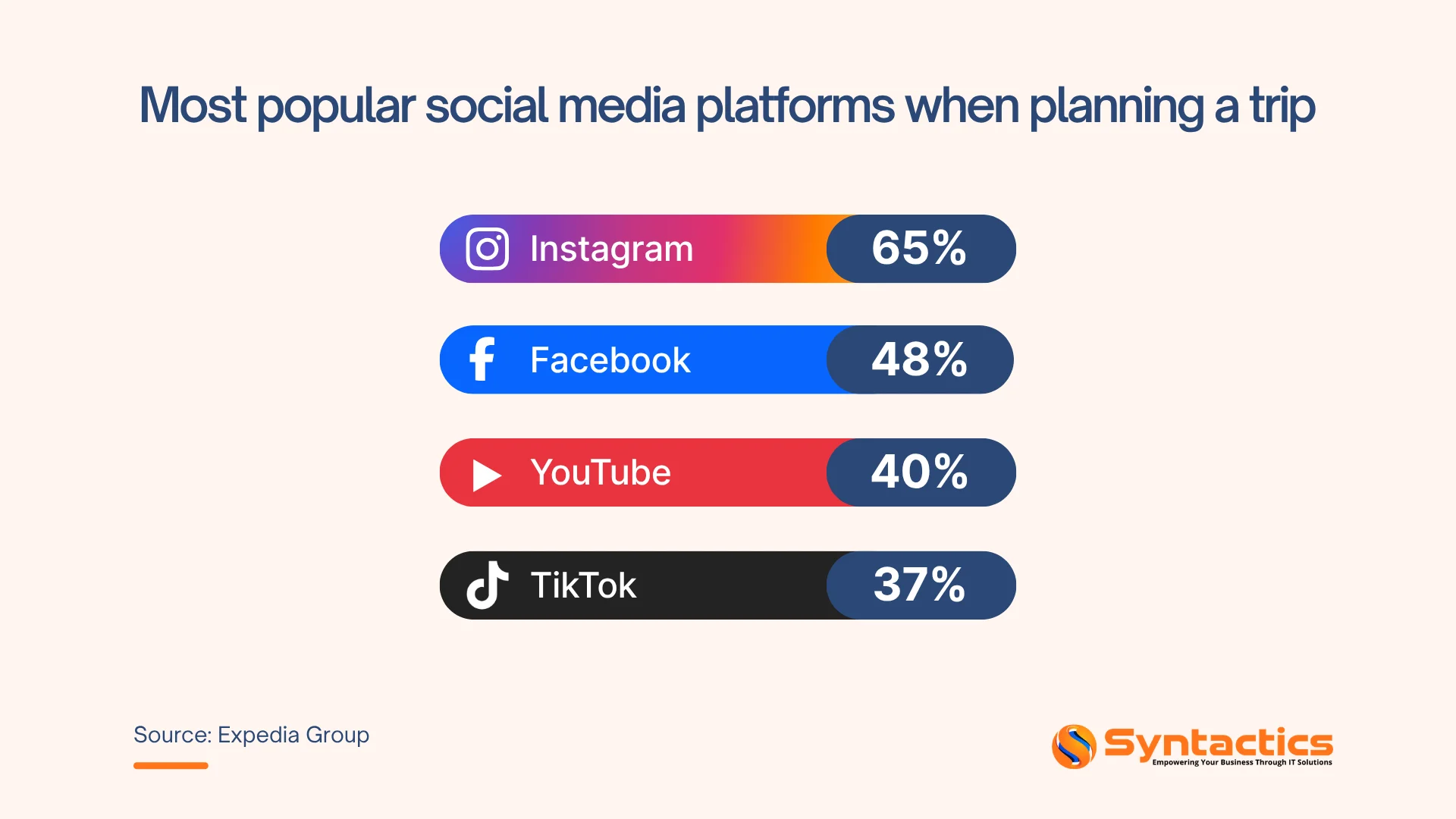
Source: Expedia Group.
A professional website built for recreational tourism needs to do several things well:
- Online booking: Visitors expect to check availability and complete a reservation without leaving your website. Sending users to a third-party booking platform adds friction and increases abandonment.
- Mobile optimization: Despite most travel research occurring on mobile devices, most bookings are completed on desktop. Your site needs to perform well on both.
- Visual content: High-quality photography and video are the primary drivers of conversion for recreational tourism. Visitors are buying an experience. Show them what it looks like.
- Trust signals: Reviews, ratings, certifications, and media features all reduce booking hesitation. Display them prominently.
- Page speed: A site that loads slowly loses visitors before they see your content. This is both a conversion issue and a search ranking issue.
Generic website templates made for any business usually don’t meet these needs. Recreational tourism venues do better with custom web design that guides visitors from finding your site to making a booking.
Revenue Management and Business Modeling
Most recreational tourism venues use several ways to make money. If you rely solely on ticket sales, your business is more at risk of seasonal changes, weather, or economic downturns.
The main ways to earn revenue in recreational tourism include pay-per-entry tickets, memberships or season passes, bundled experience packages, additional sales of food, drinks, and merchandise, and group bookings for businesses.
Staffing and Operational Management
Staff are both your highest cost and your main way of delivering service. In recreational tourism, your staffing plan should account for seasonal changes, frequent guest interaction, and the importance of safety across many roles.
- Build seasonal staffing plans at least three months in advance. Late hiring creates training gaps that directly affect the quality of the guest experience.
- Separate safety-critical roles from general guest experience roles in your hiring and training structure. Both matter, but failure modes are different.
- Invest in front-line staff training for guest interaction, not just activity delivery. A technically proficient guide who communicates poorly leaves visitors with a weaker experience than one who excels at both.
- Cross-train staff where possible to maintain flexibility during peak periods and in the event of unexpected absences.
Building Your Digital Infrastructure
The main difference between recreational tourism venues that continue to grow and those that stall lies in their digital infrastructure. It’s not just about marketing or the product. What matters is having systems that turn interested visitors into confirmed bookings.
This section covers what that infrastructure looks like in practice.

Your Website as a Revenue Channel
A recreational tourism website isn’t just a brochure; it’s your sales tool. Every page, image, and interaction should help move visitors toward booking, not give them reasons to leave.
The difference between a well-designed tourism website and a generic template shows up in booking rates. To improve conversions, tourism websites should include:
- Clear calls to action on every page, visible above the fold
- Streamlined booking flow with minimal steps between ‘I want to go’ and ‘booking confirmed’
- Social proof (reviews, ratings, visitor counts) placed near booking triggers
- FAQ sections that resolve common booking hesitations without requiring a phone call
- Live availability or calendar visibility to reduce abandonment from uncertainty
SEO and Search Visibility
Many people who find your venue through search don’t know your brand yet. They look for an activity, a place, or a type of experience, and your site comes up. To show up in these searches regularly, you need search engine optimization built into your site’s structure, content, and technical setup.
For recreational tourism, local SEO is particularly important. Searches like ‘adventure park near me‘ or ‘wellness retreat in [city]’ are high-intent queries where appearing in the top results translates directly to bookings. Google Business Profile optimization, consistent NAP (name, address, phone) data across directories, and location-specific landing pages all contribute to local search visibility.

Direct Booking vs. Third-Party Platform Dependency
Online travel agencies (OTAs) and third-party booking platforms generate traffic and bookings. They also take commission, typically between 15 and 30 percent per booking, and own the customer relationship.
If your venue builds strong direct booking options, you’ll rely less on third-party platforms and keep more profit from each reservation. This means investing in a good website with built-in booking and offering incentives for visitors who find you through other channels.
Here’s an illustrative example:
If your venue gets 100 bookings a month at $150 each through an OTA with a 20% commission, you lose $3,000 a month in fees. Moving half of those to direct bookings saves you $1,500 monthly. For venues like this, investing in a professional website usually pays off within the first year.
A custom website that integrates with your booking system is built to convert visitors and support SEO, giving your venue the tools to rely less on OTAs without losing bookings.
Sustainability and Responsible Tourism
Being environmentally and socially responsible is now a must for recreational tourism businesses. Eco-conscious travelers check a venue’s sustainability practices before booking, and destination marketing groups prefer operators who show they care about responsible tourism.
Environmental Practices
To be more sustainable, recreational tourism venues can reduce waste, invest in energy efficiency, save water, and buy food and drinks from local suppliers. Outdoor venues, especially those that affect natural areas that attract visitors, have a significant impact, so their impact matters.
Eco-Certification
Programs like EarthCheck, Travelife, and local eco-tourism certifications can prove your sustainability efforts. These certifications show eco-conscious visitors that you’re credible and help you stand out in marketing channels focused on sustainability.
Community Benefit
When recreational tourism brings real benefits to local communities, it builds better relationships with local government, marketing groups, and community leaders. Hiring local people, buying from local suppliers, and supporting local culture all help create a sustainable business that grows stronger over time.
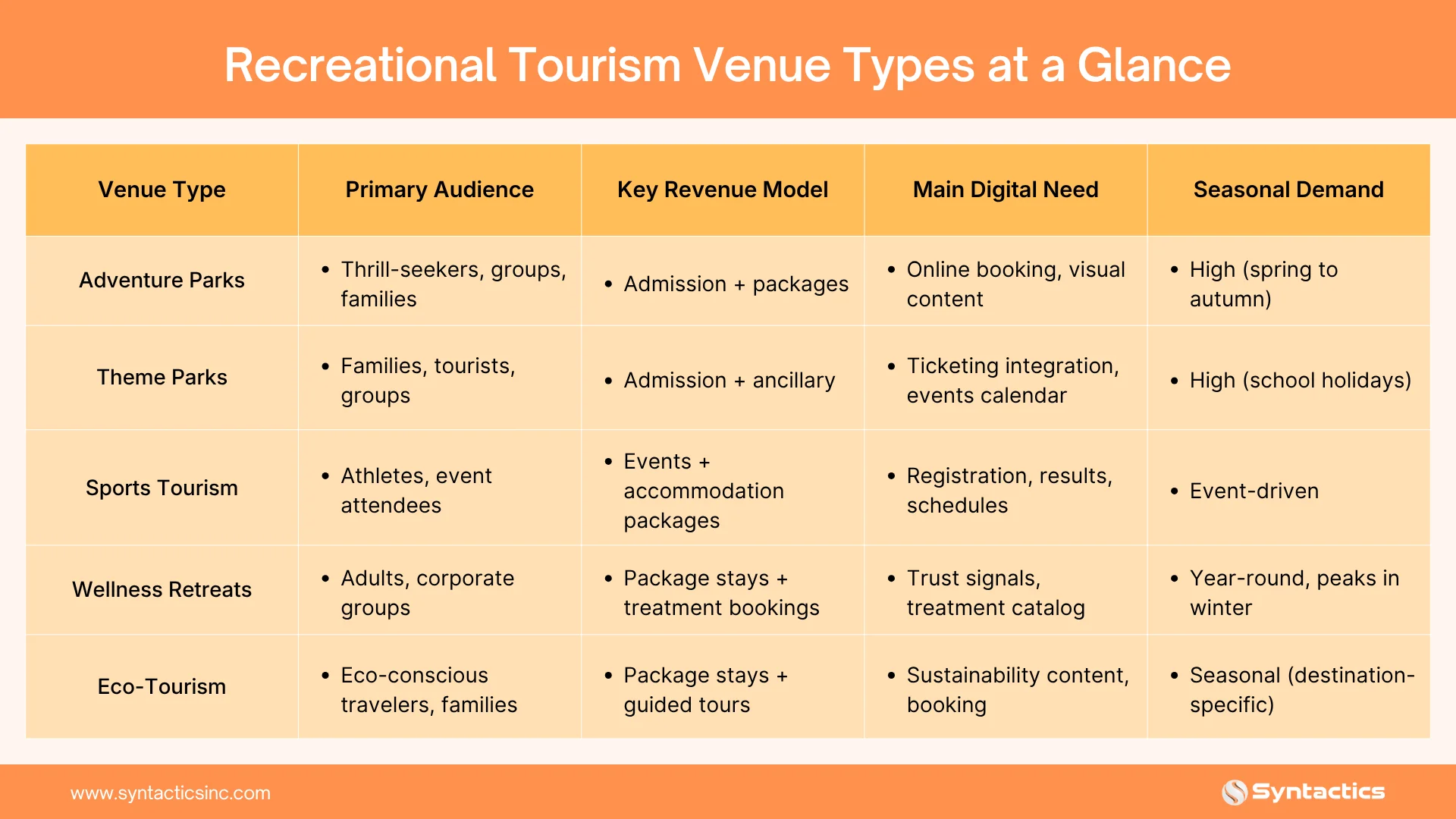
Recreational Tourism Venue Types at a Glance
The table below sums up the main features of each major type of recreational tourism venue, making it easier for operators and investors to compare their options.
Final Takeaways
Recreational tourism is growing fast and offers big opportunities for operators who set up their business well. The most successful businesses manage compliance, guest experience, digital presence, and revenue strategy as a connected system rather than as separate parts.
Digital infrastructure is often the most overlooked area. Many venues spend heavily on their physical spaces but don’t focus enough on their websites. Those who treat their website as a way to earn revenue, not just as a marketing tool, usually do better.
- Safety and compliance are the non-negotiable operational foundation.
- Guest experience drives organic growth through reviews, referrals, and repeat visits.
- Digital presence determines how many potential visitors find your venue and how many convert.
- Revenue model diversification reduces seasonality risk and increases per-visitor value.
- Sustainability practices are increasingly relevant to visitor acquisition and destination marketing visibility.
Your venue’s digital presence brings all five pillars together. A website made for your brand, built for mobile, ready for search, and able to grow with your business turns interest into bookings and first-time visitors into repeat guests.
If your current website isn’t achieving these results, a custom web design and development solution can help you close the gap quickly. Syntactics, Inc. creates custom websites for recreational tourism businesses, including online booking, mobile-friendly design, and AI-ready features to support steady visitor growth.
Get Design and Functionality
Specific to your Brand!

Frequently Asked Questions
How do I attract more visitors to my recreational venue?
The best way to attract more visitors over time is with a professional website that ranks well in search and turns visitors into direct bookings. A fast, mobile-friendly site with built-in booking, great visuals, and clear trust signals helps you rely less on third-party platforms and gives you control over your bookings.
How important is a website for a recreational tourism business?
A website is the most important digital asset for a recreational tourism business. Most travelers use several devices to research before booking. A well-designed website with booking features, strong visuals, and search optimization directly affects how many people find and book with you.
How much does a website for a recreational tourism business cost?
Website costs depend on what you need and how custom you want it to be. Basic sites cost less, while custom builds with booking, mobile optimization, and SEO cost more. The real question is about return on investment; a good tourism website usually pays for itself within the first year through more direct bookings.

About Ladymieh Naallatan
Related News:


The Pros & Cons Of Online Payment For Website Owners

Why Page Experience is Important for Google Search

What’s New on WordPress 5.8 “Tatum”?
Website Errors that Keep Sites Unhealthy




Comment 0