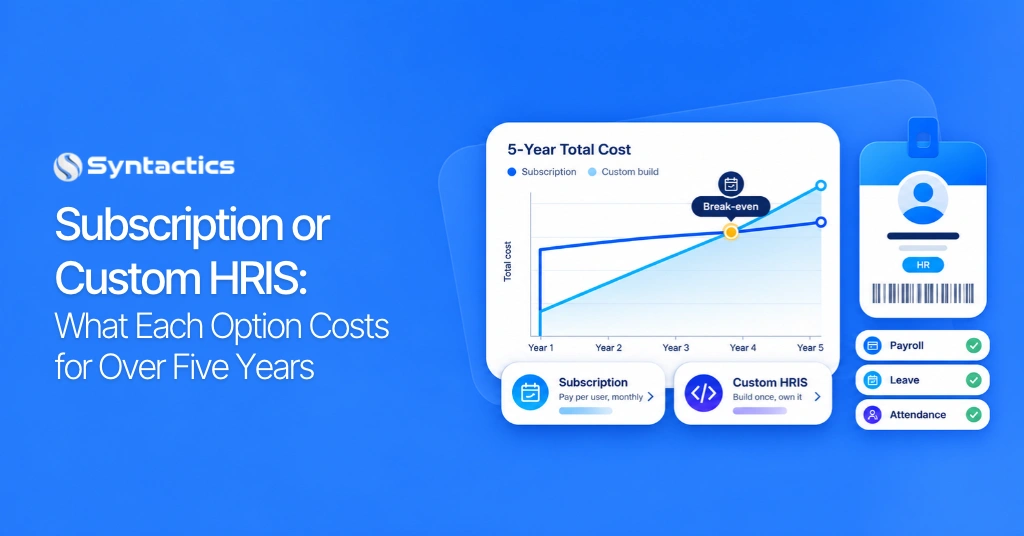
A Human Resources Information System (HRIS) helps HR teams manage workforce processes such as employee records, payroll, attendance, and benefits. For this reason, small companies subscribe to this software to save on resources. Meanwhile, growing companies opt for custom HRIS as headcount and operational complexity grow.
According to Gartner’s 2024 HR Investment Research, 48% of HR leaders planned to increase their HR technology budgets. The right option depends on whether your organization benefits more from predictable per-employee fees or a one-time development with support.
For example, a 50-employee company might spend less on a subscription platform than on a purpose-built system. However, a 500-employee organization with specialized workflows could benefit from ownership and predictable maintenance costs. Comparing both models helps businesses make informed decisions about investing in custom HR software solutions.
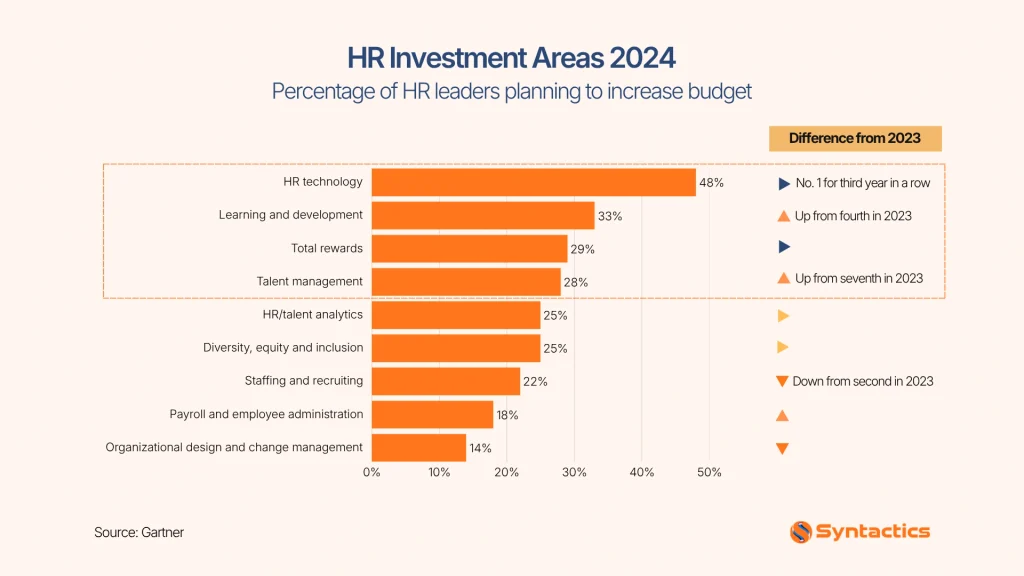
Source: Gartner
Key Takeaways
- 43% of human resource professionals perceive their HR technology as effective. (SHRM)
- Subscription HRIS provides low upfront costs and predictable recurring payments, whereas custom HRIS requires a major initial investment plus ongoing maintenance.
- Five-year costs depend on workforce size and several pricing factors to consider.
- Businesses should account for hidden costs like subscription hikes, data migration, employee training, custom features, and maintenance.
- The best HRIS depends on headcount, workflow complexity, integrations, compliance requirements, and long-term goals.
How Much Does the HRIS Models Cost You?
A subscription HRIS provides ready-made HR tools for a recurring fee. On the other hand, custom HRIS involves building software tailored to your organization’s requirements. Understanding their payment structures helps you compare total cost of ownership.
Here’s a table with a quick comparison to guide you in navigating software options:
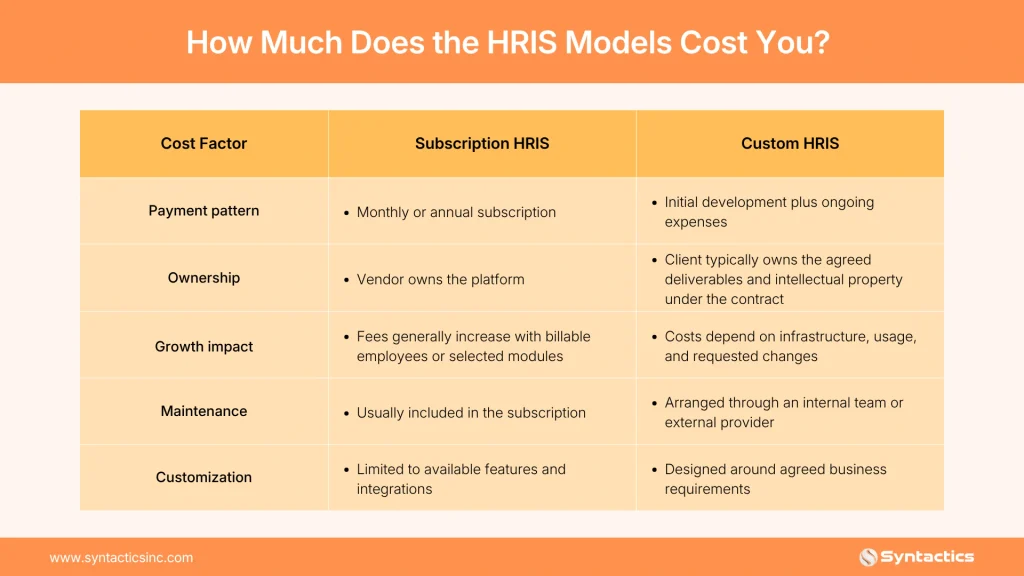
A subscription-based software model reduces upfront investment, while custom development provides greater control over functionality. The best option depends on how the platform matches your HR processes.
5-Year Costs of Subscription HRIS
Subscription expenses accumulate with every employee and every billing period. To get the total cost for a subscription to HRIS software, calculate the base cost with this formula:
Total Subscription Cost =Number of Employees Monthly Fee 60 months
Published vendor prices provide useful benchmarks on what your business gains from an HRIS. To illustrate, here’s a general overview of top HRIS subscriptions by country:
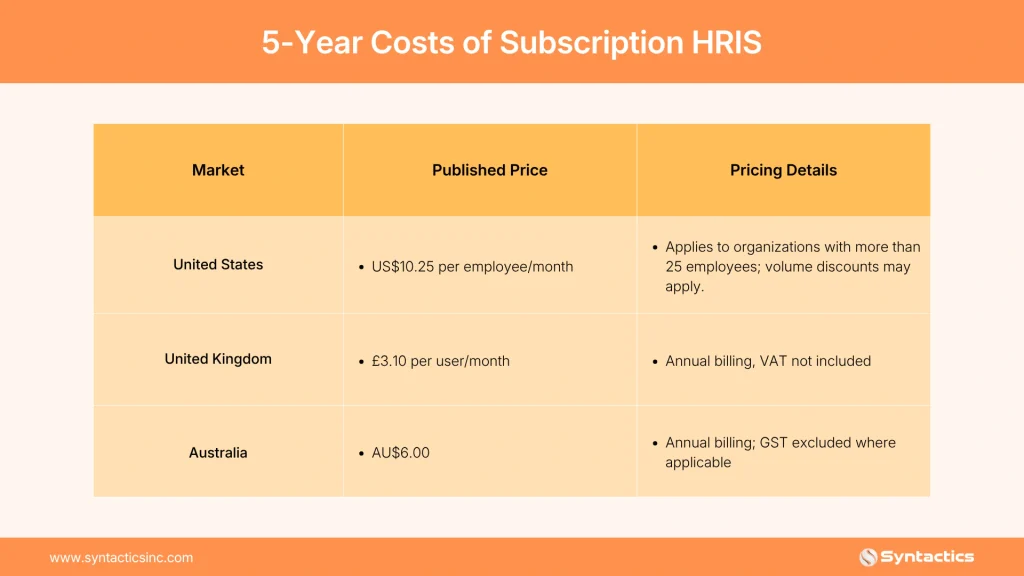
Subscription may increase when businesses add payroll, recruitment, performance management, or advanced reporting features. So, review renewal terms, minimum charges, implementation costs, and employee-count adjustments before committing.
5-Year Costs of Custom HRIS
Custom HRIS replaces recurring per-employee licensing with a development investment and ongoing operating expenses. Its five-year cost follows this formula:
Total Custom HRIS Cost = Initial Build Cost+ 5 (Annual Support + Hosting + Updates)
For example, assume a custom HRIS costs $100,000 to build and $20,000 annually for support, hosting, and updates. The estimated five-year total would reach $200,000, excluding training, major enhancements, and other unplanned expenses.
Three factors that influence development costs include the number of modules, integrations with existing systems, and complexity of approval rules. Therefore, when evaluating custom software application development for your business in the Philippines, request itemized estimates to prevent overspending.
Hidden HRIS Costs Buyers Often Miss
Initial quotes rarely capture the whole picture of every expense. According to SHRM, 43% of human resource professionals perceive their HR tech as effective. This figure highlights the importance of implementation, adoption, and effective system use.
When getting an HRIS subscription, buyers typically account for the following:
- Add-on Modules: Performance management features along with basic HR tools.
- Price Increases: Renewal adjustments raise annual spending beyond the original forecast.
- Data Migration and Exports: Connecting historical records across every channel may require paid services or additional staff time.
Meanwhile, custom HRIS buyers allocate their budget for the following:
- Training: HR staff and employees need time to learn new workflows.
- Change Requests: A new approval or payroll process may exceed the original scope.
- Hosting and Maintenance: Servers, backups, security patches, and technical support create continuing costs.
For example, a custom system might require a new integration after the company adopts another payroll provider. A subscription customer might instead pay for a premium integration or change platforms entirely.
Five-Year Cost Comparison by Company Size
Cost comparison makes the trade-offs much easier to evaluate. For instance, assume subscription costs $10 per employee per month, with no price increases or add-ons. Meanwhile, custom development costs $100,000 upfront and $20,000 annually, with additional costs.
Here’s a table comparing the difference between options after five years:
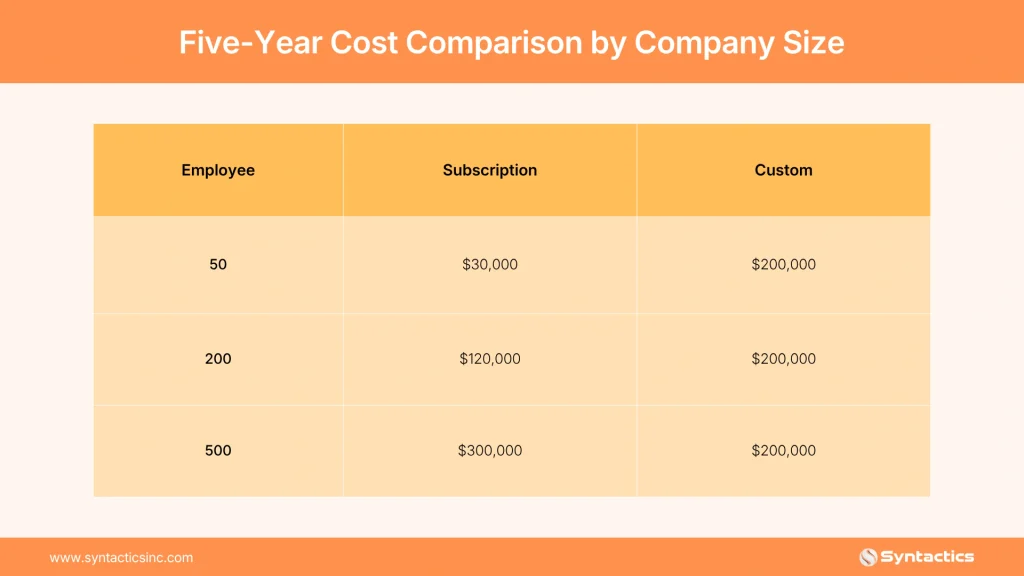
NOTE: These estimates exclude taxes, implementation, training, and unexpected changes. Actual results depend on negotiated prices, system complexity, and workforce growth. Use your own quotes to determine whether the comparison holds for your organization.
Find Your HRIS Break-Even Point
The break-even point is the headcount at which cumulative subscription expenses equal the five-year cost of custom development and operation. It indicates whether your software integrates, scales, and evolves.
To achieve this, divide the custom system’s total five-year cost by the subscription’s monthly per-employee fee multiplied by 60. For example, using the same assumptions above, let’s get the estimated employee headcount using this formula:
Headcount =200,00010 60
Headcount =333.33
With these calculations, it takes about 334 employees for agile software development to become less expensive, assuming everything else stays the same.
When the Right Option Actually Makes Sense
The right choice depends on your operating model, not headcount alone. Ask these five questions before selecting a system.
- How many employees do you have? Smaller teams often benefit from subscriptions, while larger workforces should compare licensing costs with custom software solutions.
- How unusual are your HR processes? Standard HR and employee-record workflows suit subscriptions, while specialized approval chains justify custom development.
- What payroll and compliance requirements apply? Before purchasing, check whether an existing platform supports your local payroll rules and reporting obligations.
- Which systems must connect? Choose a subscription if suitable integrations already exist. Consider custom development when connections require extensive workarounds.
- How long will you use the system? A subscription can suit uncertain or short-term needs, while a stable, long-term operating model may justify a custom investment.
Businesses considering software development services in the Philippines should also evaluate technical expertise, support arrangements, project timelines, and the provider’s ability to maintain the system after launch.
Compliance, Data Ownership, and Risk
HR systems hold sensitive employee information, including compensation, identification details, attendance, and performance records. Your chosen option should account for data protection, access controls, retention policies, and incident response.
For instance, in Europe, the General Data Protection Regulation (GDPR) governs covered personal data processing. Meanwhile, Australia regulates covered personal information under the Privacy Act 1988. Confirm which rules apply to your workforce and business activities.
For the most part, subscription providers may offer established security controls. However, businesses should verify hosting locations, backup policies, and data export terms. Vendor lock-in can complicate migration when proprietary formats or contract restrictions limit portability.
Lastly, custom HRIS offers greater control over architecture and access. Nevertheless, ownership should bring responsibility for security updates, backups, monitoring, and ongoing maintenance. That said, working with a reliable software development company in the Philippines helps establish these safeguards, responsibilities, and service levels.
Let Us Build Your Custom HRIS Software Today!
Subscription HRIS offers a practical starting point for smaller companies that need standard deployment features with limited upfront spending. On the other hand, custom HRIS becomes ideal when employee growth and specialized workflows create complex operational needs.
Before deciding, compare actual vendor proposals, estimate your future headcount, and calculate the full five-year cost of both options. Choose the most economical option that supports compliance, employee adoption, integration, and future business needs.
Fortunately, Syntactics Inc. helps you build custom HRIS software solutions tailored to your requirements and operational goals. Take the next step toward a more efficient and scalable HR management system with our custom software development services in the Philippines. To see how our team can help you boost the productivity of your business, contact us today.

Frequently Asked Questions (FAQs)
What is custom software for human resource management?
Custom HRIS is software designed around a company’s specific HR workflows, policies, and reporting needs. It includes features for payroll, employee records, attendance, recruitment, and performance management.
Can a business switch from subscription HRIS to custom software later?
Yes, a business can migrate from a subscription HRIS to a custom system as its needs evolve. Data migration, system integration, and employee training help ensure a smooth transition.
How long does it take to implement a custom HRIS?
A custom HRIS typically takes several months to develop and implement, depending on its features and complexity. Data migration, integrations, and user training can affect the timeline.