


Unified Commerce: How to Connect Customer, Inventory, and Order Data Across Every Channel
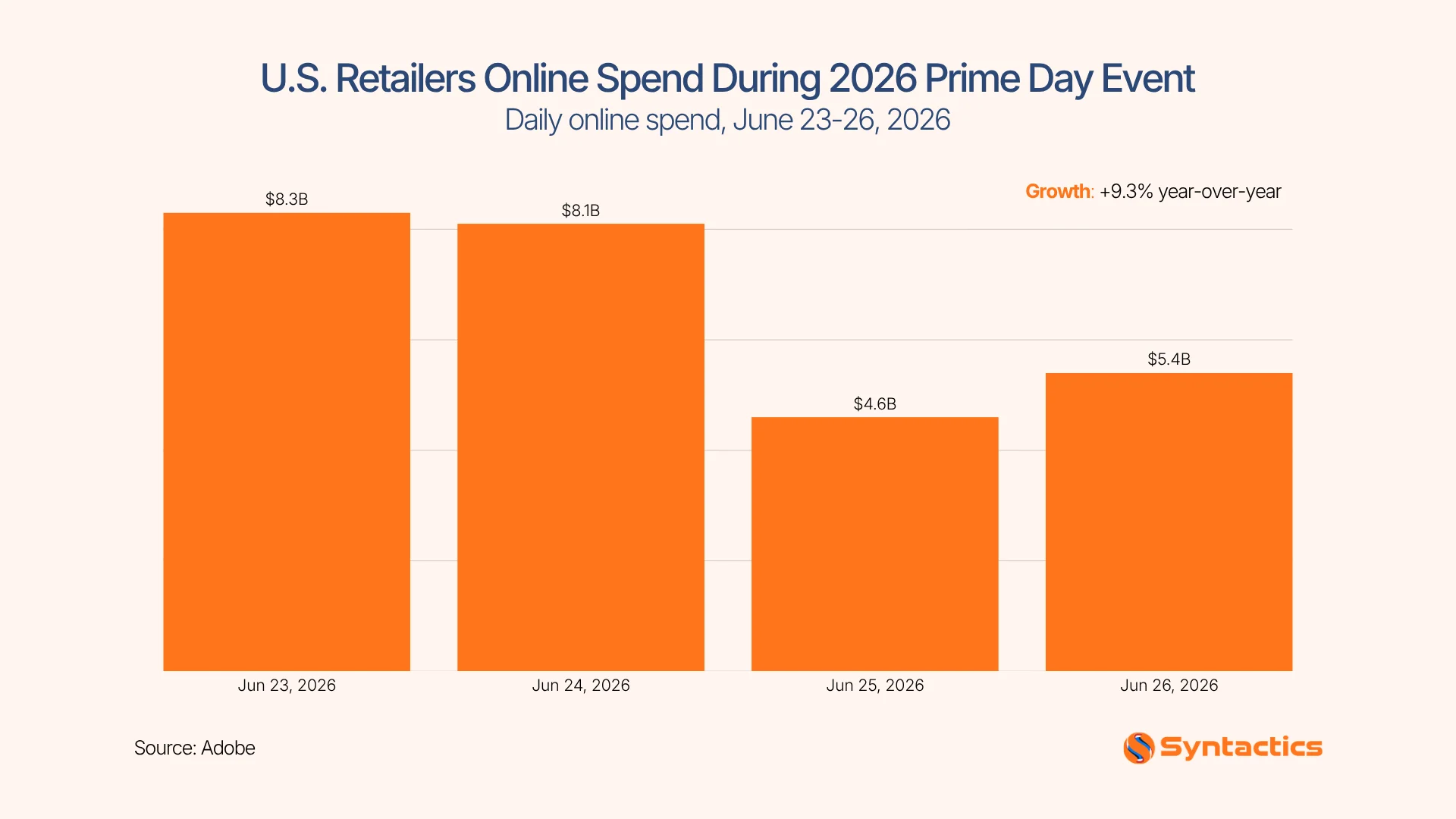
Customers move between websites, mobile devices, stores, marketplaces, and AI-powered search when they shop. Adobe reported that U.S. consumers spent $26.4 billion online during their 2026 Prime Day event. The numbers were up 9.3% from the previous year, showing the scale of digital commerce and the need for connected customer experiences.
That said, a strong unified commerce strategy connects customer, inventory, and order data so your business can provide consistent information across every channel.
Source: Adobe
Key Takeaways
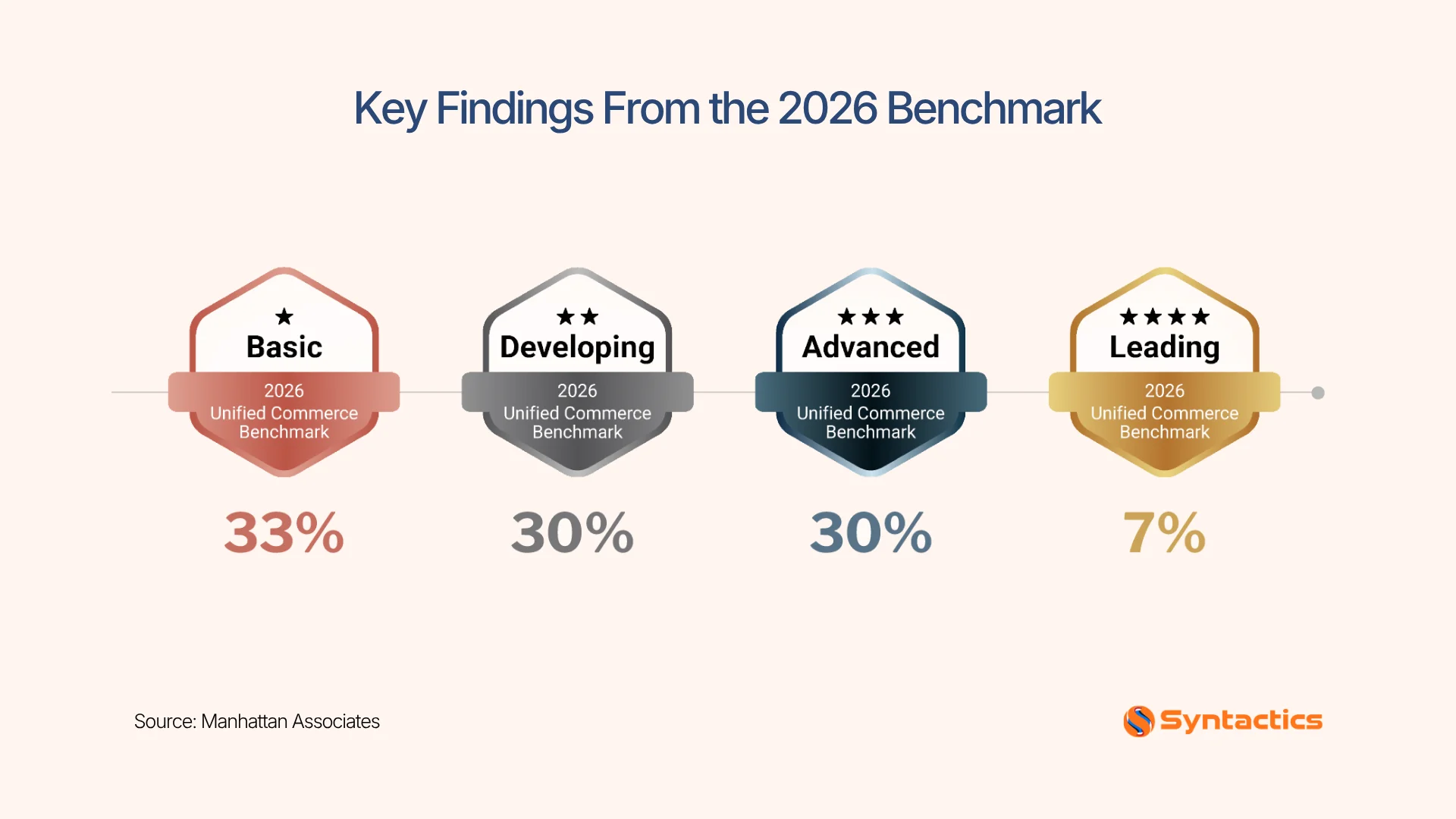
- Only 7% of retailers reached the Leading level of unified commerce maturity, with these retailers recording nearly 2x higher growth rates than Basic-level retailers (Manhattan Associates).
- Unified commerce connects customer, inventory, order, payment, and fulfillment data across channels.
- Map the customer journeys that create the most friction before choosing new technology.
- Establish clear data ownership and integration rules across your systems.
- Prioritize inventory, order management, and fulfillment before adding more advanced features.
What is Unified Commerce?
Unified commerce connects the systems and data that support your customer journey. Instead of keeping your website, physical stores, inventory platform, CRM, payment systems, and fulfillment operations separate, you create coordinated data flows between them.
Multichannel commerce lets you sell through several channels. Meanwhile, omnichannel commerce connects those channels to create a more consistent experience. Unified commerce takes that connection deeper by coordinating the data and operational processes behind each interaction.
For example, a customer could find a product on your website, check its availability at a nearby store, place an order online, pick it up in person, and later return it through another channel. Each step depends on accurate product, inventory, customer, payment, and order information.

What Unified Commerce Is Not
Unified commerce does not automatically mean replacing every existing platform or moving the entire business to one software suite. You can create a connected environment through a single commerce platform, a composable technology stack, or several specialized systems connected through governed APIs. The objective is coordinated information and processes rather than simply reducing the number of platforms.
It also doesn’t require immediate AI personalization. Reliable customer, product, pricing, inventory, and order data provide the groundwork for more advanced capabilities later.
Finally, unified commerce is not a one-time installation. Data standards, governance rules, process alignment, integration monitoring, and ongoing optimization remain part of the operating model as your business adds channels, products, locations, and fulfillment options.
The Business Case for Unified Commerce
Connected systems can improve how you manage inventory, orders, customer service, reporting, and personalization. They can also reduce repetitive reconciliation when employees no longer need to compare information across disconnected platforms.
The potential business impact is reflected in Manhattan Associates’ 2026 Global Unified Commerce Benchmark. The study assessed more than 400 specialty retailers across North America, Europe, the Middle East, Africa, and Latin America and found that 7% had reached its Leading level of unified commerce maturity.
These retailers recorded nearly 2x higher growth rates than those in the Basic category. Although the benchmark shows an association between maturity and growth rather than proving that unified commerce caused the difference.
Source: Manhattan Associates
With that in mind, the finding supports a broader point: connecting shopping, checkout, fulfillment, and service systems can extend beyond improving the customer experience. It can also give retailers a more coordinated way to manage inventory, orders, and customer interactions as their operations become more complex.
What a Unified Commerce Architecture Looks Like
Your architecture connects the systems that manage different parts of the customer and operational journey. A typical environment can include:
- Commerce platform: Manages products, pricing, carts, accounts, and online purchases.
- Point-of-sale (POS): Records in-store transactions and customer activity.
- Inventory system: Tracks stock across stores, warehouses, and other locations.
- Order management: Routes orders based on inventory, location, fulfillment, and delivery rules.
- Customer data and CRM: Stores profiles, interactions, purchase history, and service information.
- Payment systems: Process purchases, refunds, and payment information.
- Fulfillment systems: Coordinate shipping, warehouse operations, pickup, and ship-from-store orders.
- Analytics: Combines information for reporting and business decisions.
- Integration layer: Transfers data between systems through governed APIs and defined rules.
A business can use one software suite or several specialized platforms. A reliable web design company in the Philippines can also help plan the customer-facing layer so website structure, integrations, account functions, checkout, and future channel requirements work together.
The Data Flows That Matter Most
The value of connected systems becomes clearer when you look at specific customer journeys.
Buy Online, Pick Up in Store
Your ecommerce platform needs real-time inventory data to show which products are available at each location. Once a customer places an order, the order management system reserves the item while store staff receives the information needed to prepare the pickup.
Ship-from-Store
Ship-from-store requires inventory data to identify locations that have the product available. Order management can then route the purchase to the appropriate store, while fulfillment systems update inventory and order status after shipment.
Cross-Channel Returns
Customers may purchase online but return an item at a physical store, so staff need access to the original order, payment details, and applicable return rules. Connected systems let employees process the return using the same information across channels instead of asking customers to provide their purchase details again.
Regional Inventory Visibility
Customers need accurate stock information when products are available across multiple stores and warehouses. Shared inventory data helps your ecommerce platform display realistic availability and lets order systems identify where products can be fulfilled.
Loyalty Benefits
A connected customer profile can keep loyalty points, purchase history, rewards, and promotional eligibility consistent across online and in-store purchases. This helps customers receive the benefits they have earned regardless of where they shop.
Unified Order History
Customer service teams need a complete view of purchases, payments, shipments, returns, and other order activity to resolve issues efficiently. Connecting these records gives employees the context they need to answer questions without switching between disconnected systems.
How to Build Toward Unified Commerce in Phases
A phased approach lets you address the most expensive problems before expanding your architecture. Start with the systems and customer journeys that have the greatest impact, then build integrations as your needs grow.
- Map your current systems: Document your ecommerce platform, POS, inventory, CRM, order management, payment, fulfillment, and analytics systems. Identify where data is duplicated, delayed, or manually transferred.
- Set data standards and ownership: Define consistent rules for products, customers, orders, inventory, locations, pricing, and promotions. Establish which system owns each type of data and how updates move between platforms.
- Prioritize high-impact integrations: Focus first on the problems creating the most customer or operational friction. Inventory synchronization and order management may come first, followed by fulfillment, returns, loyalty, mobile experiences, and additional channels.
- Build and test in stages: Connect the highest-priority systems first, then test data accuracy, transaction flows, and error handling before expanding to other processes.
- Prepare for future capabilities: Once your core systems are connected, you can add personalization, AI-powered tools, new fulfillment options, and additional sales channels without rebuilding the entire architecture.
Your website also needs to support these integrations. An experienced ecommerce website builder in the Philippines can provide the customer-facing infrastructure, but your development plan also needs to account for the systems operating behind the storefront.
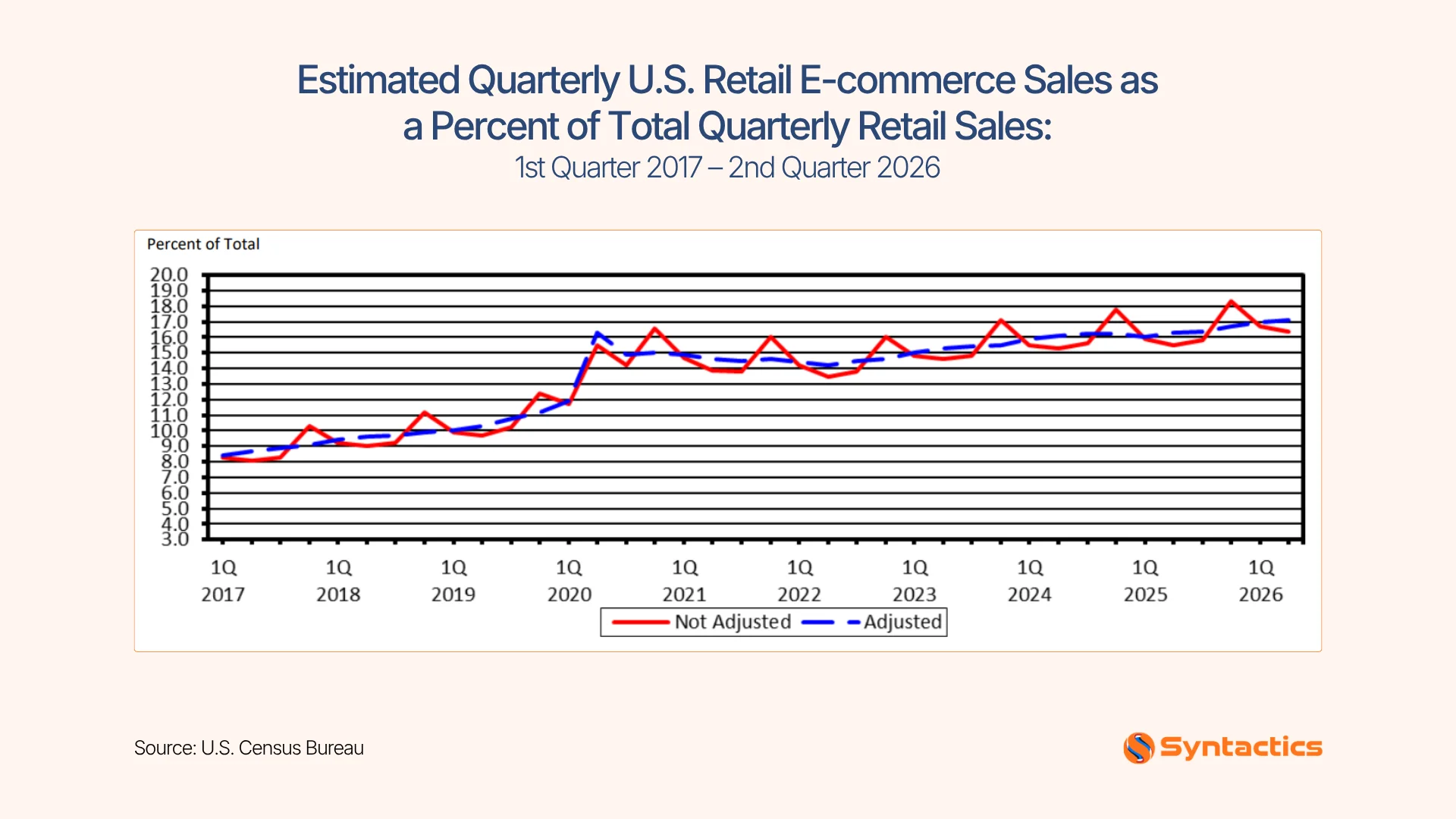
The scale of online retail also makes a connected architecture increasingly relevant. The U.S. Census Bureau reported $340.2 billion in retail ecommerce sales in the second quarter of 2026. The numbers were up 12.2% from the same quarter in 2025, with ecommerce accounting for 17.1% of total retail sales.
As online sales continue to represent a substantial share of retail activity, businesses need systems that can keep customer, inventory, order, and fulfillment data aligned across channels.
Source: U.S. Census Bureau
How to Measure Progress
Connected commerce needs measurable outcomes. The right KPIs depend on your business model, existing technology, and current level of integration.
Useful metrics include:
- Inventory accuracy
- Fulfillment time
- Orders cancelled because of stock discrepancies
- Return processing time
- Customer-service resolution time
- Repeat purchase rate
- Conversion rate
- Manual intervention levels
- Order error rates
- Channel-specific revenue
You can also monitor failed integrations, duplicate records, outdated inventory data, and reconciliation tasks. These operational measures can show where technical improvements are reducing friction for employees and customers.
Customer behavior provides another reason to track performance across channels. Circana reported that 84% of U.S. consumers are omnichannel buyers, based on data for the 52 weeks ending January 1, 2026. As such, tracking channel-specific conversion, fulfillment, returns, and repeat purchases can help you see whether your systems are supporting customers consistently across physical and digital touchpoints.
When Unified Commerce Is the Right Investment
Unified commerce can be valuable when you operate across several sales channels, locations, inventory pools, or fulfillment methods. Recurring stock discrepancies, complicated order routing, expensive reconciliation, inconsistent customer records, and expansion plans can also indicate a need for stronger integration.
A smaller business with one primary sales channel may have less reason to build a complex architecture immediately. In that situation, clean data structures and integration-ready processes can provide a practical starting point for future growth.
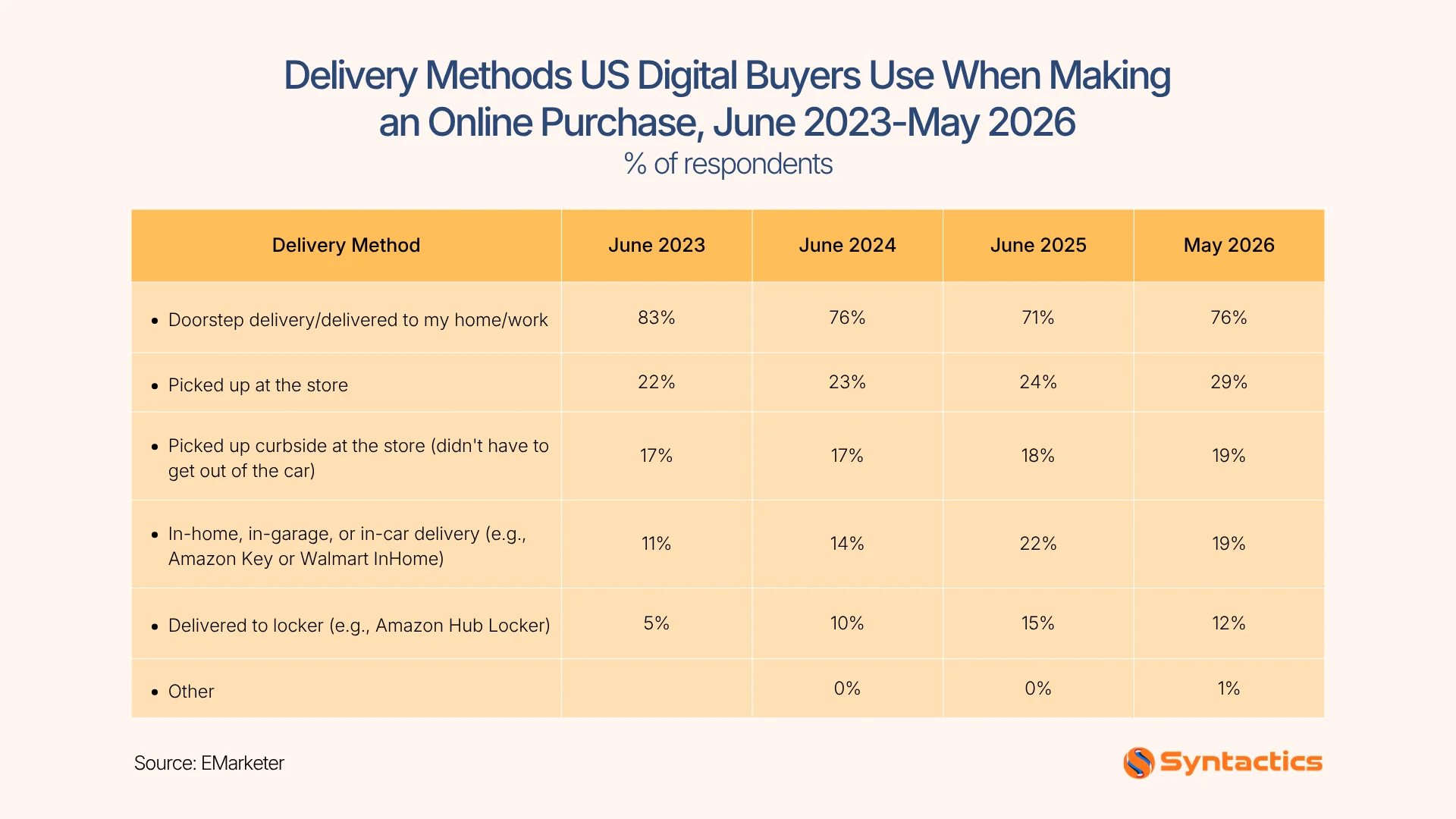
Customers are also moving between digital and physical channels during the same shopping journey. According to EMarketer, 29% of U.S. digital buyers picked up an online order at a store in May 2026, up from 22% in 2023.
This type of cross-channel behavior requires accurate inventory, order, payment, and fulfillment data so customers can move from online purchase to in-store pickup without disconnected processes.
Source: EMarketer
Why the Development Partner Matters
A unified commerce strategy needs more than individual integrations. You need a development partner that can understand how your customer experience, data structures, technology stack, and operational processes fit together.
Syntactics, Inc. brings 26 years of experience and a global client portfolio to projects involving discovery, integration architecture, API and data-layer design, ecommerce development, migration, testing, rollout, and ongoing support. Our experienced team in the Philippines can also support ecommerce website development that connects customer-facing experiences with inventory, order management, CRM, payment, fulfillment, and analytics systems.
If you’re ready to build a connected commerce strategy that brings your systems, data, and customer experiences together, contact us today!

FAQs About Unified Commerce
Can unified commerce work with multiple ecommerce platforms?
Yes. APIs and integration layers can connect multiple platforms when data ownership and synchronization rules are clearly defined.
What are some examples of unified commerce in action?
Examples include buying online and picking up in-store, checking local inventory online, and returning an online purchase at a physical store. Loyalty points, customer profiles, and order histories can also stay consistent across online and in-store channels.
Does unified commerce apply to B2B businesses?
Yes. B2B companies can connect customer accounts, product catalogs, pricing, orders, inventory, sales teams, and service information across digital and offline channels.

About Ladymieh Naallatan
Related News:













Comment 0