


ChatGPT Adds Live Yelp Data to Improve Local Search Results
ChatGPT now displays real-time Yelp reviews, ratings, photos, and business details in local search results thanks to a new data licensing deal between Yelp and OpenAI. With this update, users can also use Yelp’s Request a Quote feature in ChatGPT to contact local businesses directly from the chat.
Source: BrightLocal.
Key Takeaways
- Local businesses now need strong Yelp profiles to show up in ChatGPT’s local recommendations, not just Google Business Profile.
- Yelp’s non-exclusive deal with OpenAI means similar AI licensing partnerships are likely to follow across the industry.
- Yelp branding and links will appear with its content in ChatGPT, but OpenAI decides how the content is shown.
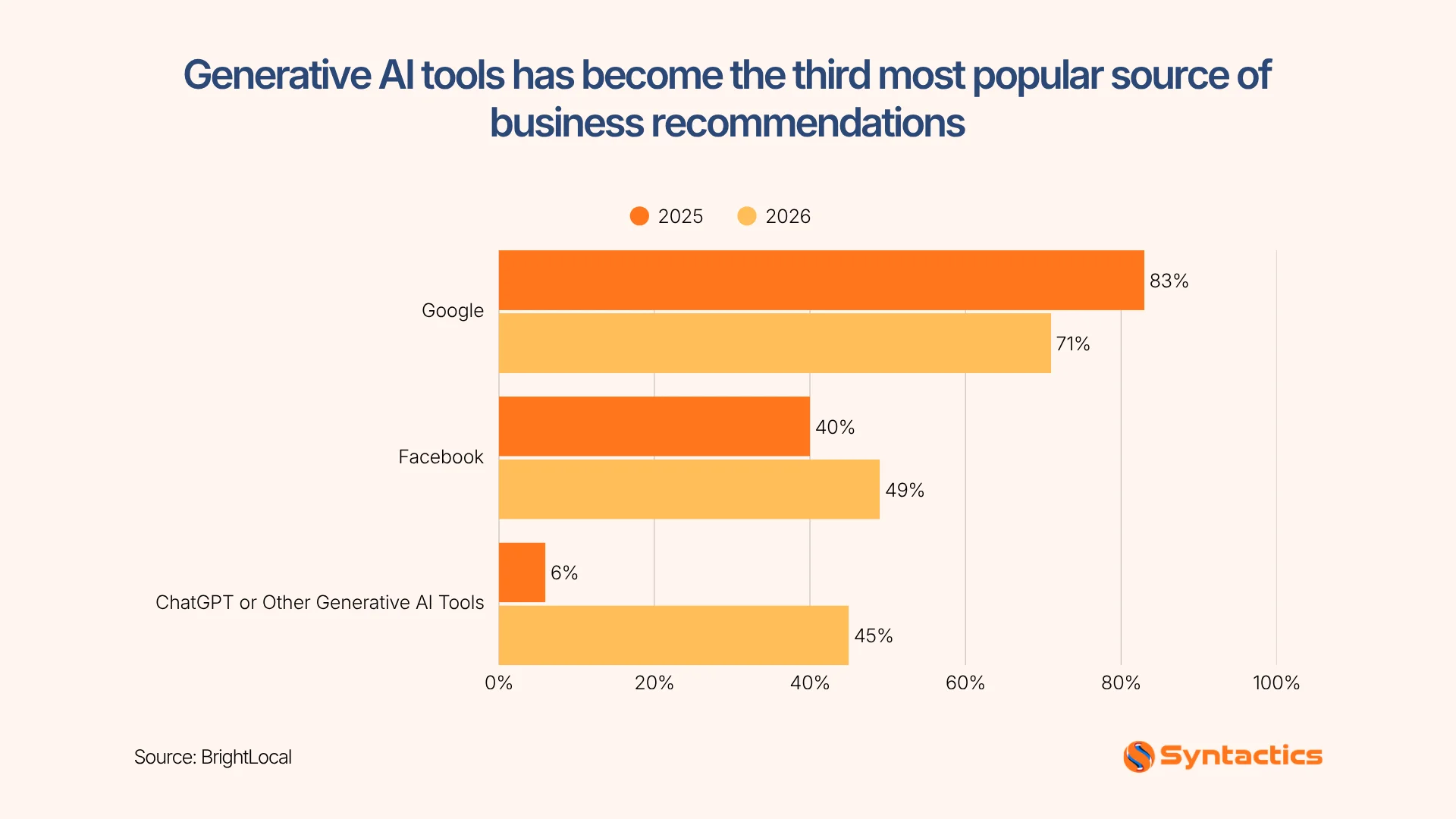
- Around 45% of consumers now use ChatGPT or another AI tool to find local businesses.
- This shift extends AEO and GEO strategy beyond a business’s own website to third-party directory data.
What is the ChatGPT-Yelp integration?
ChatGPT can now access real-time Yelp data, including customer reviews, star ratings, photos, and business listings. This gives ChatGPT users a fresh layer of local recommendation data.
This feature also extends to Yelp’s Request a Quote tool. Users can contact local service providers, book consultations, or ask for quotes directly inside a ChatGPT conversation.
Yelp branding and links back to Yelp will appear alongside this content. That said, OpenAI decides how that content gets displayed within ChatGPT responses, which shifts more presentation control toward OpenAI than Yelp holds on its own platform.
This arrangement functions as a data partnership rather than a full merger of the two products. Yelp keeps ownership of its data and its own app, while OpenAI gains a live feed it can pull into relevant conversations. Both companies benefit here: Yelp gains distribution beyond its own audience, and OpenAI closes a functional gap in local recommendations.

Why ChatGPT needed local data in the first place
Search engines have spent about twenty years building local search with business listings, map data, and billions of user reviews. In contrast, ChatGPT is starting to build trust from a much newer base.
Local searches are different from general questions. For example, someone asking “what’s a good ramen place near me” is looking for:
- Current opening hours
- Recent, genuine reviews
- A real, verifiable address
- Photos that reflect what the business looks like today
With live data, ChatGPT can now answer these questions much more confidently than it could with just training data. By licensing Yelp’s data, OpenAI quickly fills this gap. Instead of building its own local review system, OpenAI now has access to millions of businesses, reviews, and photos in categories like restaurants, trades, healthcare, and home services.
Source: Semrush.
What this means for local businesses
Local searches have been a weak spot for ChatGPT compared to Google, which has years of local search experience. Adding Yelp’s review data helps close that gap.
For business owners, Yelp profiles now matter more than just on Yelp’s app or website. If a business has good reviews, up-to-date photos, and accurate details on Yelp, it could appear when someone asks ChatGPT for local recommendations.
Consequently, this shifts part of local AI visibility outside a business’s own website. Optimising a Google Business Profile now covers only one part of the picture, especially since AI Overviews now appear in up to 68% of local searches. Yelp data quality now feeds a second major AI channel.
Service businesses can benefit most from the Request a Quote feature. For example, a plumber, electrician, or mover with a strong Yelp profile could get quote requests directly from ChatGPT users, no matter their Google ranking for that search.
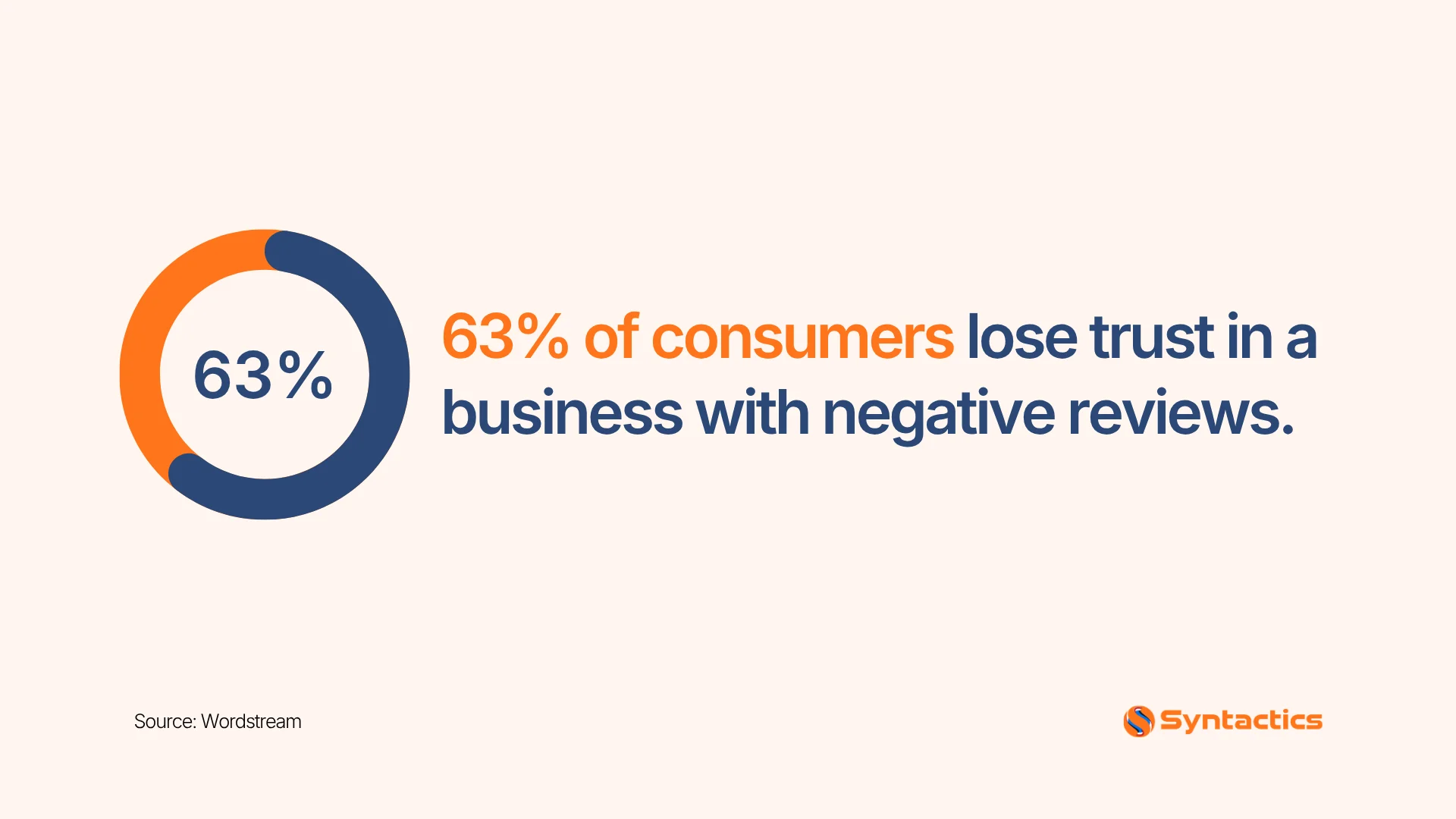
This also makes review management more important. Businesses that see Yelp as a niche platform may want to rethink that, since it’s becoming a bigger AI referral channel.
Yelp’s broader distribution strategy
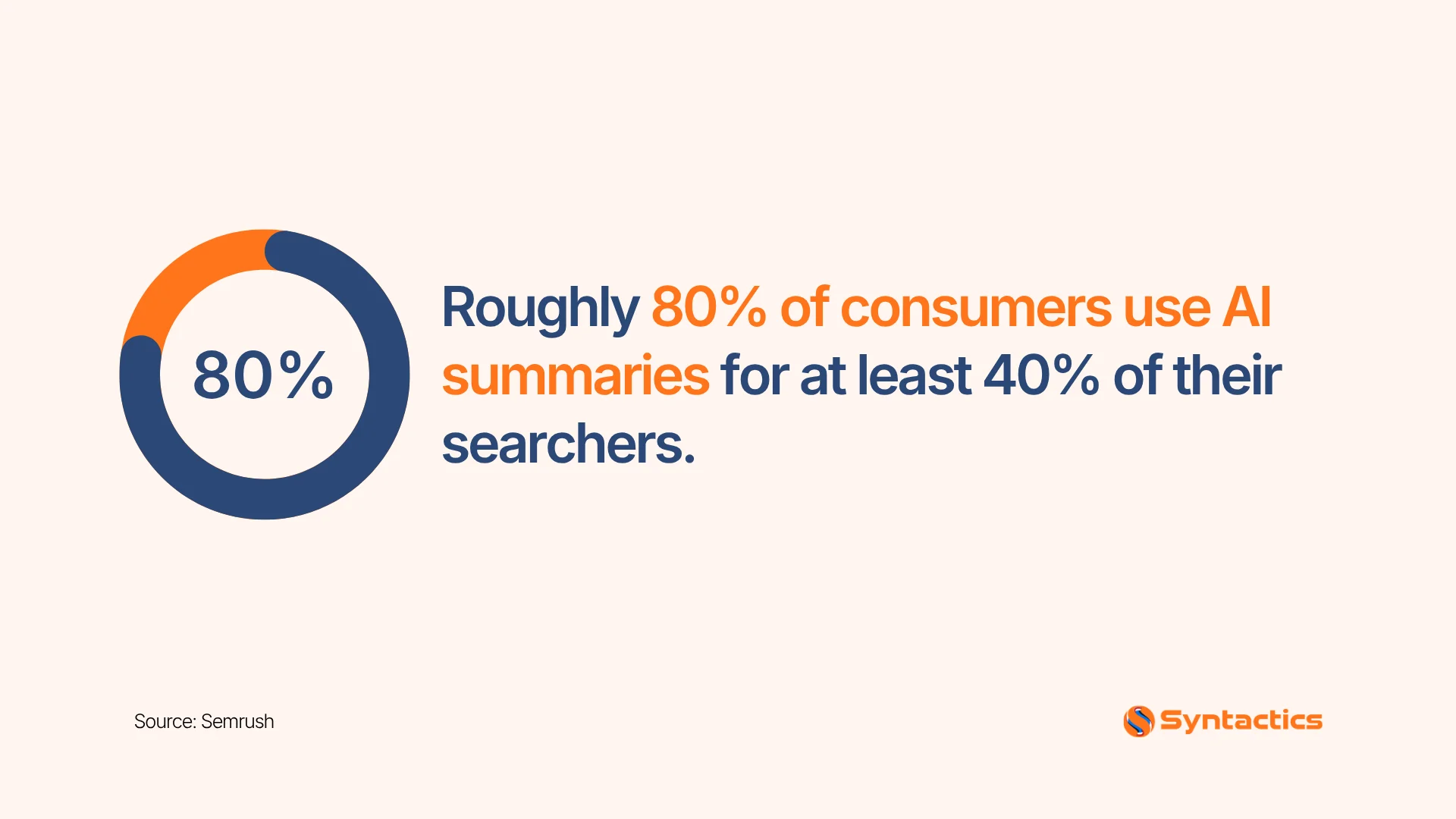
Yelp already shares its data with other platforms like Yahoo+ and Apple Maps. Adding ChatGPT expands Yelp’s reach to a fast-growing AI search audience. This matters even more because ChatGPT still has nearly half of the standalone AI chatbot market as of 2026.
This deal means Yelp can still make similar data licensing agreements with other AI companies, so more partnerships like this are likely. Platforms like Perplexity, Gemini, and Copilot could also make deals with Yelp or with other review sites.
Yelp’s relationship with Google is a good comparison. Yelp used to license content to Google, but that ended in a legal dispute over how Google shows local search results. Now, Yelp is suing Google for allegedly favoring its own services in local search.
That history probably influenced how Yelp set up the deal with OpenAI. Visible branding, working links, and open licensing show that Yelp pushed for more control over how its data is used and credited.
Source: Wordstream.
Trust remains a challenge for AI-generated local recommendations
Trust remains the sticking point. Research from Morning Consult found that 65% of Americans have used AI search, but only 15% trust it a lot.
That same research found that 72% of people believe AI platforms should always disclose where their information comes from. That’s likely why Yelp negotiated visible branding and links as part of this deal, rather than letting its data blend anonymously into ChatGPT responses.
Given this, source transparency may become a differentiator for AI platforms competing on local search, just as much as data coverage. A platform that clearly shows where a recommendation came from may earn more user trust than one that presents information anonymously, even when the underlying data is identical.
This trust gap also matters for businesses. Since AI-generated recommendations still face scepticism, human-readable proof points, real names on reviews, recent photos, and responses from business owners, become more valuable than ever.
What this means for AEO and GEO strategy
This deal is a clear example of how answer engine optimisation and generative engine optimisation now extend beyond a business’s own website. AI systems increasingly rely on structured third-party data alongside what a business publishes itself.
That changes how local SEO should be prioritised. A business page with strong on-site content still matters, but a Yelp profile, a Google Business Profile and other structured directories now function as feeder data for AI-generated answers.
Keeping information consistent across all these sources helps AI models create an accurate picture of a business. So, businesses aiming for AI visibility should treat directory profiles as seriously as their own website.
Having complete categories, up-to-date hours, real photos, and regular genuine reviews all help AI systems recommend a business with more confidence.
What businesses should do now
- Keep Yelp business listings accurate, current, and complete with photos.
- Encourage genuine customer reviews, since review volume and recency likely influence what ChatGPT surfaces.
- Set up Yelp’s Request a Quote feature if it’s relevant to the business, since this may soon become a direct booking channel from inside ChatGPT.
- Keep business name, category and description consistent across the website, Google Business Profile, Yelp and other directories, since AI models rely on repeated, matching signals to recommend a business confidently.
- Monitor how the business appears across ChatGPT, Google AI Overviews and other AI tools on an ongoing basis, since visibility can shift quickly.
- Treat Yelp as an AI visibility channel as much as a review site when planning local SEO and AEO strategy.
Conclusion
The ChatGPT-Yelp integration shows that local visibility now covers several platforms at the same time. Businesses need consistent, review-rich profiles on Google, Yelp, and every channel that AI systems use.
To keep up with these changes, businesses need to monitor their profiles regularly and use a strategy that matches how AI tools find local recommendations. For those needing expert help, local SEO services in the Philippines from Syntactics, Inc. can help both local and international brands stay visible as AI changes local search.

Frequently Asked Questions
Does ChatGPT now show Yelp reviews?
Yes. ChatGPT can include Yelp reviews, ratings, photos, and business details in responses to local search queries.
Can users book services through ChatGPT using Yelp?
Yelp’s Request a Quote feature is being added to ChatGPT, allowing users to contact local service providers for quotes and consultations.
Is this Yelp’s only AI data partnership?
Yelp already licenses data to Yahoo+ and Apple Maps too, and this new OpenAI agreement still leaves Yelp free to license data to other AI companies.
Does this affect Yelp’s relationship with Google?
This runs as a separate matter. Yelp is separately suing Google over local search practices after its earlier content licensing relationship with Google broke down.
How much do people trust AI-generated search results?
Only 15% of Americans trust AI search a lot, even though 65% have used it, according to Morning Consult research.
Should businesses still invest in their own website SEO?
Yes. Directory data like Yelp supplements a website, but a clear, well-structured site remains a core trust signal for both search engines and AI systems.

About Jalou Batilong
Related News:

7 Types of Content that Drive Local SEO Success
Local SEO Services in the Philippines for Businesses








Comment 0