

7-Day Portfolio Fix for Businesses Ready to Scale
A portfolio carries more weight than most businesses realize. It influences trust, shapes credibility, and often determines whether a prospect moves forward or leaves without making contact.
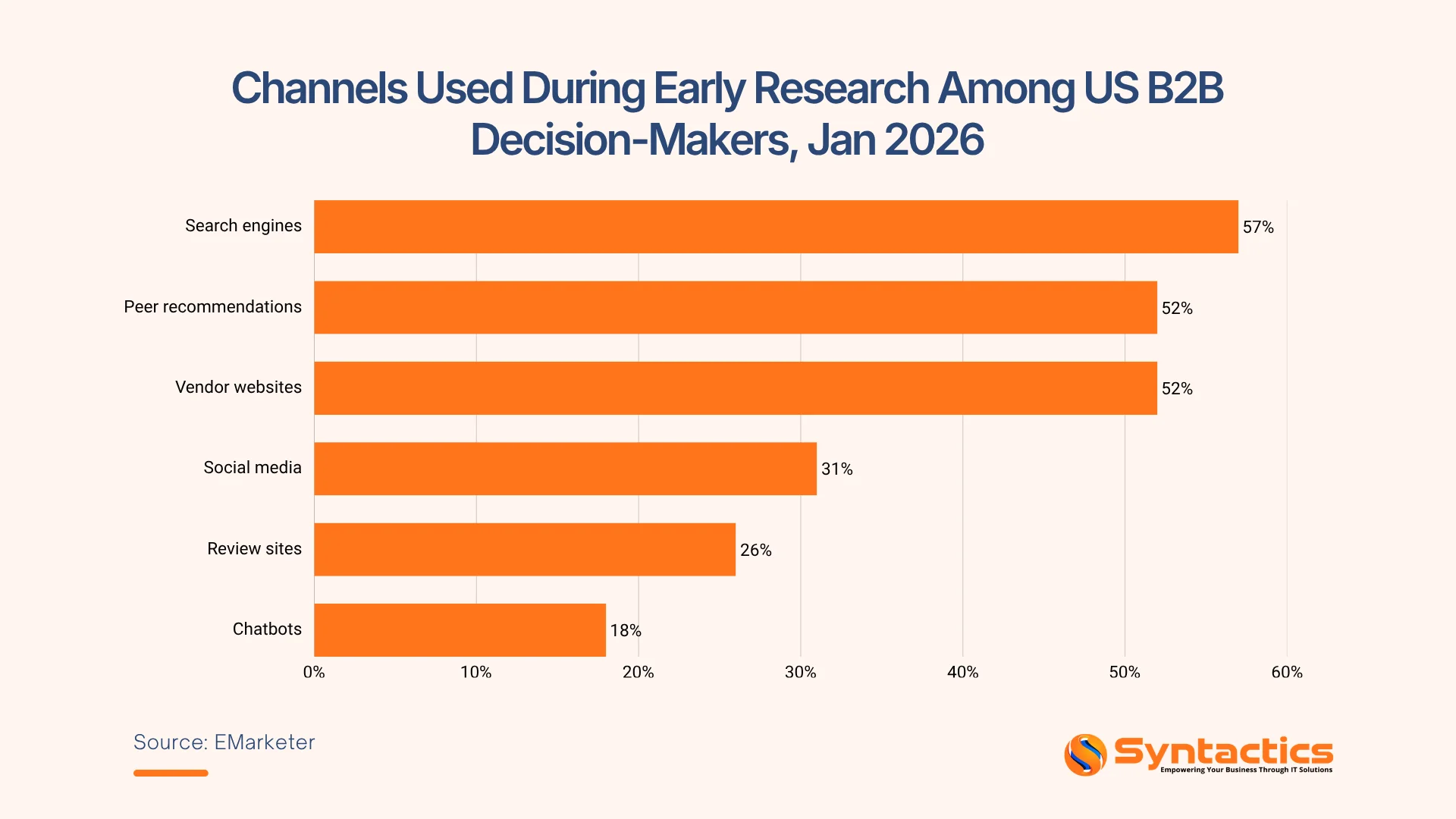
According to EMarketer, 57% of US B2B decision-makers still begin their vendor research with search engines, making portfolio websites among the first credibility signals buyers encounter online.
Many growing brands still rely on portfolios built solely on visuals. However, high-value clients rarely evaluate design in isolation. They focus on business outcomes, operational reliability, and measurable performance. This shift explains why leading web development companies prioritize strategic positioning, user trust, and conversion-focused experiences over purely creative presentation.
Source: EMarketer
TABLE OF CONTENTS
Key Takeaways
- 20% of marketers are investing in brand messaging framework development. (HubSpot)
- Business-focused portfolios generate stronger trust signals than visual galleries alone.
- Weak or outdated projects dilute positioning and reduce credibility.
- Outcome-driven case studies resonate more with decision-makers.
- Expert web teams strengthen scalability, usability, and lead generation.
Portfolio Lie: Why “Just Show Your Work” Never Works
Many portfolio websites rely heavily on visuals without explaining business value. However, clients rarely invest in design for appearance alone. What captures their attention is the ability to reduce risk, improve performance, and support business growth.
Buyers want evidence that your work contributes to lead generation, operational efficiency, customer trust, or revenue opportunities. This expectation continues to grow across digital industries.
According to WifiTalent’s B2B Ecommerce Statistics, 94% of B2B buyers conduct online research before making purchasing decisions. This behavior changes how decision-makers evaluate portfolios. Instead of asking whether a website looks modern, buyers focus on questions such as:
- Does this company understand business goals?
- Can this team support scalability?
- Is there measurable proof behind the work?
- Does the portfolio inspire confidence?
That said, a gallery-style portfolio leaves too much open to interpretation. Executives and procurement teams respond more strongly to strategic validation than abstract creative presentation. As such, successful portfolios place equal importance on business outcomes and visual execution.

80/20 Audit: Delete 80% of Your “Best Work” Today
Many companies continue showcasing work that no longer reflects their current audience, pricing, or expertise. While older projects may still appear visually strong, they often blur positioning and make it harder for prospects to understand what your business actually specializes in.
This issue becomes more relevant as businesses refine how they communicate value. According to HubSpot’s 2026 State of Marketing Report, 20% of marketers are now investing in brand messaging framework development. This highlights a growing focus on clearer positioning and more intentional storytelling across digital channels.
A modern portfolio performs better when relevance takes priority over volume. Alignment with current services, target industries, and measurable outcomes directly influences trust and lead quality. As such, projects that generate inquiries and reinforce premium positioning tend to outperform large collections of outdated work.
In contrast, irrelevant case studies can weaken authority and create hesitation, especially for high-value sectors. For this reason, many businesses work with a trusted web design company in the Philippines to refine portfolios to emphasize clarity, alignment, and conversion impact over sheer project quantity.
Outcome-First Case Studies: Rewrite Every Project as a Business Result
Many case studies fail because they describe visual updates without connecting those changes to measurable outcomes. Design details alone rarely persuade executives or marketing leaders.
Consider this example:
“We redesigned the homepage using modern typography and interactive animations.”
Now compare it with this:
“The redesigned homepage increased qualified lead inquiries by 38% within three months while reducing mobile bounce rates.”
The second example is more credible because it frames the project in terms of business performance. This focus on outcomes matters even more as user expectations around digital experience continue to rise.
According to Forbes, 88% of users are less likely to return to a website after a poor experience, highlighting how directly website performance affects retention and trust.
High-performing case studies typically include:
- The original business challenge
- Strategic recommendations
- Performance metrics
- Conversion improvements
- Operational impact
- User experience outcomes
Generic testimonials such as “great service” or “highly recommended” carry limited weight when they lack supporting data or measurable results.
With that in mind, an experienced web developer in the Philippines often structures portfolio content around clear performance signals, as decision-makers respond more strongly to evidence than to general praise.
The Anti-Design Trend: When Beautiful Sites Repel High-Value Clients
In industries such as healthcare, legal services, finance, and B2B manufacturing, highly experimental design can reduce perceived trustworthiness instead of improving it. Professional buyers often associate clean layouts, fast performance, and straightforward navigation with operational reliability.
For example, a financial services website overloaded with animations may appear less stable. Meanwhile, a manufacturing company with unconventional navigation may create friction for procurement teams searching for technical information quickly.
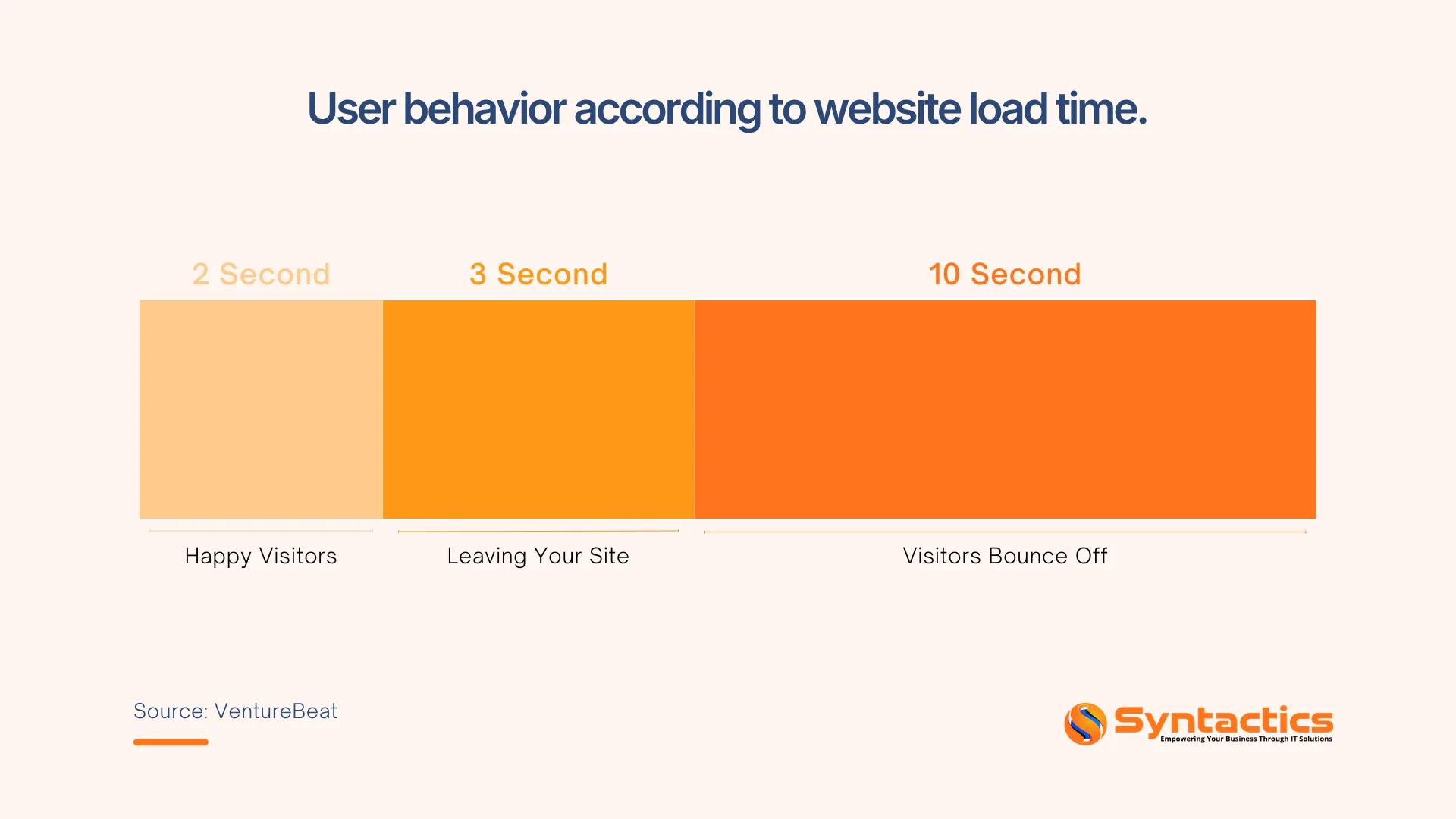
This reflects broader user expectations around usability and performance. According to VentureBeat, websites should ideally load in 2 seconds or less. When load times exceed this threshold, visitors are more likely to leave and less likely to return.
This effect becomes even more noticeable on eCommerce and lead-focused sites, where faster performance tends to drive higher conversions and encourage repeat visits over time.
Performance-driven portfolios commonly emphasize:
- Faster load times
- Clear navigation
- Mobile responsiveness
- Strong security indicators
- Professional typography
- Direct messaging
Many businesses invest in website design services in the Philippines because they offer cost-effective expertise that improves conversion rates, usability, and customer trust.
Source: VentureBeat
How to Know When a Portfolio Is Hurting Your Brand
Outdated content and declining technical performance tend to weaken how a brand is perceived over time, especially when competitors are consistently improving their digital presence. Even small issues build up and create doubt during early evaluation stages.
Several signs often point to a portfolio losing effectiveness:
- Outdated team photos that no longer reflect the current business
- Dead client links that break trust instantly
- Old logos that make case studies feel irrelevant
- Slow mobile load times that interrupt browsing flow
- Generic testimonials that lack credibility or context
- Weak search visibility that limits discovery
- Minimal organic inquiries despite steady traffic
- Inconsistent branding across pages and projects
- Missing performance metrics that leave outcomes unclear
Technical performance also affects credibility. When pages load slowly or feel unresponsive, users tend to question reliability before they even explore the work in detail. With that said, many businesses now look at their portfolio through structured reviews that focus on four areas:
Content Relevance
Project selection reflects current positioning, industries, and capabilities. It helps ensure the portfolio communicates what the business actually does today rather than where it started.
Technical Performance
Page speed, responsiveness, accessibility, and site stability remain competitive. These factors shape how smoothly users interact with the portfolio across different devices and conditions.
SEO Visibility
Case studies, service pages, and portfolio content continue attracting organic traffic. Strong visibility helps new audiences discover the business without relying only on paid channels.
Conversion Performance
Calls-to-action, inquiry forms, and user journeys support lead generation goals. A clear structure guides visitors toward taking the next step without friction.
Why Web Design and Development Experts Matter
As businesses scale, portfolio websites evolve from simple showcases into active business assets that drive leads, build trust, and increase revenue. At this stage, technical execution becomes just as important as design, since performance, SEO structure, analytics, accessibility, and conversion pathways all shape how effectively the portfolio works.
Experienced web development companies contribute beyond visuals by refining how users navigate, engage, and convert. Their work often focuses on improving user experience (UX) flow, strengthening site speed, optimizing for search visibility, and ensuring data tracking connects with real business goals.
Support typically extends to mobile optimization, Customer Relationship Management (CRM) integration, scalable architecture, and consistent brand execution. This level of structure helps the portfolio function more like a growth system rather than a static presentation of past work.
Conclusion
Your portfolio influences how potential clients evaluate your expertise, credibility, and long-term value. When the experience feels outdated, disconnected, or difficult to navigate, trust declines before conversations even begin.
This is where experienced web development companies like Syntactics, Inc. create lasting value for businesses. Our expertise in website development services in the Philippines helps your brand create scalable portfolios built for visibility, performance, and lead generation. To start building a portfolio that supports long-term business growth and stronger client acquisition, contact us today!
Get Design and Functionality
Specific to your Brand!

FAQs About Portfolio Websites
What is a portfolio on a website?
A website portfolio is a collection of projects, work samples, or case studies displayed online to showcase a business’s skills and expertise. It helps potential clients evaluate the quality, experience, and results your company can deliver.
What makes a portfolio more conversion-focused?
Clear messaging, measurable case studies, fast performance, and strong trust signals improve conversion potential. Simplified navigation also supports better user engagement.
How often does a portfolio website need to be updated?
Many businesses refresh portfolio content annually to maintain relevance. Faster-growing companies often update case studies and performance data more frequently.

About Ladymieh Naallatan
Related News:
Tools and Technologies for Laravel Development

7 Effective Ways to Improve PPC Campaigns






Comment 0