

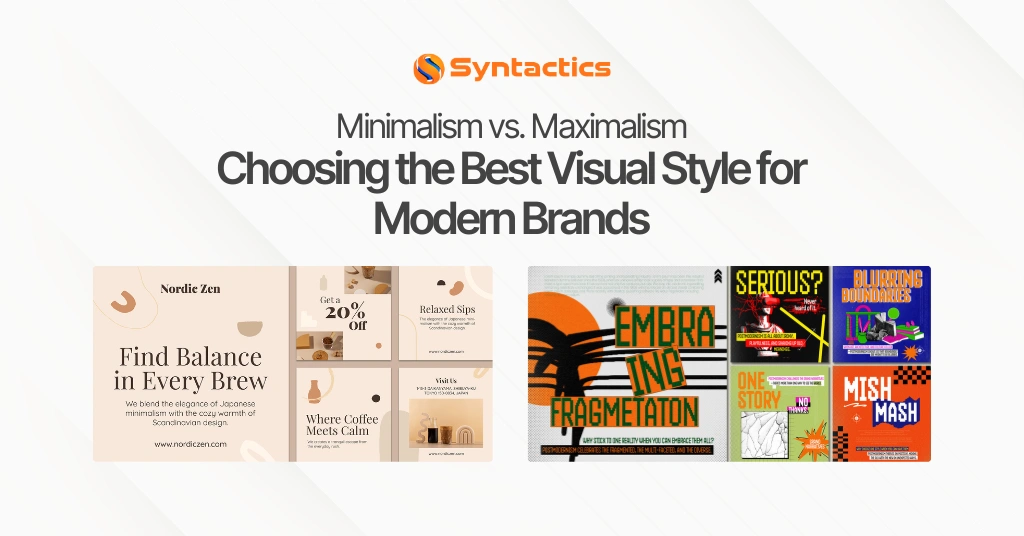
Minimalism vs. Maximalism: Choosing the Best Visual Style for Modern Brands
In visual communication, your brand’s identity is the first signal your audience receives. That said, minimalism vs maximalism graphic design defines the spectrum between clean simplicity and bold, vibrant expression.
According to Dash, 68% of companies find that maintaining a balanced, consistent brand identity contributes to a 10%-20% increase in overall revenue. This evolution highlights that your design choice is a strategic move to capture attention and stand out in a competitive marketplace.
TABLE OF CONTENTS
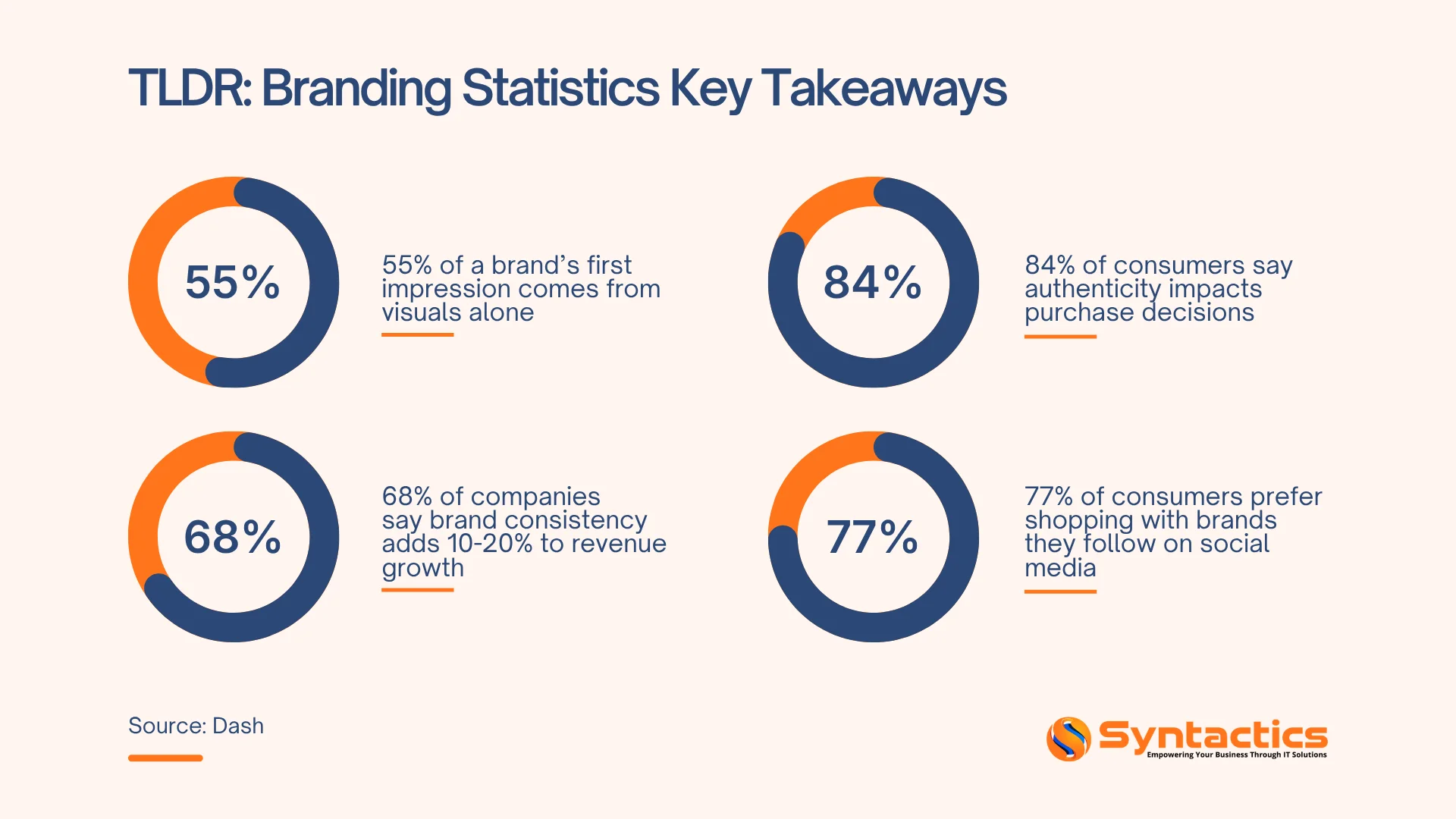
Source: Dash
Key Takeaways
- 94% of initial impressions are influenced by design quality. (Cropink)
- Minimalism focuses on clarity and functional efficiency for high-utility brands.
- Maximalism thrives on emotional resonance and storytelling through bold aesthetics.
- The hybrid approach lets you combine the strengths of both styles for maximum impact.
- Audience demographics and platform context dictate the most effective style.
Understanding Minimalist Design
You can think of minimalism as the art of intentionality. It’s a philosophy rooted in the idea that every element on a page or screen needs to have a distinct purpose. So, when you strip away decorative noise, you allow your brand’s core message to breathe. In fact, Cropink’s Insightful Graphic Design Statistics reports that 94% of first impressions are design‑related.
By focusing on clarity, you ensure that your audience isn’t overwhelmed by unnecessary data, making your brand appear sophisticated, modern, and accessible.
Core Characteristics of Minimalism
Minimalist design creates a sense of luxury and calm by removing everything that doesn’t contribute to the primary message. According to Yale School of Management, 67% of consumers need to trust a brand before making a purchase, and clear, high-quality visuals are a top driver of that confidence.
To achieve this level of precision, focus on these elements:
- Negative Space: Extensive use of “white space” to give elements room to breathe.
- Simplified Typography: Prioritizing clean, readable fonts over decorative lettering.
- Limited Color Palettes: Using monochromatic schemes or a few complementary shades.
- Functional Hierarchy: Directing the user’s eye to the most important information first.
- Stripped Visuals: Reducing icons and illustrations to their simplest geometric forms.
The Rise of Maximalism in Modern Design
You’re likely seeing a surge of visual loudness in your social feeds, a direct response to the repetitive look of many corporate identities. Maximalism challenges these uniform visuals by rejecting rigid grids and embracing a “more is more” approach that prioritizes expression and personality.
For your brand, maximalism offers a way to stand out in an era of short attention spans. According to Canva, creative visual content drives 74% faster memory encoding than non-creative content, reinforcing the idea that bold, expressive design helps audiences remember and engage with your brand more effectively.
With this in mind, maximalist graphics invite your audience into a rich, immersive world where every detail contributes to the experience, making your brand feel more human, experimental, and relatable.
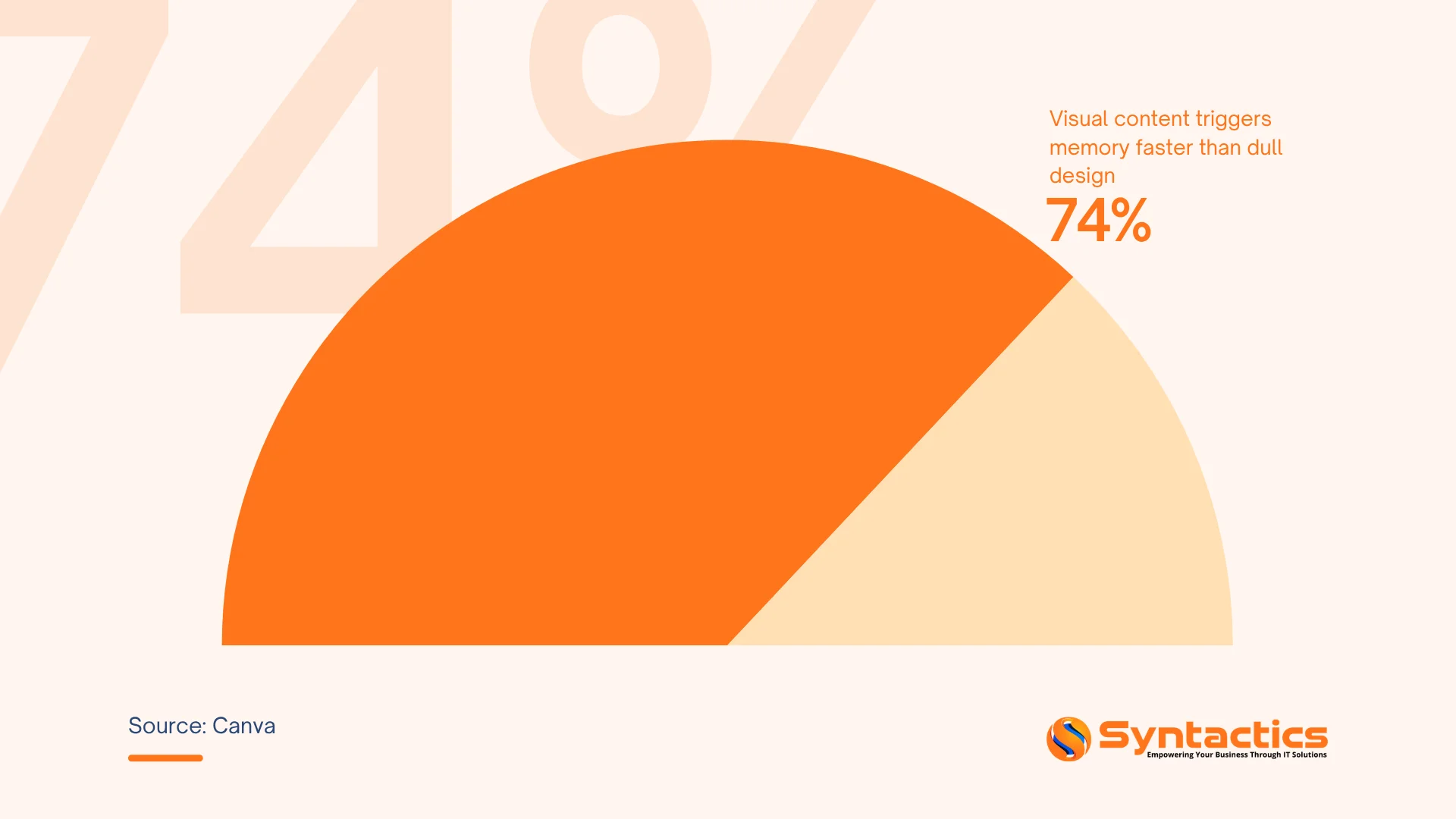
Source: Canva
Core Characteristics of Maximalism
Maximalism is defined by its fearlessness and refusal to leave any space empty. Unlike the quiet nature of minimalism, this style is loud, proud, and often nostalgic.
Mastering this aesthetic requires a focus on these specific traits:
- Vibrant Color Schemes: Using clashing or high-contrast colors to create energy.
- Layered Textures: Combining different visual patterns and grains to add depth.
- Mixed Typography: Using multiple font families simultaneously to emphasize different moods.
- Repetitive Patterns: Filling the entire surface with motifs or icons to create a sense of abundance.
- Visual Storytelling: Including hidden details or “easter eggs” that reward the viewer for looking closer.
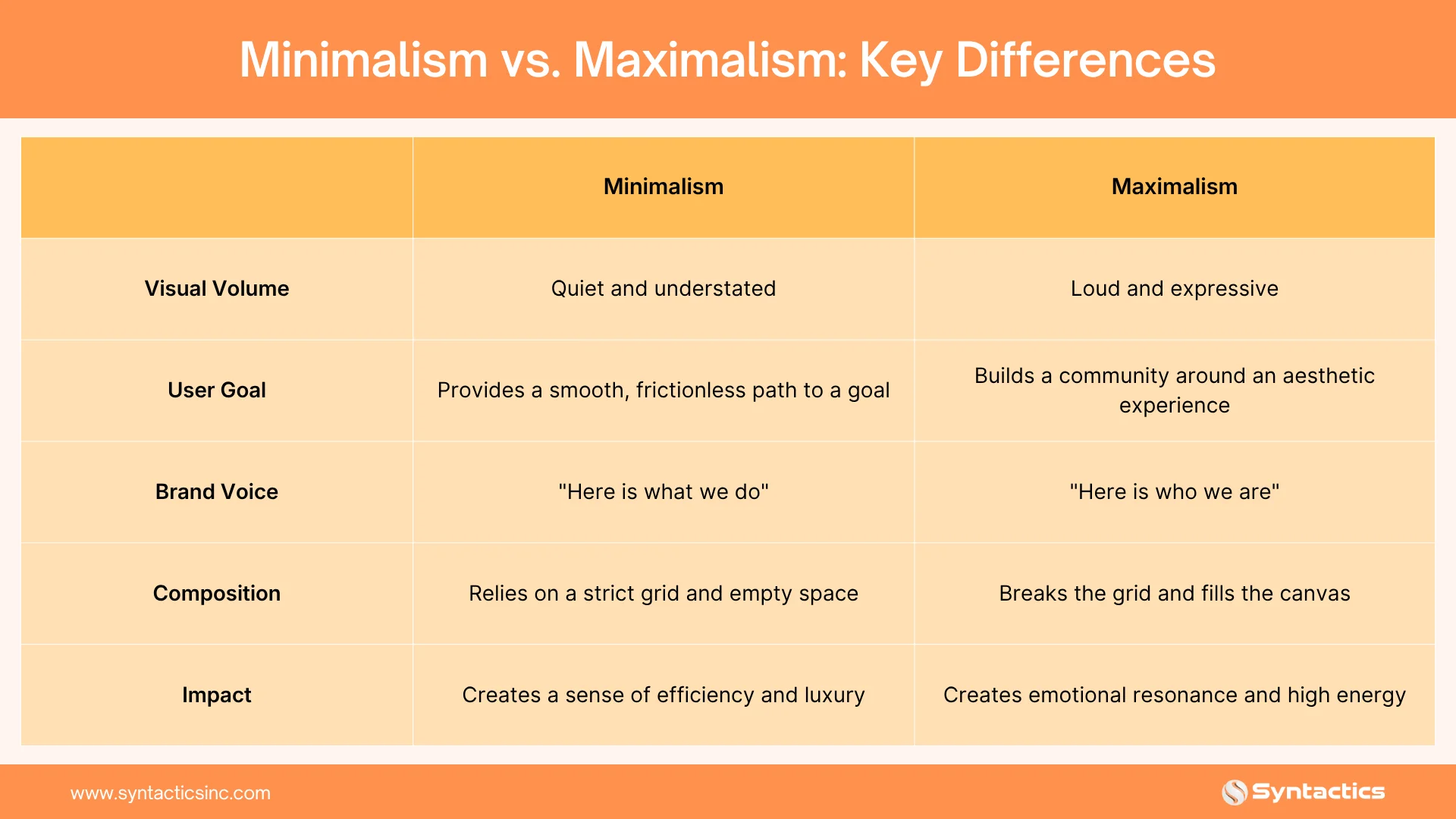
Minimalism vs. Maximalism: Key Differences
When you compare these two, you’re essentially choosing between focus and feeling. The emerging trend of minimalism vs maximalism in graphic design allows you to use a clean minimalist structure while filling it with maximalist textures and colors. As such, this design creates a balanced visual feast.
To better understand the divide, consider these primary differences:
When to Use Each Style
Your choice is dictated by your target audience and the medium you’re using. For example, if you’re designing a landing page for a business service, minimalism will help people find the information they need quickly. However, if you’re launching a limited edition product or an event poster, a maximalist approach will create the “stop and stare” effect you need.
Many firms are now expanding their creative capacity by seeking a trusted graphic design company in the Philippines to diversify their visual output. This is because working with experienced graphic designers in the Philippines allows brands to experiment with high-end aesthetics while maintaining a professional standard. Whether you lean toward the quiet or the loud, the goal is always to create a cohesive brand story that converts.

Conclusion
By adopting a strategy that incorporates minimalism vs maximalism in graphic design, you ensure your brand remains functional yet unforgettable. You don’t have to settle for a generic look when you can have a bespoke identity that speaks directly to your customers’ desires and needs.
At Syntactics, Inc., we understand that every brand has a unique pulse. Our graphic design services in the Philippines specialize in creating tailored visual solutions that bridge the gap between simple utility and bold expression. Whether you need a clean minimalist interface or a vibrant maximalist marketing campaign, we provide the technical expertise and creative flair to level up your presence.

FAQs About Minimalism vs Maximalism in Graphic Design
What is minimalism in graphic design?
Minimalism prioritizes simplicity by using ample white space and limited color palettes. It aims to eliminate distractions so the viewer can focus entirely on the core message or function.
Which style is better for SEO and web performance?
Minimalism is generally better for web performance because fewer heavy visual elements lead to faster loading times. However, well-optimized maximalist designs can still perform well if they use modern file formats and clean coding.
Is maximalism too distracting for mobile users?
It can be if not handled correctly by a professional designer. Effective maximalism uses a clear visual hierarchy to guide the eye, ensuring the most important information is seen first.

About Jalou Batilong
Related News:

Strategies for In-Depth PPC Competitor Analysis











Comment 0