

The Breaking Point: When LMS Providers Outgrow their Platforms
Lending businesses expand faster than the systems supporting them. As application volumes increase, firms begin to experience operational bottlenecks that affect both customer satisfaction and internal productivity. What was once manageable in the early stages of the business now exposes itself as a limitation.
Because of these circumstances, a loan management system (LMS) software has been developed to accommodate the growing scale of service. According to PwC, these digital innovations can automate transaction processes for more focused outcomes in finance. To illustrate, here’s an overview of how modernized systems change the workflow of lending institutions:
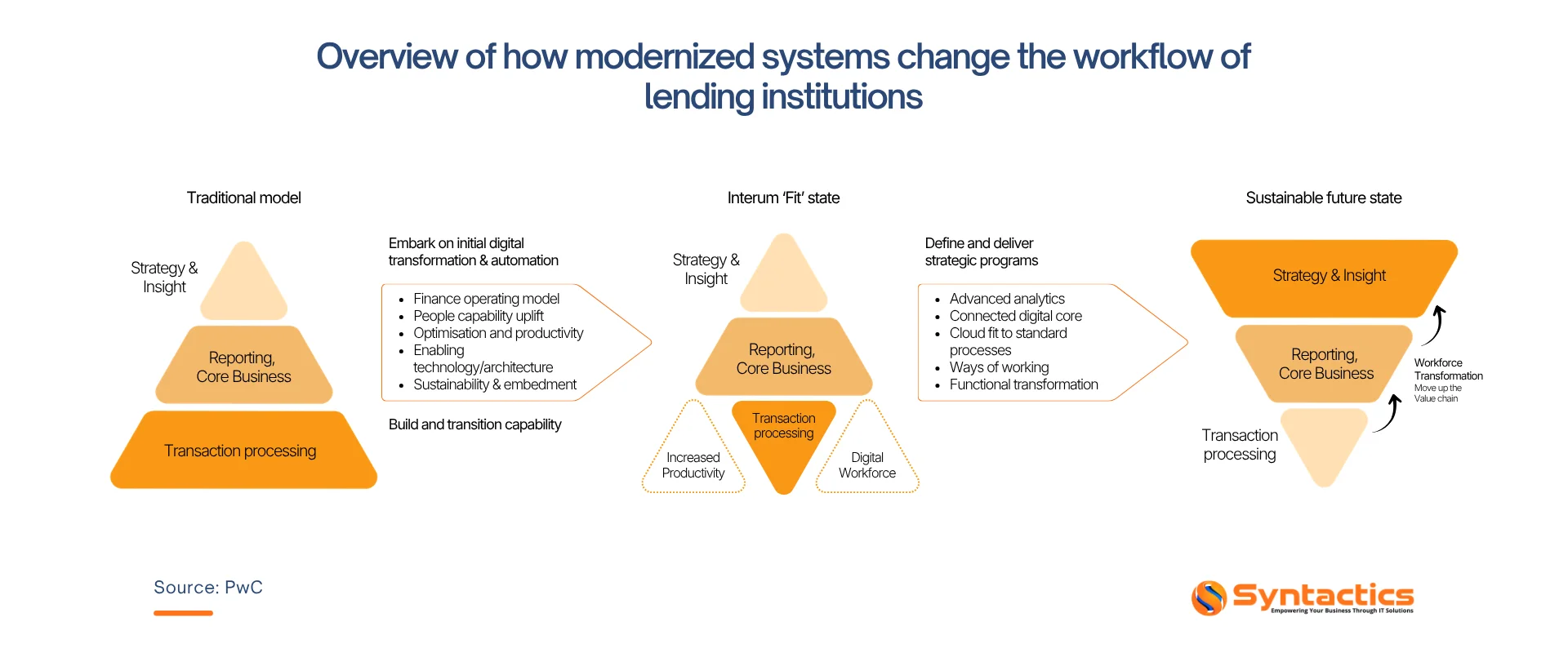
Source: PwC
For lending providers, outdated infrastructure directly impacts revenue opportunities, scalability, and risk management. Addressing these problems early on helps you determine when a more scalable loan management system software solution is necessary.
Key Takeaways
- Over 50% of organizations still struggle to deliver fast and seamless digital lending experiences. (BusinessWire)
- Outdated infrastructure leads to hidden costs, including decreased employee productivity, risks in manual data consolidation, and revenue loss due to downtime.
- Inefficient systems often lead to high application abandonment rates, resulting in customers switching to competitor providers.
- Off-the-shelf software lacks the flexibility needed for niche financing products, making loan management system software a feasible choice.
- Rapidly changing financial regulations require agile systems that can be updated quickly to meet region-specific standards.
- A dedicated development team enables faster iteration and customization of your loan management platform.
Early Signs You’ve Outgrown Your LMS
Most lenders use loan management systems. As operations grow, inefficiencies become easier to spot, which can quickly affect company-wide performance.
Daily Operations Are Becoming Inefficient
Many firms rely on disconnected tools to compensate for software limitations. As a result, teams create workarounds to handle changing operational processes. This indicates the need for a loan management system software that addresses these problems. According to Experian, 66% of businesses believe advanced features will change how loan firms do their business.
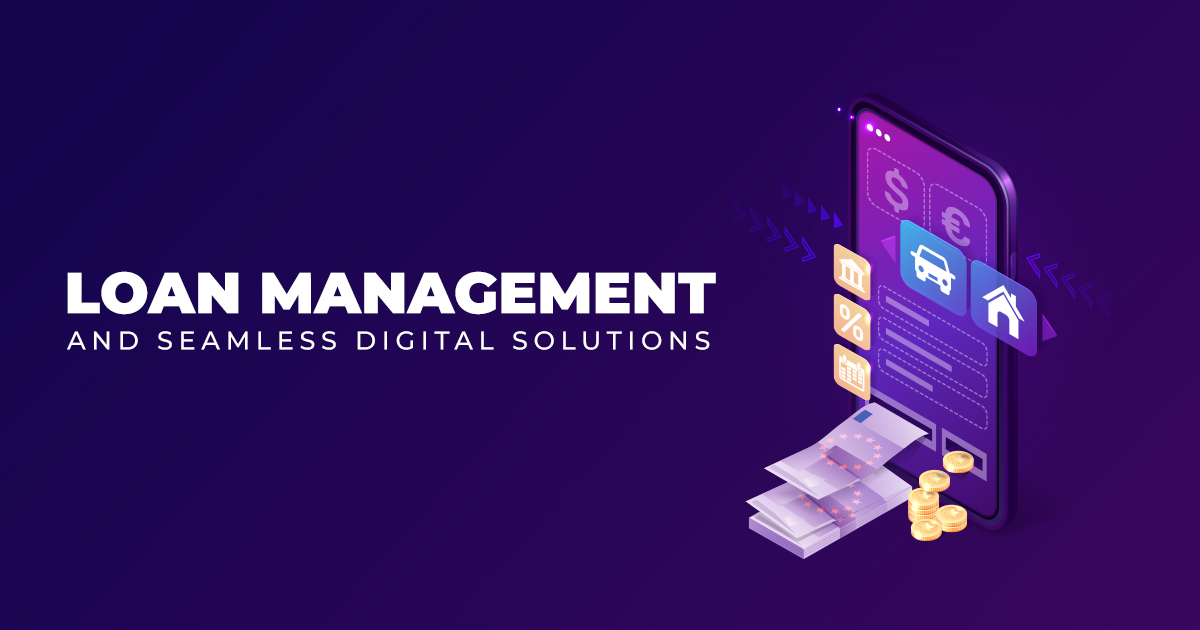
Here’s how digital solutions can make loan management systems seamless:
Employee Bottlenecks Start Slowing Productivity
When staff members spend more time fixing errors, duplicating records, or verifying information, productivity declines across departments. These bottlenecks delay loan approvals because teams must compensate for software inefficiencies. As internal teams struggle with outdated systems, interdepartmental collaboration creates operational strain.
Reporting and Data Become Harder to Manage
Data visibility is another major issue when lenders outgrow their platforms. According to Business Wire, more than half of organizations still struggle to deliver fast and seamless digital lending experiences. Reports that often require manual consolidation from multiple sources are at risk of inaccuracies. As such, executives get decision fatigue on maintaining momentum.
The Hidden Costs of Legacy LMS Software
Outdated LMS platforms increase operational expenses, undermining the cost-effectiveness of software development. Here’s how it impacts financial firms:
Slow Processing Impacts Customer Experience
Borrowers expect fast approvals and transparent communication throughout the process. So when inefficient systems cause delays, customers grow frustrated with your services. They also end up abandoning their applications and switching to competitors that offer faster approvals.
For this reason, 70% of financial institutions have implemented digital loan origination systems, according to the ABA Banking Journal reports. These features prioritize convenience and responsiveness to improve customer service.
Downtime and Support Issues Disrupt Operations
Legacy systems are more vulnerable to outages, compatibility issues, and delayed vendor support. Even brief downtime can interrupt underwriting, servicing, collections, and customer communications. As a result, financial institutions can lose up to $152 million annually, according to industry data. In addition, it can damage borrower trust.
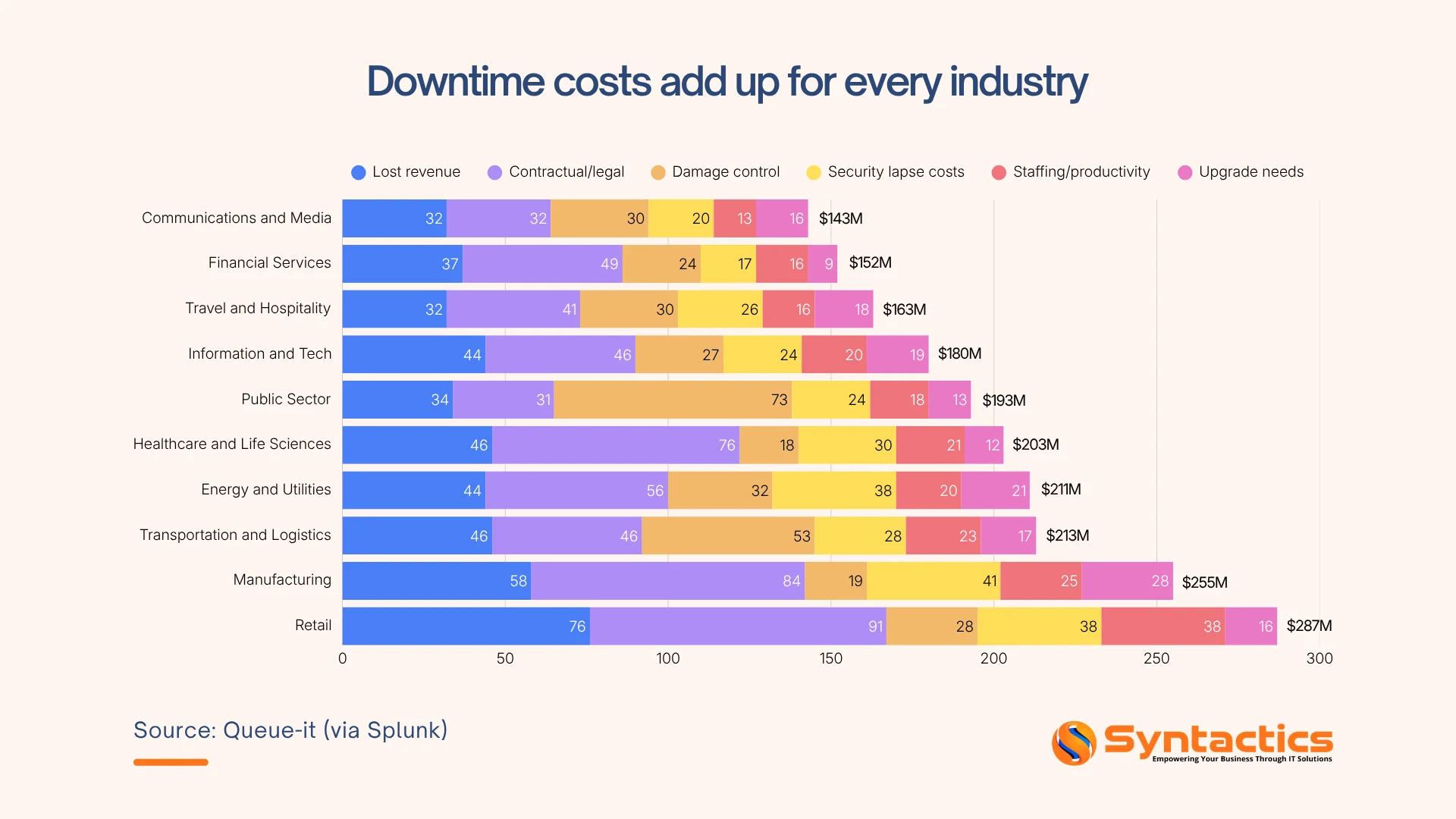
Source: Queue-it (via Splunk)
Missed Revenue Opportunities
According to data from Research and Markets, the loan management system software market is expected to reach $14.13 billion in 2026. The rapid expansion highlights how lenders increasingly prioritize scalable and configurable systems
Outdated systems limit operational scalability, resulting in teams inefficiently processing loans on manual intervention. As a result, lenders may struggle to launch new products quickly or expand into new lending markets. Without modernization, businesses risk losing borrowers to faster and more adaptive competitors.
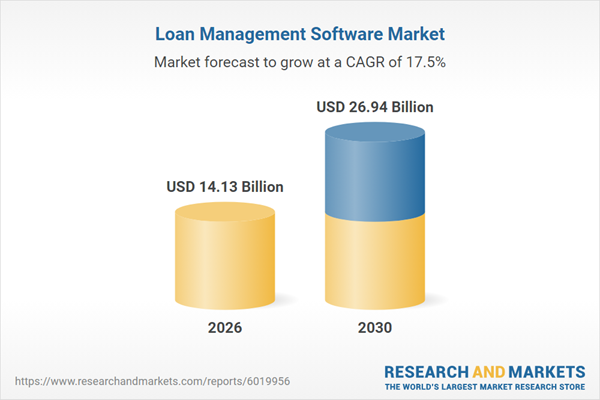
Source: Research and Markets
When Off-the-Shelf Software No Longer Fits Your Process
Many off-the-shelf systems offer limited flexibility, making it difficult for lenders to configure them to meet their specific workflow needs. This issue becomes more noticeable for businesses offering niche financing products such as:
- Variable repayment terms
- Layered approval processes
- Specialized underwriting requirements
That said, lending firms partner with web design and development teams in the Philippines and around the world to build efficient loan systems. This results in a seamless borrower experience among them.
Regulatory compliance also adds another layer of complexity for lenders using outdated systems. Financial regulations frequently change, requiring businesses to update workflows, reporting standards, and borrower verification processes quickly. Older platforms often lack the flexibility needed to support region-specific lending requirements or updates.
When a Dedicated Development Team Makes Sense
Here are factors that point to when having a dedicated team makes sense for lending providers operating in the Philippines and worldwide:
- Need for Customization: Firms connect with dedicated developers who understand the philosophy of their platform.
- Faster Iteration: Lenders respond quickly to market shifts, borrower expectations, and regulatory updates that affect profitability and compliance.
- Vendor Limitations: Internal development collaboration becomes important as the scale of operational complexity increases.
- Outpaced Business Growth: More borrowers, products, compliance requirements, and integrations place heavier demands on existing systems.
Strong digital infrastructure combined with an effective loan management system software helps lenders maintain performance while improving customer engagement.
Conclusion
Business growth exposes the limitations of outdated software. What once effectively supported operations can eventually become the biggest obstacle to efficiency. That’s why lenders need flexible systems capable of adapting to evolving market demands, regulatory changes, and increasing borrower expectations.
Investing in scalable loan management system software allows you to create better borrower experiences. Modernizing this experience early on places your firm for long-term growth instead of reactive operational breakdowns.
Partnering with Syntactics Inc., a dedicated software and web development team, helps future-proof your lending operations. Whether you are replacing legacy software or building a custom solution from the ground up, you get a single point of contact for your business needs. See how our team learns your business and scales with it!

Frequently Asked Questions (FAQs)
Why do lenders invest in custom LMS development?
Lenders in the Philippines and worldwide invest in custom software development to improve their operational efficiency and scalability. It also supports unique workflows, automation, and lending products.
How does a loan management system help with regulatory compliance?
A loan management system helps automate compliance tracking and reporting requirements. It also reduces manual errors and supports faster regulatory updates.
Can a custom LMS integrate with third-party tools our team already uses?
Yes, a custom LMS can integrate with CRMs, payment gateways, accounting software, and e-invoicing workflows. These integrations improve workflow efficiency and data accuracy.

About Ladymieh Naallatan
Related News:

Digital Marketing Lessons Learned from 2020




Web Page Comments and Letting Users Leave Them






Comment 0