

Win More Clients Through Conversion Rate Optimization
Getting traffic to your website is only half the battle. The real challenge is turning those visitors into paying clients, and many businesses struggle with this.
Conversion rate optimization (CRO) means getting more website visitors to take the actions you want, such as submitting an inquiry, booking a consultation, or requesting a proposal. CRO offers a high return on investment, but for every $92 spent acquiring new customers, only $1 is spent converting them.
When done right, CRO helps businesses lower the cost of acquiring new customers, generate better leads, and deliver better results over time.
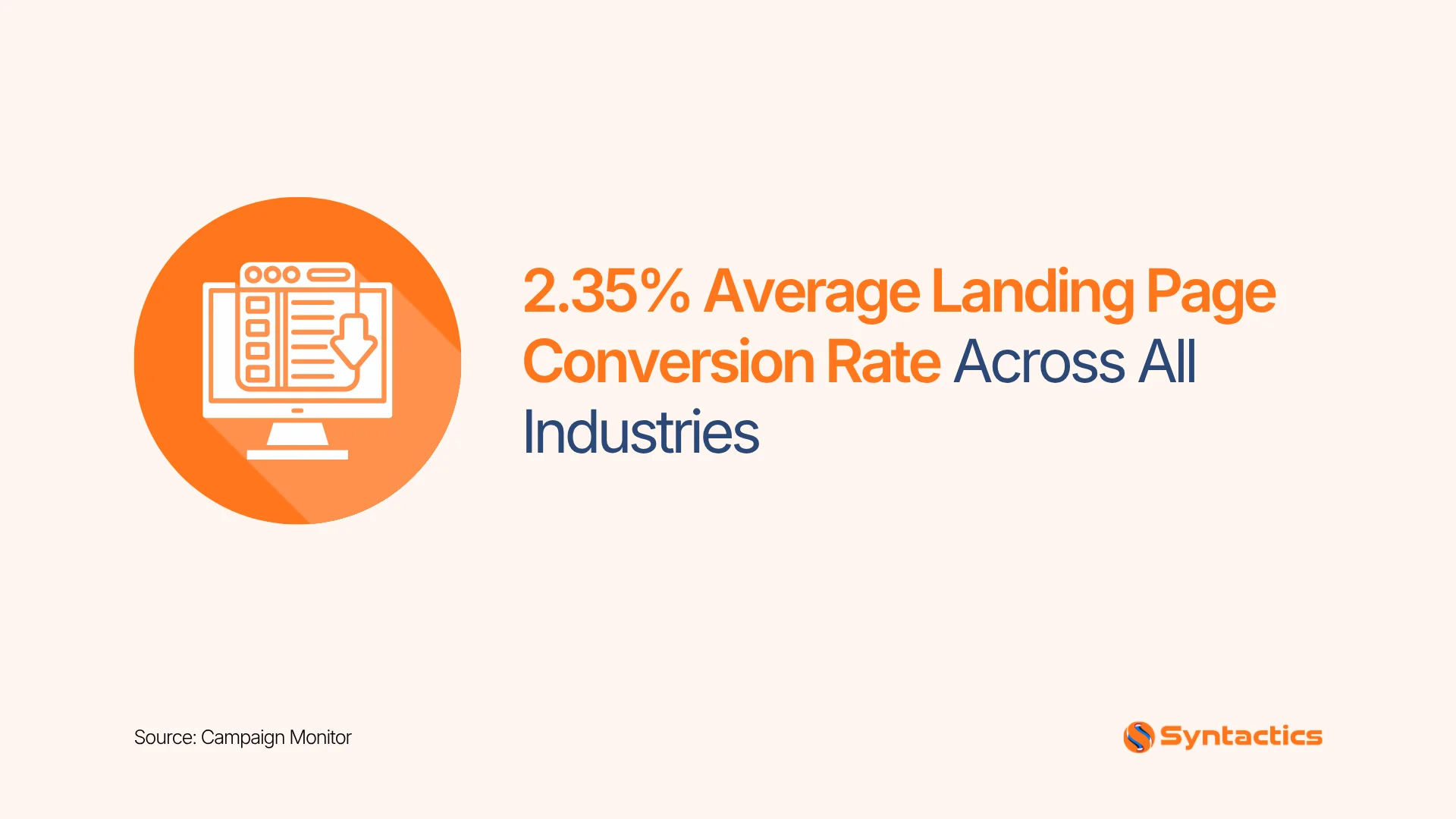
Source: Campaign Monitor.
What Is Conversion Rate Optimization for Businesses?
For businesses, conversion rate optimization means making steady improvements to your website so more visitors complete a key action. This action is usually the first step in your sales process, like filling out a form, booking a call, or requesting a quote.
A CRO strategy for businesses operates across two levels.
- Primary conversions are the actions that directly generate leads or revenue: a contact form submission, a consultation booking, or a proposal request.
- Micro-conversions are the smaller steps that lead there: visiting a pricing page, downloading a case study, or spending time on a key service page.
By improving both types of conversions, you help move visitors from just browsing to actually becoming customers.
CRO Is an Ongoing Testing Process
Conversion rate optimization is not something you do just once. It’s an ongoing process in which you look for ways to improve, make changes, measure the results, and try new ideas.
Even small tweaks to headlines, calls to action, form layouts, or trust signals can lead to big improvements, especially when you rely on data instead of guesses.
Why Most Business Websites Fail to Convert
The average conversion rate for professional services sits at 4.6%. But most businesses don’t reach that number. The good news is that the reasons are common and can be fixed.
- Vague value propositions. Visitors cannot tell within five seconds what you do, who you serve, or what outcome you deliver. Most service pages lead with company history instead of client results.
- Weak CTAs. A “Contact Us” button creates hesitation. Personalized CTAs perform up to 202% better than generic ones. CTAs that describe the next step, such as “Book a Free Strategy Call,” consistently outperform vague alternatives.
- Slow load times. Sites that load in one second convert at roughly 3x the rate of sites that take five seconds.
- Friction in forms. Long inquiry forms drive drop-off before submission. Reducing form fields from 7 to 3 increases conversions by 20-35%.
- Poor message match. Visitors come to your site with certain expectations based on what they saw in search results, ads, or referrals. If your landing page doesn’t meet those expectations, people often leave without doing anything. Make sure your headlines, offers, and messages match what brought visitors to your page.

How to Improve Your Website Conversion Rate: 7 Strategies That Work
These strategies address the most common reasons service-business websites lose conversions. Each one is practical and doesn’t require much technical know-how to implement.
1. Clarify Your Offer Above the Fold
The first section a visitor sees should immediately communicate three things: what you do, who you help, and the outcome clients can expect. Visitors should not have to interpret vague marketing language or search for basic information.
A clear value proposition helps visitors quickly see if your business is right for them. Almost half of website visitors don’t scroll past the first section they see, so your above-the-fold area does most of the work in getting conversions.
Action step: Change your homepage message to clearly state the main benefit for clients and prompt them to take the next step, such as “See How We Help You Grow” or “Start Your Free Consultation Today.”
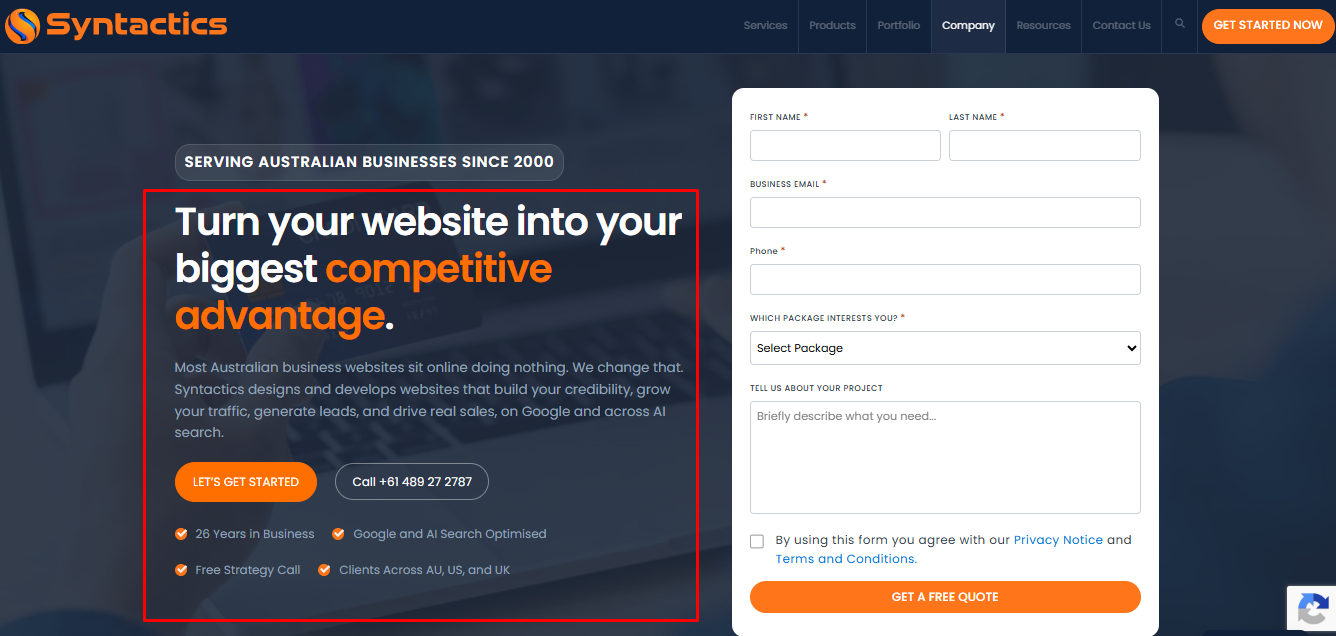
2. Understand Visitor Behavior Before Making Changes
To improve your conversion rate, start by learning how visitors use your website. Tools like heatmaps, session recordings, form analytics, and user surveys show where people get stuck, confused, or leave before converting.
Instead of guessing, use real data about user behavior to find out where visitors run into problems. This way, you can focus your improvements on actual issues, not just what you think might be wrong.
Action step: Use Microsoft Clarity or Hotjar to find the one biggest barrier in your users’ journey. Commit to fixing it this week and track results immediately.
3. Map and Fix Your Conversion Funnel
A conversion funnel is the path a visitor follows from landing on your site to making an inquiry. For most service businesses, this means moving from the homepage to the service page, then the pricing page, the contact form, and finally a confirmation.
By mapping this funnel in Google Analytics 4, you can see exactly where visitors leave. Marketers who target content based on funnel position see a 73% higher conversion rate than those who don’t. The step with the highest exit rate is your highest-priority CRO opportunity.
Action step: Set up a funnel in GA4, identify your top drop-off point, and update that page with a targeted offer or clearer next step right away.
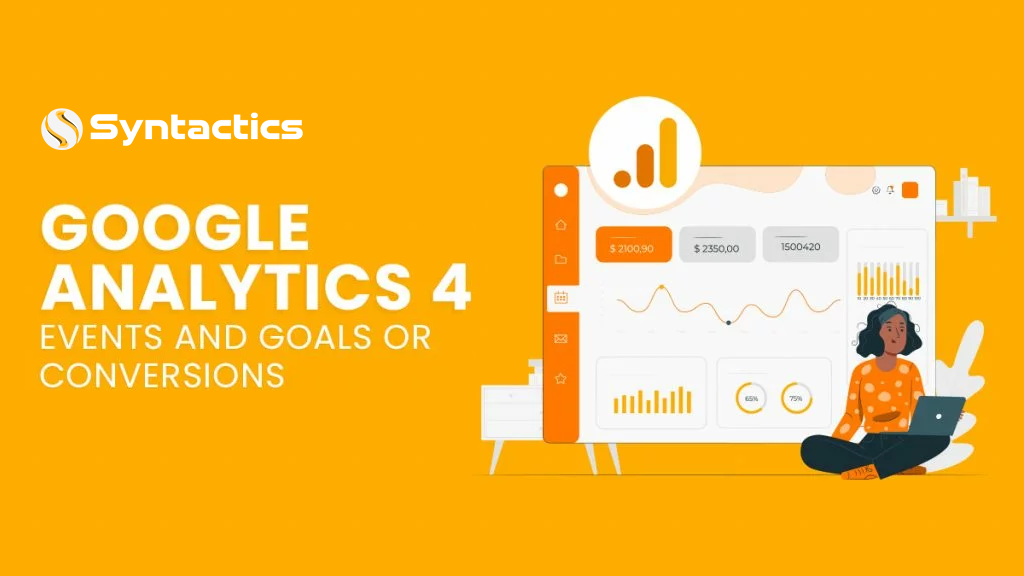
4. Optimize Landing Pages for a Single Action
Landing page optimization is one of the highest-return CRO activities for businesses. The average landing page conversion rate is 6.6% across industries, with top performers reaching 10% or higher.
The key is to have one page focused on one action. Pages with a single CTA convert 32% better than those with two or more. Every additional link or secondary offer is a distraction that reduces the likelihood of conversion.
Action step: Build a custom landing page for each service. On paid ads, keep only one clear call to action, such as “Book My Free Strategy Call Now.”

5. Place Social Proof Near Every CTA
Trust often makes the difference when people choose a service provider. Visitors want proof that your business can deliver the results they’re looking for.
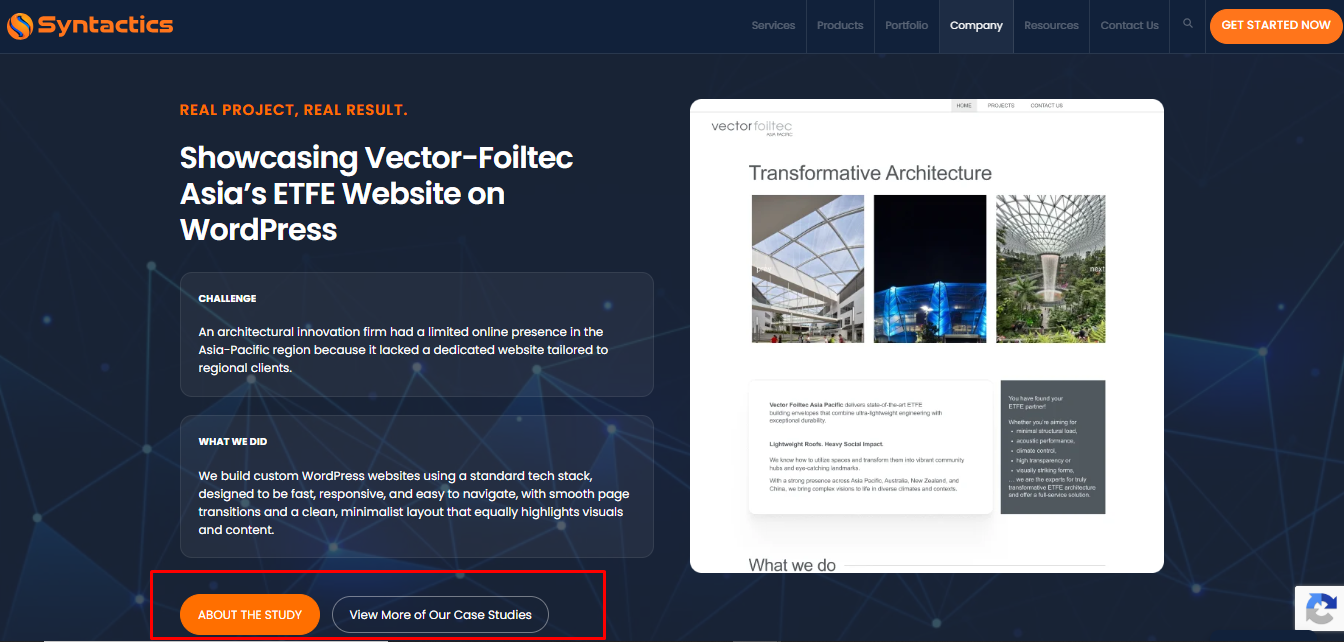
Testimonials matter, but they’re just one way to build trust. Things like industry certifications, awards, client retention rates, case study results, partner badges, and showing your expertise can all help convince visitors to convert.
The placement of these trust signals matters just as much as their presence. Social proof placed near CTAs, not buried on a separate testimonials page, drives measurable results. According to HubSpot data, including social proof below a CTA can increase its conversion rate by 68%.
Only 28% of companies are satisfied with their conversion rates, according to Econsultancy and RedEye. For many businesses, the real problem isn’t traffic or design, but a lack of credibility when visitors are ready to decide.
Action step: Place a testimonial, client logo, or credential right next to your primary call to action. Test which element gets you more inquiries this month.
6. Reduce Friction in Contact and Inquiry Forms
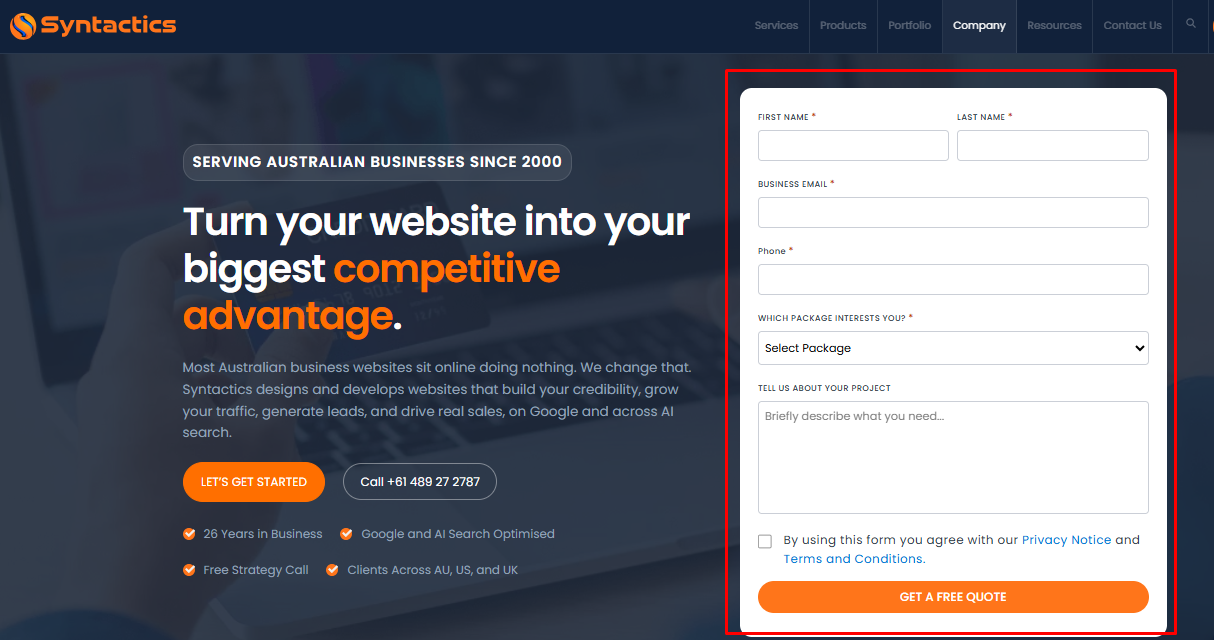
Form length reduction delivers the highest conversion lift of any single CRO change, up to 120% in A/B test data. Collect only what you need to start a conversation: name, email, company or website, and a brief description of the need.
Each field should have a clear, short label that tells visitors what to enter and why. Confusion at this stage is a common reason people leave before submitting the form.
Action step: Cut all non-essential fields from your form and leave only what’s needed to make contact. Test the new version this week and review the conversion lift.
7. Optimize for Mobile and Page Speed
Mobile devices account for 79% of landing page visits, but their conversion rates are much lower than on desktops. Meanwhile, 53% of mobile users abandon sites that take more than three seconds to load.
A one-second improvement in load time can boost conversions by up to 7%. Compressing images, enabling browser caching, and minimizing render-blocking scripts are high-impact fixes that most websites can apply without a full rebuild.
Action step: Run your key pages website speed test tools like Google PageSpeed Insights. Fix every High Impact issue on mobile before making any design changes.

Source: BrowserStack.
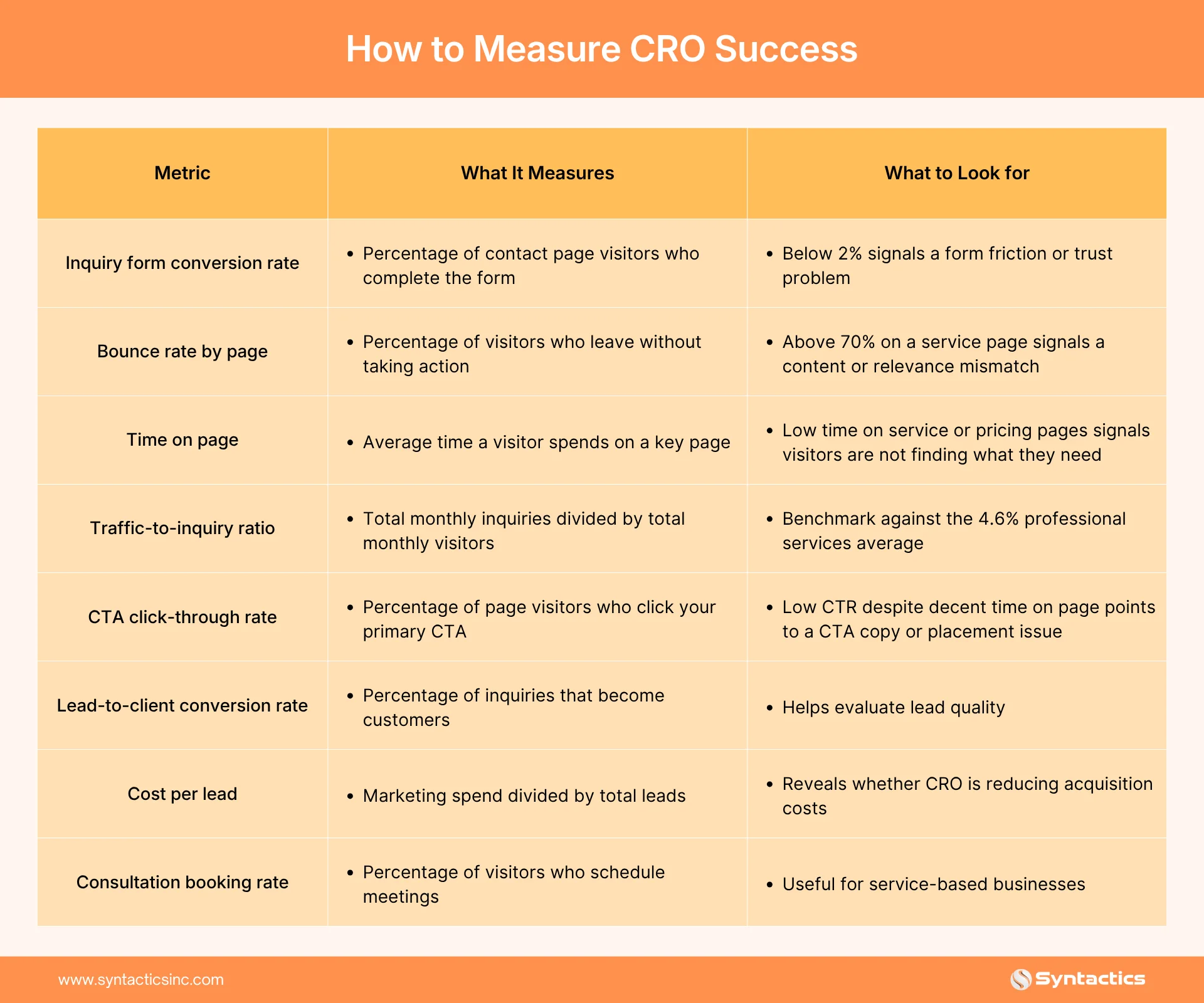
How to Measure CRO Success
Track these five metrics consistently to measure CRO progress for your service business website.
Conclusion
Conversion rate optimization helps your website get more out of the visitors you already have. For businesses, this means making things easier for users, building trust, and leading visitors to take the next step.
CRO and SEO (and, we mean Search Everywhere Optimization) work best together. If you get traffic but don’t convert it, you’re missing out. If you convert but don’t get enough traffic, your growth will be limited. Successful businesses use SEO to attract the right visitors and CRO to turn them into clients. When you combine this with strong SEO, the results are even better.
Syntactics, Inc. helps businesses attract qualified traffic through SEO services while improving the on-site experience that converts visitors into inquiries, consultations, and long-term clients. By combining search visibility with conversion optimization, businesses can generate greater returns from every marketing investment.

Frequently Asked Questions
What is conversion rate optimization for businesses?
Conversion rate optimization (CRO) for businesses is the process of improving a website so more visitors take a target action, such as submitting an inquiry, booking a call, or requesting a proposal. It involves analyzing user behavior, identifying friction points, and testing changes that increase the conversion rate.
What is a CRO strategy for businesses?
A CRO strategy for businesses is a structured plan to improve website conversion rates through funnel mapping, user research, landing page optimization, and A/B testing. It covers the entire conversion path and is treated as an ongoing process.
What is a good conversion rate for a business?
Professional services websites average a 4.6% conversion rate. A realistic starting goal for most businesses is 2% to 3%, with consistent CRO work pushing toward and beyond the 4.6% mark.
How do you convert website visitors into clients?
To convert website visitors into clients, clarify your offer above the fold, reduce friction in your inquiry forms, place social proof near your CTAs, build dedicated landing pages for each service, and fix mobile experience and page speed issues. Track your conversion funnel in GA4 to identify and address the highest drop-off points.

About Jalou Batilong
Related News:

Signs that Your Business is Ready for Automation


Google Sheets Features for Project Managers

Web Development Mistakes Developers Should Avoid


Comment 0