CASE STUDY
How a Poultry Farm Turned into a Data-Driven Production with Layer Management Systems
A mid-scale commercial layer farm operating three layer houses and nine cage lanes, with three lanes per building, looking to capitalize their egg production.
The poultry industry faces increasing pressure to maintain product quality and respond to market fluctuations. According to AviNews reports, chicken egg production in the Philippines grew by 8.9% in the late quarter of 2025. At a daily production scale, manual systems cannot provide the operational visibility required for sustainable growth.
This is the exact challenge a commercial poultry farm with 45,000 layer hens experienced. Their business relied heavily on spreadsheets, handwritten logs, and manual reporting processes, leading to inefficiencies. To modernize their operations, the client partnered with our company to build a custom farm management software and fix their fragmented workflows.
This case study breaks down how our development team bridged the gap on these problems.
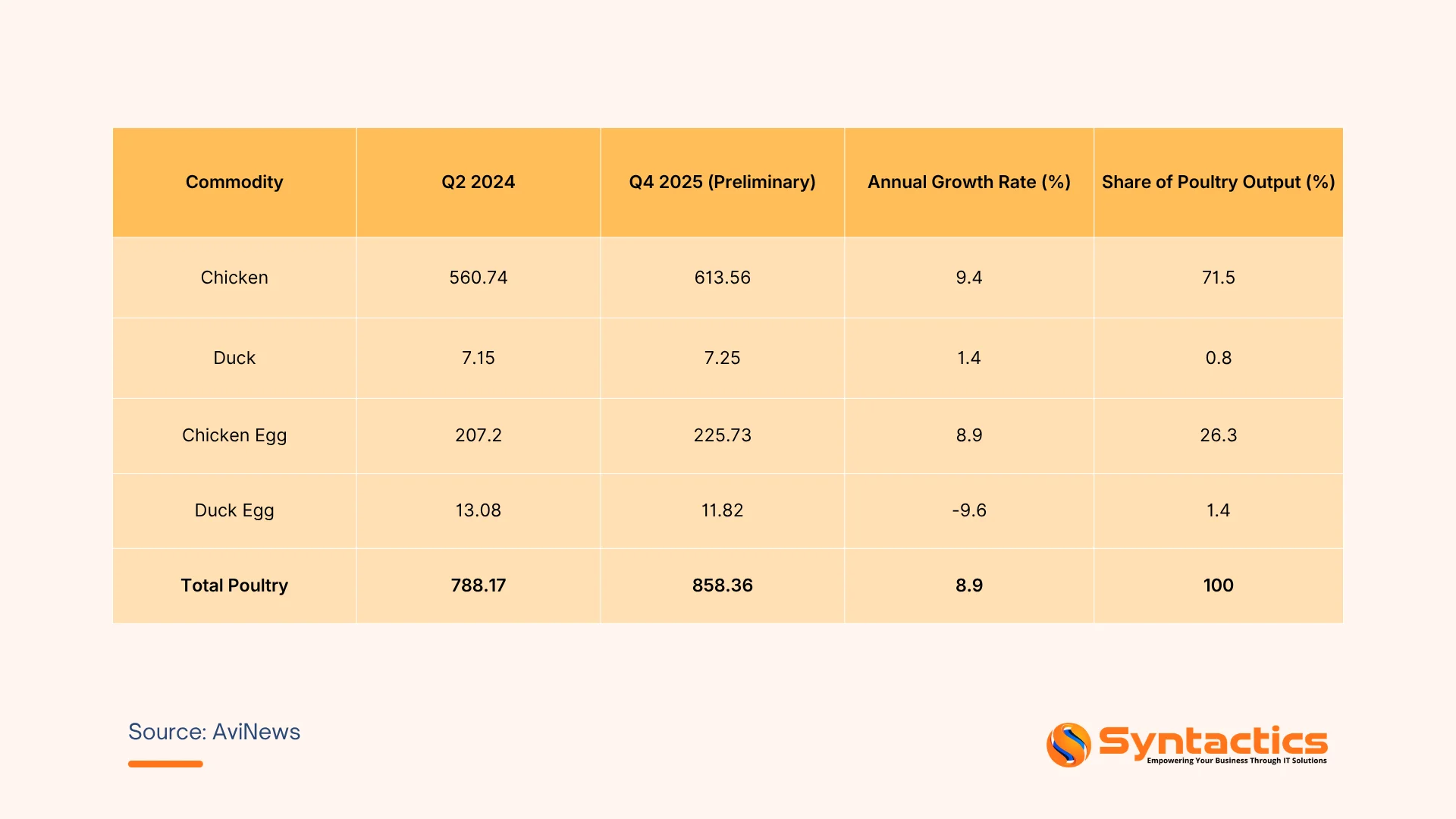
Source: AviNews
Key Takeaways
- Only 8% of farmers maintain consistent inventory records, a gap that often leads to costly stockouts or oversupply issues. (Frontiers.org)
- Manual systems and handwritten logs are insufficient for sustaining large-scale farm operations.
- Layer farm management systems allow dual-level performance tracking to distinguish egg production dips and staff performance issues.
- By digitizing the point of collection, farms reduce the risk of stockouts or oversupply of their products.
- Dual-entry data validation lessens recording errors and reduces the time spent on manual consolidation.
- Granular data supports long-term business decisions based on performance history.
About the Client
The client operates a mid-scale commercial layer farm structured around three layer houses and nine cage lanes, with three lanes per building. The farm uses an open-house conventional battery cage system to produce between 1,275 and 1,350 trays of eggs daily. This production pace is equivalent to approximately 38,250 to 40,500 eggs per day.
With 45,000 layer hens in active production, operational inefficiencies result in revenue loss for corrective action. To drive this digital initiative, the client engaged our team to develop agile business software, capitalizing on our proven track record as a trusted software company in the Philippines.
Operational Challenges in the Poultry Farm
Before the system was built, the farm struggled with three interconnected problem areas that created blind spots across its entire operation. Here’s what our software development services in the Philippines identified:
Production Tracking Issues
Egg production records were tracked by number of trays, with no breakdown of individual egg counts or size classifications. Cracked and damaged eggs were also logged inconsistently, creating data gaps that made it difficult to compare efficiencies across battery cage systems.
Inventory and Reporting Discrepancies
Manual consolidation of inventory reports took significant time and led to discrepancies between what flockmen and supervisors recorded. Inventory balances were often delayed or unclear, and there was no structured system for monitoring egg price trends.
According to an empirical study on record-keeping, only 8% of farmers keep track of their inventory records. If there’s ineffective inventory management, the poultry will often face stockouts or oversupply, which affects the farm’s profitability.
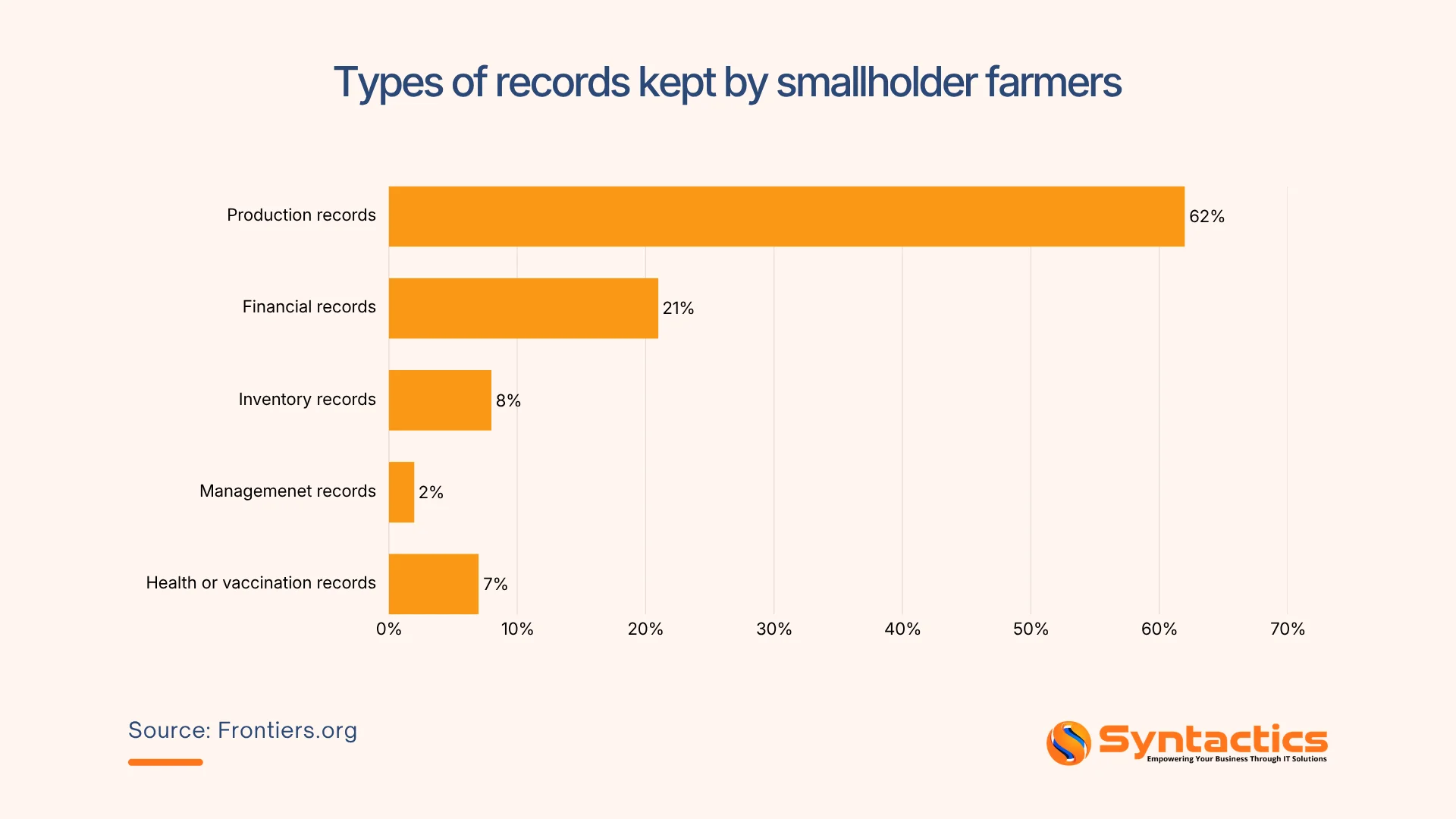
Source: Frontiers.org
Performance Visibility Issues
Management had no way to determine which flock or which lane had production dips or quality issues. Without quality tracking or individual accountability, root-cause analysis was time-consuming and largely based on assumptions rather than data.
Key Opportunities for Operational Improvement
With the challenges mapped out, our team identified four core areas that emerged as priorities for the layer farm management system software:
- Improve Production Accuracy: Egg tracking gives management a more precise picture of daily output.
- Increase Personnel Accountability: Identify whether production issues originate from specific flock men or lanes to target corrective action.
- Strengthen Quality Control: Proper classification of egg sizes, cracked eggs, and rejected eggs at the point of collection.
- Efficient Reporting and Inventory Management: Replace manual logs and spreadsheets with automated, real-time data capture.
- Better Business Decisions: Make informed actions based on inventory analysis, pricing trends, workforce performance, and lane efficiency.
The Solution: Layer Farm Management System
Leveraging our extensive experience as an established software development company in the Philippines, we developed a system that digitizes every key touchpoint in daily poultry operations. Here’s what our software solution contained for a feasible document tracking system:
Core System Features
Our team designed a farm management software equipped with the following features to address operational gaps in the client’s old workflow:
- Production tracking per building, lane, and flockman
- Dynamic flockman-to-lane assignment with records
- Egg recording by trays and individual pieces
- Egg classification by saleable, cracked, and rejected categories, as well as by size
- Real-time inventory computation
- Sales, balance, and revenue tracking
- Dual-entry data validation to reduce recording errors
Dynamic Workforce Tracking
The system accommodates personnel rotation across different lanes throughout the week, where all historical data remains accessible. This eliminates the accountability gaps that manual tracking systems inevitably create.
Dual-Level Performance Monitoring
Performance is evaluated at two distinct levels simultaneously: per flockman and per lane. This dual-layer approach is particularly valuable in large-scale farm operations. By separating staff performance from lane performance, management can overcome challenges with smart technological adoption.
Granular Operational Visibility
The system tracks inventory at the piece level, distributes eggs by size category, and monitors quality at the lane level. This provides the client with the data they need to make informed business decisions about pricing, buyer allocation, feed evaluation, and breed performance.
Generated Reports by the System
Automation reports save you 25,000 hours of avoidable work each year (CloverDX). Here are the types of reports that serve a specific decision-making function in the poultry farm:
Flockman Productivity
Track each worker’s daily output, including eggs and trays collected, breakage rates, mortality records, and feed usage responsibility. This creates a clear performance trail that supports both accountability and coaching.
Lane Performance
Monitor production output per lane, cracked and rejected egg counts, and quality trends over time. As a result, the management can identify underperforming lanes before small issues escalate into larger production losses.
Cross-Analysis Report
Compare how different flockmen perform on the same lane and how the same flockman performs across different lanes. This comparison helps answer whether the problem was caused by the flockman or the lane.
Egg Size Distribution
Track the daily distribution of eggs by size to support pricing decisions, buyer allocation, feed evaluation, and breed assessment. It transforms an informal observation into a structured, data-driven input for farm strategy.
Outcomes Achieved and Business Impact
The layer farm management system software delivered clear, documented improvements across different aspects of poultry operations:
- Faster Reporting: Reports are created in a fraction of the time previously required.
- Improved Accuracy: Inventory balances are clearer, and reporting discrepancies between flockmen and supervisors has decreased.
- Better Performance Visibility: Management can track per-flockman and per-lane performance with precision and identify problems faster.
- Better Quality Control: Egg size monitoring and reject and breakage tracking now run automatically with each daily entry.
- Improved Decision-Making: Real-time operational insights allow for faster corrective actions and more strategic planning.
With these outcomes, the farm successfully institutionalized a data-driven operational framework, mitigating the risks associated with legacy manual processes. This transition produced tangible business improvements that extend beyond operational efficiency into long-term strategic positioning.
Conclusion
Overall, the farm management software our team developed transformed fragmented manual records into a data-driven system built around the farm’s actual operational structure. By digitizing daily operation touchpoints, the project showed improvements within a focused timeline.
The results are further reflected in the value of building a solution designed for the problem:
- Daily reporting became faster and no longer dependent on manual consolidation
- Management gained clear, real-time visibility into production, inventory, and workforce performance
- Root-cause identification shifted from guesswork to structured, data-supported analysis
Modernize your farm operations with expert solutions. Syntactics Inc. is your leading provider of custom software development services for SMEs in the Philippines and worldwide. We develop and integrate adaptable solutions designed that scale in tandem with your business’s growth. See how our team empowers your operations with systems built for your needs!

Frequently Asked Questions (FAQs)
What is farm management software?
Farm management software is a digital system that helps agricultural industries track production, inventory, work performance, and operations.
How long does it typically take to implement a system like this for a poultry farm?
Implementation timelines depend on the farm’s size, workflow complexity, and required features. Most customized poultry management systems can be deployed within a few months.
How does the dual-entry validation prevent reporting errors?
Dual-entry validation compares records submitted by different users or sources before finalizing reports. This helps identify discrepancies early and improves overall data accuracy.

In this article
- Key Takeaways
- About the Client
- Operational Challenges in the Poultry Farm
- Production Tracking Issues
- Inventory and Reporting Discrepancies
- Performance Visibility Issues
- Key Opportunities for Operational Improvement
- The Solution: Layer Farm Management System
- Core System Features
- Dynamic Workforce Tracking
- Dual-Level Performance Monitoring
- Granular Operational Visibility
- Generated Reports by the System
- Flockman Productivity
- Lane Performance
- Cross-Analysis Report
- Egg Size Distribution
- Outcomes Achieved and Business Impact
- Conclusion
- Frequently Asked Questions (FAQs)