

How to Overcome Business Challenges in AI Adoption
AI adoption challenges usually stem from a gap between business ambition and execution. IBM’s enterprise survey found that 42% of companies had already deployed AI. Meanwhile, 40% were still exploring or experimenting, with skills and ethical concerns as the main barriers.
The gap lies in transitioning from a niche experiment to an operational engine. It shifts everything from customer touchpoints to backend productivity. Hence, its adoption success requires moving beyond organizational silos toward a holistic strategy. This involves synchronizing data integrity, workforce upskilling, and ethical governance.
TABLE OF CONTENTS
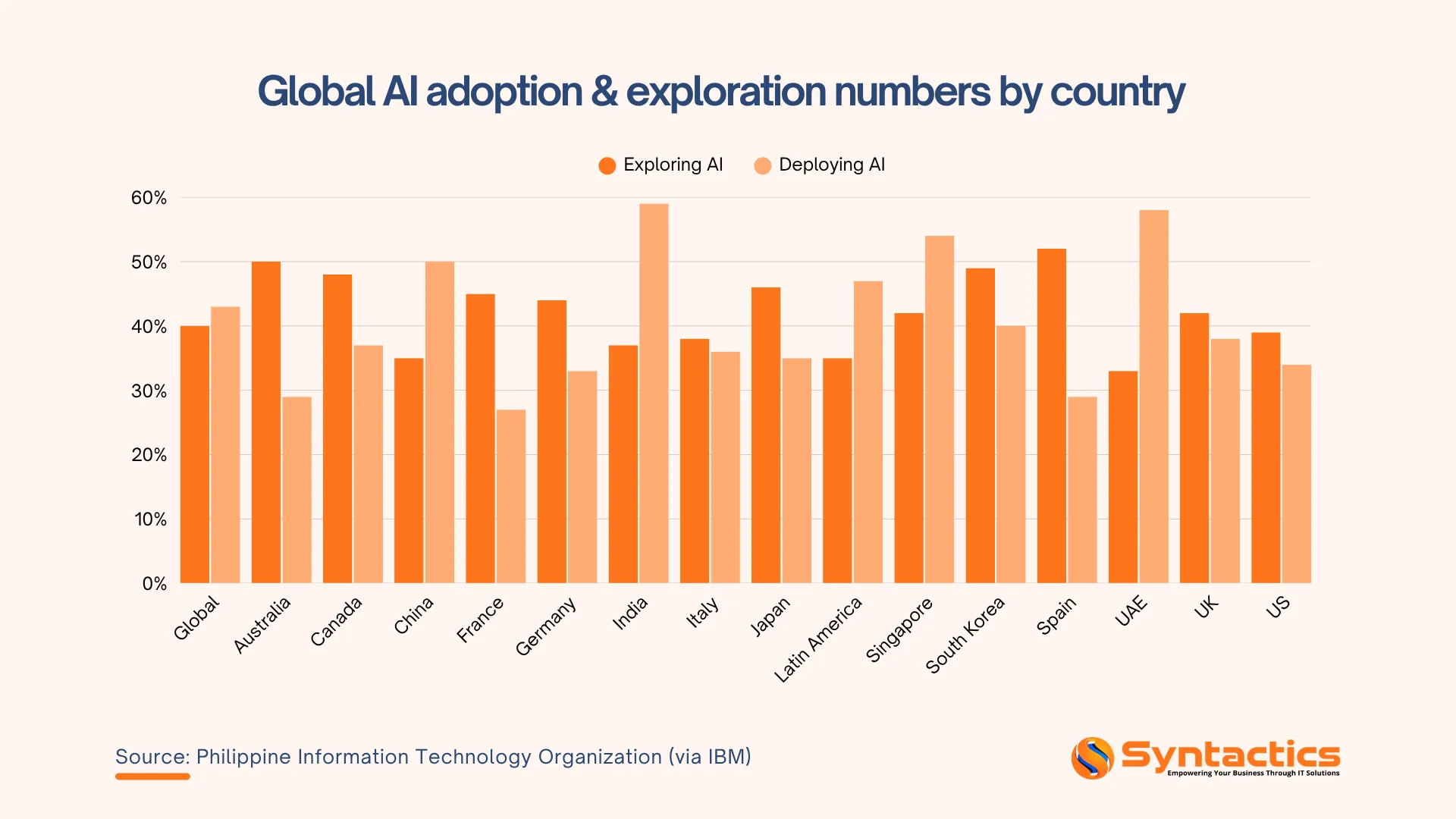
Source: Philippine Information Technology Organization (via IBM)
Key Takeaways
- The majority of companies have invested in AI in their workflows. However, only 1% of them have reached maturity in their investment. (McKinsey & Co)
- 7 out of 10 AI projects fail due to poor data quality. (TraxTech)
- Most workers feel apprehensive about AI in their careers, so leaders foster transparency and ethical governance to address this challenge.
- AI adoption requires a cross-functional alignment to advance beyond the maturity rate of its investment.
- A successful AI adoption demands a redesigned process that can handle multiple workflows without compromising performance or user experience.
Common Pain Points That Delay AI Rollouts in Business
Understanding where AI adoption challenges occur allows companies to design and implement effective strategies.
Uncertainties in Adoption
Many organizations struggle with defining clear use cases for AI. Without a roadmap, these initiatives often stall at the pilot stage. According to Strategy, 41.7% of organizations struggle with AI adoption due to high implementation costs and unclear ROI. This hesitation is especially common among small firms working with outsourced IT services in the Philippines and worldwide.
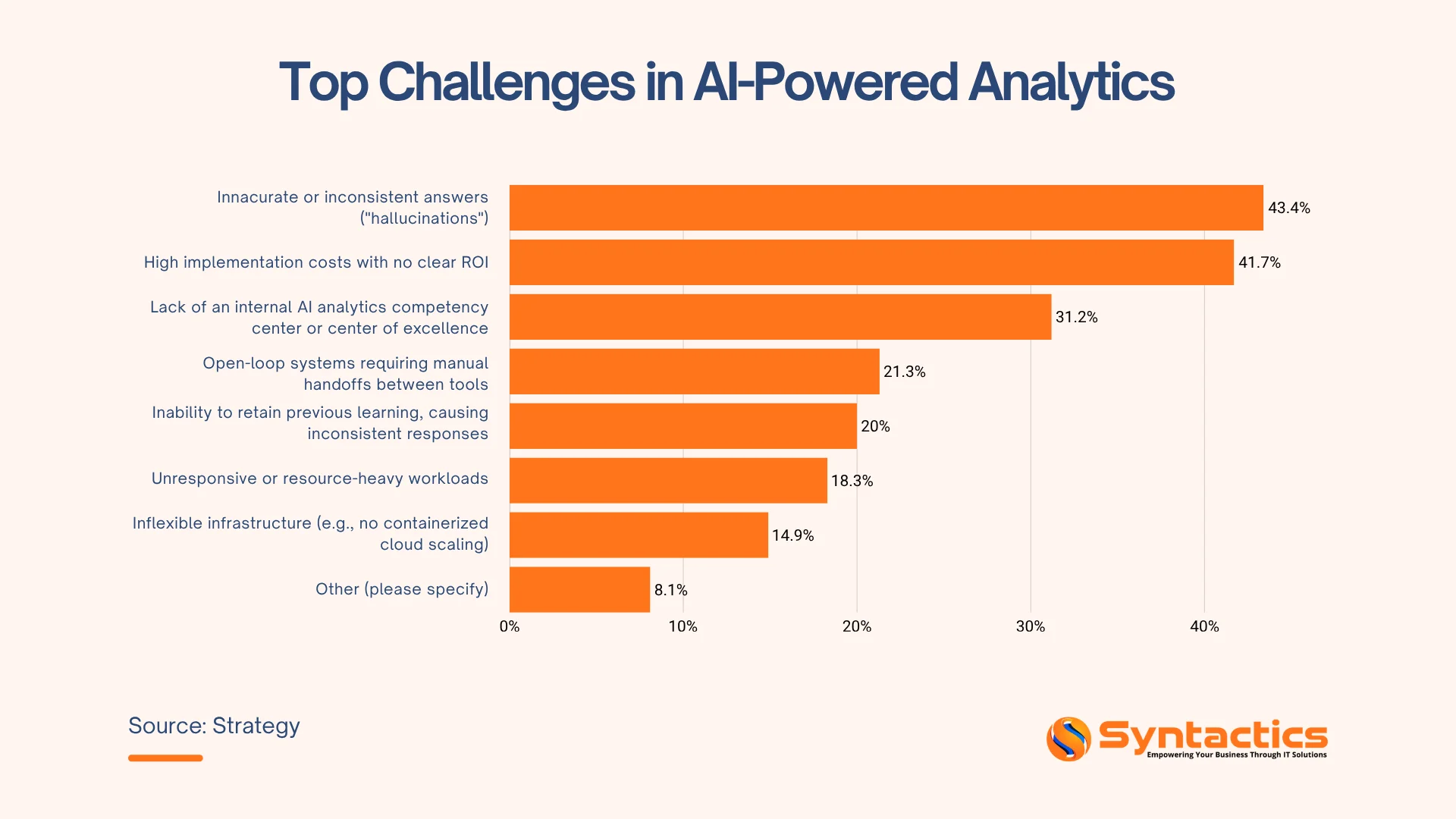
Source: Strategy
Technology Choices
AI involves multiple frameworks, platforms, and vendors that vie for your attention. Hence, businesses investing in web design and development, both globally and in the Philippines, often face decision fatigue. Poor selection of AI integration in developing apps prevents them from moving beyond proof of concept. So, choosing the right integrated tool is a top priority.
AI Resistance
Another hurdle that significantly impedes AI adoption is employee resistance. It occurs when the tool is perceived as a threat to job security and ethics. Harvard Business Review reports that 80% of workers are apprehensive about AI’s role in their professional lives. As a result, innovative adoption is delayed even when systems are technically sound.
Security Concerns
AI systems rely heavily on data, leaving companies vulnerable to cybersecurity risks. This creates hesitation among industries such as health and finance, which handle sensitive data. Hence, precautionary measures are considered to shield your business’s web security.
Where AI-Powered Projects Go Wrong
Here’s where AI adoption challenges impact delivering systematic outcomes:
Poor Data Quality
Reliable AI workflows are built on a foundation of high-quality, usable data. TraxTech reports that 7 out of 10 AI projects fail due to data quality issues. A frequent pitfall for businesses is processing massive datasets plagued by disconnected systems, duplicate records, and a lack of governance. If the data is flawed, the model will inevitably reflect those weaknesses.
Lack of Cross-Functional Alignment
AI projects fail when IT, operations, legal, security, and business leaders work in separate lanes. According to McKinsey reports, most companies have invested in intelligent tools. However, only 1% of them perceive their investments have matured. This indicates that AI value depends on operating model discipline.
To resolve this problem, assign development personnel to specific responsibilities. Then, connect them with the same key performance indicators. A web developer in the Philippines and worldwide builds product experiences where AI integrates into the same planning loop across departments.
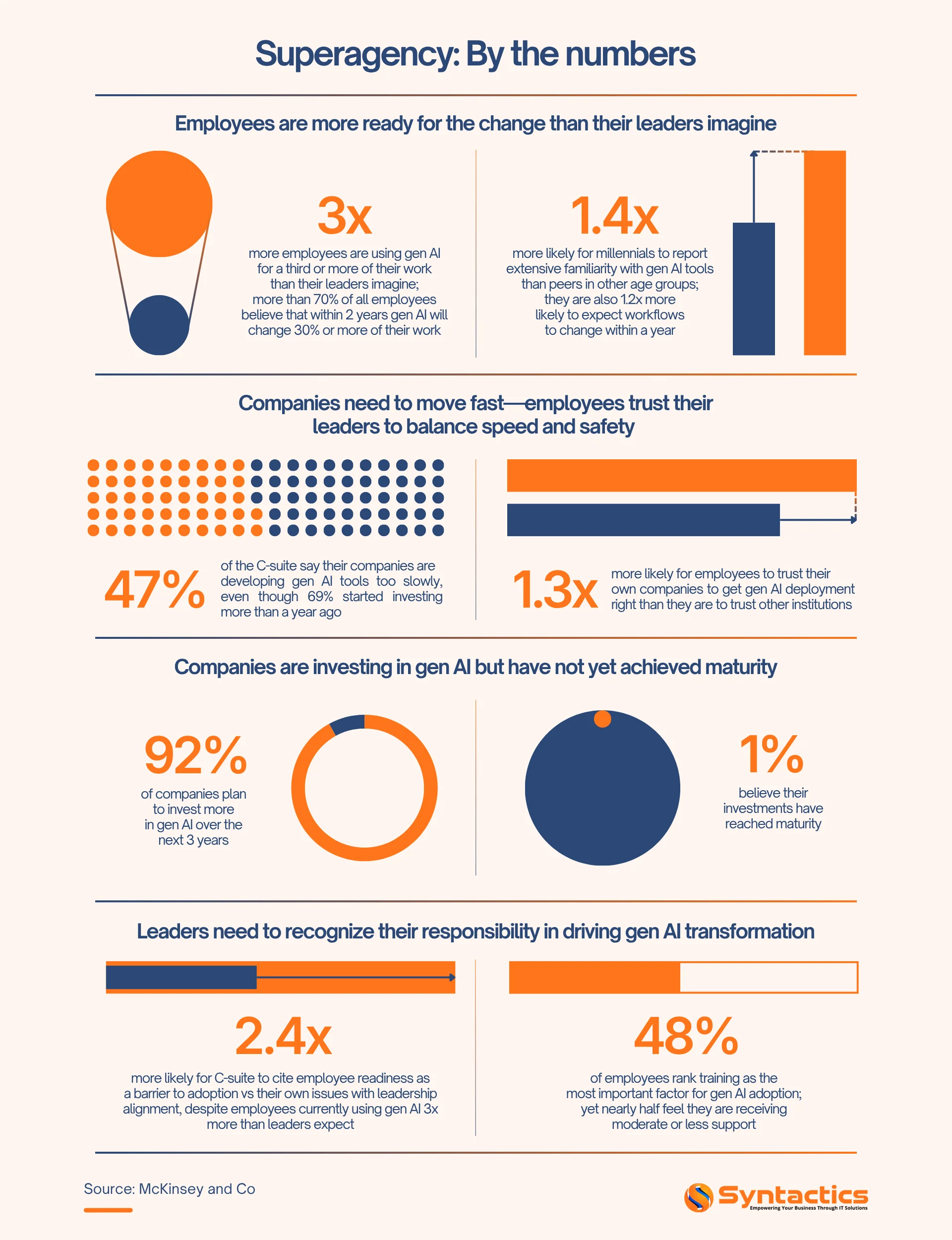
Source: McKinsey and Co
Insufficient Scalability
Many companies struggle to balance AI and human skills to deliver tangible value through technological development. This often results in organizations failing to achieve or grow their ventures after investing a significant amount in AI programs.
This gap exists because businesses frequently overestimate the reach of a single pilot. While a model might succeed in one specific workflow, scaling it may require a redesigned process. An experienced IT services provider can help engineer this transition to ensure seamless operation across multiple workflows.
How the Right Partner Accelerates AI Success
Here’s how working with the right partner provides simple solutions for AI adoption challenges:
- AI-Driven Strategy: Identify use cases, success metrics, and rollouts before writing code.
- Data Readiness: Monitor data quality, structure, access controls, and integration points before launching workflows.
- Engineered Discipline: Builds AI-assisted websites, progressive web apps, and native apps without breaking user experience or performance.
- Security and Governance: Reduce adoption risks by implementing permissions, monitoring, and policy controls.
- Scalable Execution: Connect product design, implementation, testing, and optimization as AI moves from pilot to production.
Conclusion
Adopting innovative tools is a process of refining and scaling quality data and team workflows. With the right structure, businesses position themselves for long-term success. Hence, AI adoption challenges require solutions that address technical precision and strategic clarity.
Companies that hire a dedicated development team accelerate progress while minimizing risks. Syntactics Inc. simplifies the design, construction, and management of your project into a single comprehensive web solution. Let our team advance your vision for business growth by reaching out to us today!

Frequently Asked Questions (FAQs)
What are the ethical challenges of AI?
The ethical challenges of AI include bias, data privacy, transparency, and accountability in decision-making. For this reason, businesses ensure fair data usage and explainable outputs.
How should a business choose its first AI use case?
To choose an AI use case, start with a high-impact, low-complexity process that uses structured, reliable data. Focus on measurable outcomes that lead to efficiency gains and improvements.
Do AI projects always need custom development?
Most AI use cases can work with minimal customization. Custom development becomes necessary when complex systems or unique workflows are integrated.

About Ladymieh Naallatan
Related News:


Hiring an SEO Consultant and Questions to Ask

Measuring Success in Real-Time Marketing









Comment 0