

AISEO Decoded: How LLM Optimization Improves Your Business’s Visibility in AI Search
SEO once focused on earning rankings and clicks, but AI-powered search is changing how potential customers discover businesses online. A Pew Research Center survey found that 42% of Americans use AI chatbots to search for information.
As a result, customers now have another path to find businesses beyond traditional search results. AISEO addresses this shift by helping AI systems understand what your business does, which information they can rely on, and when your website is relevant enough to cite or recommend by name.
Traditional SEO still provides the foundation. However, LLM optimization adds another layer by reducing ambiguity across your content, technical setup, and machine-readable data, enabling AI crawlers and answer-generating systems to accurately interpret your business.
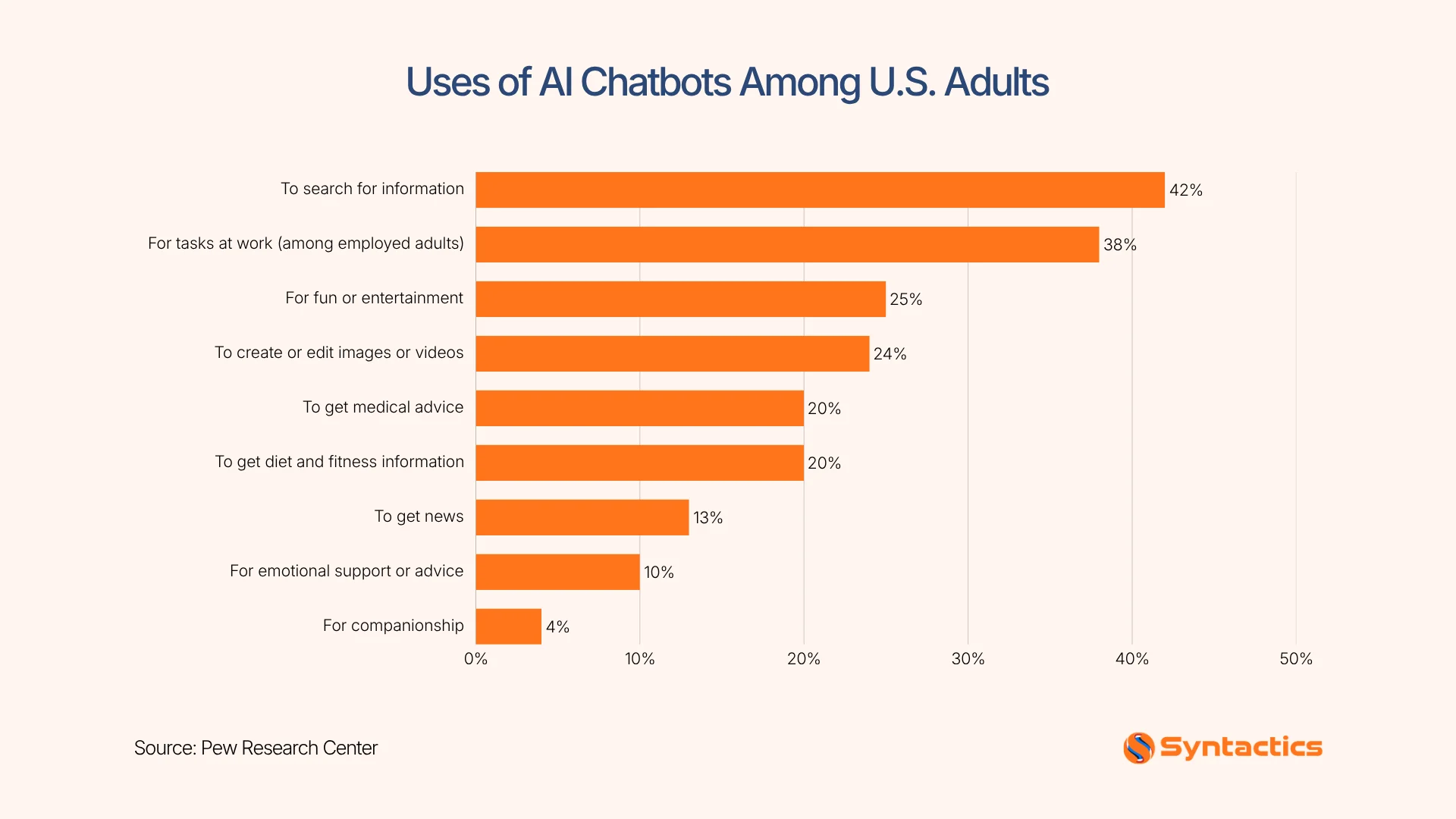
Source: Pew Research Center
Key Takeaways
- 30% of domains cited in Google AI Overviews didn’t appear among the co-displayed first-page results (arXiv).
- AISEO helps make your business easier for AI systems to understand, cite, and recommend by name.
- Crawlability and structured data help AI systems access your content and interpret your business information accurately.
- The llms.txt file can provide AI systems with a clearer path to your most important content.
- Ongoing monitoring helps you identify schema inconsistencies, track AI crawler activity, and measure citation visibility.
The Real Cost of Ignoring AI Search
The biggest risk is not that Google rankings will stop mattering. Users can now get answers, comparisons, and recommendations directly from AI-generated results, reducing the need to click through to traditional organic listings.
This can create a gap between impressions and traffic, so track more than rankings. Monitor branded searches, AI referral traffic, citation appearances, assisted conversions, and changes in organic click-through rates.
The opportunity also extends beyond search. Reuters reports that generative AI is expected to influence $8 billion in sales. Meanwhile, Adobe Analytics found that AI referrals generated 41% more revenue per visit than traditional channels, highlighting AI-assisted retail activity.
That’s why AISEO shouldn’t replace traditional SEO. Instead, it needs to strengthen the technical and content foundations that already help search engines and users understand, trust, and find your business.
Crawlability: Making Sure Relevant AI Systems Can Reach Your Site
Before AI systems can use your content, relevant crawlers need to access it. However, these platforms don’t access or use websites in the same way.
For ChatGPT search visibility, OAI-SearchBot is the important OpenAI crawler to check. OpenAI states that sites blocking OAI-SearchBot will not be included in ChatGPT search summaries and snippets, although a link may still appear in some cases. It differs from GPTBot, which OpenAI identifies as related to potential model training. As such, website owners can use robots.txt to manage access for these different purposes.
Meanwhile, Googlebot is used specifically for Google Search. By contrast, Google-Extended is a separate control intended for certain uses of content in generative AI systems. Google also states that pages have to meet the requirements to be eligible as supporting links in AI Overviews or AI Mode.
Review these areas to make sure your website doesn’t unintentionally block relevant AI crawlers:
- robots.txt: Check whether OAI-SearchBot and other relevant crawlers can access the pages you want surfaced.
- CDN, firewall, and bot-management settings: Make sure security tools do not return errors or block legitimate crawlers.
- Server logs: Monitor which bots visit your site, which URLs they request, and whether requests are successful.
- Crawler permissions: Different crawlers serve different purposes, so decide which ones you want to allow based on your discovery and data-access goals.
If you want your business to appear in AI-generated answers, start by making sure the relevant systems can actually reach the information you want them to surface.
Structured Data: What Schema Actually Does (and Doesn’t Do)
Structured data helps machines understand what your content represents. It can clarify entities such as organizations, products, services, articles, locations, and other defined content types.
However, schema doesn’t make an LLM verify your claims. Marking up a statement as structured data doesn’t automatically make that statement factual or authoritative. Google also confirms that there’s no special schema or additional structured data requirement for appearing in AI Overviews or AI Mode. The same foundational SEO requirements and best practices continue to apply.
As such, use structured data to reinforce information that already appears clearly on the page. Keep names, prices, availability, addresses, authors, and other details accurate and consistent with the visible content.
Moreover, Google supports JSON-LD, Microdata, and RDFa for structured data, with JSON-LD recommended because it is generally easier to implement and maintain. The format matters less than using valid, accurate, and properly implemented markup.
This is where an experienced SEO specialist in the Philippines can connect technical implementation with content accuracy without treating schema as a shortcut to AI visibility.
Implementation Priorities That Actually Matter
Once crawlers can reach your website, implementation quality determines whether machines receive useful information.
Start with four checks:
- Correctness: Your structured data should accurately reflect the page.
- Rendered availability: Important content should appear when the page renders, not only after fragile client-side interactions.
- Validation: Test markup, crawlability, canonicalization, and indexability regularly.
- Consistency: Keep product, service, company, and author information aligned across pages.
These fundamentals matter because AI systems don’t benefit from confusing signals. If your page title says one thing, your visible content says another, and your schema contains outdated information, you create unnecessary ambiguity. For this reason, businesses make improvements based on information already available instead of isolated AI-specific tactics.
Many trusted SEO companies in the Philippines can implement technical SEO elements, but the stronger approach connects those changes to your actual business information and keeps them maintained.
The llms.txt File: A New Layer of Optional Discovery Aid
The proposed llms.txt convention gives website owners a way to present important pages and resources in a concise, AI-oriented format. Think of it as an optional map that can help participating systems identify useful documentation and content.
A well-organized file can point to high-value pages such as service descriptions, product documentation, knowledge bases, pricing resources, and company information. That said, keep the file focused and accurate, rather than using it to repeat keywords or publish promotional copy.
It is also important to distinguish llms.txt from robots.txt. In particular, the latter provides instructions about automated access. The former, by contrast, provides a curated overview of useful content. However, it also doesn’t assume that adding llms.txt guarantees AI citations or recommendations. Adoption and implementation vary, and different AI systems use the web differently.
Still, it can support a broader LLM optimization strategy when it reflects a well-organized website. But the file can’t compensate for inaccessible pages, poor content, contradictory information, or weak technical foundations.
Schema Drift and Ongoing Technical Maintenance
Schema drift occurs when machine-readable information no longer matches the visible page. For example, your schema may show an old price after you update your product page. A service page may list a former offering, while your structured data still describes it as active. Meanwhile, your inventory markup may claim availability after an item has gone out of stock.
These mismatches can spread confusion across systems that consume your data. Even if they don’t create a formal “trust score,” inconsistent information makes it harder for machines to determine which version is current.
Create a maintenance process to check key templates after website updates. Review pricing, stock, business details, product attributes, service descriptions, and other structured information that changes over time.
This ongoing work is one reason businesses looking for SEO services in the Philippines need to evaluate technical maintenance, not only initial optimization. This is because AISEO requires accuracy over time.
Real Results From Real Pages
AISEO claims should be supported by evidence. Instead of assuming that a change worked, document the result. For a page optimized for AI accessibility, collect before-and-after data such as:
- Crawl log entries showing relevant bot access
- HTTP status codes for requested pages
- Screenshots of rendered content
- Schema validation results
- AI-generated answers that cite or mention the page
- Changes in referral traffic and assisted conversions
You can also compare how different systems describe your business. Ask relevant questions repeatedly over time, record whether your brand appears, and check whether the description matches your actual services. These checks tell you whether the implementation is effective.
For actual outcomes, monitor metrics such as:
- AI citation share for relevant queries
- Brand mentions in AI-generated answers
- Qualified referral traffic from AI platforms
- Assisted conversions associated with AI referrals
- Changes in branded search demand
- Organic click-through rates and traffic
- AI-generated descriptions that accurately represent your services
Recent research illustrates why traditional rankings alone may not tell the full story. An arXiv study analyzing 55,393 queries found that nearly 30% of domains cited in Google AI Overviews didn’t appear among the co-displayed first-page results.
The practical lesson is simple: ranking well remains valuable, but source selection for AI-generated answers can introduce another layer of visibility. You need evidence from your own pages to understand whether technical changes actually improve access and brand representation.
Conclusion
AI systems can’t recommend your business accurately if they can’t access, interpret, or reconcile the information on your website. Start by auditing crawlability, improving content clarity, validating structured data, and maintaining consistency across your most important pages.
Syntactics, Inc. can help you build that foundation through technical SEO and data-driven website optimization. Our SEO experts in the Philippines can assess where your site creates ambiguity and apply LLM optimization practices that support traditional search visibility and emerging AI discovery.

FAQs About LLM Optimization
What is LLM optimization?
LLM optimization improves your website so large language models can better understand, interpret, and use your content. It focuses on clear information, technical accessibility, structured data, and consistent signals that can support AI recommendations and citations.
When should we invest in LLM optimization?
Consider investing in LLM optimization if your customers increasingly use AI tools to research products, services, or businesses. It’s especially useful when you want to increase your chances of being cited or recommended in AI-generated answers.
Does AISEO affect local businesses?
Yes, AISEO can help AI systems better understand your business location, services, and other local information. It may improve your chances of appearing in relevant AI-generated local recommendations.
Can AISEO improve brand visibility?
Yes, clear, consistent business information can make your brand easier for AI systems to identify and describe accurately. This can increase your chances of appearing in relevant AI-generated responses.
How long does AISEO optimization take to show results?
Technical improvements can take effect once search engines and AI crawlers revisit your website. However, changes in AI visibility can take longer to appear and may vary across platforms.

About Jalou Batilong
Related News:

7 Effective Ways to Improve PPC Campaigns

Visually Appealing Websites and How They’re Designed


The Hidden Secret to Web Development Success




Comment 0