

Best Landing Page Design Practices That Make Visitors Convert
Many businesses lose potential customers when visitors arrive on a poorly designed landing page. Factors contributing to this loss include weak messaging, confusing layouts, and slow website loading times. To counter these problems, a strategic website landing page design is needed to secure your clients.
So, if you’re wondering how your landing page stacks up, the average conversion rate across industries is 6.6% (Backlinko). To achieve this feat, your website needs to guide users through one simple action. Regardless of whether you operate locally or serve global markets, these landing page practices can help you achieve significant results.
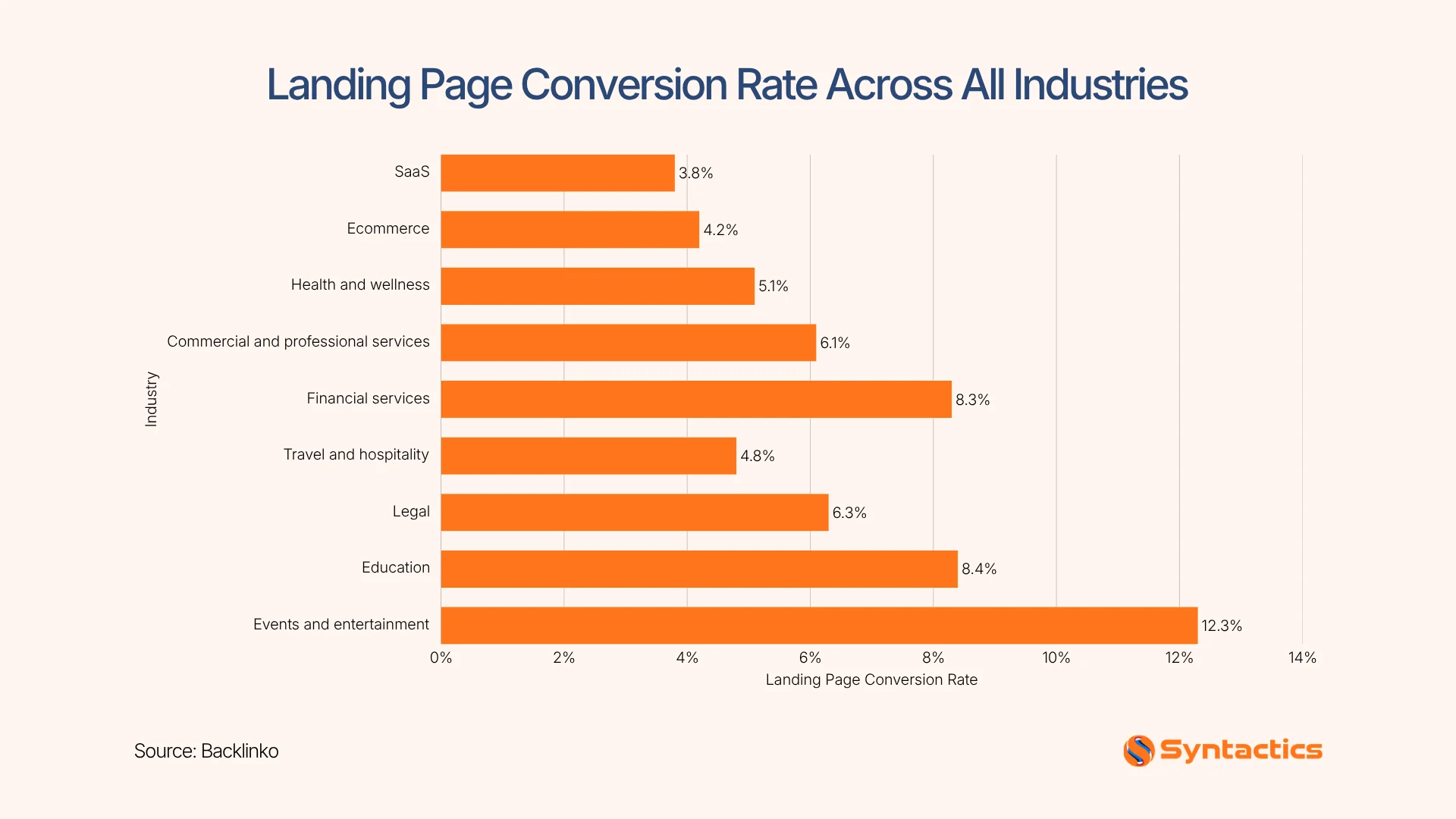
Source: Backlinko
Key Takeaways
- The average landing page conversion rate across industries is 6.6% (Backlinko). However, this can be improved by 202% with personalized CTAs (WordStream).
- Conventional websites let you explore multiple service pages, whereas a landing page is focused on a specific action or goal.
- High-converting landing pages rely on a compelling hero section, CTAs, clear value propositions, and trust indicators to build customer confidence.
- Efficient landing pages leverage user experience principles to reduce navigation friction.
- Avoid landing page mistakes such as redundant CTAs, slow load times, weak copy, overly long forms, and a poor mobile experience.
- Tweak specific elements if you have healthy traffic but low conversion. Opt for a complete rebuild if your core business goals have fundamentally changed.
What Actually is a Landing Page? (And What isn’t)
A landing page is a single web page intended for a specific marketing objective. Unlike websites, which introduce multiple areas of a business, a landing page focuses on one goal. Common outcomes include generating leads, booking consultations, downloading resources, and completing purchases.
Websites typically contain navigation menus, multiple links, and various pathways. Meanwhile, landing pages remove unnecessary distractions and direct visitors toward a single conversion action. Understanding this distinction helps you design strategies that differ from conventional website structures.
To further distinguish their differences, here’s a simple table for a quick overview:
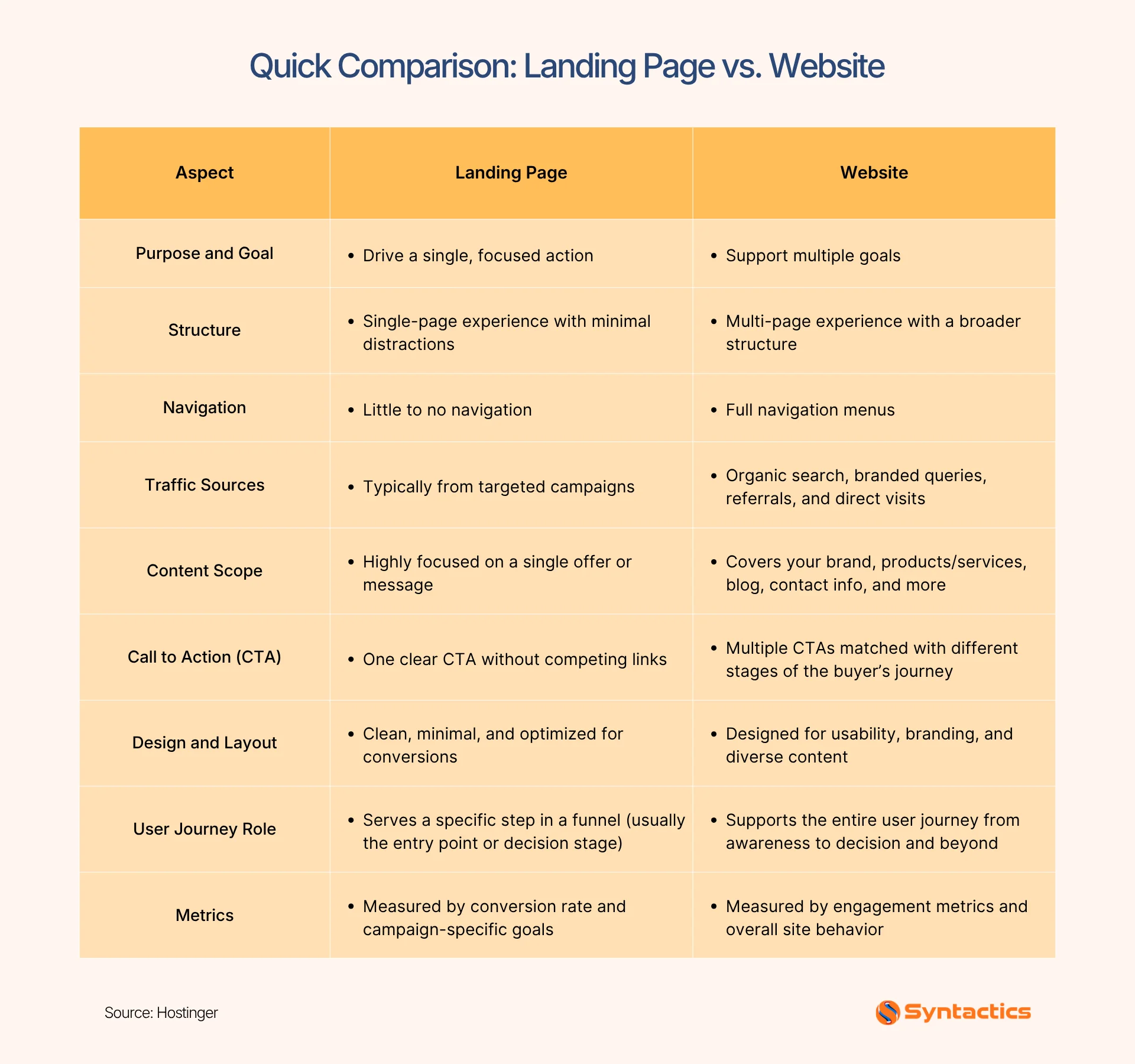
Source: Hostinger
Anatomy of a High-Converting Landing Page
Every successful website landing page design includes several elements that guide visitors toward conversion. Here’s a simple breakdown of each section:
Hero Section
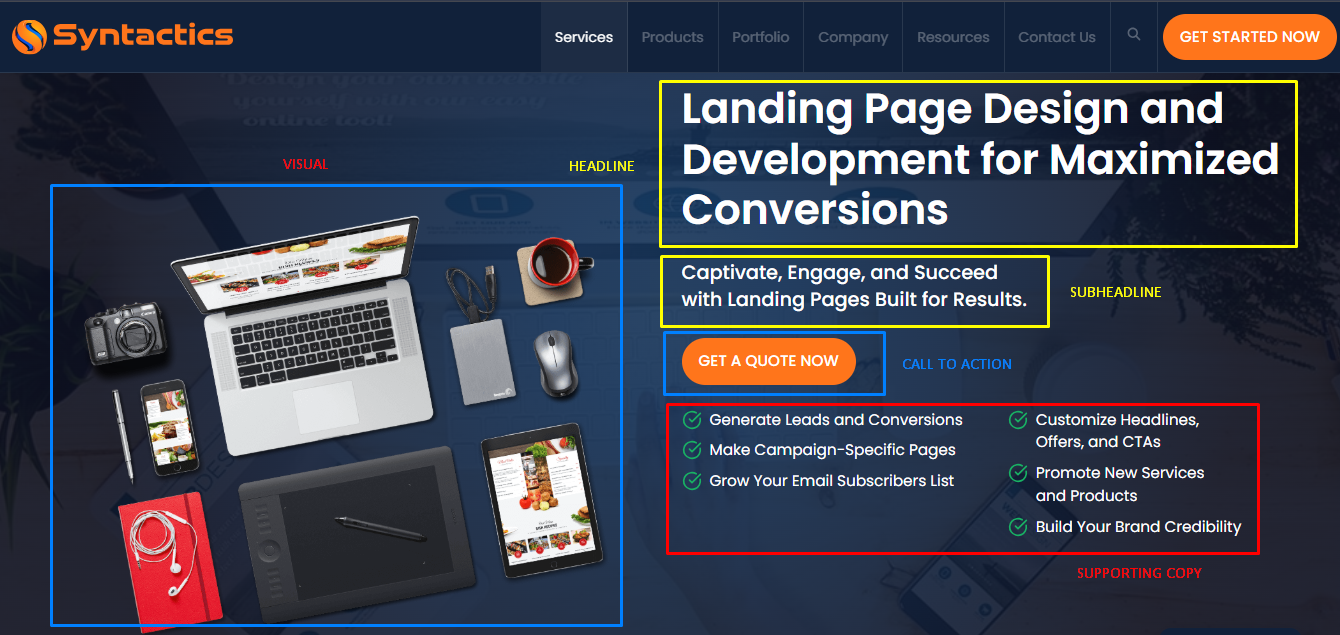
The hero section communicates the page’s primary value proposition. It typically has a clear headline, supporting copy, relevant visuals, and a visible call-to-action button. This section makes visitors immediately understand what is being offered and why it matters to them.
For example, a software company offering inventory management services should avoid vague headlines such as “Transform Your Business.” A clearer message, such as “Reduce 50% of Inventory Errors With Automated Tracking,” provides immediate relevance.
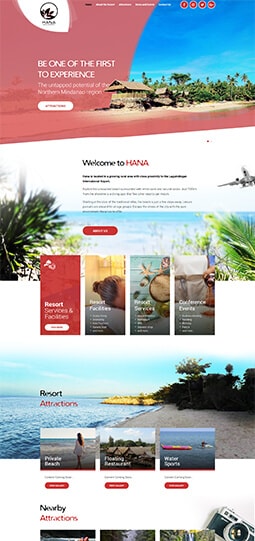
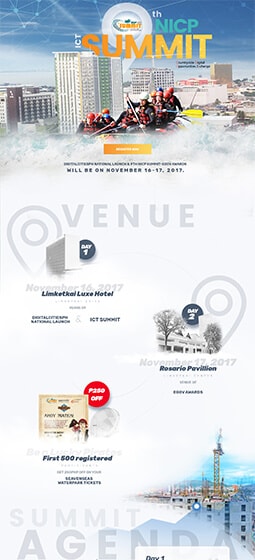
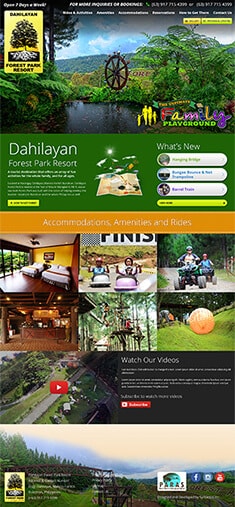
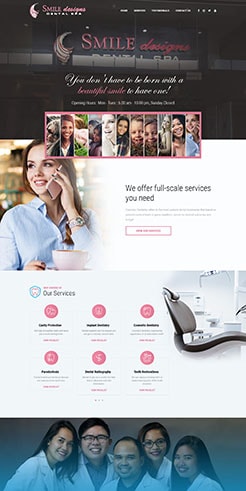
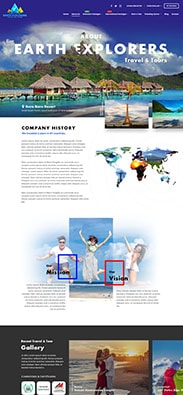
Another example of maximizing the potential of a hero section is one of our service pages. Here, we used headlines, buttons, and compelling copy to capture viewers’ attention.
Calls to Action (CTAs)
A landing page uses action-oriented language to tell users what to do next. Businesses that work with a WordPress website design company improve conversion rates by aligning sections around a single primary action. Examples of effective calls to action include:
- Schedule a Consultation
- Get a Free Quote
- Download the Guide
- Start Your Free Trial
These CTAs can be personalized to boost your conversion rates by 202% (WordStream). It can also be strategically positioned throughout the page to prevent overwhelming visitors.
Trust Indicators
Trust signals affect purchasing decisions and help visitors feel confident partnering with you. When people arrive on a landing page, they often have questions or concerns about your offers. That’s why high-end industries use trust-building elements to secure clients.
Consider a construction company requesting project inquiries online. Displaying completed project photos alongside customer testimonials encourages customers to avail themselves of your service. Other credibility indicators visitors look for include case studies, industry certifications, and security badges.
Value Proposition
A value proposition conveys why your customers should choose your offerings over competitors’. It conveys a clear, specific outcome or benefit that customers can expect, helping them quickly understand the value of your offer.
To propose a compelling value, focus on results whenever possible. So, instead of default phrases like “Custom WordPress Development,” you can say, “Launch efficient websites that generate leads and sales.” Website design teams in the Philippines and around the globe often use this approach by addressing customer challenges and desired outcomes.
UX Principles That Directly Affect Your Conversions
A user-centered design impacts how visitors interact with your page and whether they complete a desired action. Here are the fundamentals you should consider for a website landing page design:
Visual Hierarchy
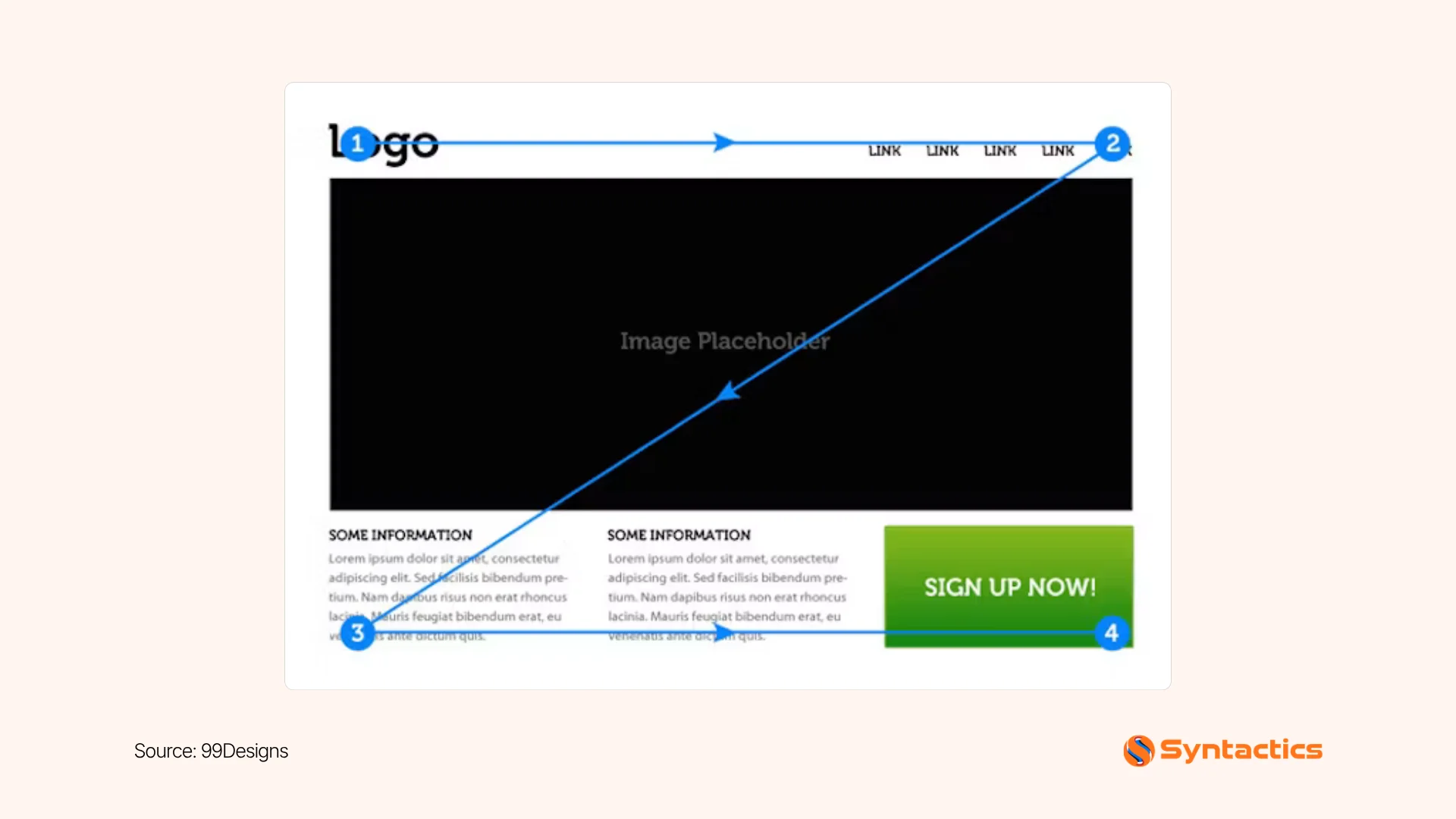
Visual hierarchy determines where users focus their attention and the order they process information. Designing accessible website landing page designs takes advantage of size, color contrast, spacing, and content placement. If these elements compete for attention, visitors become overwhelmed and are more likely to leave without converting.
For a balanced webpage design, here’s an example with a Z-pattern layout:
Source: 99Designs
Above-the-Fold Decisions
Visitors should immediately understand what the business offers, why it matters, and what action they should take next. If key information is buried lower on the page, many users will leave before discovering it.
Mobile Responsiveness
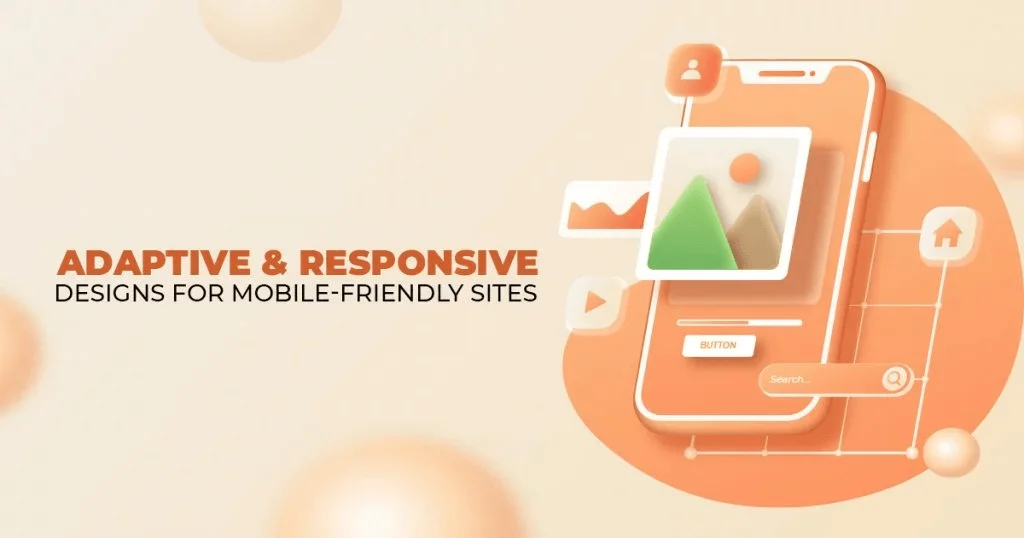
A mobile-responsive design ensures visitors can easily interact with the page regardless of the device used. Buttons on these devices are easy to tap, forms require minimal effort, and content remains readable without zooming. Businesses in the Philippines and around the world team up with web design and development teams to prioritize adaptive pages on these devices.
For additional resources, here’s what you need to know about adaptive and responsive designs:
 Page Speed
Speed directly affects user satisfaction, trust, and conversion rates. A slow experience creates friction before users even evaluate the offer, causing you to waste valuable marketing spend. Meanwhile, faster pages encourage deeper engagement, helping you generate more inquiries and maximize return on investment.
Common Landing Page Mistakes to Avoid
To maximize the full potential of your website landing page design, avoid making these common mistakes during development:
- Redundant calls to action in one section
- Slow landing page loading times
- Generic and low-quality visuals
- Weak headlines and copy
- Long forms with unnecessary information
- Poor mobile design and user experiences
- Inconsistent messaging between ads and landing pages
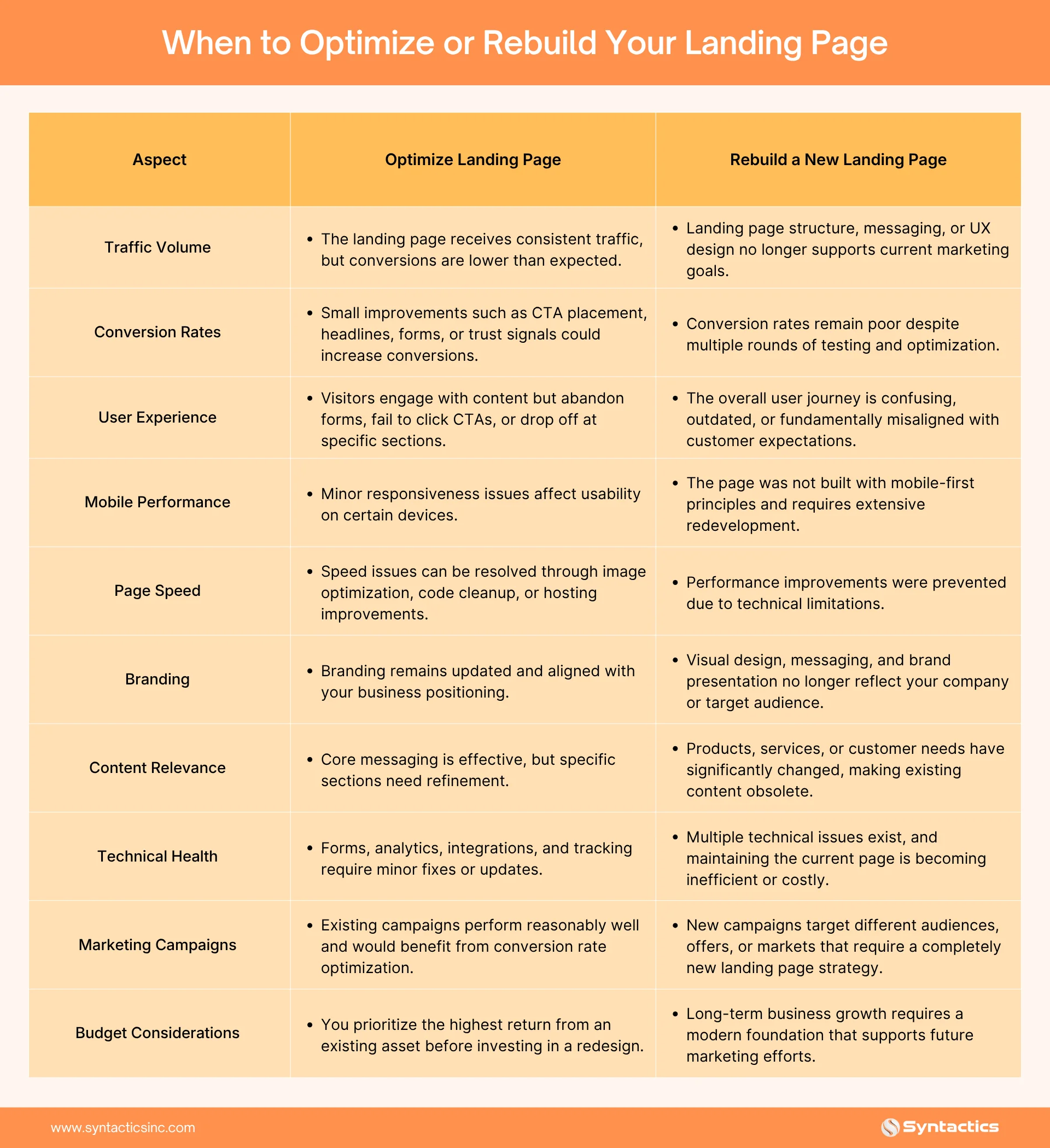
When to Optimize or Rebuild Your Landing Page
Here’s a quick overview of when you should optimize or rebuild your landing page:
Conclusion
A high-converting landing page does not happen by accident. They result from strategic decisions that align visitor expectations, business objectives, and user experience principles. Successful enterprises constantly evaluate how visitors interact with their pages and make improvements that reduce friction and increase trust.
Developing an effective website landing page design requires expertise in user behavior and performance optimization. At Syntactics Inc., we help you achieve these goals through engaging pages designed to deliver results. Our landing page design and development team crafts tailored digital experiences through strategic UX/UI and well-organized code. See how we transform one page into a high-performing business asset today!

Frequently Asked Questions (FAQs)
Do I need a website for a landing page?
No, a landing page can function as a standalone page without a full website. However, having a website can strengthen credibility and provide additional information for potential customers.
How long should a landing page be?
The ideal length depends on the complexity of your offer and audience. Simple offers tend to have shorter pages, while high-value services require more content that answers questions.
Should I use video on a landing page?
Yes, you can add videos if it explains your offer and supports your conversion goal. However, keep it short and focused on customer benefits rather than company features.

About Ladymieh Naallatan
Related News:

Elevate Your Brand with Dedicated Web Designers
Creating GIFs in Photoshop: A Step by Step Guide
Use Twitter Ads in Promoting Business Campaigns

Comment 0