


December Core Update 2025: The New Authority Signals You Need
Google’s December 2025 Core Update is finally rolling out! Here’s how you can ensure your website aligns with the new authority signals.
Many businesses and marketers are now bracing for Google’s possible December 2025 Core Update. Early insights suggest significant shifts in how authority is perceived. Google may refine E-E-A-T once again, placing greater weight on real experience, transparent credibility, and stronger entity signals.
With potential shifts like these on the horizon, preparing your content strategy early will give you a competitive advantage.
TABLE OF CONTENTS
Key Takeaways
- Google’s December Core Update has officially rolled out on December 11, 2025.
- Real experience and transparent credibility now drive authority signals in Google rankings.
- AI content must include human insight and practical examples to rank effectively.
- Websites with clear expertise, verified data, and consistent branding gain visibility.
- Generic, thin, or outdated content risks losing search presence.
What to Expect in Google’s December 2025 Core Update
Google’s December 2025 Core Update is positioned to significantly reshape how authority, trust, and expertise are evaluated. It ushers in one of the most impactful shifts since E-E-A-T became central to ranking. Based on early signals and Google’s recent guidance, here’s what businesses and content teams should anticipate:
Real Experience Over Credentials
Similar to the previous June 2025 Core Update, content backed by firsthand knowledge is likely to outperform generic articles. Google looks for specifics that can only be obtained by doing the work.
- Include detailed process descriptions or case studies.
- Highlight acknowledged limitations or failures.
- Share unexpected insights not found in standard guides.
- Use time-stamped references or personal testing.
- Provide screenshots, data, or evidence of hands-on work.
The Fade of Token Author Bios
Author credentials alone no longer guarantee ranking. Google favors content that demonstrates actual expertise within the article.
- Integrate practical expertise into the content itself.
- Avoid relying solely on credentials in author bios.
- Show real-life experience through examples and scenarios.
Entity-Based Authority Gains Ground
Google increasingly ties content quality to the underlying entity, whether an individual or organization.
- Include mentions or citations from authoritative sources.
- Highlight partnerships, collaborations, or endorsements.
- Strengthen visibility through recognized industry affiliations.
Transparency as a Trust Signal
Google is elevating sites that openly disclose who’s behind the content, their background, and operational legitimacy, especially in ecommerce and service-based sectors.
- Maintain detailed About pages and team profiles.
- Include verifiable company history and achievements.
- Make contact information accessible and trustworthy.
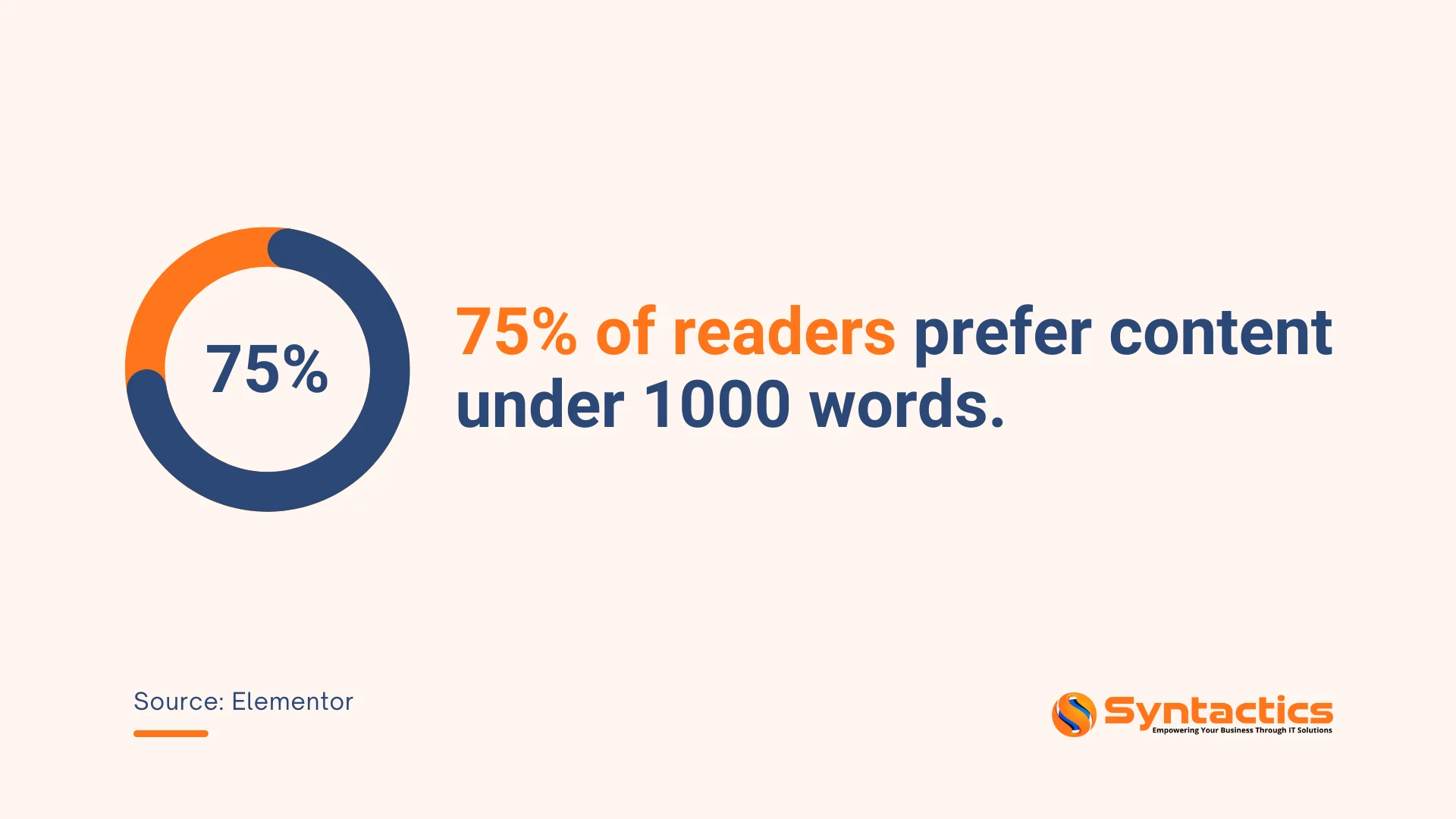
Depth Trumps Word Count
Google rewards concise, high-signal content that delivers unique insights, actionable takeaways, or expert nuance, even if it’s shorter than competitors’ fluff-filled pages. So, focus on the following:
- Stop writing a 3,000-word article.
- Provide clear solutions or advice.
- Offer practical examples and real-world applications.
- Avoid filler or repetitive text just to increase word count.
Source: Elementor
Technical Trust Factors Matter More
Site security (HTTPS), accurate publication/update dates, clear sourcing, mobile reliability, and error-free UX are now integral to perceived trust. Neglecting these can undermine even high-quality content.
AI Content Must Show Human Value
AI-generated content isn’t banned, but it must be enhanced with real-world insight, editorial oversight, and experiential validation. Content that reads like a generic summary will likely lose visibility; those enriched with human judgment and original perspective will gain.
Who Gains and Who Risks Losing Visibility
As Google leans deeper into AI-generated search experiences, your site’s visibility depends on how well your content aligns with intent, authority, and real-world usefulness. Some websites stand to benefit from enhanced exposure, while others may experience a decline if their content fails to meet evolving quality standards.
Here’s how different types of sites are affected:
Business Websites
Companies with detailed service pages, verifiable case studies, and transparent team or company information are positioned to gain trust and maintain visibility. But sites that lack clear proof of expertise may experience reduced ranking potential.
eCommerce Stores and Online Retailers
Product pages that showcase real usage, customer insights, reviews, and verifiable information will perform better. Generic descriptions or weak branding can lower visibility, especially in AI-driven search summaries.
Content Publishers and Educational Sites
Blogs, guides, and informational sites should demonstrate true expertise and offer actionable value. Generic posts, listicles, or lightly edited AI content may struggle to rank and appear in AI-generated snippets.
Professional Service Providers and Consultants
Profiles showing verified experience, project outcomes, and client success stories are favored. However, outdated or thin contributor information can weaken authority and reduce search visibility.
Local Brands and Service-Based Businesses
Accurate business listings, consistent NAP details, and transparent company information strengthen trust and authority. But websites with incomplete or inconsistent local data risk losing visibility in local search results.
News Organizations and Editorial Publishers
Sites with strong editorial standards, verified sources, and original reporting gain credibility. On the other hand, outlets relying on syndicated, unverified, or shallow content may see traffic fluctuations.
Affiliate Sites and Product Review Platforms
Pages providing firsthand testing, clear comparisons, and honest reviews are rewarded by Google with better searchability. Meanwhile, thin, generic, or copied content is likely to be deprioritized in search results.
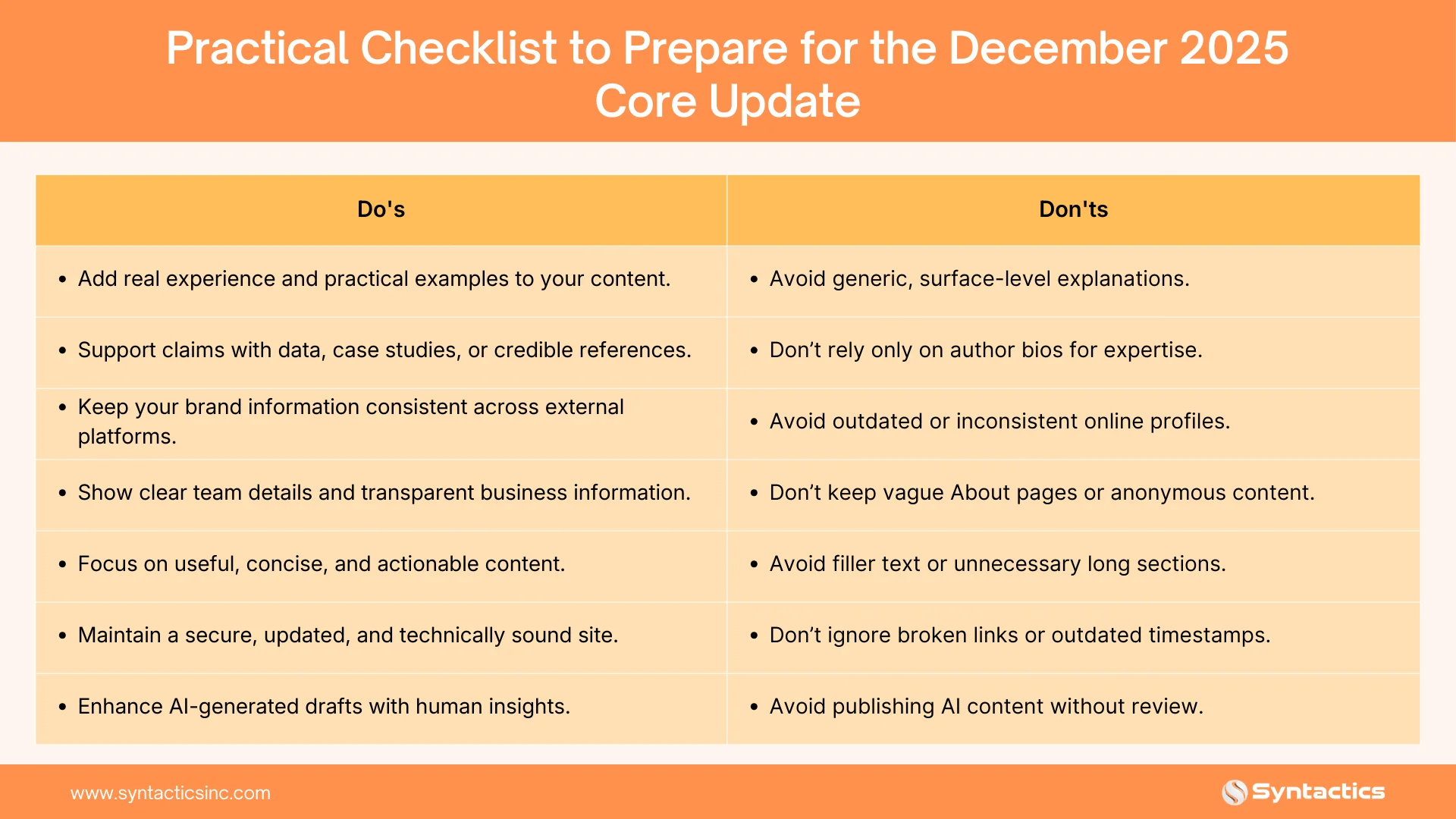
Practical Checklist to Prepare for the December 2025 Core Update
Conclusion
Here’s the bigger picture: Google’s December Core Update reflects a broader shift in how the search engine evaluates authority, trust, and user-value. Businesses that focus on real expertise, transparent credibility, and meaningful content can position themselves for long-term relevance and authority in search.
However, those relying on generic or superficial content risk falling behind. This means search success now favors authenticity, experience, and genuine value. Partner with a professional digital marketing company in the Philippines like Syntactics, Inc. Our team can help you audit your content, strengthen authority signals, and ensure your website is ready to lead in 2026.
Elevate Your Brand In the Digital Landscape!

FAQs About December 2025 Core Update
When is the December 2025 Core Update?
Google rolled out the December core update on December 11, 2025. Experts say that this update will take up to 2-3 weeks to complete.
How is this update different from previous core updates?
The December 2025 update appears to place stronger emphasis on demonstrable authority. It prioritizes real-world experience, verifiable expertise, and entity-based trust signals over surface-level content optimization or keyword targeting. It builds on E-E-A-T but requires more rigorous validation.
Where can I track the update’s impact?
Monitor Google Search Console for traffic and ranking fluctuations. Tools like Semrush, Ahrefs, or Moz can help identify affected pages. Google typically confirms core updates via its official channels and the Google Search Central Blog.

About Jalou Batilong
Related News:


PHP Coding Standards for WordPress: A Guide







Comment 0