


Why Inconsistent Visual Branding Is Costing You Clients (And How Graphic Designers Fix Them)
Prospects evaluate a business’s credibility based on how it presents its brand. It is also one factor that most small businesses overlook. If a branding doesn’t appeal, it impacts potential customers’ trust, recall, and purchase decisions. In fact, Salsify’s Consumer Research report found that 46% of buyers would pay for a brand they trust.
So, if your brand appears disjointed, people would assume your service quality is the same. As such, a cohesive visual branding is needed to reflect your business’s philosophy. This article breaks down what buyers actually check, the hidden costs of inconsistency, and how to systematically fix your brand.
TABLE OF CONTENTS
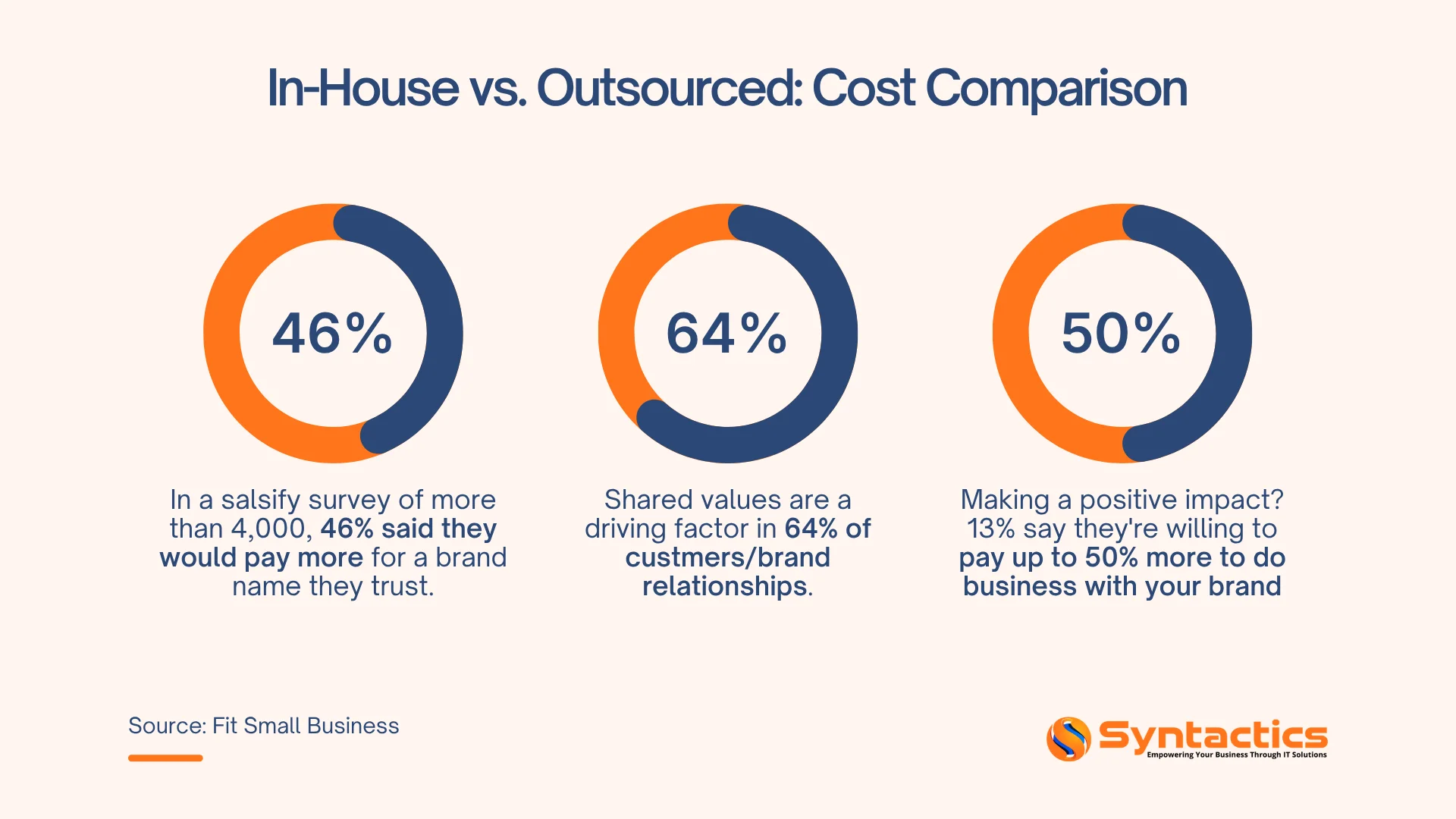
Source: Fit Small Business (via Salsify)
Key Takeaways
- Consumers preferred a brand’s competence as a trust indicator by 73%. (Qualtrics)
- Visual branding determines a business’s credibility by whether the service quality matches the presentation.
- Inconsistent branding and messaging create friction that can cause potential clients to disengage from a business.
- Professionalism extends to formal documentation, which impacts client retention and word-of-mouth referrals.
- Branding guidelines and asset libraries prevent fragmented outputs and save teams from wasting time on repetitive design decisions.
- Strategic design partnerships solve visual red flags by standardizing templates and workflows to maintain cohesiveness.
What Buyers Check Before Calling You
Before a buyer gets in touch with a brand, they conduct a visual branding audit. For the most part, they evaluate a business’s website, social posts, proposal design, deck quality, and the way materials line up. This credibility test will also impact their customer journey.
According to Qualtrics, customers look for qualities that make a brand trustworthy. These three characteristics are competence, integrity, and benevolence. Among these features, consumers trust companies that deliver on their promises.
To know more about consumer trust, here’s a simple infographic to keep you guided:
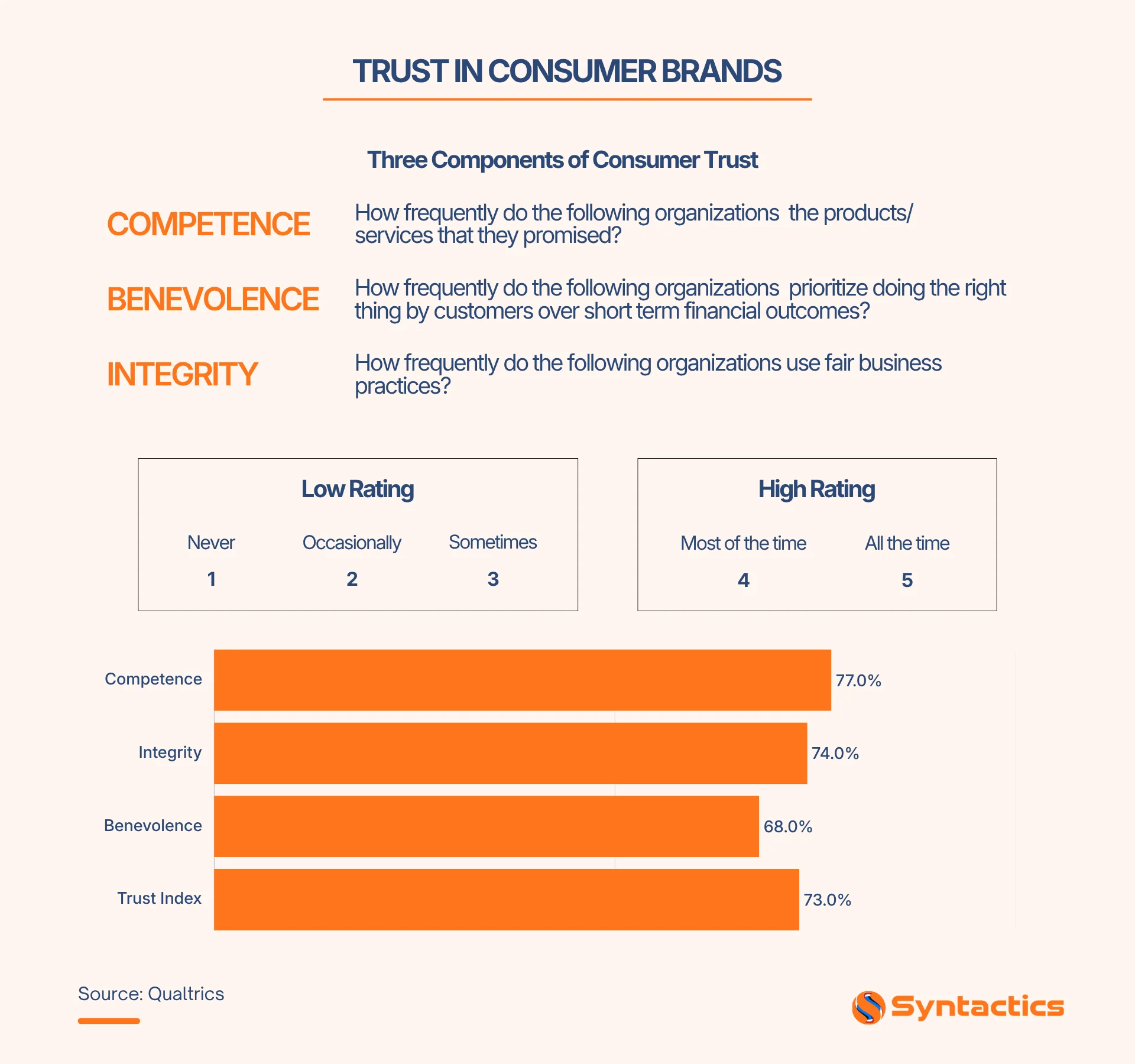
Source: Qualtrics
6 Visual Inconsistencies That Erode Trust
Contradictory branding causes friction in your business’s optimized conversion funnel, specifically through the following inconsistencies:
Different Logos and Color Schemes Across Platforms
When your platforms and social media use different branding and logo designs, it creates confusion among prospects. Such inconsistency indicates a lack of internal alignment, which can translate to perceived low-quality service. Hence, establishing a cohesive visual branding and design helps strengthen your business’s reputation across different platforms.
Outdated and Generic Proposals and Decks
Leveraging generic, outdated proposal decks can make your business appear less like a field expert to a potential client. It weakens their confidence to engage with your brand. For this reason, decks are treated as part of the sales journey by making a good impression.
When design looks tailored, it gives the perception of an accurate process. According to Pitch Deck Statistics, investors take a 10-second glance at your pitch before bouncing off. So, it’s highly important to pique their interest by showing how your service can impact their venture.
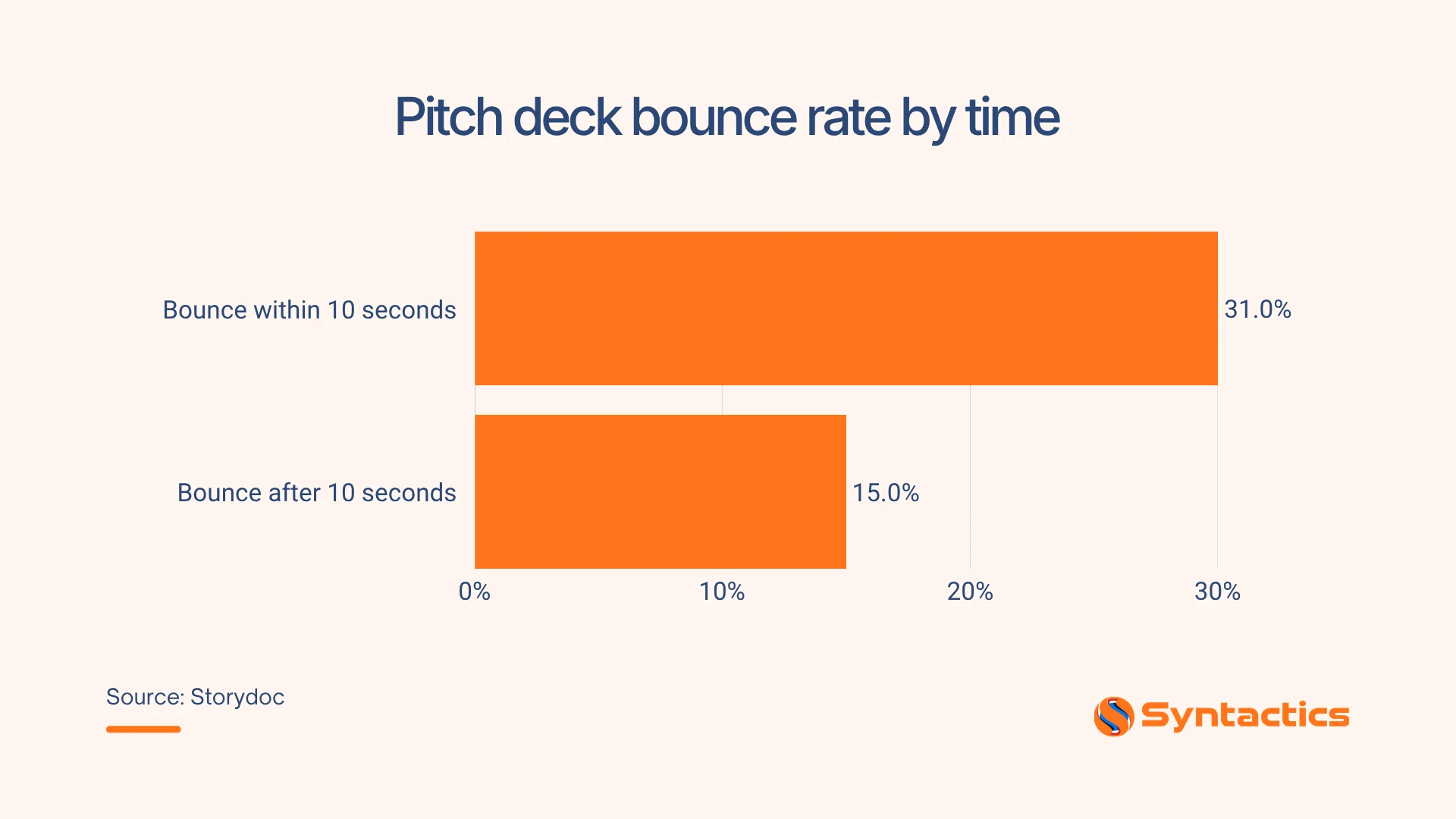
Source: Storydoc
Lack of Visual Cohesion and Brand Voice
A strong brand voice is the backbone of a recognizable identity. When messaging feels disconnected among platforms, your brand loses its clarity. This often happens when teams create assets without establishing guidelines.
In addition, when branding lacks visual cohesion, your sales team compensates by over-explaining positioning and value. As a result, potential clients end up disengaged. To address this, businesses in the Philippines and worldwide partner with digital marketing experts to align their company image with their principles.
Non-professional Marketing Collateral
Low-quality marketing materials indicate risk to potential clients. Poor visual branding suggests that the business either lacks expertise or does not prioritize quality. This perception can discourage prospects from initiating contact, especially when comparing multiple providers.
According to Adobe, 90% of potential customers expect a seamless, consistent brand experience across every marketing touchpoint. Every underwhelming asset can weaken your brand’s overall reputation. As such, additional effort is required to rebuild trust that should have been established from the first impression.
No Branding Guidelines
Without clear branding guidelines, your team delivers fragmented outputs across departments. This lack of structure increases internal inefficiencies, as employees spend more time making design decisions that should already be defined. It also weakens your brand’s external perception, making your business appear disorganized.
To fix this problem, check out our guide on creating an impactful brand identity:

Inconsistent Branding of Official Materials
Invoices, contracts, and formal documents determine the trust you built during the client journey. These materials represent a business in critical moments, such as closing deals and managing client relationships. When documentation appears unpolished, it raises doubts about your professionalism, which affects retention and referrals.
Clients evaluate their entire experience based on their confidence in your operations. That’s why positive experiences result in repeat business and word-of-mouth recommendations that sustain business growth.
How to Prevent Red Flags in Visual Branding
Here’s how graphic designers prevent common branding mistakes for businesses operating in the Philippines and worldwide:
- Establish Branding Guidelines: Ensure all assets come from a single source to maintain consistency across all touchpoints.
- Define Visual and Messaging: Standardize logo usage, typography, color palettes, tone, and layout rules to eliminate guesswork.
- Create Accessible Templates: Use pre-designed formats for proposals, decks, and social posts to keep outputs aligned and efficient.
- Implement a Structured Workflow: Assign checkpoints to review materials before release to prevent inconsistencies from reaching clients.
- Maintain a Shared Asset Library: Store updated logos, social media graphics, and templates in one location so teams always use the correct versions.
- Align Contributors in One Visual Direction: Ensure designers, writers, and marketers follow the same brand logic to avoid fragmented outputs.
- Work with a Design Partner: Instead of hiring graphic designers Philippines for one-off tasks, collaborate with a team that enforces consistency across all deliverables.
In-House vs. Outsourced: Cost Comparison
Having a dedicated graphics team helps your business stand out professionally. For instance, a small business in the Philippines partnered with a graphic design company for its assets. As a result, their business quickly gained customers’ trust through consistent branding.
Hiring an in-house designer incurs overhead costs and tool expenses. Meanwhile, outsourcing teams significantly reduces expenses with lower labor and production costs.
Here’s a quick comparison to know which option is better for your business:
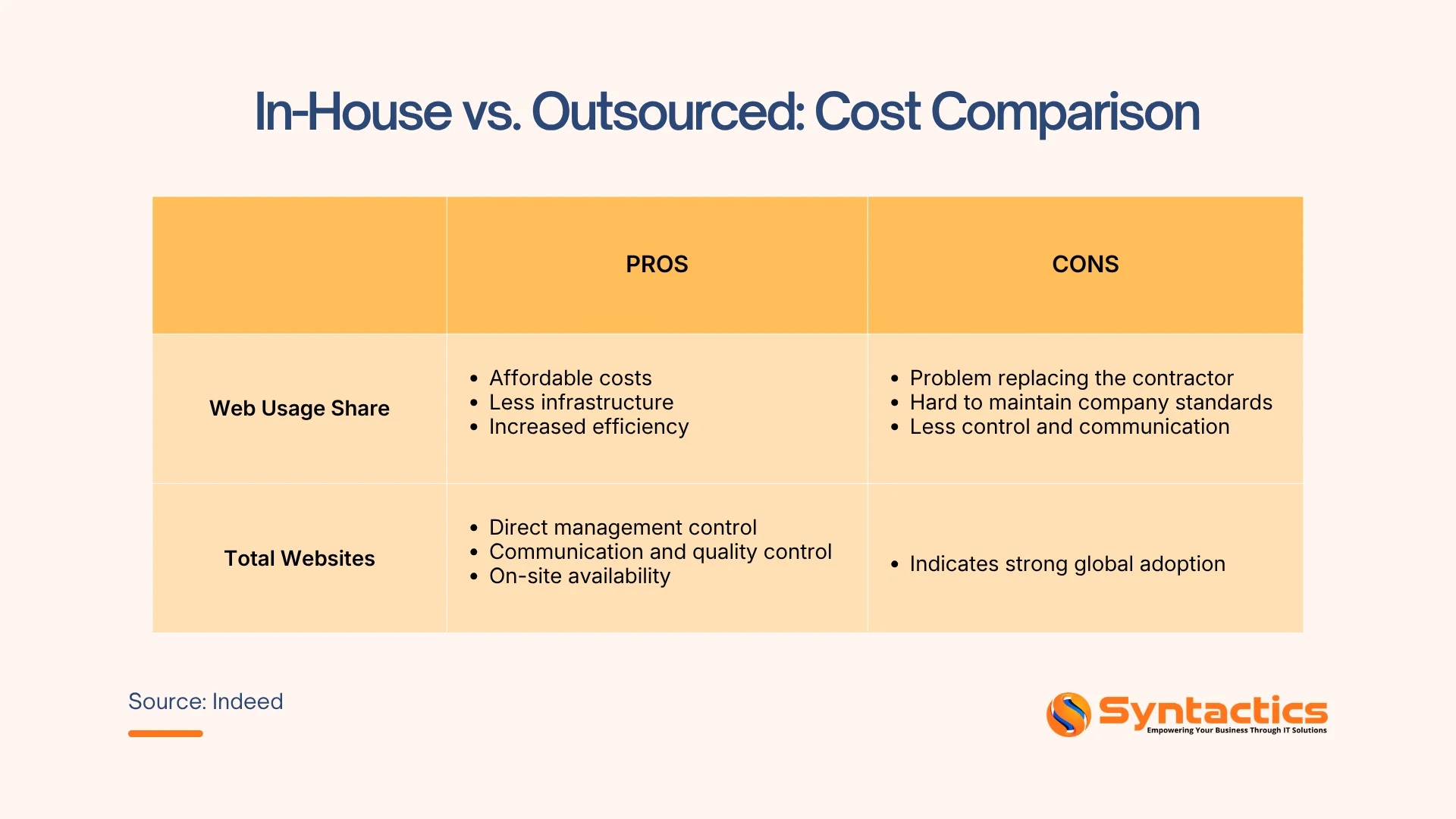
Source: Indeed
What an Outsourced Designer Delivers
For small and medium businesses considering outsourcing design teams, here’s how an outsourced designer helps you maintain branding:
- Develops familiarity with your identity, reducing the need for repeated onboarding and revisions.
- Ensures deliverables align with campaign timelines and content strategy.
- Maintains organized templates for decks, ads, social posts, and proposals for uniformity.
- Guarantees that all outputs follow a structured design system across channels.
- Adapts to fluctuating workloads without compromising quality or consistency.
Conclusion
When your visual branding appears fragmented, prospects hesitate to trust you and choose competitors with a more cohesive presence. It impacts trust and value as a consequence. That said, building a structured brand system helps you create a consistent and credible presence.
Leveraging expert design support allows your business to compete on value rather than price. At Syntactics, Inc., we help businesses like yours establish cohesive, scalable brand systems. Our graphic design services in the Philippines ensure every asset aligns with your identity and campaigns. See how we can help you attract attention with eye-catching visuals!

Frequently Asked Questions (FAQs)
What is the biggest mistake in brand consistency?
The biggest mistake in branding is the lack of a defined brand system execution across channels. Without clear guidelines, teams produce mismatched visuals that weaken trust.
Why is visual branding important?
Visual branding shapes first impressions and directly influences credibility and buying decisions. Consistent visuals make your brand easier to recognize, trust, and remember.
Do internal documents need the same branding rules?
Yes, because internal materials often reach clients through partnerships with you. Consistent branding across these documents reinforces professionalism and reliability.

About Jalou Batilong
Related News:

Google Analytics 4 Events and Goals or Conversions



The Importance of Data Backups and How to Do It

Comment 0