

From Listing to Closing: Why Real Estate Brands Choose WordPress
Real estate brands compete in one of the fastest-moving digital industries today. Buyers expect instant access to properties, sellers want credibility, and agents need a platform that keeps every stage of the customer journey moving without friction. According to W3Techs, WordPress powers over 42.2% of all websites worldwide, making it the most widely used content management system (CMS) on the internet.
That level of adoption is not accidental. Real estate companies are under more pressure to build websites that load quickly, rank locally, manage growing property inventories, and support lead generation at scale. The challenge is finding a platform that can keep up without creating long-term technical limitations or unnecessary costs.
This is where custom WordPress development really stands out. From boutique agencies to enterprise-level brokerages, more real estate brands are rethinking how their websites influence visibility, trust, and ultimately, closings.
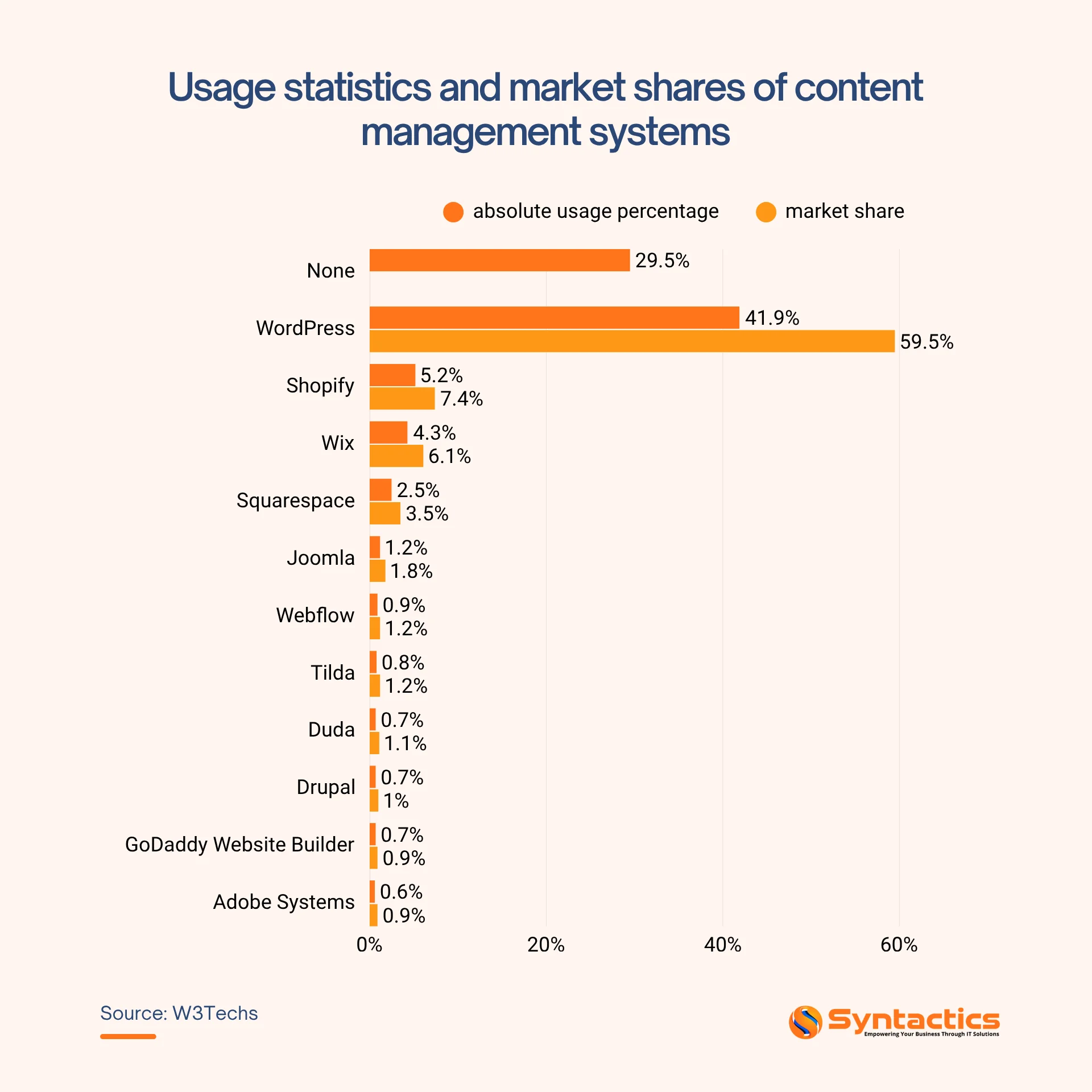
Source: W3Techs.
TABLE OF CONTENTS
Key Takeaways
- 36% of WordPress security risks come from outdated plugins and themes, not the core platform itself. (Sucuri)
- WordPress reduces development timelines for real estate sites.
- Custom functionality scales more efficiently than proprietary systems.
- SEO and local visibility improve with structured content architecture.
- Flexible integrations support CRMs, IDX, analytics, and automation.
The $10,000 Question: Is WordPress Still Built for Real Estate at Scale?
Many real estate businesses assume custom-coded platforms outperform WordPress for large property websites. In reality, WordPress often delivers better speed-to-market and lower development costs while remaining highly scalable.
A property-heavy website requires constant updates, listing imports, CRM integrations, virtual tours, and mobile optimization. Building all of that from scratch can take months and significantly increase maintenance costs.
With WordPress, you can deploy core functionality faster while still customizing every major feature. That flexibility allows agencies and brokerages to focus on growth rather than repeatedly rebuilding infrastructure.
Many businesses partner with a professional WordPress website design company to ensure their platform is built around real estate workflows, multiple listing service (MLS) systems, and lead conversion requirements. This helps them launch with a structure designed for performance and scalability from the start.
5 Features That Turn Tire-Kickers Into Signed Contracts
Real estate websites fail when they prioritize aesthetics over usability. Buyers want fast access to listings, clear navigation, and immediate trust signals. So, the most effective WordPress real estate sites include:
Advanced Property Filters
Visitors expect to narrow listings by price, property type, square footage, school district, and amenities within seconds. Fast filtering helps buyers stay engaged longer instead of leaving your site for competitors with easier search experiences.
Interactive Maps
Map-based browsing helps users explore neighborhoods, commute routes, nearby schools, and local amenities visually. This feature keeps buyers engaged because many property searches begin with location preferences before home specifications.
Virtual Tours and Video Walkthroughs
Virtual tours give buyers a realistic view of a property before scheduling an in-person visit. Video walkthroughs also help qualify leads because interested buyers spend more time reviewing listings they genuinely want to explore further.
In fact, the 2025 Home Buyers and Sellers Generational Trends Report found that 41% of homebuyers found virtual tours very useful when researching properties online.
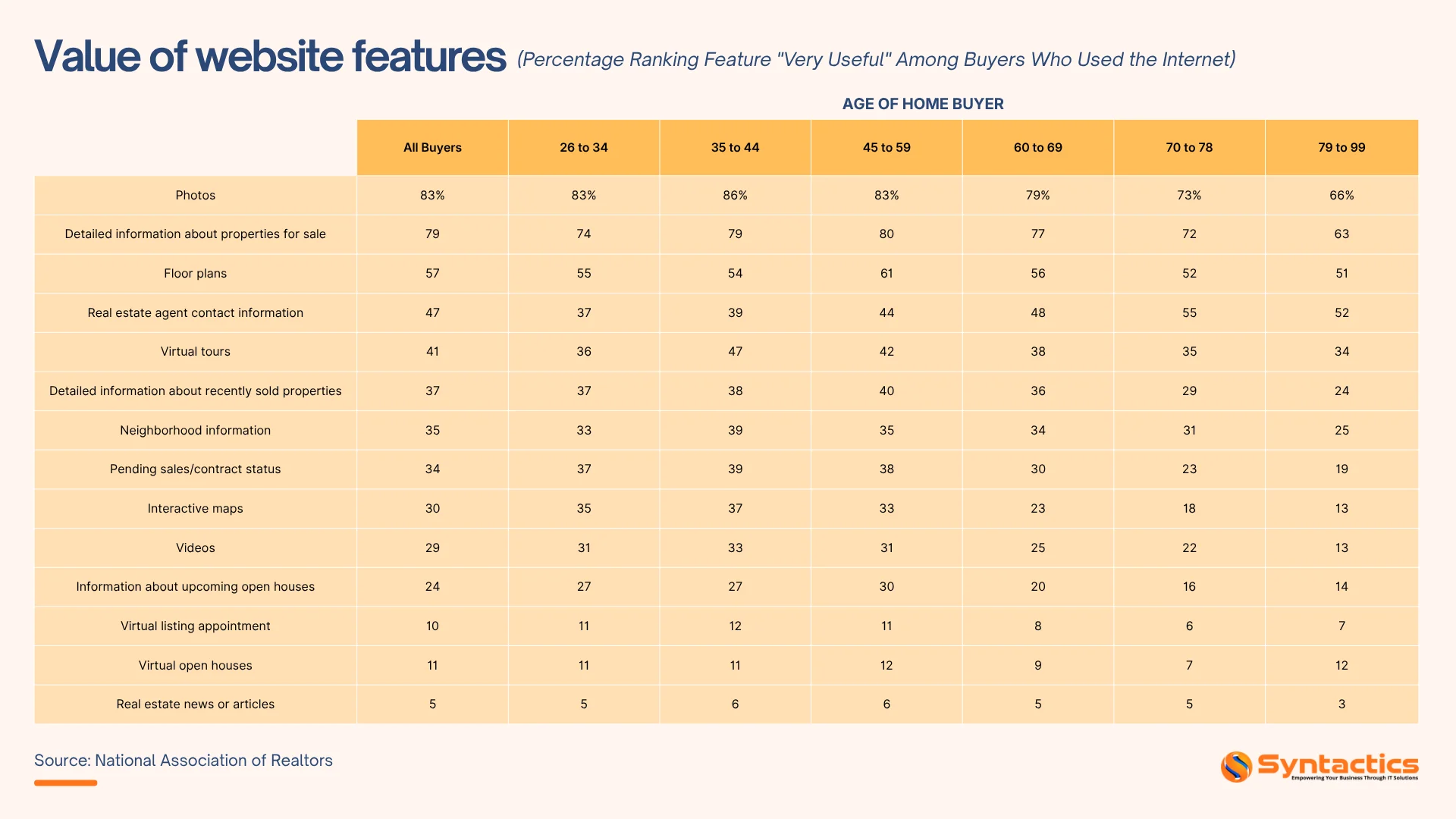
Source: National Association of Realtors
Lead Capture Forms
Simple lead forms connected directly to your CRM improve response times and reduce missed opportunities. Shorter forms also increase completion rates because visitors can inquire about listings without unnecessary steps.
Mobile Optimization
Most homebuyers now browse listings, compare properties, and contact agents directly from their phones. A mobile-friendly website improves usability, strengthens SEO performance, and keeps potential clients from abandoning slow or broken pages.
Page Builders vs. Custom Code: Where Agencies Lose (or Make) a Fortune
Choosing between page builders and custom-coded WordPress themes directly affects performance, scalability, and long-term cost. Many businesses underestimate the impact of these decisions on site speed, maintenance workload, and future flexibility.
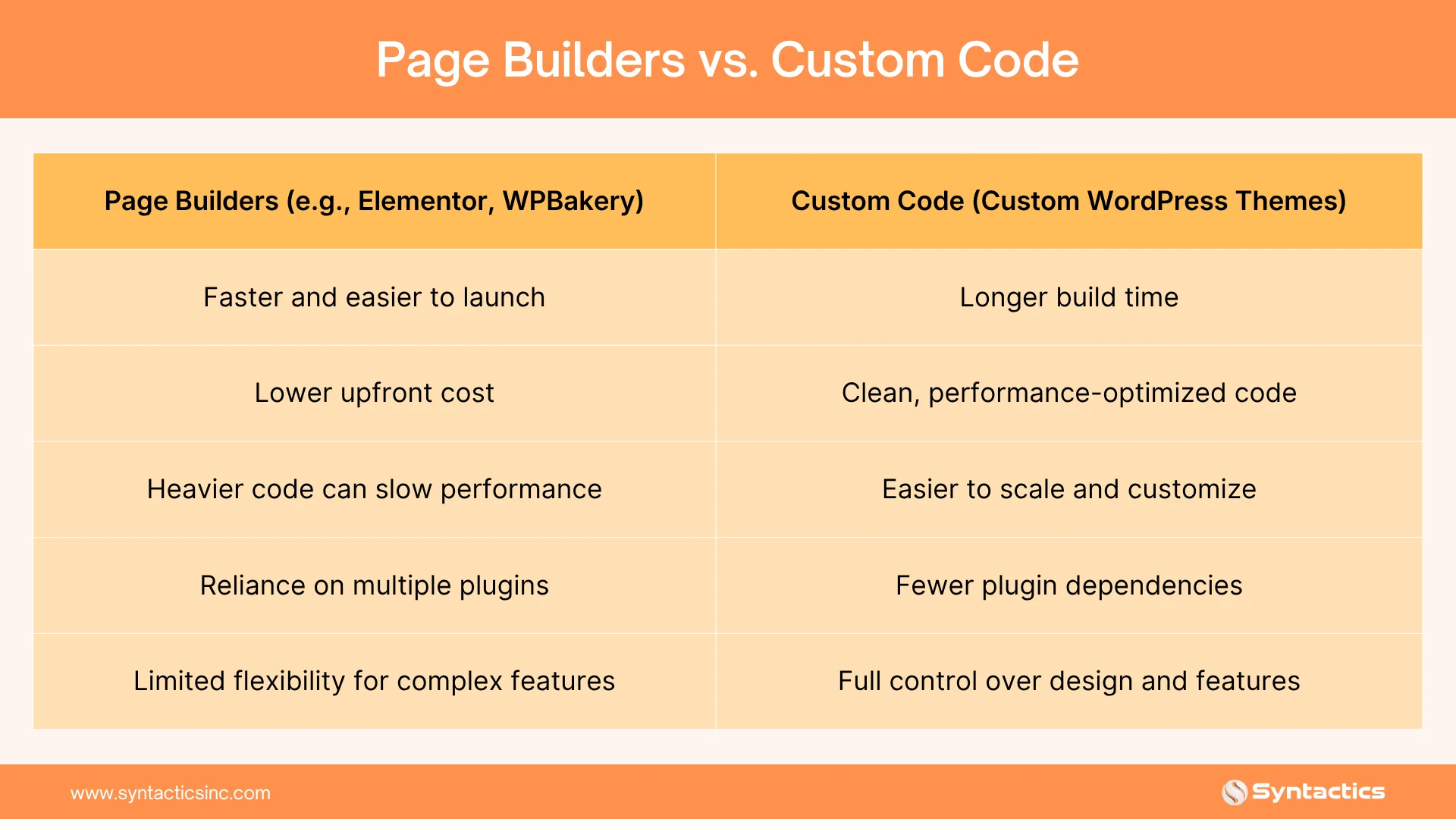
In real estate, the difference shows up in results rather than just in development style. Page builders may get you online quickly, but custom builds are what support long-term growth, higher lead quality, and better conversion performance.
The Plugin Trap: Why Most Real Estate Sites Crumble (and How Yours Won’t)
Many real estate sites collapse under excessive plugin use. This is because poorly maintained plugins introduce security risks, performance issues, and compatibility problems.
Sucuri’s 2022 Website Threat Research Report found that 36% of vulnerabilities originated from outdated plugins and themes rather than the WordPress core platform itself. This is why successful real estate websites limit plugin usage to trusted, business-critical tools.
Reliable plugin categories include:
- MLS and IDX integrations
- SEO optimization
- Image compression
- Security hardening
- Caching systems
- CRM synchronization
White-label real estate brands especially benefit from stable plugin ecosystems because downtime damages credibility and reduces leads. So, if your website relies on dozens of overlapping plugins, performance and security issues are inevitable.
How to Own Local Search Without Paying for Ads
WordPress supports strong local SEO by enabling structured content creation at scale. You can build neighborhood pages, community guides, school district content, and local market updates that target high-intent searches.
Your strategy should include:
- Real estate schema markup
- Optimized Google Business Profile integration
- Internal linking structures
- Hyperlocal landing pages
- Fast-loading mobile pages
- Location-specific metadata
Organic traffic compounds over time. According to ZipDo, organic search accounts for over 53% of global website traffic. That means your real estate website can become a long-term lead engine without relying entirely on ad spend.

Speed Sells, Slow Kills: Performance Secrets That Protect Your Commissions
Real estate websites contain massive image galleries, interactive maps, and multimedia assets. Without optimization, load times increase rapidly.
You should focus on:
- WebP image compression
- CDN implementation
- Server-side caching
- Script optimization
- Lazy loading
- Database cleanup
- Firewall and malware protection
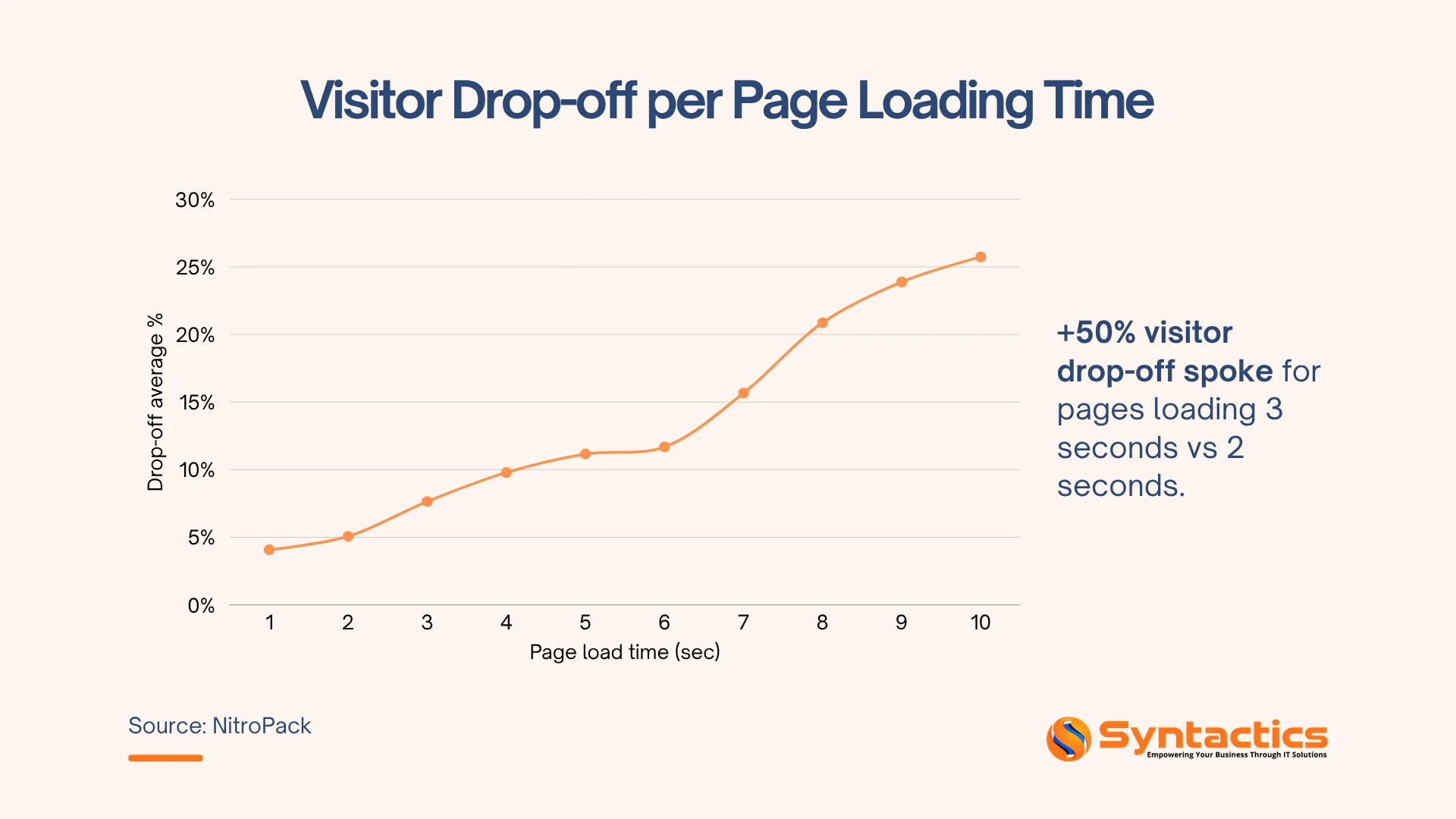
Speed directly impacts user behavior and conversions. According to NitroPack, 50% more visitors drop off when a page loads in 3 seconds compared to a 2-second page load time. That single second can determine whether a buyer stays to explore listings or leaves for a competitor.
This is why experienced developers prioritize performance architecture early instead of trying to fix problems after launch. As such, businesses that invest in professional WordPress website design and development gain long-term advantages in SEO, user experience, and lead retention.
Source: NitroPack
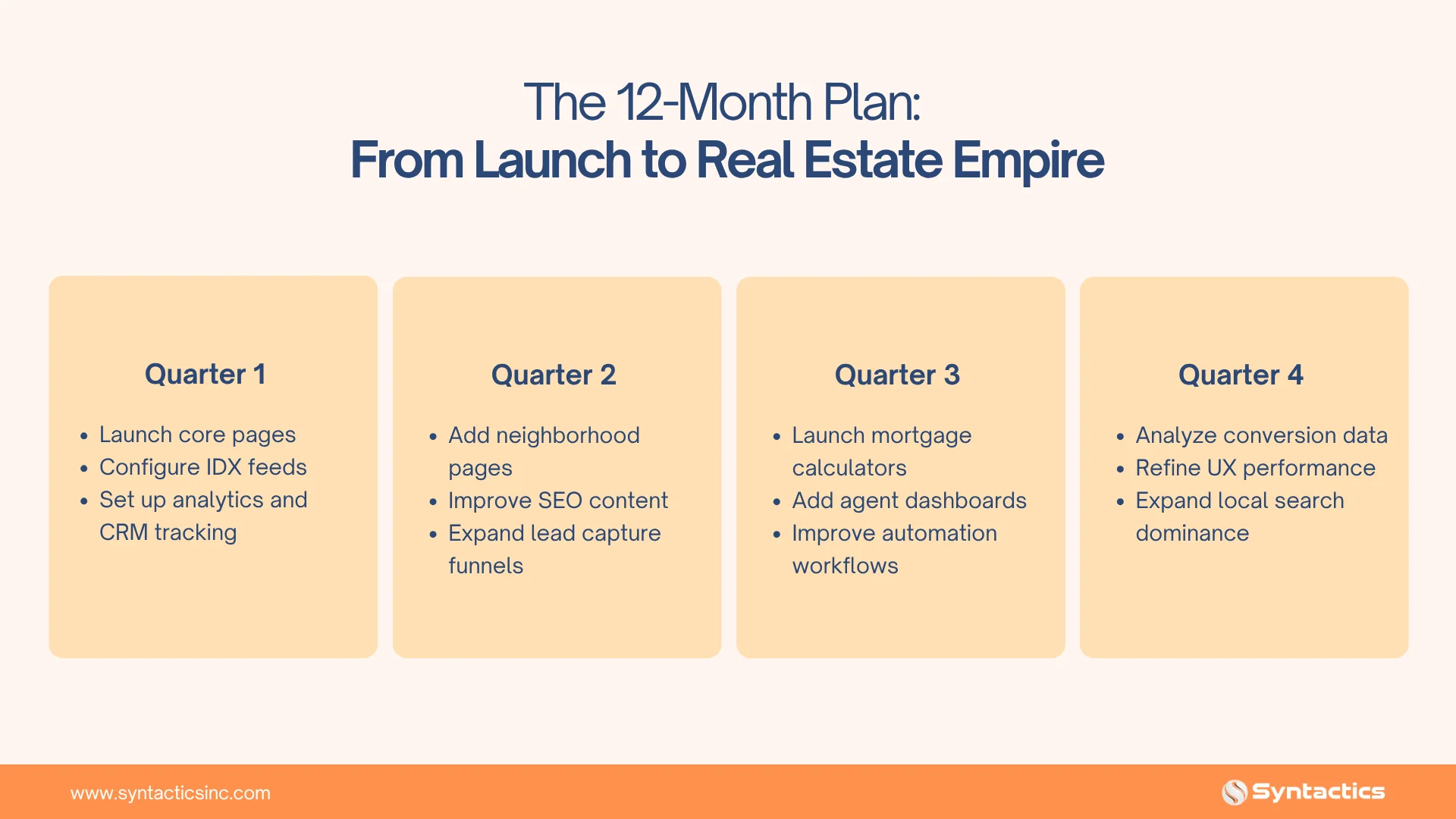
The 12-Month Plan: From Launch to Real Estate Empire
Successful real estate brands continuously improve their websites through analytics, feature additions, and conversion testing. Your 12-month roadmap should include:
Why Real Estate Brands Invest in WordPress Development Services
As your business grows, technical demands become more complex. You may need:
- CRM automation
- Custom APIs
- High-volume property imports
- Enterprise hosting
- Advanced security configurations
- Conversion tracking systems
At that stage, professional development services become essential. Working with a skilled WordPress developer in the Philippines can provide cost-efficient expertise while maintaining high-quality implementation standards.
Many global brands choose offshore WordPress specialists for their combination of technical skill and scalable support. As such, they help eliminate technical bottlenecks, allowing your sales and marketing teams to focus on closing deals.
Conclusion
Real estate brands choose WordPress because it balances scalability, flexibility, SEO performance, and long-term ownership. With custom WordPress development, you can create a platform that attracts qualified buyers, supports agents, and generates consistent leads without relying entirely on paid advertising.
If you want a scalable real estate platform built for growth, Syntactics, Inc. can help you implement high-performing custom solutions tailored to your business goals. From SEO architecture to WordPress design and development, our expert team delivers strategies that support long-term lead generation and conversion performance.

FAQs About Custom WordPress Development
Can WordPress handle thousands of property listings?
Yes. With proper hosting, database optimization, and IDX integration, WordPress can efficiently manage large property inventories.
Is WordPress secure enough for real estate websites?
Yes. Strong hosting, security plugins, regular updates, and limited plugin usage significantly improve WordPress security.
How to build a real estate website with WordPress?
You build a real estate website with WordPress by setting up a theme, adding IDX/MLS tools, and installing key plugins for listings and lead capture. Then you optimize for mobile, speed, and CRM integration to start generating and managing leads effectively. To launch a high-converting real estate website, contact us today to get started.

About Ladymieh Naallatan
Related News:


Tips for your IGTV Marketing and How to Optimize It

Google Analytics Tag Update to Global Site Tag

Why Hire a Marketing Assistant for Your Business?

Google Analytics 4 Takeover: UA is Out, GA4 is In!








Comment 0