


A Guide to Profitable Google and Meta Ads Campaigns for Your Business
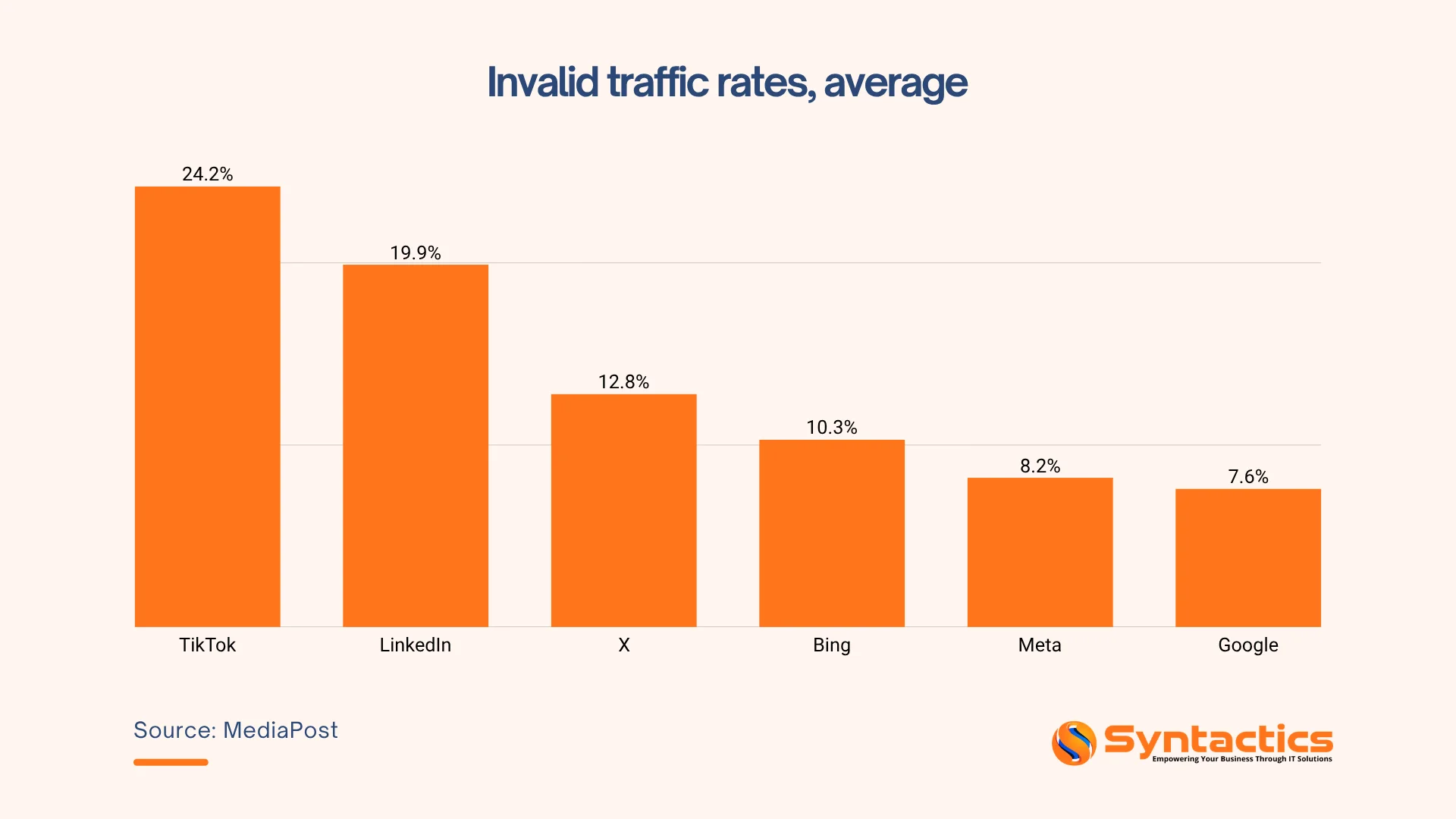
Most starting businesses assume their paid ad campaigns fail due to budget limitations. To illustrate, invalid traffic is identified as a common factor of wasted ad spend. Its average rate reaches 8.2% and 7.6% for platforms like Google and Meta Ads, respectively. This contributes to a wasted ad spend of $63 billion, according to Media Post reports.
However, its performance lies down in how the ads were set up. For the most part, underperforming campaigns fail because the account is built for volume instead of profit. The three levers that control these results are targeting, offer, and landing page. Optimizing these will help achieve ROAS that covers ad spend while leaving room for profit.
TABLE OF CONTENTS
Source: MediaPost
Key Takeaways
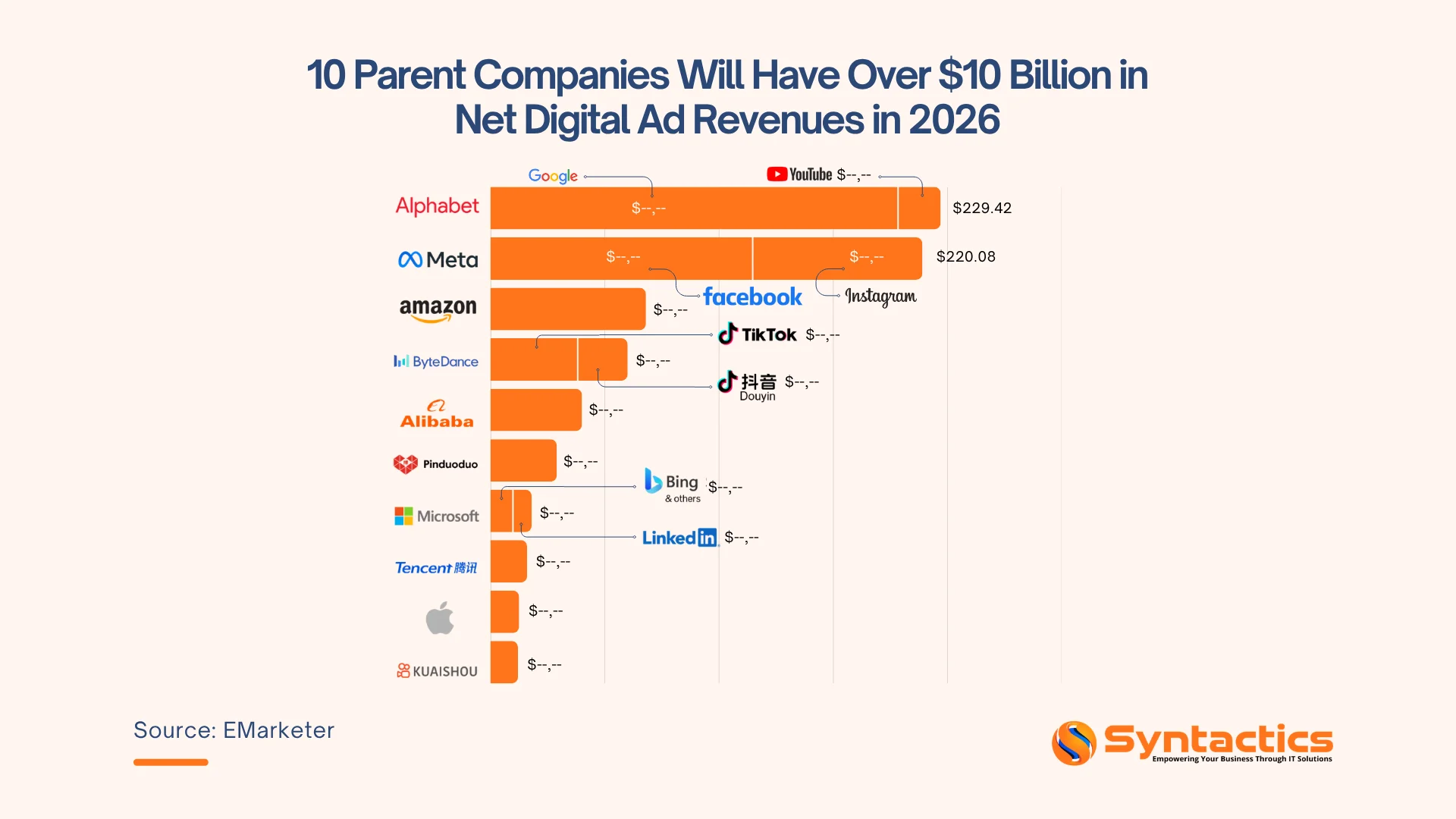
- Google and Meta Ads dominate in driving $10 billion revenue for marketing campaigns. (EMarketer)
- Invalid traffic remains a major drain on resources, accounting for an average of 8.2% of Google Ads traffic and 7.6% of Meta Ads traffic. (Media Post)
- Structural flaws are the primary cause of campaign failure, particularly when accounts are optimized for higher traffic volume than actual profit.
- A dedicated landing page is an important element for a frictionless conversion journey.
- To sharpen ad strategy, use negative keywords to minimize irrelevant traffic and bid capping to avoid overpaying for low-quality clicks.
- A successful campaign connects ad data to CRM outcomes and buyer-stage alignment, ensuring sales pipelines are actually growing.
Signs Your PPC Setup Is Costing You More
Before optimizing your ad campaigns for better profitability, it’s important to determine factors that waste ad spend. In the perspective of PPC management experts, ad campaigns fail due to structural issues that can be prevented. Here’s why your ad setup is costing you more money:
Untargeted Broad Match Keywords
Broad match keywords help maximize your business’s Google search ads, however, it requires a strategic approach. More often, these keywords trigger ads for loosely related searches, leading to irrelevant clicks. As a result, it increases your average cost-per-click (CPC) without improving conversion rates, leading to wasted ad spend.
Lack of Negative Keyword Strategy and Bid Caps
Negative keywords filter out specific search terms in your campaign, while bid caps set the budget limit for your Google and Meta ads. Neglecting to establish these results in advertisers paying premium prices for low-quality traffic.
Lack of Dedicated Landing Page
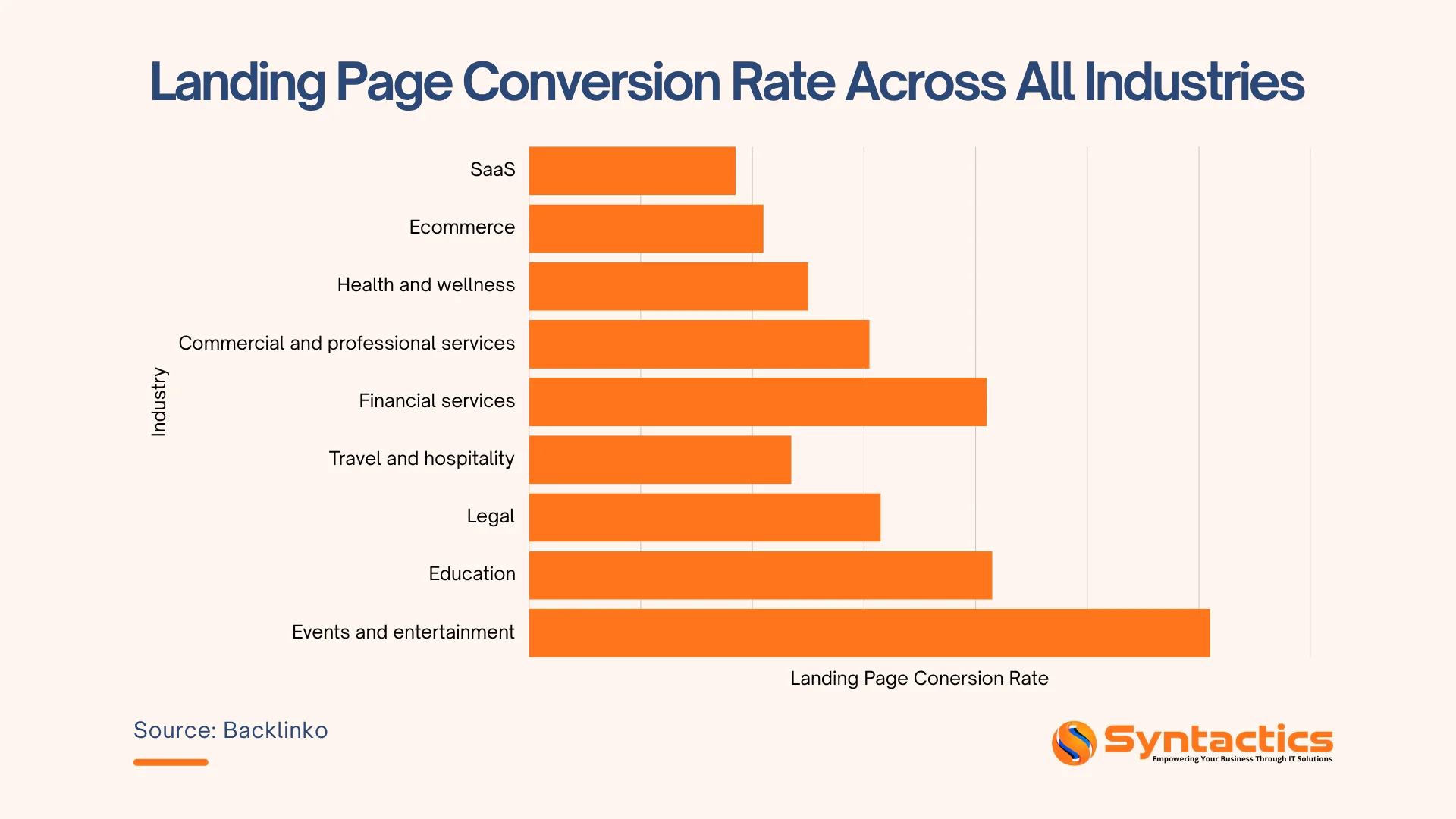
A lot of small businesses direct their ads on their website’s home page. As a result, potential customers find it difficult to attain what they need. As such, a dedicated landing page is needed to enhance user navigation and action. It also helps improve your business’s conversion rates.
For more insights, here’s a quick overview of landing page conversion rate across industries:
Source: Backlinko
Poor Conversion Tracking or Misattributed Conversions
Without proper performance tracking, all ad efforts rely on incomplete data. For instance, when conversions are incorrectly credited, businesses end up stripping budget for touchpoints that actually drove the sales. As a result, marketers scale underperforming campaigns and underfund high-performing ones.
Misaligned Ad Campaign Goals
According to EMarketer, Google and Meta Ads dominate in driving revenue for marketing campaigns. That said, if your ads don’t align with your end goal, it creates inefficiency. To create high-performing ads, the best approach is to turn content into buyers. This can be done by matching the campaign to the buyer’s stage in the funnel.
Source: EMarketer
4-Part Profitable Campaign Audit for Decision-Makers
Conducting audits identifies gaps and growth opportunities in your Google and Meta Ads. To guide you, here are frameworks used by leading PPC management services:
Audience Audit
Check whether your audience settings match your actual target market. The goal is to narrow down the audience who need your offerings. Then, compare audience quality against ad performance by reviewing:
- Market segments that convert
- Most used type of device
- Highly profitable locations
For a practical example, here’s how an e-commerce company increased their sales with a targeted audience in their Meta Ads campaign:

Offer Audit
Strong offers reduce hesitation among potential buyers because they tell exactly why this ad matters to them. When the value proposition is vague, it rarely transforms into revenue. A better offer increases qualified clicks and usually improves downstream conversion quality.
With this approach, PPC management tests value positioning in all elements of ad copy. Generic messaging such as, “Contact us today,” barely appeals to cold traffic. Meanwhile, specific promises such as “Get a same-week proposal” encourage user action.
Funnel Audit
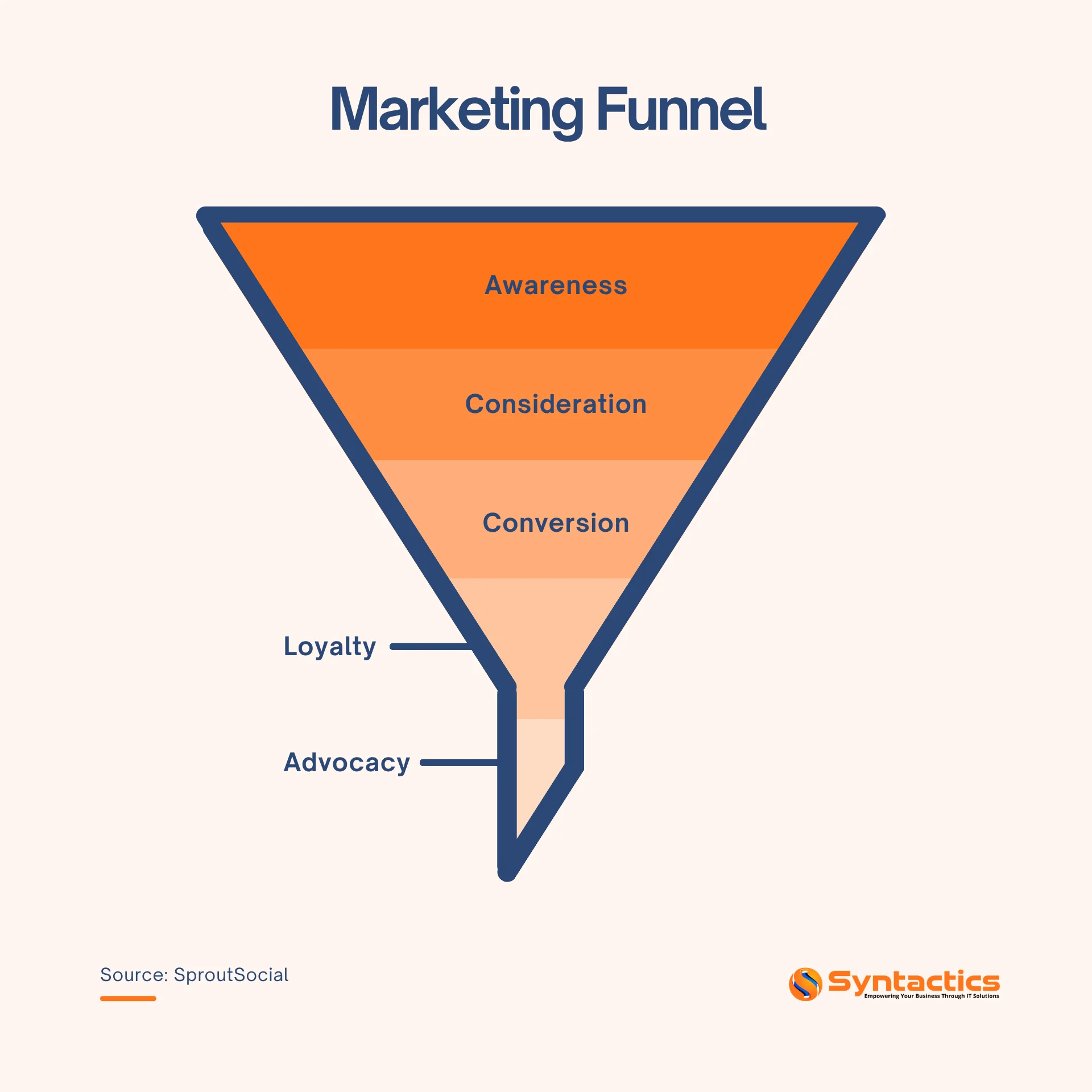
The post-click path should lead to the next obvious step. If an ad promotes a specific product, it directs to the page where the user can check out the item. This is an area where a lot of campaigns fail due to friction in the marketing funnel.
A funnel audit checks the page speed, message alignment, user-centered experience, form length, and trust signals. For businesses, that often means cleaner forms, stronger proof, and a shorter path from interest to inquiry.
To keep things simple, here’s a simple illustration of a marketing funnel;
Source: SproutSocial
Reporting Audit
According to Nielsen’s Marketing Report, 38% of global marketers evaluate ROI through both digital and traditional marketing efforts. Reports tell you whether a campaign is generating leads or profit. In paid ads, metrics such as impressions, click-through rates (CTR), and CPC help evaluate performance. However, these are not true indicators of a sales pipeline.
A good audit connects ad data, landing page behavior, and CRM outcomes. If the dashboard celebrates clicks with poor lead quality, chances are performance was incorrectly measured. For this reason, PPC experts thoroughly manage Google and Meta Ads campaigns.
What a PPC Management Partnership Should Include
Here’s what a proactive collaboration should entail when partnering with a digital marketing company in the Philippines or worldwide:
- Dedicated Account Management: Monitor performance changes, the reason behind them, and proposed next actions.
- Full-Funnel Strategy: Align campaigns according to the ad promise for a seamless customer journey.
- Ad Spend and Revenue Report: PPC reports show what was spent, how much was earned, and where the margin improved.
- A/B Testing: A good ads account management test different variations of ad copies, creatives, audiences, and bids for a high-performing campaign.
Conclusion
Profitable ad campaigns are a product of deliberate strategy and continuous optimization. For Google and Meta Ads, this success can be achieved by:
- Refining your target audience
- Replacing generic calls to action with specific promises
- Enhancing user experience; and
- Reporting valuable insights, outcomes, and solutions
Partnering with a trusted agency like Syntactics Inc. turns your ad spend into sustainable growth. We offer PPC campaign management services built around measurable outcomes. Our experts work with running campaigns that attract ready-to-convert audiences. Let our specialists optimize your paid ad campaigns today!

Frequently Asked Questions (FAQs)
What is the difference between Google Ads and Meta Ads?
Google Ads captures active intent through search queries, while Meta Ads targets users based on audience interests, behavior, and demographics.
What matters more, a lower CPC or a higher conversion rate?
A higher conversion rate matters more because it directly impacts revenue and lead quality. Low CPC is considered ineffective if the traffic does not convert into quantifiable results.
Should Google and Meta Ads campaigns use the same creative?
No, because each platform has different user behavior and intent. Creative should be tailored to match search-driven intent on Google and scroll-based engagement on Meta.

About Jalou Batilong
Related News:













Comment 0