


Why Modern Paid Advertising Focuses on Revenue Metrics
Paid advertising has undergone a structural transformation, leaving marketers no longer satisfied with surface-level engagement metrics. Instead, measurable business outcomes are prioritized for revenue and profitability. According to WhatConverts, the average return on ad spend varies by industry, meaning no PPC strategy fits all campaigns.
This shift has elevated the importance of PPC campaign metrics that reflect actual financial impact. Businesses are closely examining how every dollar is spent to drive growth. Consequently, revenue-focused measurement has become part of modern PPC strategies.
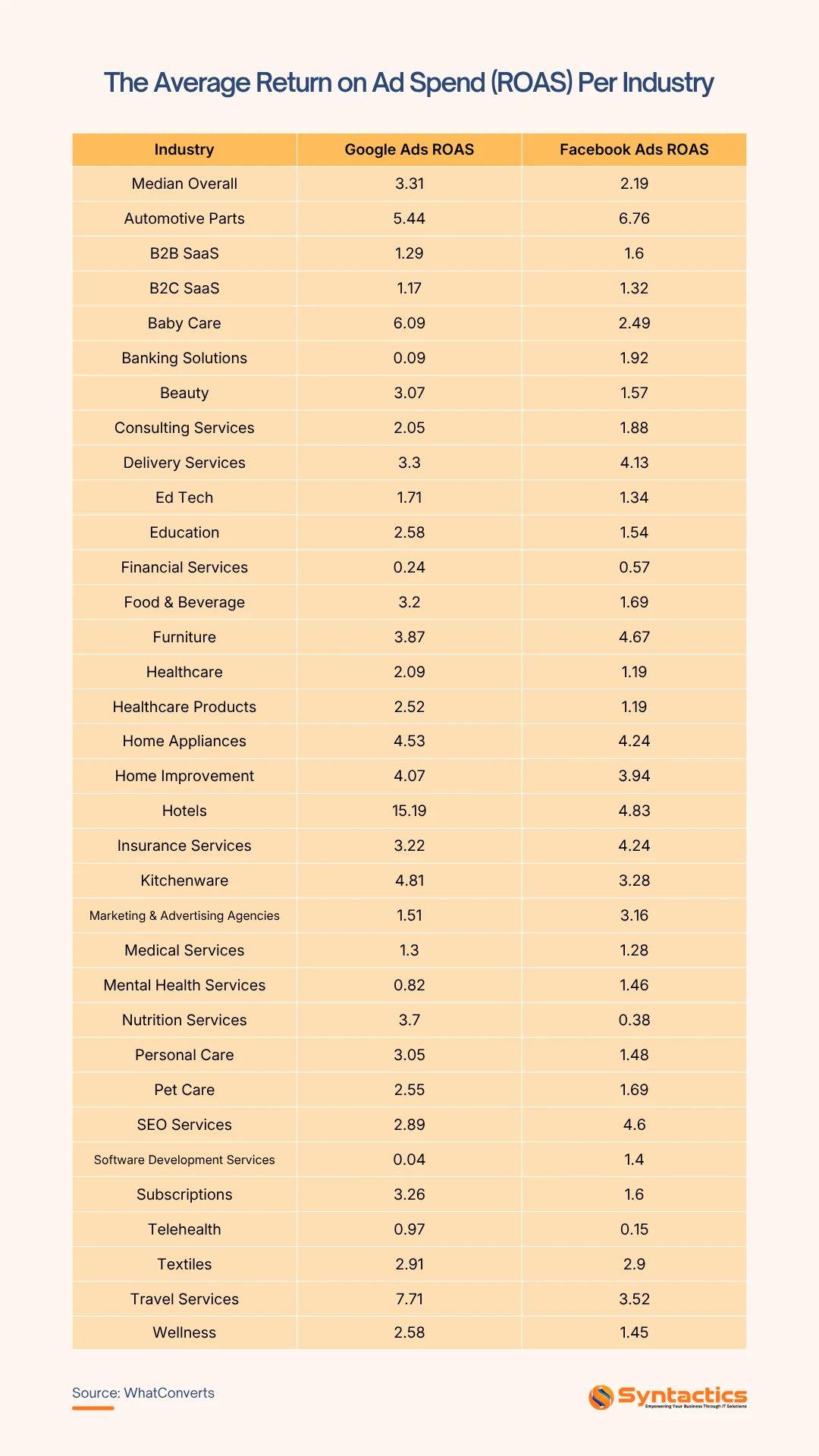
Source: WhatConverts
TABLE OF CONTENTS
Key Takeaways
- Boosting customer retention by 5% boosts your total profit by 95% (Social Plus).
- 70% of marketers intend to shift their budgets away from general brand-building and toward performance-based strategies (Nielsen).
- Vanity metrics, such as high click-through rates (CTR) and impressions, do not guarantee actual sales or business profitability.
- Modern PPC management emphasizes conversion value to prioritize the specific customer actions that drive business revenue.
- Return on Ad Spend (ROAS) and Customer Lifetime Value (CLV) ensure your advertising aligns with your long-term goals.
The Shift from Vanity Metrics to Revenue Metrics
Traditional metrics such as impressions, clicks, and CTR once dominated campaign reporting. While these indicators provide useful directional insights, they fail to evaluate how much revenue the campaign generated.
According to Nielsen, 7 out of 10 marketers intend to shift their budgets toward performance-based strategies. This evaluation reflects a focus on scaling back on brand-building initiatives.
As a result, PPC ad management services are evolving to align campaigns with business outcomes. Rather than optimizing for traffic alone, they now focus on KPIs that drive revenue. These PPC campaign metrics include conversion value and customer acquisition cost.
Limitations in Traditional Advertising Metrics
Here’s where traditional metrics fall short in bringing profit for your business:
- Clicks don’t equate to conversions: High click volume doesn’t translate into sales.
- Lack of intent signals: Visibility doesn’t guarantee engagement or purchase behavior.
- Misleading CTRs: A strong click-through rate may result from compelling creatives but still fail to drive revenue.
- No connection to profitability: These metrics do not account for costs, margins, or return on investment.
- Short-term focus: They emphasize immediate interactions rather than long-term customer value.
PPC Survey shared that more than half of ad management experts believe that running campaigns has become more challenging. These gaps highlight why marketers rely on deeper performance indicators that connect advertising efforts to financial outcomes.
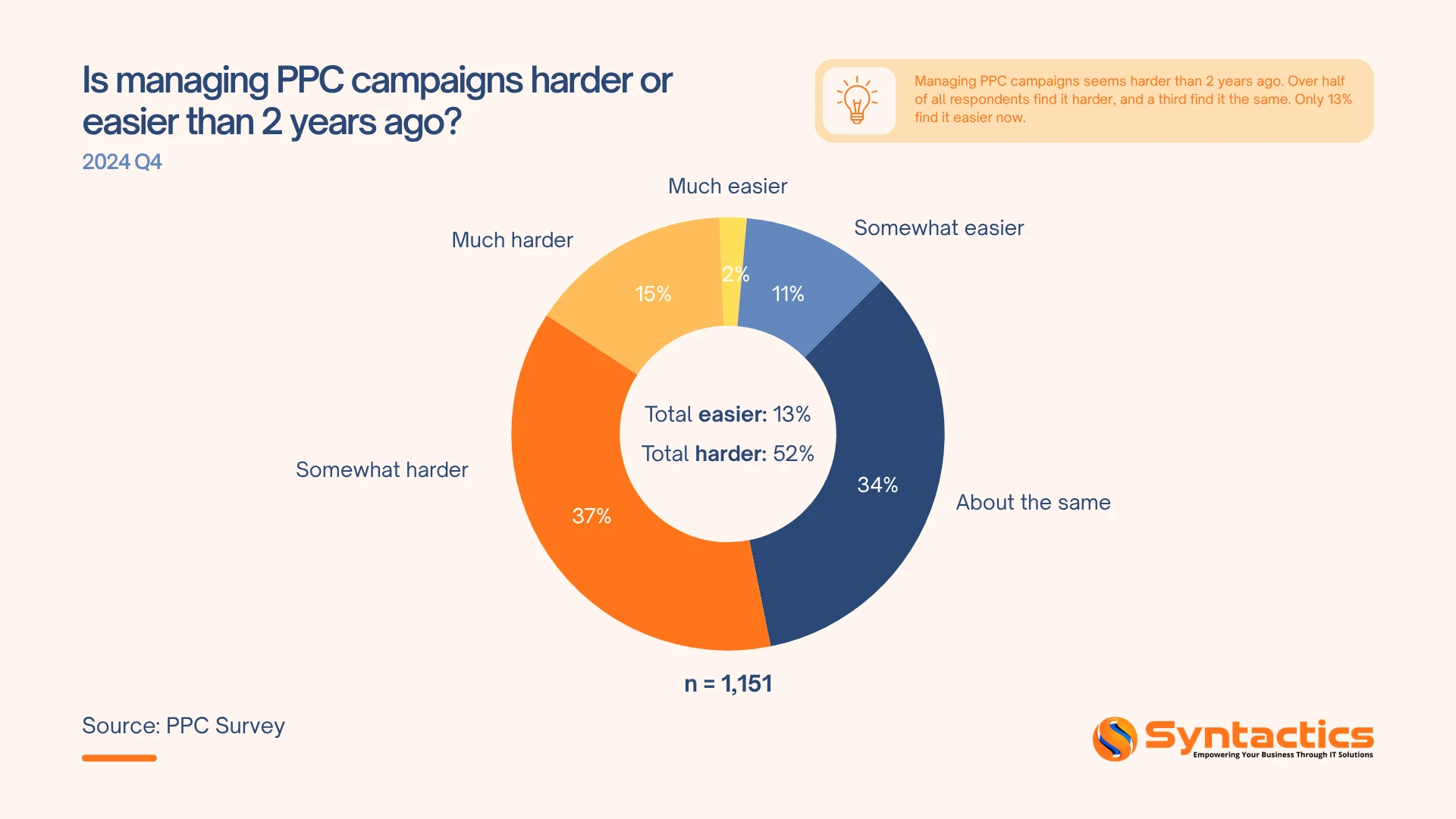
Source: PPC Survey
Why Revenue-Focused KPIs Matter
The following KPIs redefine how PPC management service for effective ad campaigns.
Return on Ad Spend (ROAS)
ROAS provides a direct link between investment and profitability. PPC campaigns optimized for these metrics achieve higher efficiency compared to click-based optimization
Conversion Value
Conversion value measures the monetary worth of each completed action. It allows advertisers to prioritize high-value conversions rather than volume alone. This metric is important for e-commerce and lead generation campaigns.
Customer Lifetime Value (CLV)
According to Social Plus, increasing customer retention by 5% boosts your profit by 95%. CLV estimates the long-term profit your business generates from one customer.
Multi-Touch Attribution
This conversion funnel model assigns value across multiple customer interactions. It helps marketers understand which channels contribute to conversions. With this approach, advertisers can optimize the full customer journey.
To further illustrate, here’s how multi-touch attribution works with sign-ups as conversion goal:
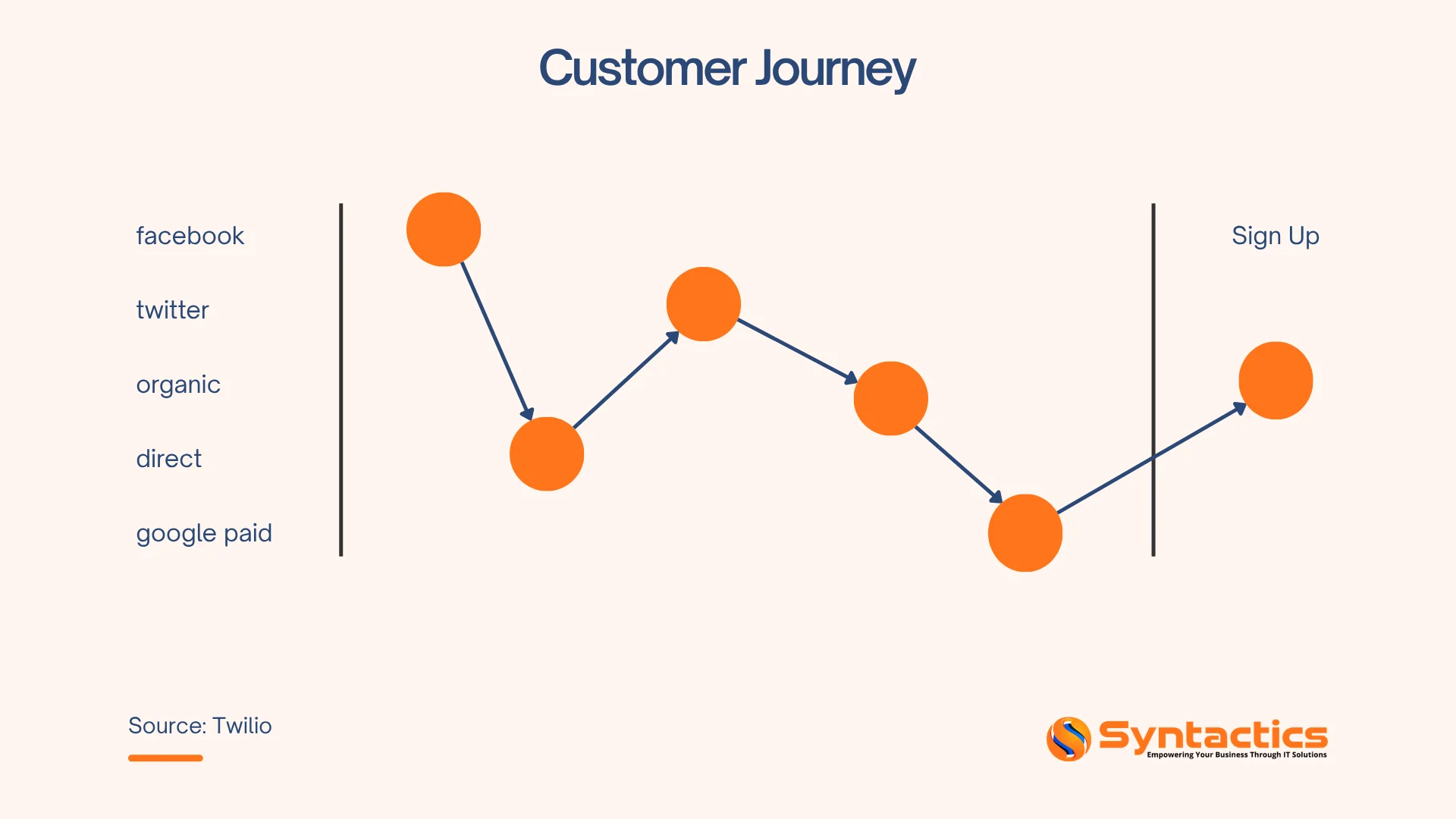
Source: Twilio
How Revenue-Based Metrics Improve Advertising Strategy
Here’s how profit-driven PPC metrics reshape campaign execution with smarter decisions:
Budget Allocation Optimization
Ad spend changes during campaign optimization. With this approach, marketers can allocate budgets toward high-performing channels and campaigns. This reduces waste and maximizes return on investment.
Smarter Audience Targeting
Revenue metrics help identify high-value customer segments, placing focus on users who are most likely to convert and generate profit. It improves conversion rates while lowering acquisition costs and makes targeting more accurate.
Continuous Campaign Optimization
Revenue data enables ongoing performance refinement. Advertisers can adjust bids, creatives, and targeting based on real financial outcomes. In one instance, our team helped a finance firm achieve more than 300 conversions through Google Ads refinement. This continuous optimization loop ensures campaigns remain aligned with business goals.
To know how our team optimized a campaign, check out our case study here:

Long-Term Growth Strategy
Revenue-focused metrics emphasize sustainability rather than short-term gains. They encourage investment in customer retention and lifetime value. This approach builds stronger brand equity and predictable revenue streams.
Conclusion
This fundamental shift in paid advertising reflects how performance is defined. Businesses are no longer hooked on vanity metrics. They favor PPC campaign metrics that directly connect their ad spend to revenue and profitability.
Delving into this change requires more than a basic setup. That’s why collaborating with certified specialists helps you refine high-conversion opportunities.
Fortunately, companies like Syntactics, Inc. offer expert PPC campaign management services. Our team provides hands-on strategies backed by deep analytics. We also craft campaigns that turn clicks into customers. See how we help boost your revenue today!

Frequently Asked Questions (FAQs)
What are revenue-based PPC metrics?
Profit-driven metrics focus on actual income generated instead of traffic or clicks. Key indicators include ROAS and conversion value that measure how the ad budget converts into sales.
How to evaluate PPC agency performance metrics?
To evaluate an agency’s essential qualities, compare its achieved ROAS against your predefined goals to determine how well it meets them.
How do revenue metrics improve PPC campaigns?
Revenue metrics allow you to shift budget away from high-traffic keywords that don’t convert toward those with the highest lifetime value (LTV).

About Jalou Batilong
Related News:













Comment 0