


Which Platform Best Serves Your Business: Web, Mobile, or AI?
Businesses evaluating web, mobile, or AI apps are under pressure to choose a platform that delivers measurable results, not wasted investment. With only 35% of companies achieving their digital transformation goals according to Backlinko, the wrong platform choice can quickly lead to poor adoption, rising development costs, and stalled growth.
Thus, it’s important to assess whether a web, mobile, or AI application aligns best with your users, operational needs, and long-term roadmap.
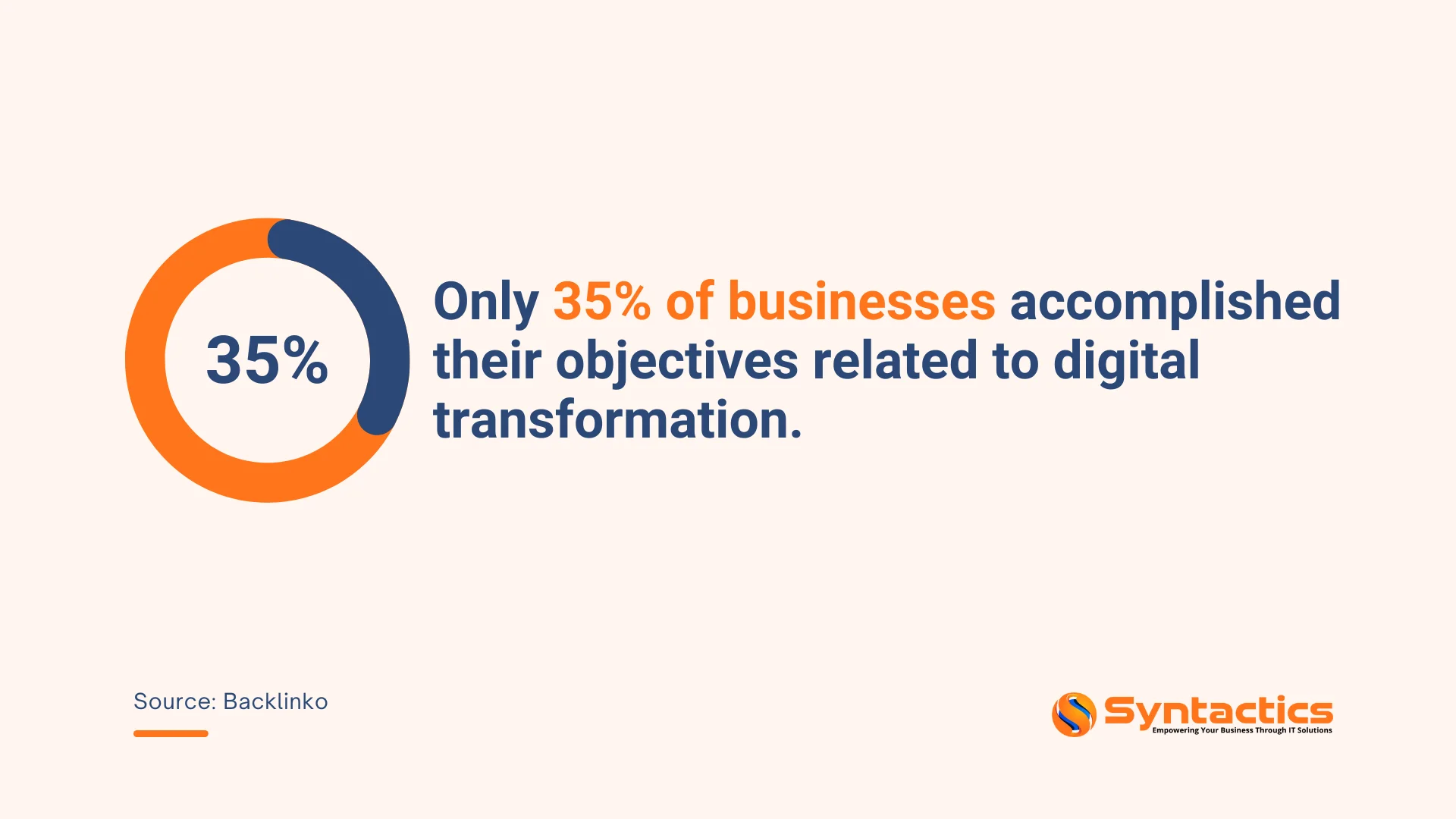
Source: Backlinko.
Key Takeaways
- 65% of companies are using AI and predictive analytics to enhance customer retention and loyalty. (Adobe)
- Platform choice has a direct impact on adoption, costs, and the success of digital transformation.
- Web apps prioritize accessibility and speed, mobile apps drive engagement, and AI apps deliver automation and personalization.
- Budget, timeline, user behavior, and data readiness should guide platform decisions.
- The right choice depends on audience behavior, business goals, device context, and long-term scalability.
Web Applications: Strengths and Limitations
Web apps offer a flexible starting point for your digital presence. Through web application development, you can deploy solutions that work on any browser for consistent access across desktops, tablets, and smartphones. This way, users don’t need to install software, leading to faster onboarding and smoother maintenance since updates are applied automatically.
Strengths of Web Apps
Web apps offer broad compatibility, suitable for audiences using a variety of devices. They’re also highly visible through search engines, helping your business attract organic traffic and maintain long-term discoverability. This can be particularly beneficial since HubSpot reports that 32.9% of users aged 16 and older discover new brands, products, and services through search engines.
Deployment is also straightforward, and teams can introduce changes without disrupting user activity. As a result, this supports businesses that value fast iterations and predictable maintenance workloads.
Limitations
Web apps depend on stable internet connectivity, with offline capability available only in limited forms. This is because mobile-heavy workflows sometimes feel less responsive compared to native mobile apps, especially when real-time interactions or animations are involved.
In addition, hardware-level functionalities, such as Bluetooth, Near Field Communication (NFC), and advanced camera controls, can be more challenging to integrate. So, for businesses with hardware-intensive operations, a mobile solution may be more effective.
Mobile Applications: Value and Considerations
When performance, engagement, or device-based features are top priorities, mobile application development services provide strong advantages. This is because mobile apps deliver fast and smooth interactions thanks to native optimizations for iOS and Android.
Strengths of Mobile Apps
Mobile apps fully leverage a device’s built-in capabilities, delivering smooth and responsive experiences for users who are frequently on the go. They can access location services, sensors, and secure authentication methods, making them suitable for industries that depend on real-time data and quick interactions.
For example, sectors such as logistics, fitness, travel, and healthcare benefit from features like GPS tracking, biometric sign-ins, AR functionality, and advanced camera tools for scanning or documentation. Lastly, mobile apps support push notifications, keeping users informed and encouraging them to return, maintaining ongoing engagement with your business.
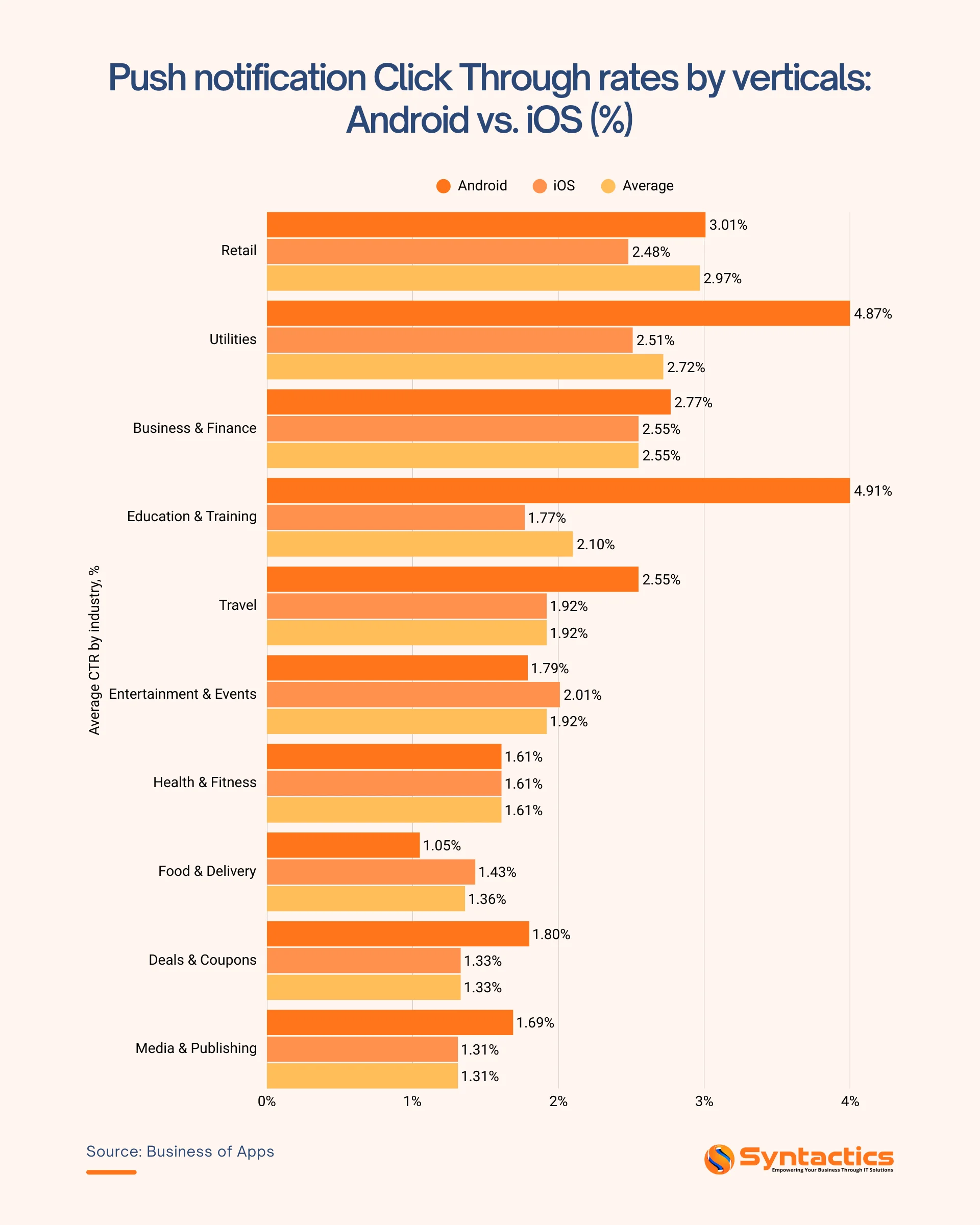
Source: Business of Apps.
Limitations
Developing mobile apps often involves a larger investment, as separate versions are typically required for iOS and Android. Updates also rely on users downloading the latest version, which can delay adoption of new features. Lastly, app store review and approval processes can extend launch timelines.
These factors can be challenging for businesses with limited budgets or tight schedules. Despite these considerations, mobile apps remain a valuable choice for operations that prioritize high engagement, real-time interactions, and access to device-specific capabilities.

AI Applications: The Intelligent Edge
AI-driven platforms are becoming increasingly common as businesses seek ways to automate processes, support informed decisions, and deliver personalized experiences. Through AI application development, your company can implement tools that analyze patterns, generate insights, and adapt to user behavior.
Strengths of AI Apps
AI apps, including chatbots, recommendation engines, predictive systems, and autonomous agents, introduce capabilities that enhance accuracy and efficiency. For instance, chatbots support customer service teams by answering routine questions. Recommendation engines increase conversions by showing users what they’re most likely to want.
Meanwhile, autonomous systems help analyze data and take action based on the patterns they have learned. Overall, these features create more intelligent interactions that improve over time.
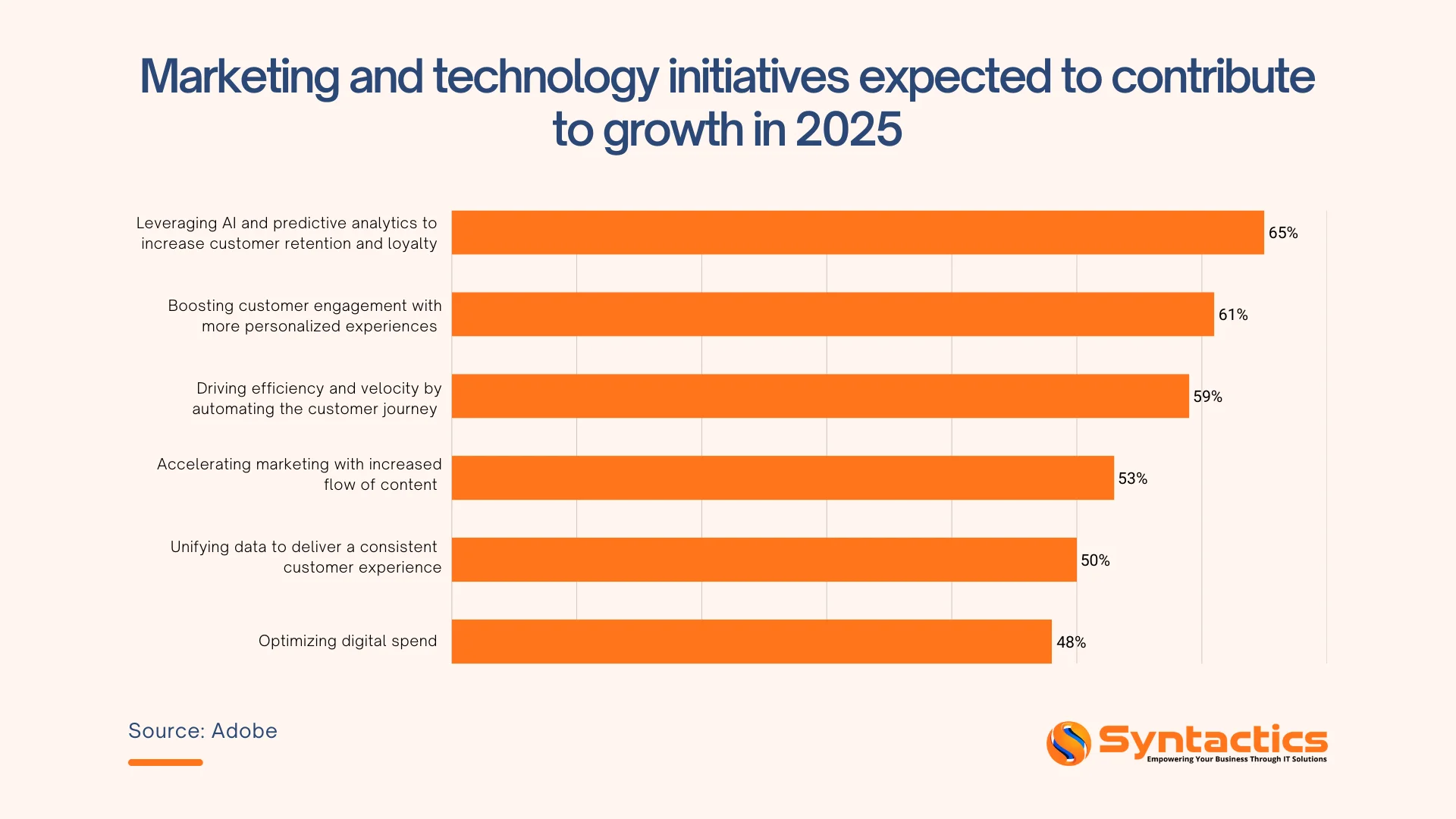
Source: Adobe.
Limitations
AI applications require reliable datasets, training pipelines, and ongoing evaluation. With this, businesses need to consider data privacy, infrastructure, processing speed, and integration requirements.
Development timelines also vary depending on whether the solution uses existing AI models or requires custom training. Although AI involves additional technical layers, its impact on decision-making and personalization can give your company a stronger competitive position.
Decision Factors: When to Choose What
Choosing between web, mobile, or AI apps involves understanding how each platform aligns with practical and strategic considerations. Here are important evaluation factors to consider:
User Base and Accessibility
- Web apps provide a broad reach for all device types.
- Mobile apps support users who rely heavily on smartphones or offline access.
Device Context
- Web suits users who work on desktops or need multi-device access.
- Mobile supports users who move between locations or rely on device-specific features.
- AI enhances experiences that depend on prediction, automation, or rapid data analysis.
Data Requirements
- Teams aiming for personalized experiences, automated workflows, or predictive features often benefit from AI integration.
Budget and Timeline
- Web apps usually offer the fastest and most economical development path.
- Mobile apps require increased investment but provide strong engagement.
- AI adds additional development layers that increase timelines depending on complexity.
Roadmap and Scalability
- Consider future expansion, long-term support, and whether additional interfaces or AI capabilities will be necessary as your solution grows.
Competitive Advantage
- Studying what your competitors offer helps you identify whether performance, convenience, or automation offers the strongest advantage.
Hybrid and Integrated Approaches
Many companies discover that combining web, mobile, and AI apps yields the most effective outcomes. Instead of relying on a single platform, you can develop interconnected systems that offer users multiple access points.
Common hybrid approaches include the following:
- A mobile app powered by an AI backend that personalizes content or automates tasks.
- A web dashboard paired with a mobile companion app for teams who work both onsite and remotely.
- A web platform enhanced with AI chatbots, analytics, or automated workflows.
- A mobile app connected to an administrative web portal for managers.
Conclusion
Selecting the right platform, whether web, mobile, or AI apps, depends on understanding your audience, operational needs, and long-term goals. Web apps offer broad accessibility and SEO advantages, while mobile apps provide smooth performance and device-specific features. AI apps, on the other hand, deliver automation, prediction, and personalized experiences.
Many businesses also find that combining these platforms creates seamless and efficient digital ecosystems for their users and internal teams. For businesses seeking to enhance their digital presence, Syntactics, Inc.’s web design services in the Philippines enable businesses to make informed platform choices that drive adoption and deliver measurable results.
Your investment works smarter, engages users, and fuels long-term growth.
Get Design and Functionality
Specific to your Brand!

FAQs About Web, Mobile, or AI Apps
Which platform is suitable for early-stage businesses?
Web apps are usually the best choice for early-stage businesses because they’re cost-effective and easy to deploy. Mobile or AI apps can be added later as the business grows and user needs become clearer.
How to integrate AI into business operations?
Start by identifying repetitive tasks or data-driven decisions that could be improved through automated processes or predictive insights. Then, implement AI tools, such as chatbots, recommendation engines, or analytics platforms, and connect them to existing systems to achieve seamless workflows.
Can all three platforms be used together?
Yes. Many companies use blended digital ecosystems where web, mobile, or AI apps support different needs or user groups. Contact us to explore how your business can integrate these platforms into your business.













Comment 0