

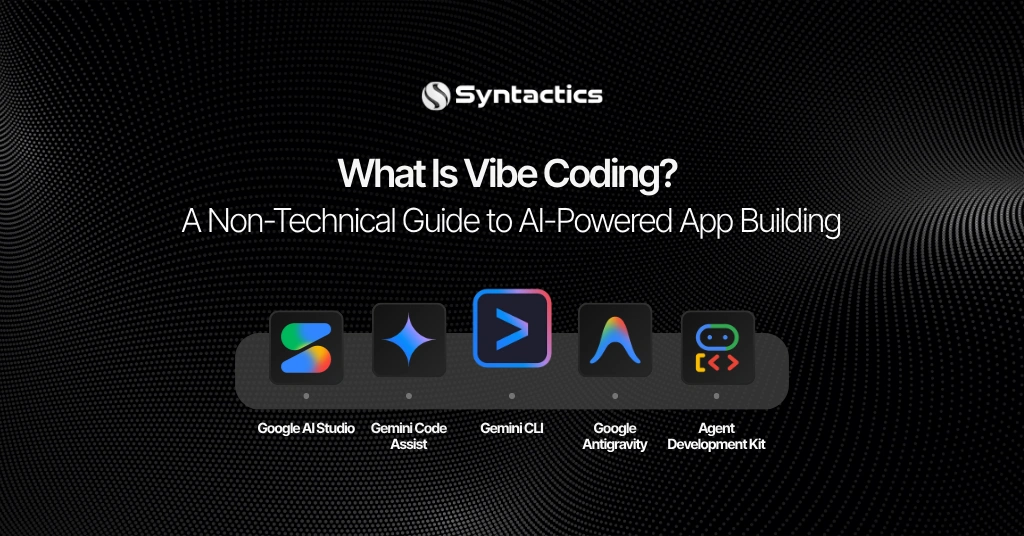
What Is Vibe Coding? A Non-Technical Guide to AI-Powered App Building
Software development is no longer limited to programmers. AI-powered tools now allow business owners, managers, marketers, and other non-technical professionals to build functional applications using simple text prompts.
According to the U.S. Census Bureau, 17-20% of businesses reported using AI in their operations from 2025 to 2026. This shows how AI is helping businesses improve productivity and accelerate innovation.
One emerging trend driving this shift is vibe coding, an approach to development that uses artificial intelligence (AI) to generate software from natural language instructions. Instead of writing code line by line, you describe what you want an application to do, and AI helps create it.
For organizations looking to test ideas faster, automate workflows, or launch digital solutions with fewer technical barriers, understanding the best vibe coding tools can provide a significant competitive advantage.
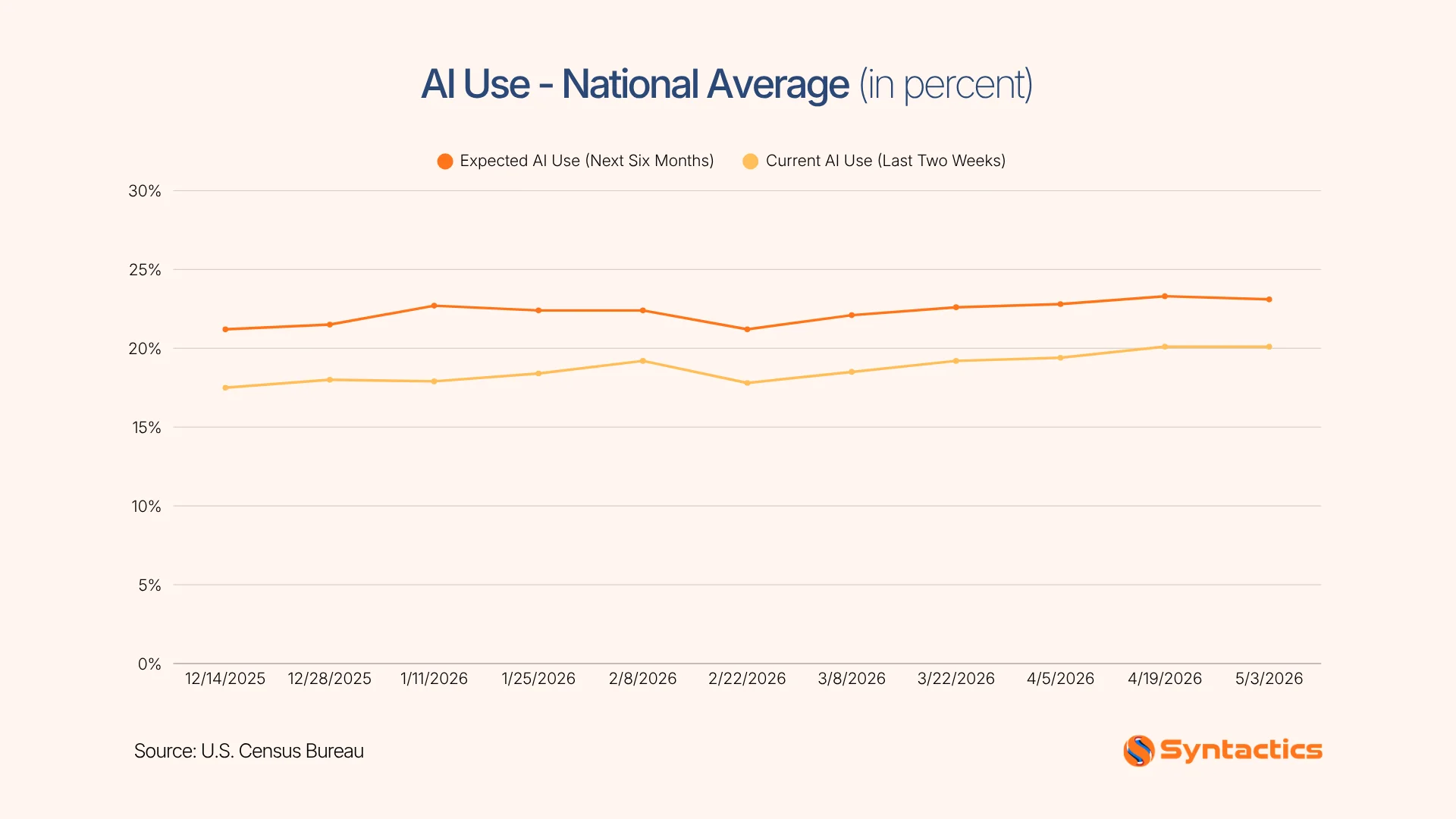
Source: U.S. Census Bureau
Key Takeaways
- Developers can complete coding tasks 55.8% faster when using AI tools than those working without them (arXiv).
- Vibe coding allows you to build applications using natural language instead of traditional programming.
- AI-powered development significantly reduces barriers for non-technical users.
- Businesses can quickly prototype, test, and deploy solutions with fewer resources.
- Successful long-term applications still require proper planning, security, and governance.
Why Vibe Coding Matters for Businesses
Businesses constantly search for ways to innovate faster while controlling costs. Vibe coding helps address both challenges.
Instead of waiting months for development cycles, you can quickly transform ideas into working prototypes. This speed allows teams to validate concepts, gather feedback, and make improvements before committing substantial resources.
As AI-assisted development becomes more accessible, businesses worldwide are using it to streamline innovation and accelerate digital initiatives. This includes organizations that invest in custom software application development in the Philippines as part of their long-term digital transformation strategies.
The business impact is becoming increasingly visible. Deloitte reports that workforce access to AI tools increased by 50% in 2025, with approximately 60% of workers now having access to approved AI solutions.
As a result, marketing teams can build internal dashboards, operations departments can automate repetitive workflows, and business owners can test new digital products without relying entirely on traditional development teams.
How Vibe Coding Works
Before exploring specific platforms, it helps to understand the typical workflow. Most vibe coding projects follow these steps:
Describe the Application
You begin by explaining your idea in plain language. For example:
“Create a customer appointment booking app with email reminders and a dashboard for tracking reservations.”
The AI interprets your instructions and generates the underlying code structure.
Review the Generated Output
The platform creates screens, workflows, databases, and functionality based on your request. You can then test the application and identify areas for improvement.
Refine Through Conversation
Instead of manually editing code, you provide additional instructions such as:
- Add payment processing
- Improve the user interface
- Create an admin dashboard
- Add reporting features
The AI then updates the application accordingly.
Deploy the Application
Many modern platforms include deployment tools that allow you to publish applications directly to the web or cloud environments. This conversational development process significantly shortens the journey from concept to deployment.
Two Approaches to Vibe Coding
Not every vibe coding project is designed for the same outcome. Some prioritize speed and experimentation, while others aim to support ongoing business operations. That said, knowing which approach fits your goals can help you make smarter development decisions and avoid costly mistakes later.
Rapid Experimentation
This approach focuses on validating ideas quickly with minimal time and investment. It’s ideal for:
- Marketing campaign dashboards
- Internal workflow automation
- MVP and product concept testing
- Department productivity tools
- Customer feedback experiments
The goal is to learn what works before committing significant resources.
Long-Term Business Applications
This approach focuses on building reliable solutions that can support daily operations and future growth. These applications require stronger architecture, security measures, scalability, performance optimization, and ongoing maintenance.
While vibe coding can accelerate development, business-critical applications still need proper planning and oversight to remain effective over time.
Vibe Coding vs. Traditional Software Development
As AI-powered development becomes more common, many organizations wonder how it compares to conventional methods.
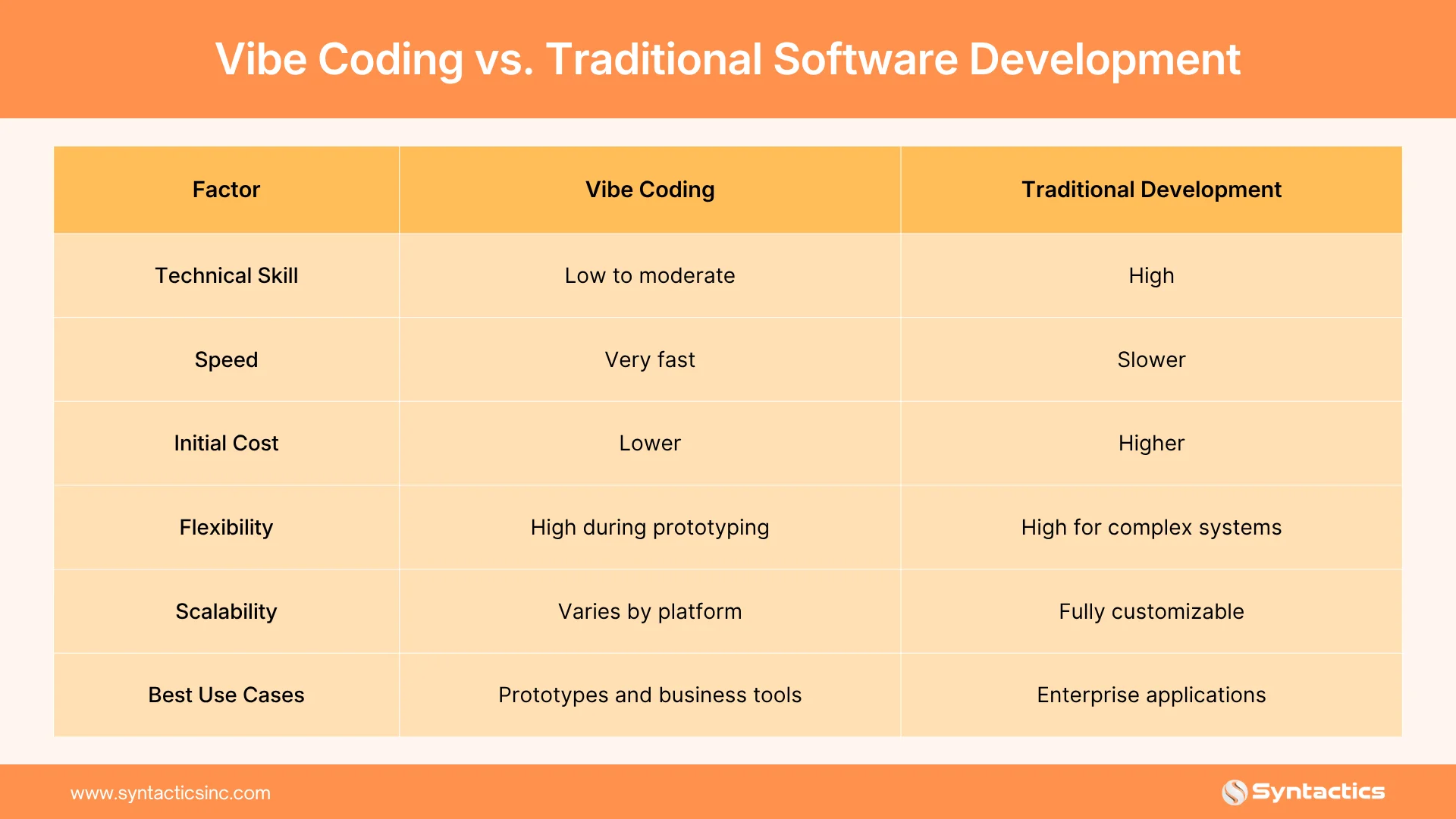
Research continues to demonstrate measurable productivity gains from AI-assisted development. According to Microsoft’s GitHub Copilot research published in arXiv, developers completed coding tasks 55.8% faster with AI assistance than those working without it, highlighting the potential for significant efficiency improvements in software development workflows.
However, traditional development remains essential for highly customized enterprise systems, mission-critical applications, and complex software environments where scalability, security, and long-term maintenance are top priorities.
Understanding Vibe Deploying
Once an application is built, deployment becomes the next challenge. Fortunately, the best vibe coding tools simplify this process through what many users informally call “vibe deploying.”
Rather than configuring servers, databases, hosting environments, and infrastructure manually, AI-assisted deployment tools automate much of the setup.
You can often:
- Publish applications with a few clicks
- Configure cloud environments automatically
- Manage hosting without advanced technical knowledge
- Monitor application performance through visual dashboards
Choosing the Right Vibe Coding Solution
With new platforms entering the market regularly, selecting the right vibe coding solution requires careful evaluation. The right tool should support your current requirements while providing flexibility for future growth.
Your Technical Experience
Some platforms are designed for complete beginners and rely heavily on natural language prompts. Others offer more advanced customization options that may require basic coding or development knowledge.
Business Objectives
Start by identifying what you want to accomplish with vibe coding. Whether you need internal productivity tools, customer-facing applications, workflow automation, or data management systems, your goals should guide your platform selection.
Many organizations begin with AI-powered prototypes, then partner with experienced software development companies in the Philippines to transform successful concepts into enterprise-ready solutions.
Scalability Requirements
Not all vibe coding tools are built to support growing applications. If you expect increased users, data volume, or business complexity, choose a solution with strong scalability and governance capabilities.
Integration Needs
Your chosen platform should work seamlessly with the software and systems your business already uses. Strong integration capabilities can reduce manual work, improve data accuracy, and create more efficient workflows.
Vibe Coding Tools and Their Business Applications
As AI-powered development becomes more accessible, businesses are combining vibe coding platforms with services traditionally offered by a web design company in the Philippines to create more polished and user-friendly digital experiences.
That said, Google provides several AI-powered tools that support modern development workflows and help accelerate application building. These tools help non-technical users and developers in creating, testing, and deploying AI-driven solutions more efficiently.
Google AI Studio
Google AI Studio provides a user-friendly workspace that lets you experiment with AI models and quickly build prototypes. It’s designed to help you turn ideas into functional AI applications without requiring deep infrastructure setup or advanced coding skills.
Best for:
- AI-powered workflows
- Proof-of-concept projects
- Prompt testing
Gemini Code Assist
Gemini Code Assist is an AI-powered development assistant that helps you write, explain, and improve code. It integrates into development environments to speed up coding tasks and improve overall software quality.
Best for:
- Productivity enhancement
- Code generation
- Application refinement
Gemini CLI
Gemini CLI brings AI capabilities directly into your command-line environment, allowing you to interact with development tasks using natural language. It’s especially useful for developers who prefer terminal-based workflows and automation.
Best for:
- Development automation
- Workflow optimization
- Technical teams
Google Antigravity
Google Antigravity is focused on accelerating AI experimentation and simplifying the process of building and testing new applications. It supports rapid iteration, making it easier to explore ideas before committing to full development.
Best for:
- Rapid prototyping
- AI exploration projects
- Emerging AI initiatives
Agent Development Kit
The Agent Development Kit enables you to build AI agents that can perform tasks autonomously across different systems. It’s designed for more advanced automation use cases where applications need to act with minimal human intervention.
Best for:
- Process automation
- Customer support workflows
- Business operations

Risks, Limitations, and Best Practices
While vibe coding offers significant advantages, it’s not without risks. As adoption increases, governance becomes more important.
McKinsey’s The State of AI in 2025 found that 79% of organizations regularly use generative AI in at least one business function. As a result, this widespread adoption also increases the need for stronger oversight, security controls, and responsible implementation.
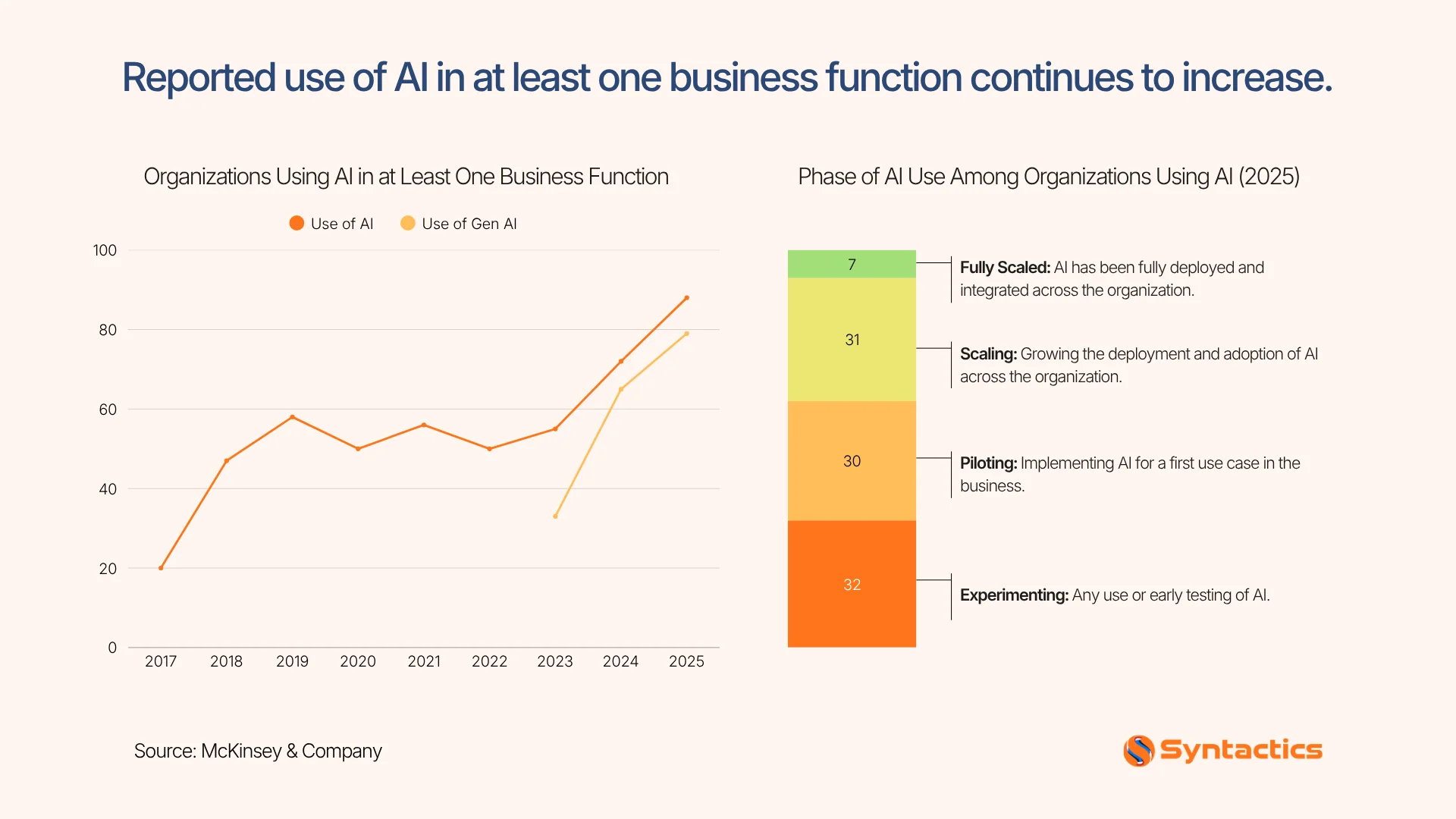
Source: McKinsey & Company
To reduce risks, focus on the following best practices:
- Prioritize Security – Review the generated code for vulnerabilities and data protection concerns.
- Validate Performance – Test applications thoroughly before deployment.
- Maintain Documentation – Keep clear records of functionality, integrations, and business requirements.
- Plan for Scalability – Ensure your application can support future growth.
- Include Human Oversight – AI can accelerate development, but human review remains essential for quality assurance.
Conclusion
Vibe coding is changing how you approach software development by enabling you to turn ideas into functional applications with simple, natural language. It reduces traditional barriers to development, accelerates experimentation, and gives you greater flexibility to test and refine digital solutions before committing to full-scale builds.
As you explore the best vibe coding tools, the next step is understanding when to move from rapid prototyping to production-ready systems. Syntactics, Inc. supports this transition by providing expert custom software development in the Philippines, helping you turn AI-built prototypes into secure, scalable, and business-ready applications that align with your long-term goals!

FAQs About Vibe Coding
What is vibe coding?
Vibe coding is a way of building software where you describe what you want in plain language, and AI generates the application for you. It removes the need for traditional coding, making app development faster and more accessible to non-technical users.
What types of apps can you build with vibe coding?
You can build internal tools, dashboards, simple web apps, and MVPs using vibe coding. More complex enterprise systems usually still require traditional development support.
Do vibe coding tools replace software developers?
No, they don’t replace developers but change their role. By balancing human skills with AI, developers can focus more on refining, scaling, and securing AI-generated applications.

About Xenia Labis
Related News:

What are Document Tracking Systems?

How to Set Up a Meta Pixel

Using Mail Merge in Email Marketing








Comment 0