

Building Mobile Health Apps That Users Can’t Live Without
Mobile health apps become indispensable when the experience feels seamless, the engagement is personal, and the performance is reliable. You stay with them when they fit into your routine effortlessly, protect your health data, and consistently deliver value that matters to your daily wellbeing.
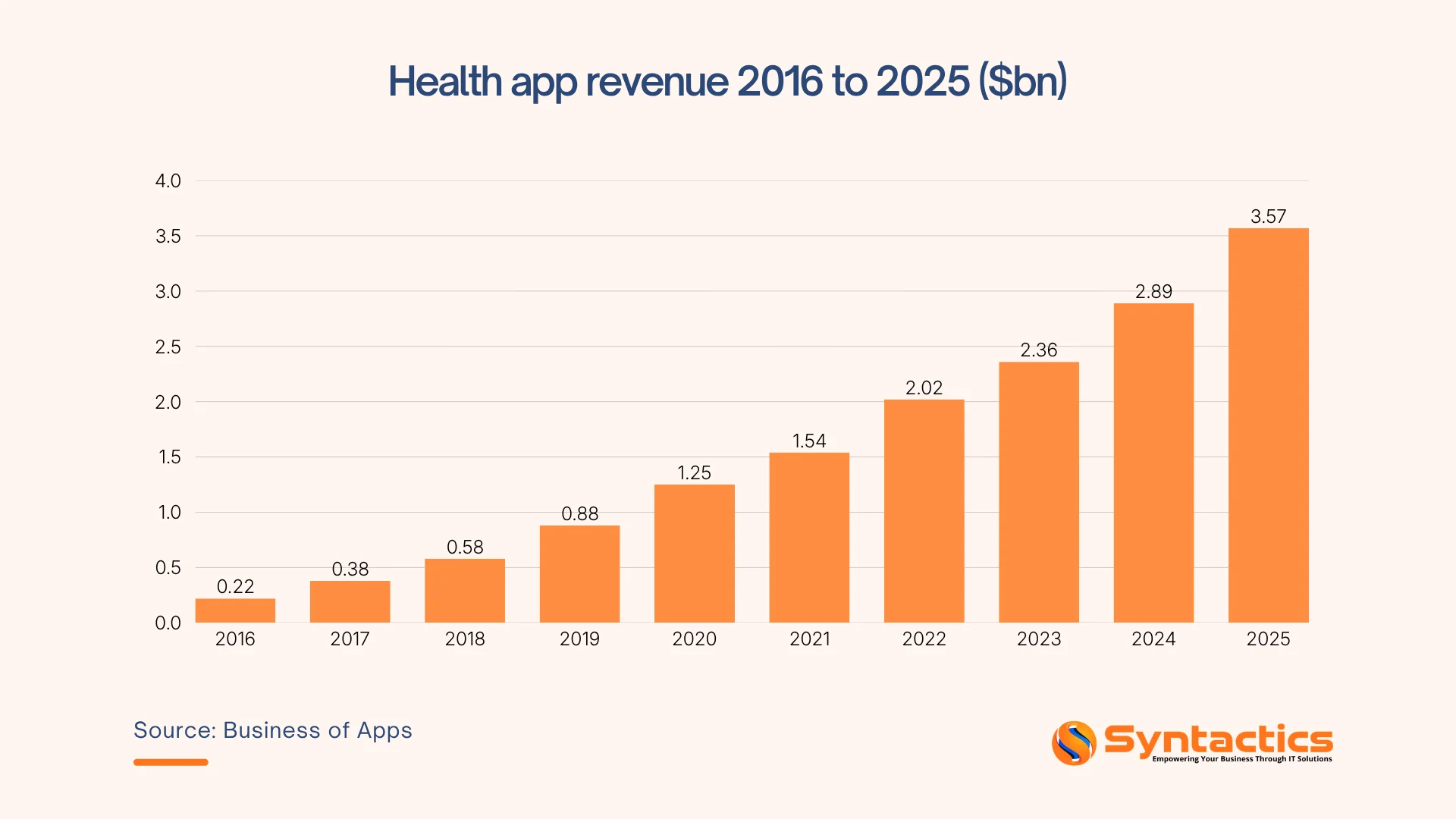
Mobile health apps perform based on three core factors: user experience, retention, and technical decisions. Understanding why users stay or leave determines everything about a product’s long-term success. According to Business of Apps, health-related apps achieved $3.5 billion in revenue in 2025, a 23.5% increase from the previous year.
Top-ranking apps in this category are ranked based on recent download counts, in-app revenue, and subscription revenue. These apps were made to cater to a specific niche or address problems in particular activities. This article breaks down the decisions made during the mobile health app development and how those actions drove user success.
Source: Business of Apps
Key Takeaways
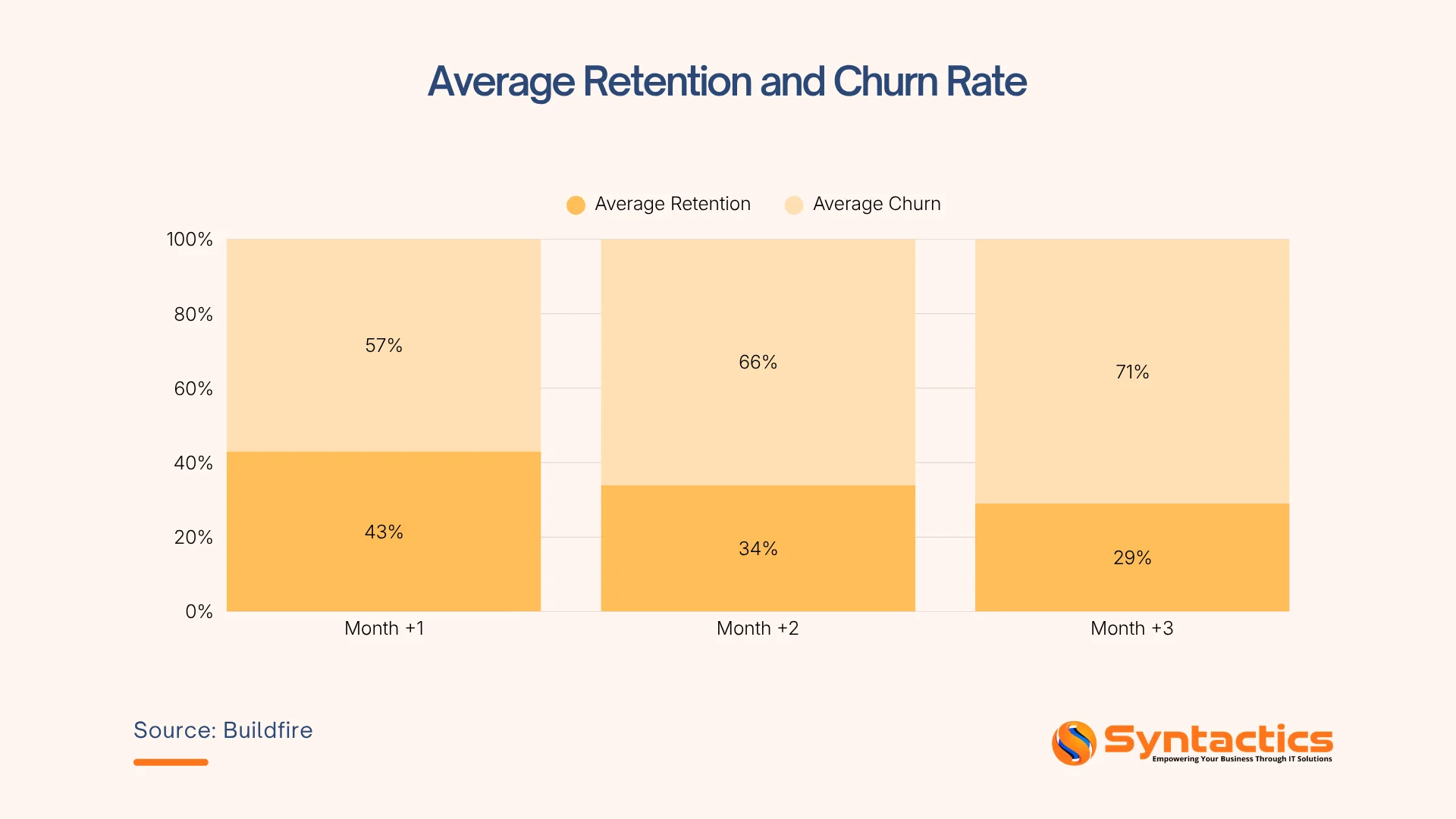
- Apps have a 71% churn rate within 3 months, underscoring the importance of a seamless user experience. (Buildfire)
- The choice between native and cross-platform development depends on specific project needs that offer better integration.
- Personalization is a primary driver of retention in user engagement.
- Strict security and regulatory compliance are non-negotiable, especially for apps that handle sensitive data.
- Successful health apps utilize subscription models for predictable growth and freemium models to lower the barrier to entry for new users.
- Pre-launch strategies, such as beta testing and app store optimization, are important for identifying usability issues and ensuring app discoverability.
Choosing the Best Health App Development Approach
The first decision made in any health app project is the development approach. Native apps are built for one platform, using Swift for iOS or Kotlin for Android. Alternatively, cross-platform development frameworks such as React Native and Flutter enable a single codebase for all platforms.
To break it down, here’s where each approach in mobile health app development stands out:
Native Development
Native app development delivers superior performance and more precise hardware integration. Hence, it is more suitable for health apps that deal with specific systems, such as heart rate sensors, GPS accuracy, or wearable device synchronization. These real-time health-tracking features also benefit from native builds, where a smooth UI and accurate sensor data build user trust.
Cross-Platform Development
The development and costs of cross-platform apps offer an efficient build cycle. This makes it the smarter choice for startups and teams launching a minimum viable product (MVP). Maintaining one shared codebase also simplifies future updates across devices.
For app developers serving teams in the Philippines and in global markets, this approach offers the following advantages:
- Faster project management timeline and lower initial costs
- Unified codebase simplifies maintenance and updates
- Ideal for MVP launches and budget-conscious startups
Building an Onboarding Experience That Retains Users
Regardless of intuitive features in a health app, poor onboarding kills retention before it begins. According to Buildfire, apps have a 71% churn rate within 90 days, highlighting the importance of user experience and performance in their success. Here’s a quick graph for an overview:
Source: Buildfire
With these insights, a well-designed onboarding process takes precedence for retaining app users. Hence, a lot of successful health apps tend to introduce these features to new users:
- Personalized health profile
- Wellness goal selection
- Activity and habit tracking dashboards
- User-centered design
Users who complete this step with personalized goal-setting are also more likely to become active users. In addition, features like smart push notifications, daily progress reminders, and personalized recommendations contribute to sustained engagement.
Health App Compliance and Security Requirements
Compliance is not optional in health app development. When providers breach compliance standards like HIPAA, it results in regulatory penalties and reputational damage. A single security breach can also trigger mass uninstalls and destroy the trust they spent years building. For this reason, providers in the Philippines and around the globe work with mobile application developers to ensure compliance with the following:
- Data encryption during both storage and transfer
- Secure login with multi-factor authentication support
- Explicit user consent and transparent privacy permissions
Apps that communicate their security practices clearly outperform those that treat privacy as a footnote. As a result, users who trust that their sensitive health data is protected are more likely to engage consistently and recommend the app to others.
Choosing a Revenue Model That Supports Retention
Here are app revenue models that directly influence how users perceive value:
Freemium Model
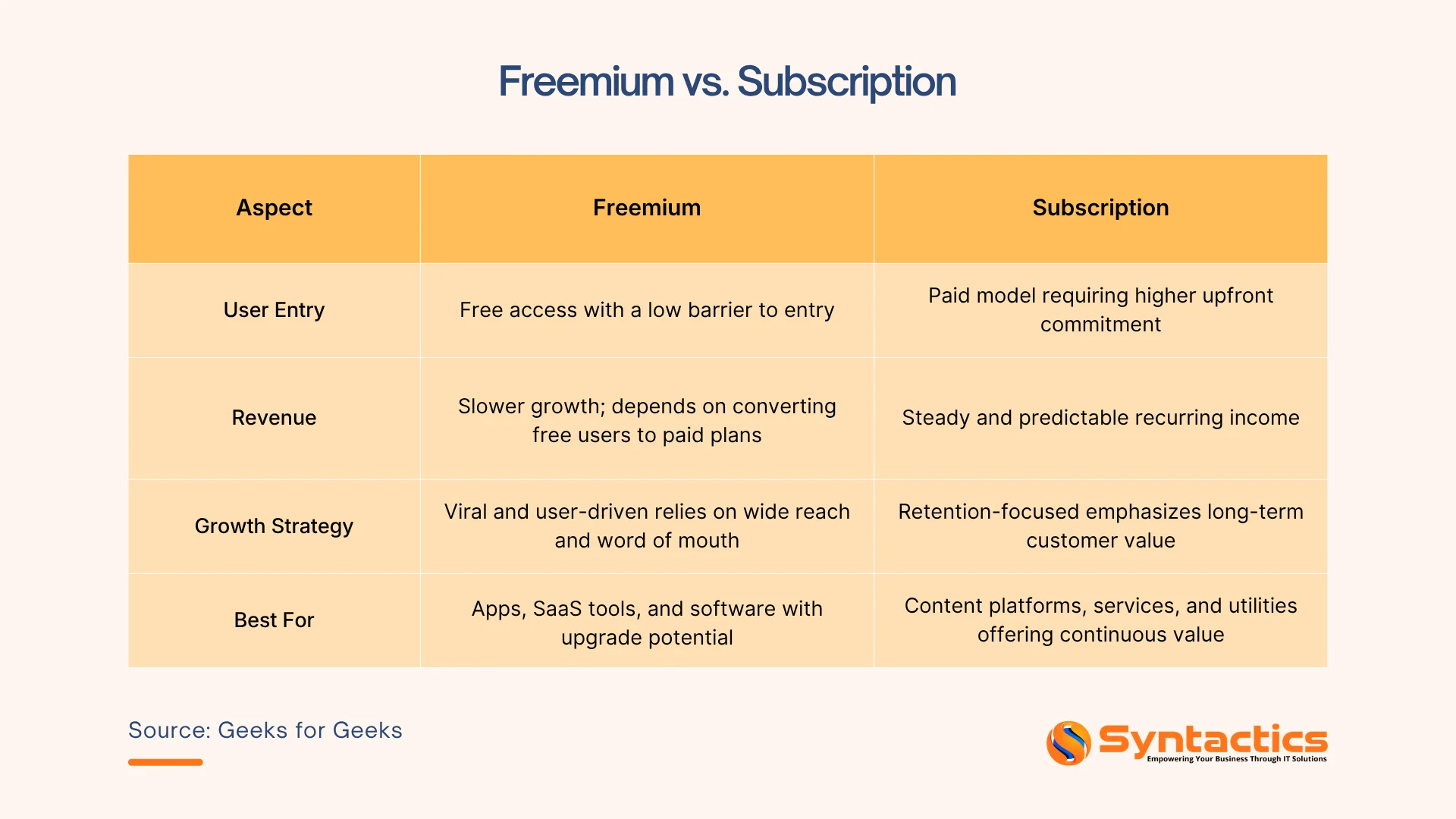
Freemium offers core features for free, with optional premium upgrades. It lowers the barrier to entry and makes user acquisition easier, especially for new apps building an audience. In this model, users experience value first before choosing to pay for more.
Subscription Model
Subscription models have become the standard for health and wellness apps that prioritize long-term engagement. This model secures a steady, predictable revenue stream that stabilizes the business. It also creates a powerful incentive for continuous innovation, keeping users committed to their health.
To summarize, here’s where each revenue model stands out in different aspects:
Source: Geeks for Geeks
App Launch Strategy and Long-Term User Retention
The following are app launching strategies that help health services retain app users:
App Store Optimization (ASO)
App store optimization affects organic discoverability in the App Store and Google Play. Using health and fitness keywords strategically in app titles, descriptions, and metadata increases visibility to high-intent users. Encouraging ratings and reviews from satisfied early users builds social proof that improves conversion rates from impressions to downloads.
Beta Testing Before Launch
Releasing to a beta group before the public launch surfaces usability issues and bugs that internal teams often miss. Real users interact with apps differently than developers expect. Beta feedback allows teams to refine navigation, fix performance issues, and validate that core features work as intended under real-world conditions.
Retention Features To Keep Users Engaged
Integrating gamification features is one way to retain user engagement in mobile health app development. Here’s how business application development teams make it work:
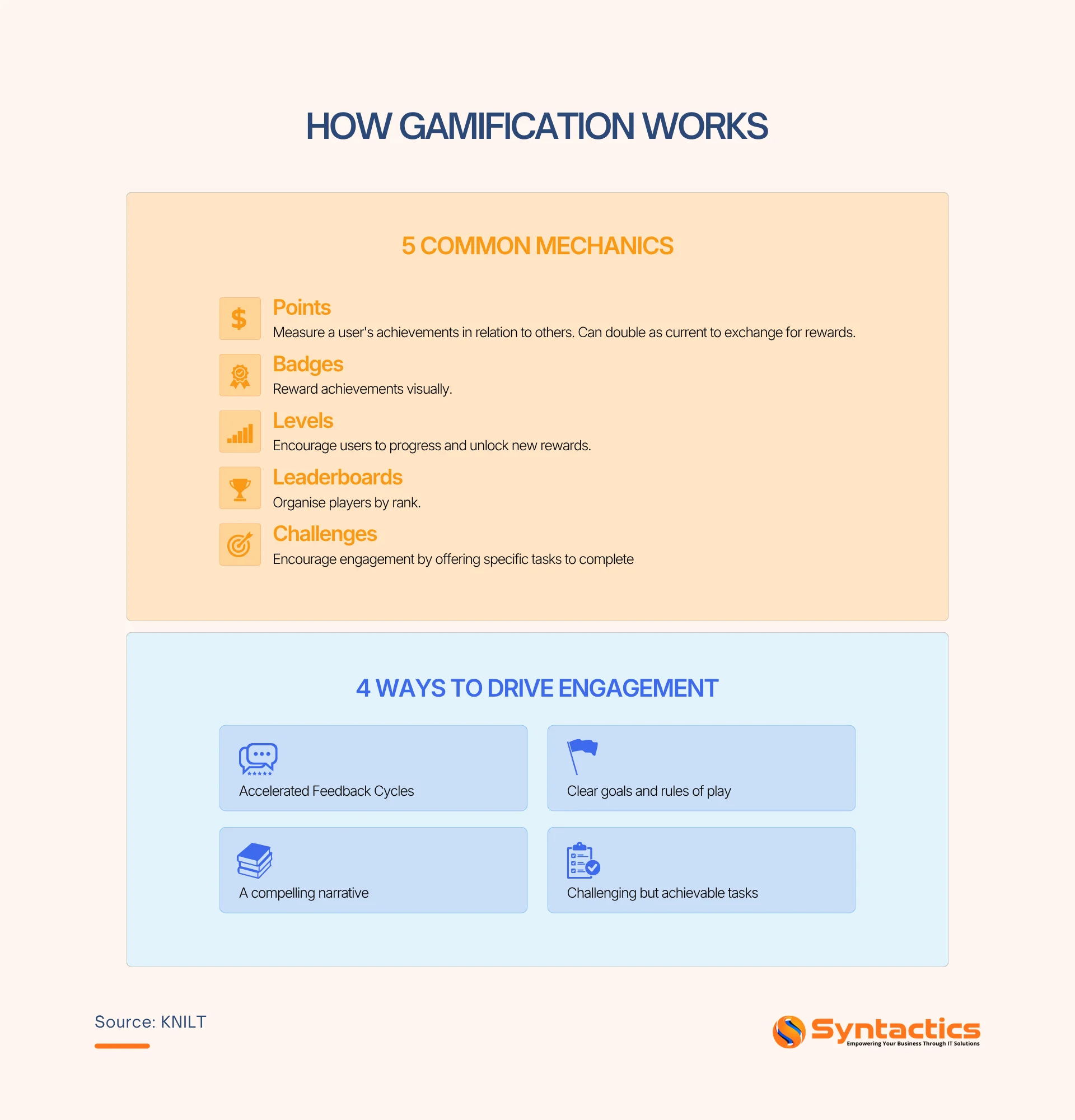
Source: KNILT
Why Quality App Development Makes Users Stay
The following are several factors that help retain user engagement when developing an app:
Quality Development Shapes User Experience
Performance directly influences whether users complete their routines or trust the data they see. A poor UI or UX significantly reduces daily active users and increases uninstall rates. That’s why it’s best to elevate user experience in your app with:
- Responsive design
- Simplified onboarding process
- Clear and visually engaging design
- Optimized performance
- App accessibility considerations
- Handling feedback and errors
- Personalization and customization
- Regular updates and user engagement
- Usability testing and iterative improvements
Features Improve User Retention
The right app development practices ensure apps are built for fast performance, smooth navigation, and personalized user experiences. They are the baseline expectations of modern app users, especially in health, where accuracy and responsiveness matter most. Additionally, the right technical foundation prevents expensive rewrites and enables continuous improvements that keep users engaged.
Conclusion
Every decision made during mobile health app development directly affects how users experience and stay with the product. Health service providers that treat development as a strategic asset build apps that earn user loyalty by meeting user needs. The gap between apps that succeed and those that fade is almost always rooted in early development choices.
So, if your health service needs intuitive apps, partner with experienced mobile app development teams in the Philippines, like Syntactics Inc. Our specialized app solutions boost engagement and growth through native, hybrid, and accelerated development. See how our team can help you turn your vision into a high-impact digital health solution today!
Frequently Asked Questions (FAQs)
What are mobile health apps?
Mobile health apps are designed to help users monitor, manage, or improve their well-being. It features tracking, telemedicine, medication reminders, and wearable integrations.
What is the most common reason health apps fail after launch?
Poor user retention is one of the biggest reasons health apps fail after launch. Complicated onboarding, weak user experience, and lack of engagement features often drive users away.
Do all health apps need to comply with HIPAA?
Not all health apps are required to comply with HIPAA. Only apps that collect, store, or share protected health information with healthcare providers typically need HIPAA compliance.

About Ladymieh Naallatan
Related News:


Digital Marketing Challenges And Their Solutions











Comment 0