

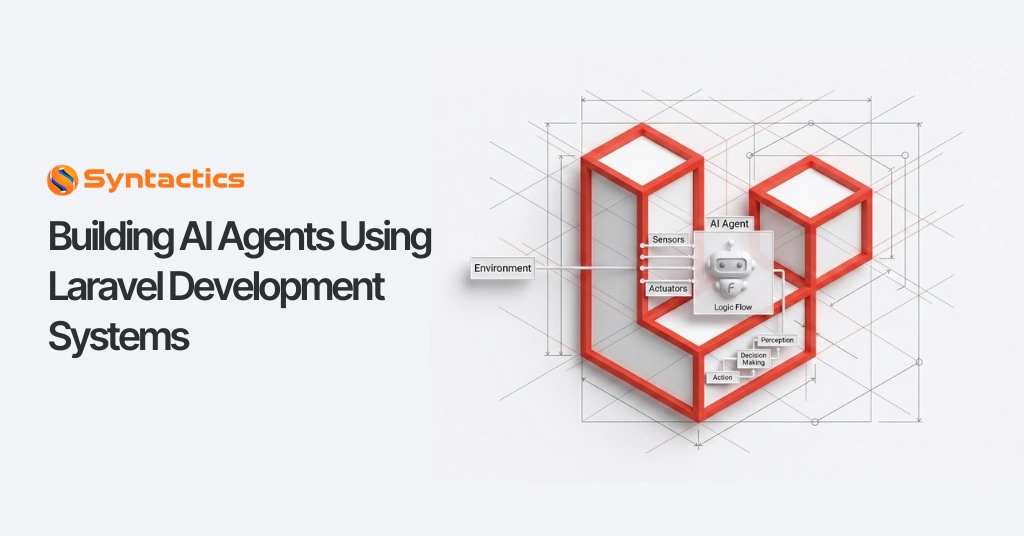
Building AI Agents Using Laravel Development Systems
Laravel development has always been a solid foundation for business applications. This year, it even evolved into a complete platform for building AI agents that automate workflows, reduce operational costs, and extend product capabilities. Businesses can add these functions without rebuilding existing infrastructure.
If your application runs on Laravel, these capabilities are available right now, using your current team and codebase. The market is already moving. In fact, Gartner projects that 40% of enterprise applications will incorporate task-specific AI agents by the end of 2026, up from less than 5% in 2025.
Therefore, businesses that establish an AI-capable application now will have a structural advantage that compounds over time. Those who delay will find themselves closing a gap rather than building a lead.
The Opportunity Cost of Delayed AI Adoption
Many businesses using Laravel have put off AI adoption for three main reasons: they thought they needed a Python team, tried basic API calls and found them lacking, or found third-party platforms too hard to integrate. These issues have now been solved.
The financial case for acting is well-documented. McKinsey’s 2025 global survey found that 88% of organizations now use AI automation in at least one business function, yet only a third have scaled it across the enterprise. That execution gap defines where competitive advantage currently lives.
Businesses closing it fastest are not the ones with the largest AI budgets. They are the ones who integrated AI directly into existing applications rather than building separate systems alongside them.
For agencies, the message is clear. Clients now ask about AI features in almost every new and existing project. Laravel partners who can deliver real AI features in PHP stand out from those who cannot.
Laravel AI SDK in a Glance
Laravel released its official AI SDK in February 2026 as a first-party package. It is more than just a simple API layer. The SDK is a full agent framework built on Laravel’s standards, providing everything you need to launch AI features in production.
The SDK supports 14 AI providers: OpenAI, Anthropic, Google Gemini, Groq, Mistral, DeepSeek, xAI, Ollama, Azure OpenAI, Cohere, OpenRouter, and others. You can switch providers with just a configuration change. If a provider goes down or raises prices, you do not need to change your code.
Core capabilities included in the SDK:
- Tool calling: The agent decides when to run functions in your app. You set up the function, and the SDK handles running it and sending the result back to the model.
- Structured output: Agents return typed, validated JSON conforming to a schema. This makes them reliable for tasks such as classification, data extraction, or workflows that require a predictable format.
- Conversation memory: The agent can save and retrieve conversation history from your database. This lets multiple users have separate sessions with the same agent.
- Streaming: Supports server-sent events and works natively with Livewire and Inertia.
- Vector search and retrieval-augmented generation (RAG): Connects directly to Eloquent models backed by pgvector. No separate vector database service required.
- Queue integration: Agents that take longer to run use Laravel’s built-in queue system, so your app’s response times stay fast.
- Testing layer: The SDK includes built-in fakes and helpers to test agent behavior before connecting to live APIs.
The SDK integrates with Laravel’s existing systems rather than running separately. AI features use the same queues, databases, files, and deployment process as the rest of your app.
What an AI Agent Actually Does for Your Business
An AI agent is more than a chatbot. It takes input, makes decisions, runs functions in your app, and produces results, with or without human help. Here’s how that works in real situations.
Lead Triage and Qualification
A routing agent reviews each new inquiry as soon as it comes in, scores it against your criteria, and either sends it to the right team or follows up automatically. Your sales team saves time by avoiding unconvertible leads. Response times for good leads drop from hours to seconds, which directly boosts revenue.
Customer Support That Scales Without Headcount
A tool-calling agent handles common support queries by pulling live data from your own database, not a generic knowledge base. It checks order status, retrieves account details, and drafts responses in your voice.
When a query exceeds its capabilities, it escalates to a human with the entire context already attached. Support volume handled without a ticket goes up. The time your team spends on repetitive requests decreases.
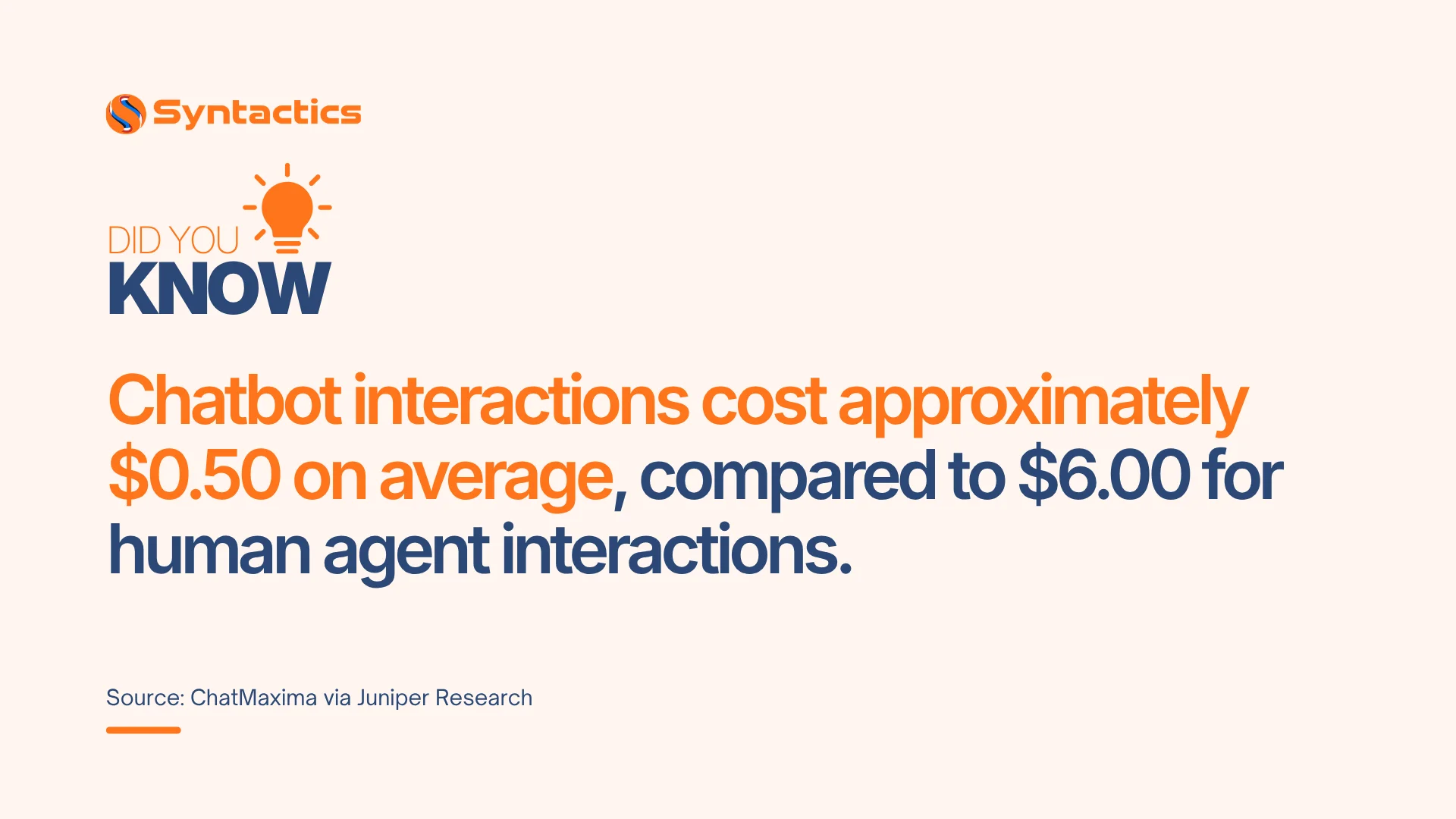
Source: ChatMaxima via Juniper Research.
Instant Answers from Your Own Documents
With vector search in the Laravel AI SDK, an agent can answer questions using your files, product specs, policies, or client documents, all stored in your existing PostgreSQL database. There is no need for a separate vector database or extra platforms. Users get accurate answers in seconds instead of searching folders or waiting for replies.
Automated Content and Operations Workflows
Chained agents manage multi-step workflows like drafting, reviewing, checking quality, and publishing. An evaluator agent scores the output before it moves forward. If the content does not meet your standard, the process repeats. This is not spell-check. It’s automated quality control on any workflow you can define, running in the background on Laravel’s native queue system.
5 Multi-Agent Workflow Patterns for Complex Business Processes
Most tasks can be handled by a single agent. For more complex workflows, the Laravel AI SDK includes five multi-agent patterns based on Anthropic’s agent design research. Each pattern fits a different type of business problem.
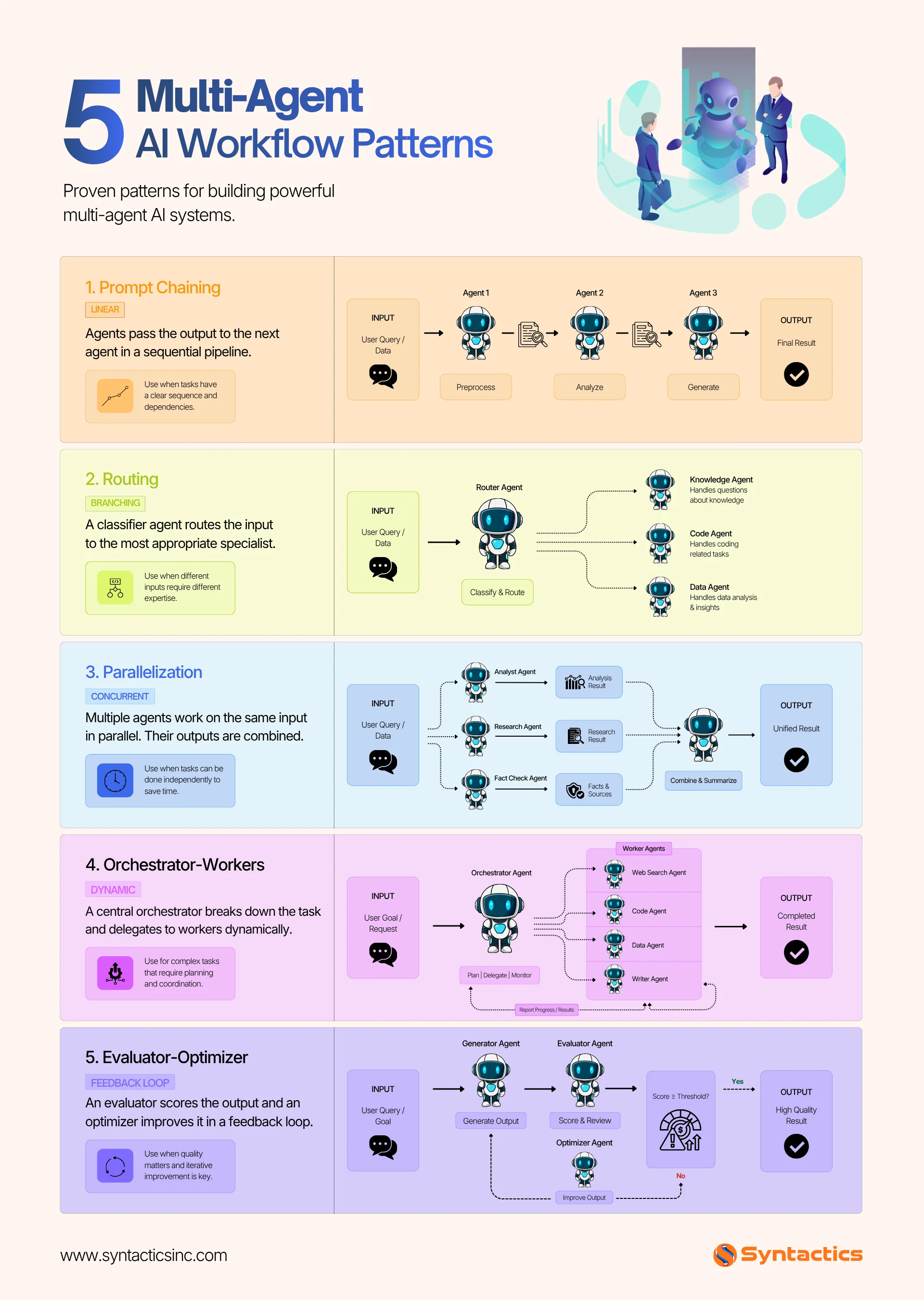
Prompt chaining: Runs agents in a fixed sequence, passing each output to the next. Best suited for structured, repeatable workflows such as drafting, reviewing, and formatting.
Routing: A classifier agent sends input to the right specialist. For example, a support ticket system can send billing and technical questions to different agents. The classifier uses a lower-cost model, so costs stay in line with the task.
Parallelization: Runs multiple agents simultaneously using Laravel’s concurrency support. Three agents can analyze the same document concurrently, with a fourth synthesizing the results. The appropriate pattern when steps are independent and processing speed matters.
Orchestrator-workers: A coordinator agent can assign tasks to worker agents as needed. There is no fixed workflow chart. The model decides the order based on the input.
Evaluator-optimizer: Runs a loop where output is generated, checked, and improved, with a set limit on repeats. The evaluator gives a quality score, and the process continues until the result meets your standard or hits the limit.
Why Laravel Is the Right Platform for AI-Powered Applications
According to W3Techs, PHP powers over 71% of websites with a known server-side language. Most of that software is not being rewritten. The businesses building an AI advantage on their existing infrastructure are outpacing those waiting for a future rebuild.
The Laravel AI SDK’s provider-agnostic design mitigates a major risk in AI adoption: reliance on a single vendor. AI providers often change prices, retire models, or add features without warning. With this SDK, switching providers or adding Ollama for local use only requires a configuration change, not a code rewrite. This flexibility is valuable for long-term business planning.
Quality matters too. Taylor Otwell, the creator of Laravel, notes that frameworks with clear conventions and structure lead to more reliable AI integrations. Language models work better with predictable, well-documented patterns than with random code. Laravel’s conventions are not a constraint here. They are a structural advantage.
Adoption data shows it is important to act quickly. Deloitte reports that 84% of organizations investing in AI are reporting positive ROI. Boston Consulting Group found that businesses that adopt AI automation early report a six-month operational head start on competitors. This gap is not permanent, but it is real and grows while others wait.
Answering the Questions Decision-Makers Ask First
“We don’t have an AI team.” You don’t need one. The Laravel AI SDK is built for the PHP developers already on your payroll: no Python, no new hires, no specialized AI engineering background required.
“We’re worried about depending on one AI provider.” The SDK is provider-agnostic by design. Your agents run on whichever provider you configure. Switching is a single change to an environment variable. Automatic failover means you are not exposed to any single provider’s downtime.
“How do we validate this before committing a budget?” The SDK includes a complete testing layer with built-in fakes. Your team writes unit tests for agent behavior before connecting live APIs. You can see exactly how the agent performs before you spend any API credits.
“What if our stack isn’t Laravel?” Neuron AI covers Symfony, WordPress, and other PHP frameworks with the same agent capabilities. LLPhant is a framework-agnostic option for any PHP 8.1+ application. The Laravel SDK is the most complete option, but the PHP ecosystem now has production-ready agent tools across frameworks.
Start With One Problem, Not a Roadmap
Most businesses get stuck with AI because they try to tackle too much at once. A better way is to pick one difficult workflow and automate just that. Build it, measure the results, and use what you learn to plan your next move.
Early AI implementations are often delivered faster than expected. A single useful agent can typically be scoped, built, tested, and deployed in weeks, not quarters. Once one workflow is working, expansion becomes clearer and lower risk.
Syntactics, Inc. builds Laravel applications with embedded AI capabilities for production systems using the Laravel AI SDK. The approach is practical and transparent: quick wins are prioritized, and alternatives are recommended when AI is not the right solution.
If you already run a Laravel application or are exploring web design and development in the Philippines, start by picking one workflow to improve and see what is possible from there.
Get Design and Functionality
Specific to your Brand!

Frequently Asked Questions About Laravel Development
What is the difference between an AI agent and a standard API call?
A standard API call sends a prompt to a language model and gets a text response. An AI agent does more. It processes input, makes decisions, and runs functions in your app. It also remembers past conversations and can loop, branch, or hand off tasks to other agents based on the results. Agents are systems that act, not just respond.
Do we need Python developers to build AI agents on Laravel?
No. The Laravel AI SDK is written fully in PHP and adheres to Laravel’s usual standards. Your current PHP team can build, test, and launch AI agents without needing Python skills, special AI knowledge, or extra infrastructure. AI features use the same queues, databases, and deployment process as the rest of your app.
How long does it take to build and deploy a Laravel AI agent?
For a clear, single-purpose agent, such as a lead router or document search tool, development usually takes two to four weeks from planning to launch. The Laravel AI SDK’s testing tools let your team verify agent behavior before using live API credentials, speeding up quality assurance.
More complex workflows with multiple agents take longer, depending on the number of tools, data sources, and workflow steps involved.

About Ladymieh Naallatan
Related News:




WordPress SEO Expert: Your Website Growth Solution







Comment 0