


How AI-First Full-Stack Marketers Dominate Modern Marketing
Marketing teams often face delays and wasted resources when work is divided into separate teams that don’t share processes or data. According to McKinsey’s State of AI in 2025, 88% of organizations use AI in at least one business function. This shows that more businesses are investing in smarter workflows to stay competitive.
By combining strategy, execution, and measurement into a single workflow with full‑stack marketing, you simplify operations and deliver faster, more effective campaigns. This is because AI provides speed, insight, and automation that traditional methods cannot achieve.
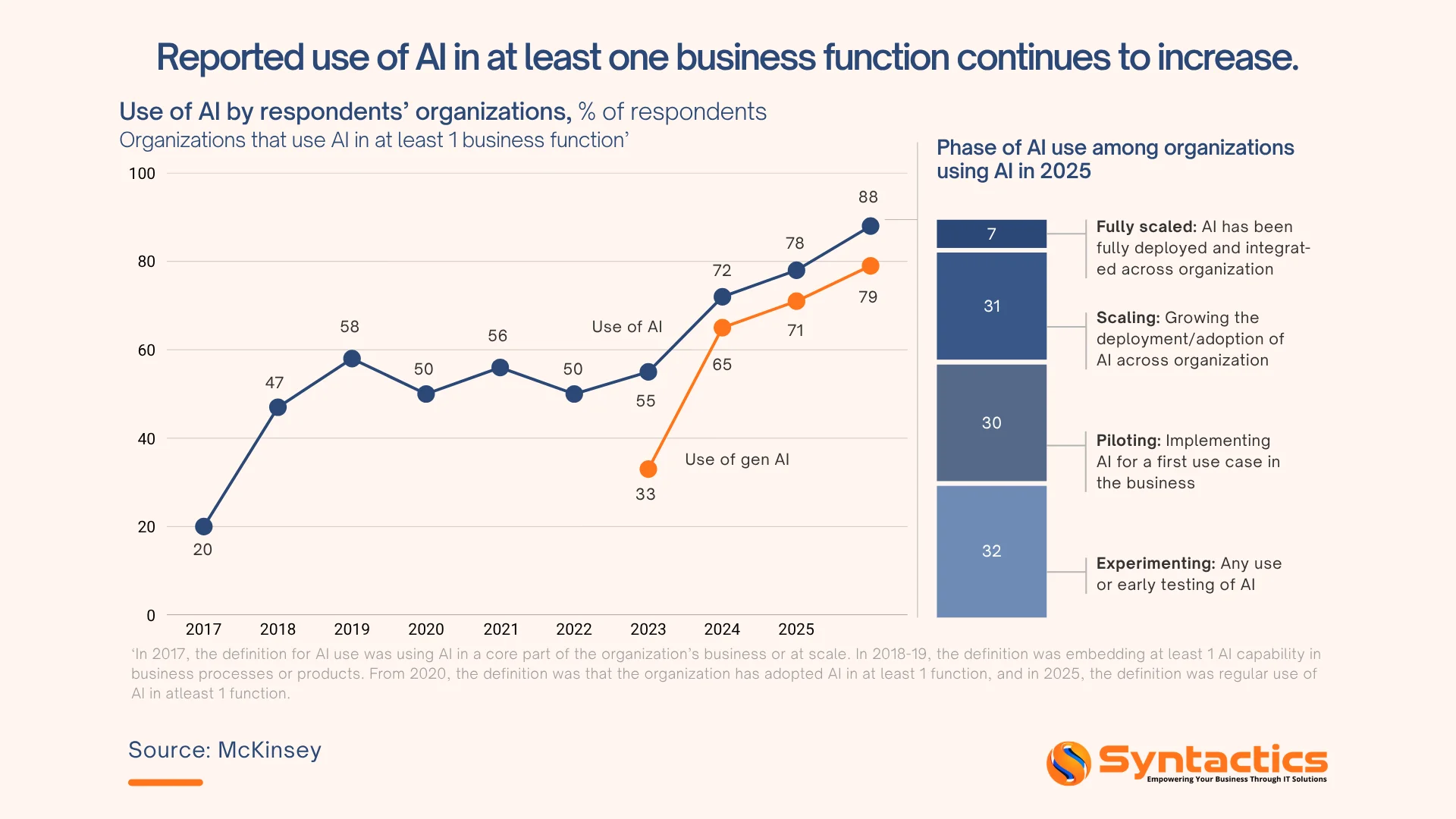
Source: McKinsey.
TABLE OF CONTENTS
Key Takeaways
- Companies using AI in marketing report 22% higher ROI compared with traditional methods. (AllAboutAI)
- Break down communication barriers between teams to boost productivity and results by using integrated tools and cross-functional collaboration.
- Use AI-first workflows to increase efficiency and deliver measurable returns by automating repetitive tasks and optimizing campaigns.
- Follow a structured AI adoption plan to keep your marketing team ahead by gradually implementing AI in phases.
- Track performance continuously to make informed decisions and ensure every marketing effort drives measurable impact.
What AI-First Full-Stack Marketing Really Means
A full-stack digital marketer manages strategy, content creation, analytics, optimization, and measurement across all channels. When you add AI to this model, everything changes. AI becomes part of planning and execution, making work faster and smarter.
Rather than treating the tool as an optional helper, AI‑powered full‑stack marketing uses it at every step of the workflow. This includes automating routine tasks, personalizing audience experiences, and delivering real‑time performance improvements. As a result, AI enables you to spend more time on strategy and less on manual work.
A Phased AI Transition Roadmap
Instant results don’t simply appear with a flip of a switch. Successful adoption happens in clear stages:
1. Augmentation
Start by using AI for specific tasks, such as content generation, keyword research, and automated reporting. This phase increases efficiency while your team gets comfortable with new tools. According to SurveyMonkey, 50% of US workers use AI to generate content faster, and 43% for automating tasks and processes, showing that starting small still drives measurable gains.
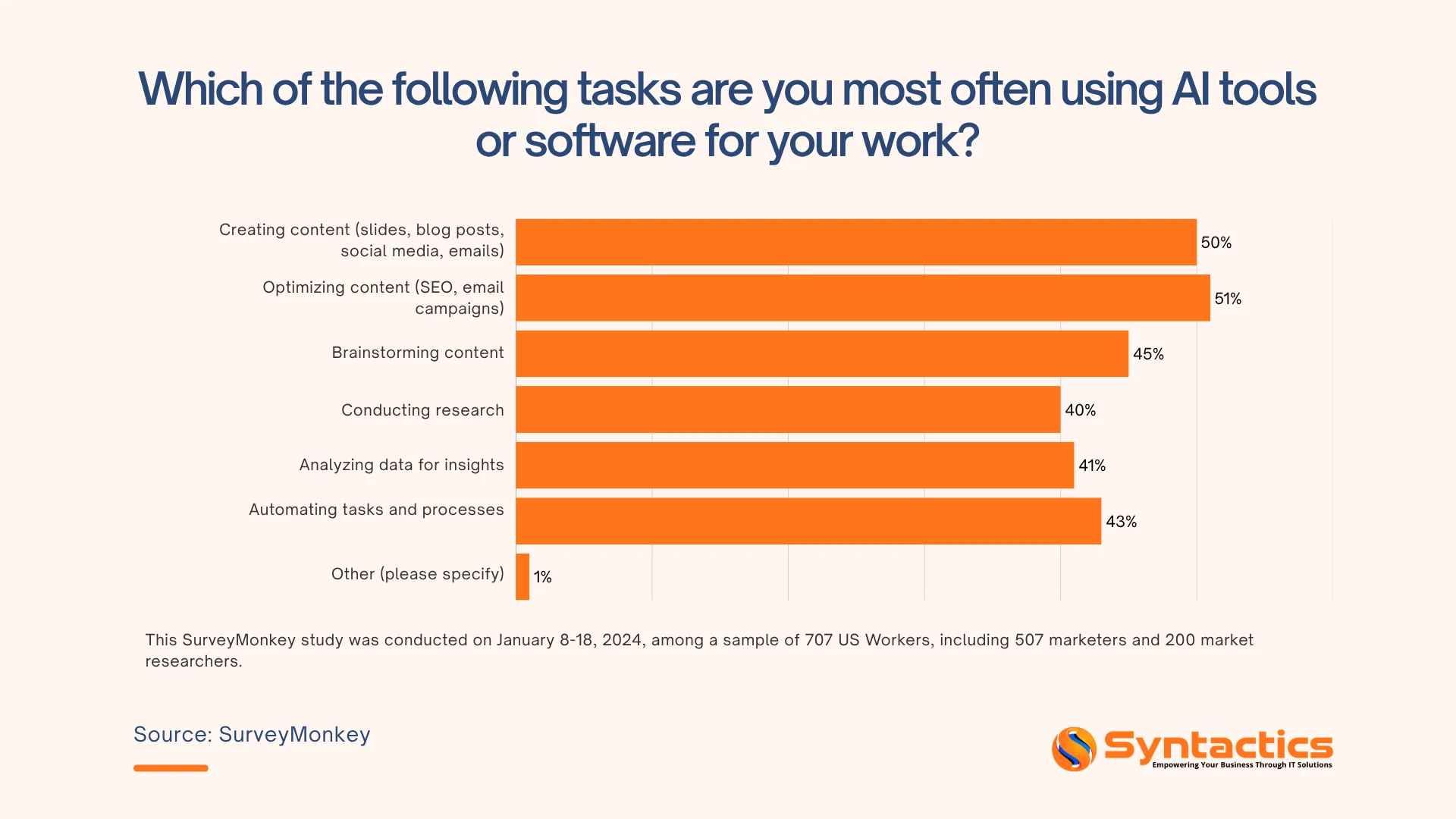
Source: SurveyMonkey
2. Optimization
Once you have experience with basic tasks, use AI to guide improvements in campaigns and overall marketing strategies. AI can uncover patterns in customer behavior, forecast which segments are most likely to convert, and suggest improvements to messaging, visuals, or offers.
By analyzing past performance, AI helps you allocate resources more efficiently and prioritize high-impact opportunities. Predictive modeling and scenario testing at this stage support smarter investment decisions and more consistent results.
3. Full Integration
At this stage, AI becomes a core part of all marketing decisions. It provides actionable insights for long-term strategy, shapes marketing calendars, and informs product or service positioning. Fully integrated AI also allows your team to focus on innovation and strategy while the system continuously monitors trends, customer engagement, and performance metrics to proactively recommend adjustments.
How AI Accelerates Full-Stack Marketing Performance
AI changes the way marketing works by speeding up processes and enhancing results. Automation takes on repetitive tasks like reporting, tagging, and basic analysis, giving you more time to focus on strategy and creative work.
According to Bain & Company, sellers may spend only about 2% of their time actually selling, but AI can take on much of the surrounding work, freeing time for high-value activities. AI also boosts conversion rates at every stage of the funnel, contributing to over a 30% increase in win rates.
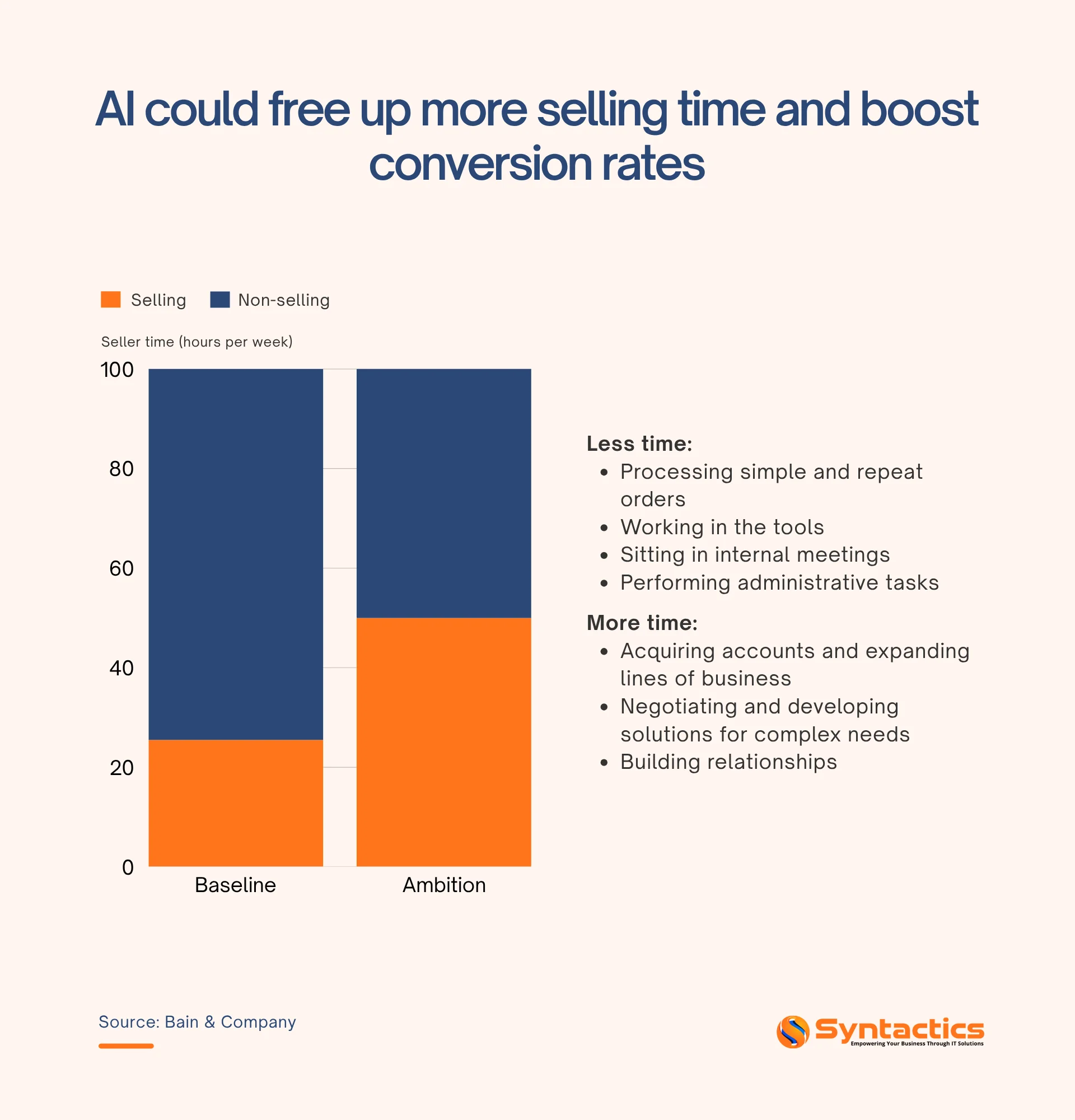
Source: Bain & Company
AI also enhances performance by:
- Speed: Campaigns launch faster because manual steps are automated.
- Personalization: AI analyzes behavior and customizes messages in real time.
- Optimization: Automated testing finds the best combinations of audience, creative, and timing.
- Decision-making: AI provides fast insights so you can focus resources where the impact is highest.
The ROI Advantage of AI-First Full-Stack Marketers
Teams that integrate full-stack digital marketing report cost savings, better engagement, and higher conversion rates. In fact, AllAboutAI reports that companies using AI in marketing achieve 22% higher ROI than traditional methods, demonstrating that AI drives measurable business impact when integrated into workflows and decision-making.
Here’s how AI improves return on investment (ROI):
- Lower acquisition costs by identifying the most efficient audiences and channels.
- Faster testing cycles because AI automates A/B tests and optimization.
- Improved conversion rates because personalized messaging resonates better with users.
- Higher engagement because AI helps tailor experiences across email, paid media, and content channels.
By tracking performance with real data, you can justify investments and iterate toward better results.
Real-World Applications Across SEO, Paid Media, and Lifecycle Marketing
AI transforms specific parts of your marketing stack:
- SEO: AI helps you find high‑impact keywords, optimize content, and predict search trends so you rank faster and retain visibility.
- Paid Media: AI adjusts bids, budgets, and audiences automatically based on performance signals, increasing efficiency and reducing wasted spend.
- Lifecycle Marketing: AI enables personalization throughout the customer journey so each user receives the right message at the right time.
Overall, teams that adopt AI for personalization and automated optimization gain insights into customer behavior, which improves experience and loyalty.
How to Adopt an AI-First Full-Stack Marketing Model
If you’re ready to transition, start by building the right skills and infrastructure. You can do this by:
- Upskilling your team with AI training, workshops, or certification programs.
- Hiring specialists with experience in data analysis, automation, and AI tools.
- Partnering with external experts or agencies that can guide your adoption and provide best practices.
Combining internal capabilities with external guidance ensures your team uses AI effectively, aligns tools with strategy, and avoids common pitfalls. This approach allows you to maximize the value of AI while keeping workflows smooth, scalable, and focused on results.
Conclusion
Full‑stack marketing with AI gives your team a clear strategic advantage by streamlining automation, delivering faster insights, and driving measurable performance improvements. Embracing AI across strategy, execution, and measurement frees your team to focus on growth, creativity, and outcomes that matter.
Companies like Syntactics, Inc. can help you implement AI‑first workflows, optimize processes, and provide expert guidance to ensure results are achieved efficiently. Our skilled virtual assistants in the Philippines can support campaign management, data tracking, and routine tasks, giving your team more time to focus on high-value work that moves the business forward.

FAQs About Full-Stack Marketing
What is full-stack marketing?
Full‑stack marketing is the ability to manage all aspects of marketing, from strategy and content creation to analytics and optimization, across every channel. It combines planning, execution, and measurement in a single, integrated workflow.
How does AI in full‑stack marketing impact customer experience?
AI helps personalize messages, recommend products, and respond faster to inquiries. This creates a smoother, more relevant experience that builds loyalty and engagement.
Do I need a large team to implement AI‑first marketing?
No. With the right tools and strategy, even small teams can scale performance and output by using AI to handle repetitive and data‑intensive work. For expert guidance and support, contact us today to see how we can help your team get started.

About Jalou Batilong
Related News:

Best SEO-Friendly CMS for Your Website: Top Picks

UCD vs CCD: Choosing Where To Center Your Design









Comment 0