

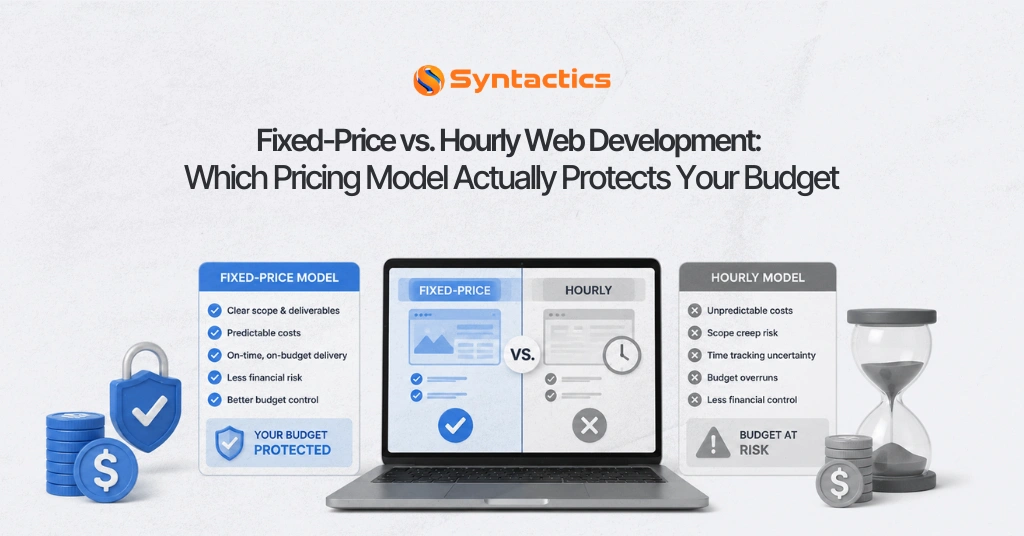
Fixed-Price vs. Hourly Web Development: Which Pricing Model Actually Protects Your Budget
Choosing between fixed-price and hourly web development is about more than comparing quotes. The real question is how each pricing model manages changing requirements, project delays, and revisions once development begins.
According to the Project Management Institute’s 2026 Pulse of the Profession Report, nearly one-third of complex projects fail to achieve their intended benefits. This is often because complexity and changing requirements are not managed effectively. That’s why choosing the right web development pricing model is just as important as selecting the right development partner for your project.
Key Takeaways
- Project scope changes can increase development costs by 10-25% (GlobeNewswire).
- Fixed-price projects work best when your requirements are clearly defined.
- Hourly pricing gives you flexibility but requires closer budget monitoring.
- Well-written contracts provide stronger budget protection than a pricing structure alone.
- Choosing the right development partner helps you avoid unexpected project expenses.
How Fixed-Price and Hourly Models Actually Work in Practice
Before comparing web development costs, you need to understand how each pricing model works throughout a project’s lifecycle. Both approaches can deliver excellent results when applied to the right type of project.
Fixed-Price Development
A fixed-price agreement establishes the total project cost before development begins. The proposal typically includes a detailed scope of work, project timeline, deliverables, and revision limits.
This model offers predictable budgeting so that you know the expected investment before work starts. It works especially well when your website requirements are fully documented and unlikely to change during development.
However, fixed-price projects depend heavily on accurate planning. If you request new features after development begins, they usually require formal change requests that increase cost and timeline.
When your project scope is well defined from the start, this structured approach helps minimize unexpected expenses, keeps development on schedule, and provides greater confidence in your overall budget.
Hourly Development
Hourly pricing charges you for the actual time developers spend working on your project. Instead of locking every requirement upfront, you can continue refining features as your business needs evolve.
This flexibility makes hourly engagements ideal for custom applications, complex integrations, and long-term website improvements. As a result, you gain greater control over feature prioritization without renegotiating an entire contract each time your requirements change.

The Scope Creep Trap That Breaks Both Pricing Models
Scope creep happens when additional features, design revisions, or functionality are introduced after development has already started. These changes may seem minor individually, but they quickly increase development time and project costs. In fact, GlobeNewswire found that project scope changes can increase development costs by 10-25%.
In a fixed-price project, scope creep usually results in formal change requests that extend the budget and timeline. Meanwhile, in an hourly engagement, scope creep appears differently. The project continues moving forward, but additional hours gradually increase the total cost without a clearly defined endpoint.
To reduce scope creep, make sure your contract includes:
- A detailed scope of work
- Clear functional requirements
- Defined deliverables
- A documented change request process
- Approval requirements before additional work begins
In addition, schedule regular project reviews to confirm priorities before developers begin the next phase. This is because small adjustments are easier to manage than major revisions discovered near project completion.
If you’re planning website development services in the Philippines, investing time in thorough project planning before development begins can significantly reduce unexpected costs later.
Likewise, collaborating with an experienced web developer in the Philippines helps ensure technical requirements are documented accurately from the start, reducing misunderstandings that often lead to expensive revisions.

Which Pricing Model Fits Your Project
Now that you understand how each web development pricing model works, the next step is determining which one best suits your project. The right choice depends on how clearly you can define your requirements before development begins.
Choose Fixed-Price for Well-Defined Projects
A fixed-price model is ideal when your project has a clear scope, timeline, and list of deliverables. It works well for:
- Corporate websites
- Landing pages
- Portfolio websites
- Small ecommerce stores
- Website redesigns with minimal custom functionality
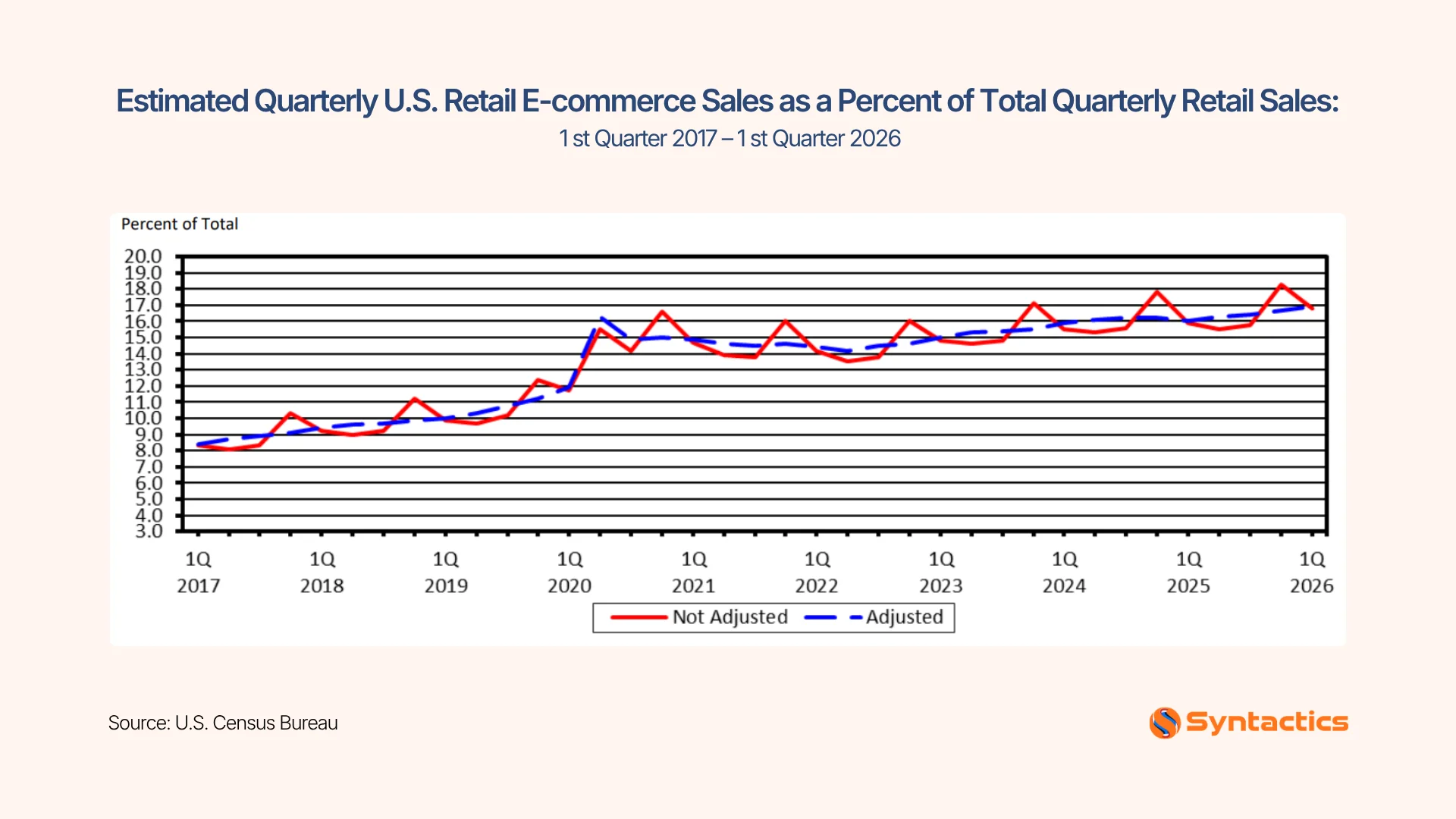
According to the U.S. Census Bureau, retail ecommerce sales in the United States reached an estimated $326.7 billion during the first quarter of 2026, accounting for 16.9% of total retail sales. As more businesses invest in online storefronts and digital experiences, choosing the right development approach becomes more important for keeping projects on budget and on schedule.
Since developers can accurately estimate the work involved, you benefit from predictable costs and fewer budget surprises. That said, fixed-price development remains a practical option when your project goals, functionality, and deliverables are clearly defined from the start.
Source: U.S. Census Bureau
Choose Hourly for Evolving Projects
An hourly model is often the better option when your project is expected to evolve throughout development. It’s particularly suitable for:
- Custom web applications
- Third-party integrations
- API development
- Ongoing website enhancements
- Feature expansions based on user feedback
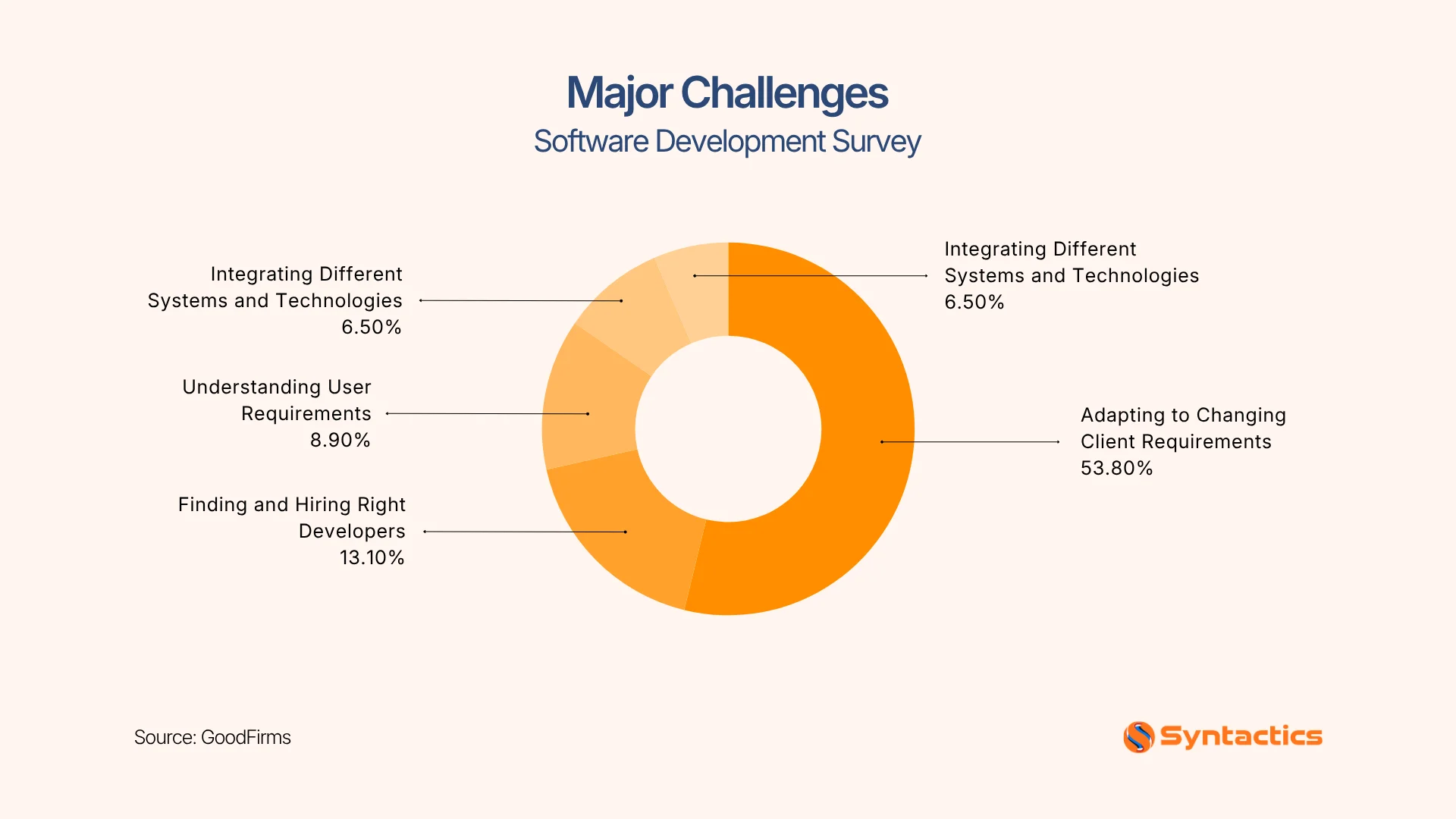
According to GoodFirms’ Useful Stats and Trends on Software Development, 53.8% of software companies identified adapting to changing project requirements as one of the biggest challenges affecting software delivery. This highlights why flexible pricing models often work better for projects that continue evolving after development begins.
Source: GoodFirms
If your requirements are only partially defined, consider a hybrid approach. Many businesses start with a fixed-price discovery phase before transitioning to hourly development for custom functionality. This approach balances predictable planning with the flexibility to adapt as new requirements emerge.
Contract Terms That Protect Your Budget No Matter Which Model You Choose
Choosing the right pricing model is only part of protecting your investment. A well-written contract often has a greater impact on project success than whether you choose fixed-price or hourly billing.
Before signing any agreement, confirm that it includes the following:
- Detailed scope of work. Clearly define every deliverable, feature, and technical requirement before development begins.
- Change request process. Specify how additional work will be reviewed, approved, and priced to prevent unexpected costs.
- Milestone-based payments. Tie payments to completed deliverables instead of arbitrary dates to improve transparency and accountability.
- Revision limits. Define how many revisions are included during each project phase to avoid unnecessary delays.
- Project timeline. Include expected milestones, review periods, and client responsibilities to keep the project moving forward.
According to Icertis, organizations lose more than 5% of their annual revenue due to poor contract management. Clearly defining project scope, payment milestones, revision limits, and change request procedures helps reduce misunderstandings that can lead to budget overruns and project delays.
If you’re evaluating website design providers in the Philippines, reviewing the contract carefully helps you understand exactly what’s included before development begins.
Conclusion
There’s no universal answer to the fixed-price versus hourly debate. The best choice depends on your project’s complexity, expected changes, and long-term goals. By understanding how each web development pricing model handles scope, revisions, and project management, you can make informed decisions that protect your budget while supporting successful project delivery.
At Syntactics, Inc., we help businesses choose the right development approach based on their unique requirements, not a one-size-fits-all pricing model. Whether you need a fixed-price project or a dedicated web development team, we deliver scalable website development solutions in the Philippines that drive lasting business growth!
Get Design and Functionality
Specific to your Brand!
- Build a website that's mobile-friendly and responsive.
- Custom designs aligned with your brand.
- Optimized for SEO and user experience.
- Scalable and feature-rich solutions.

FAQs About Web Development Pricing
How much does it cost to develop a website?
The cost of developing a website depends on its size, features, complexity, and the pricing model you choose. A simple website may cost a few thousand dollars, while custom websites with advanced functionality typically require a larger investment.
Can you switch from fixed-price to hourly during a project?
Yes, if both parties agree to update the contract. Many projects transition to hourly pricing when new requirements emerge after the original scope is completed.
How can you avoid unexpected web development costs?
Start with detailed project requirements and establish a clear change request process before development begins. Regular progress reviews and milestone approvals also help keep your project on budget.

About Ladymieh Naallatan
Related News:

Google Chrome Extensions for Dedicated Teams

Web Design Services for Modernized Web Pages


Why Page Experience is Important for Google Search








Comment 0