

How to Switch SEO Agencies Without Losing Your Rankings: A Step-by-Step Transition Guide
Switching to a new SEO agency can feel risky, especially if you’re worried about losing search rankings, traffic, or valuable account access. While a poorly managed transition can lead to unnecessary setbacks, a structured handoff helps protect your website’s SEO performance from day one.
According to Ahrefs’ 107 SEO Statistics for 2026, 68% of online experiences begin with a search engine, making it essential to preserve your existing SEO foundation during an agency transition. A carefully planned handoff ensures your new partner has the information and access needed to maintain your website’s visibility while building on its existing success.
Key Takeaways
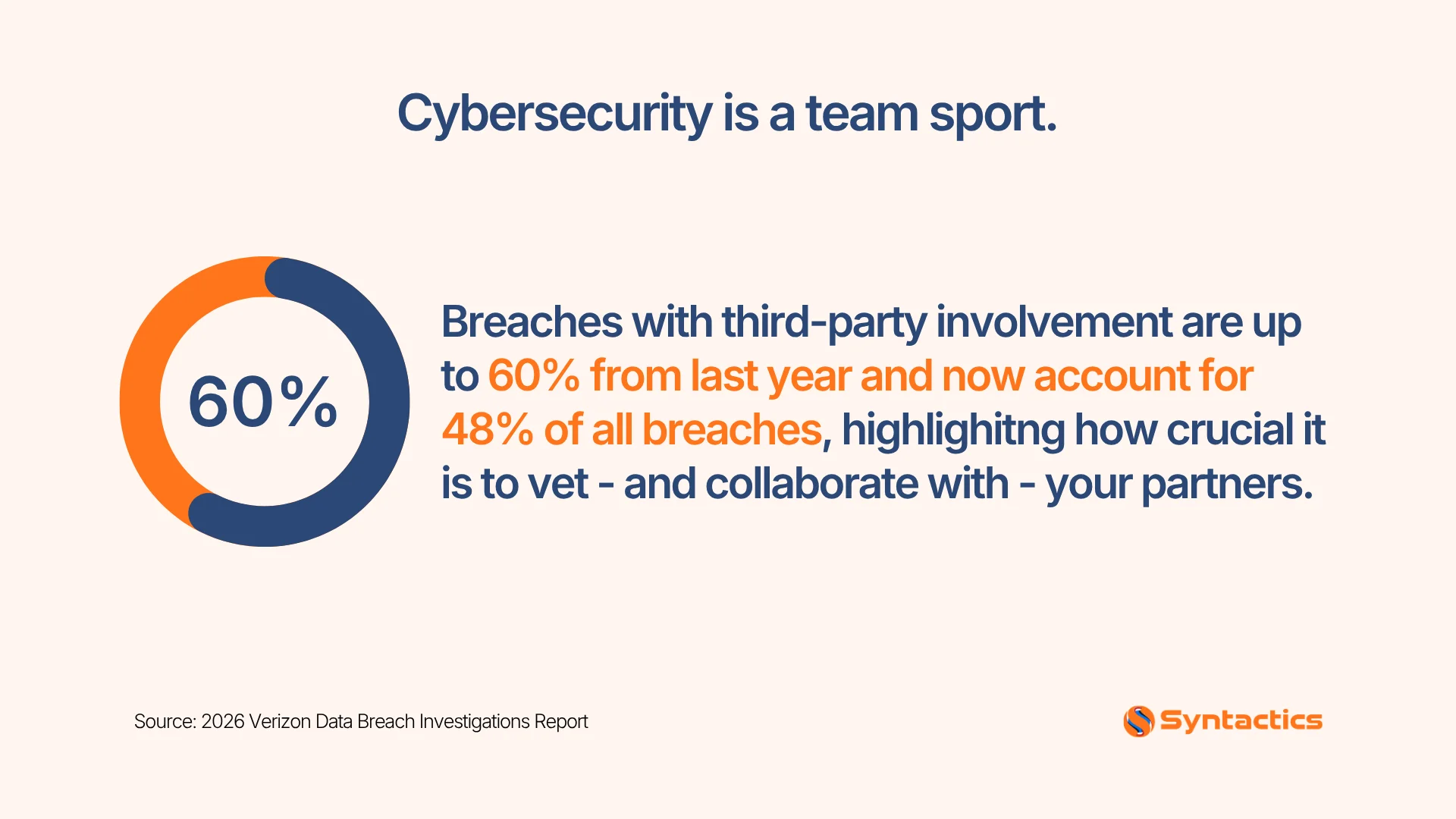
- 48% of data breaches involved a third party, which is a 60% increase from the previous year (Verizon).
- Secure all SEO accounts, website access, and historical data before ending your current contract.
- Follow a structured transition process to minimize ranking fluctuations.
- Avoid making major website changes while changing SEO providers.
- Choose a transparent SEO partner that prioritizes audits and long-term strategy before making significant optimizations.
What to Secure From Your Current Agency Before Giving Notice
Before notifying your current SEO agency, make sure you own every account and asset associated with your website. Missing access or incomplete documentation can delay your transition and affect future SEO performance.
Request the following before your contract ends:
- Google Search Console administrator access
- Google Analytics 4 administrator access
- Google Tag Manager access
- Content Management System (CMS) login credentials
- Web hosting and domain registrar credentials
- Backlink reports
- Citation listings
- Keyword ranking history
- Content calendars
- Technical SEO audit reports
- Redirect documentation
- XML sitemap and robots.txt files
According to the 2026 Verizon Data Breach Investigations Report, 48% of data breaches involved a third party, a 60% increase from the previous year. As such, securing ownership of your website accounts and administrator access before switching agencies helps reduce unnecessary security risks while ensuring your new SEO team can manage your website without interruption.
Source: 2026 Verizon Data Breach Investigations Report
The 5-Step Handoff Process That Prevents Ranking Loss
Once you’ve secured your website assets, focus on creating a structured transition. A carefully planned handoff minimizes disruption while giving your new team a complete understanding of your existing SEO performance.
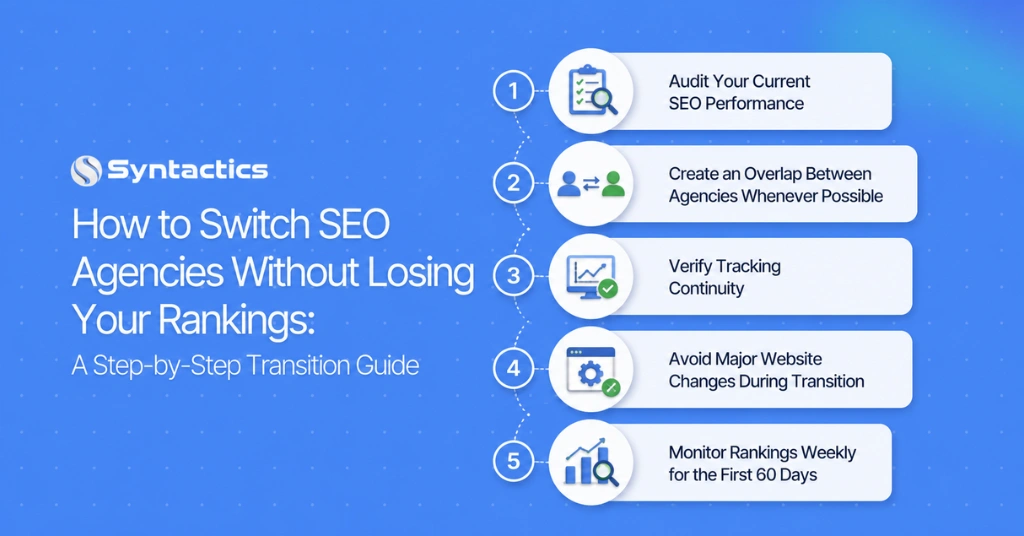
1. Audit Your Current SEO Performance
Document your current rankings, organic traffic, indexed pages, backlinks, and technical health before making any changes. This creates a benchmark that helps your new agency measure progress accurately.
2. Create an Overlap Between Agencies Whenever Possible
If your contract allows it, schedule a short overlap period between your current and incoming agency. This allows both teams to answer technical questions, transfer documentation, and clarify previous optimization efforts before responsibilities change.
3. Verify Tracking Continuity
Confirm that Google Analytics 4, Google Search Console, Google Tag Manager, and conversion tracking continue collecting accurate data after the transition. Even small tracking errors can affect reporting and future SEO decisions.
4. Avoid Major Website Changes During the Transition
Delay website redesigns, domain migrations, platform changes, or large content restructures until the transition is complete. Introducing multiple changes simultaneously makes it difficult to identify the cause of ranking fluctuations if they occur.
5. Monitor Rankings Weekly for the First 60 Days
Track keyword rankings, crawl errors, indexed pages, organic traffic, and conversions every week during the first two months. Early monitoring allows you to identify potential issues before they significantly impact performance.
According to Google Search Central, a webpage needs to return an HTTP 200 (success) status code and meet Google’s technical requirements to be eligible for indexing. That said, monitoring your website regularly during the first 60 days helps you identify crawl errors, indexing issues, or broken pages before they affect your search visibility.
Red Flags That Mean You Should Switch Immediately, Not Gradually
Most SEO transitions can be planned carefully. However, some situations require immediate action because delaying the switch could cause greater damage to your website.
Consider changing providers right away if your current agency:
- Refuses to give you administrator access to Google Search Console, Google Analytics 4, or your CMS.
- Uses private blog networks (PBNs), paid links, or other tactics that violate Google’s spam policies.
- Cannot explain its SEO strategy or provide regular performance reports.
- Makes major website changes without your approval.
- Owns your domain name, hosting account, or critical website assets under its own business account.
- Ignores Google manual actions or indexing issues instead of resolving them.
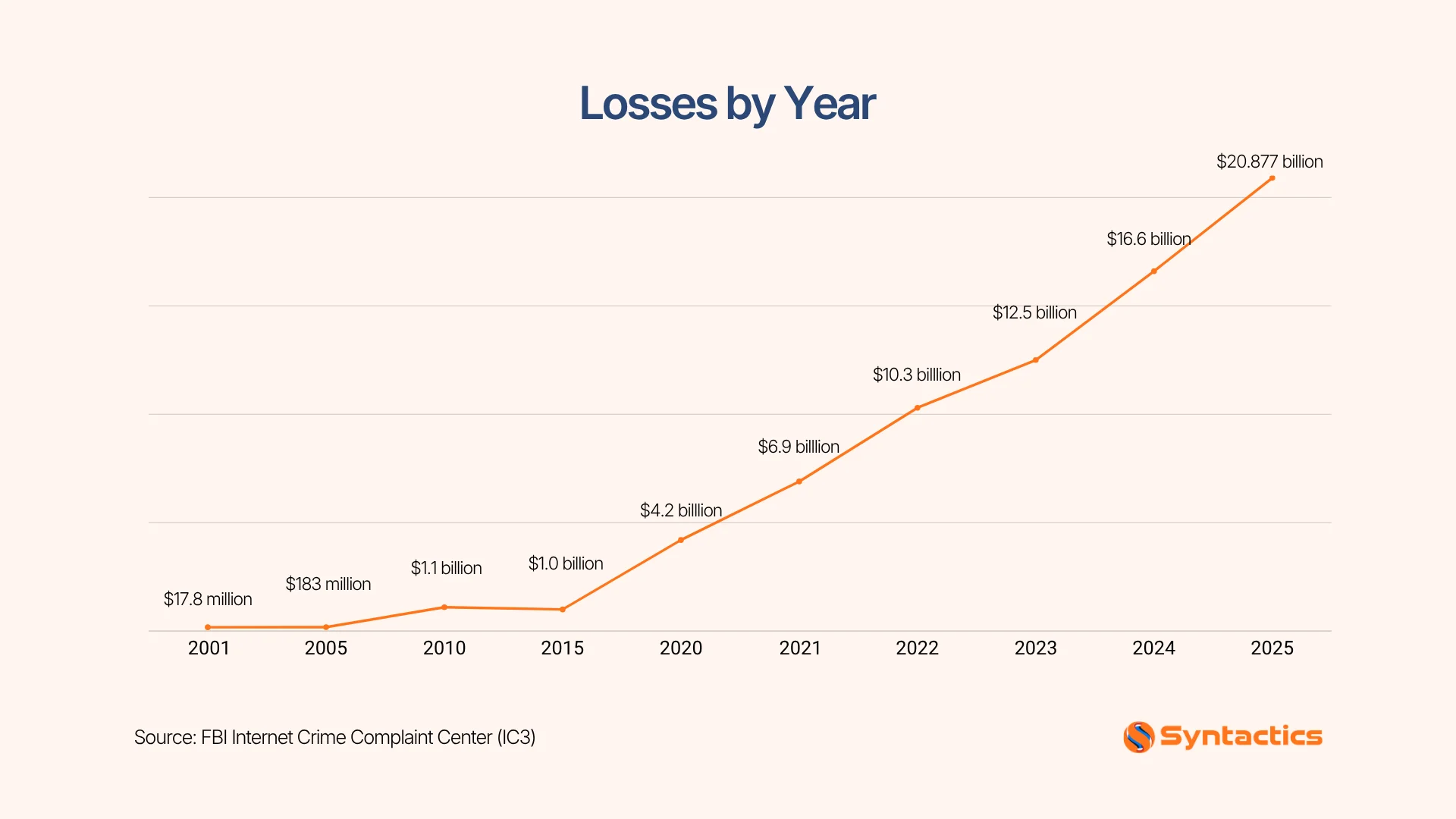
According to the FBI Internet Crime Complaint Center (IC3), reported cybercrime losses in the United States reached a record $16.6 billion in 2025, a 33% increase from the previous year. If your SEO agency withholds access to your website, hosting, or domain accounts, your business may face unnecessary operational and security risks during the transition.
Source: FBI Internet Crime Complaint Center (IC3)
What a Responsible New SEO Partner Does in the First 30 Days
Once you’ve selected a new SEO agency, the focus needs to be on understanding your website before making significant changes. A responsible partner avoids rushing into large-scale optimizations and instead builds a data-driven foundation for future improvements.
During the first month, your new agency needs to provide:
- A comprehensive technical SEO audit
- A complete content audit
- A backlink profile review
- A keyword ranking baseline report
- Competitor analysis
- Technical issue prioritization
- A documented 30-day action plan
- Clear reporting schedules and performance KPIs
If you’re comparing SEO companies in the Philippines, look for a provider that explains every recommendation and supports decisions with measurable data instead of promising instant rankings.

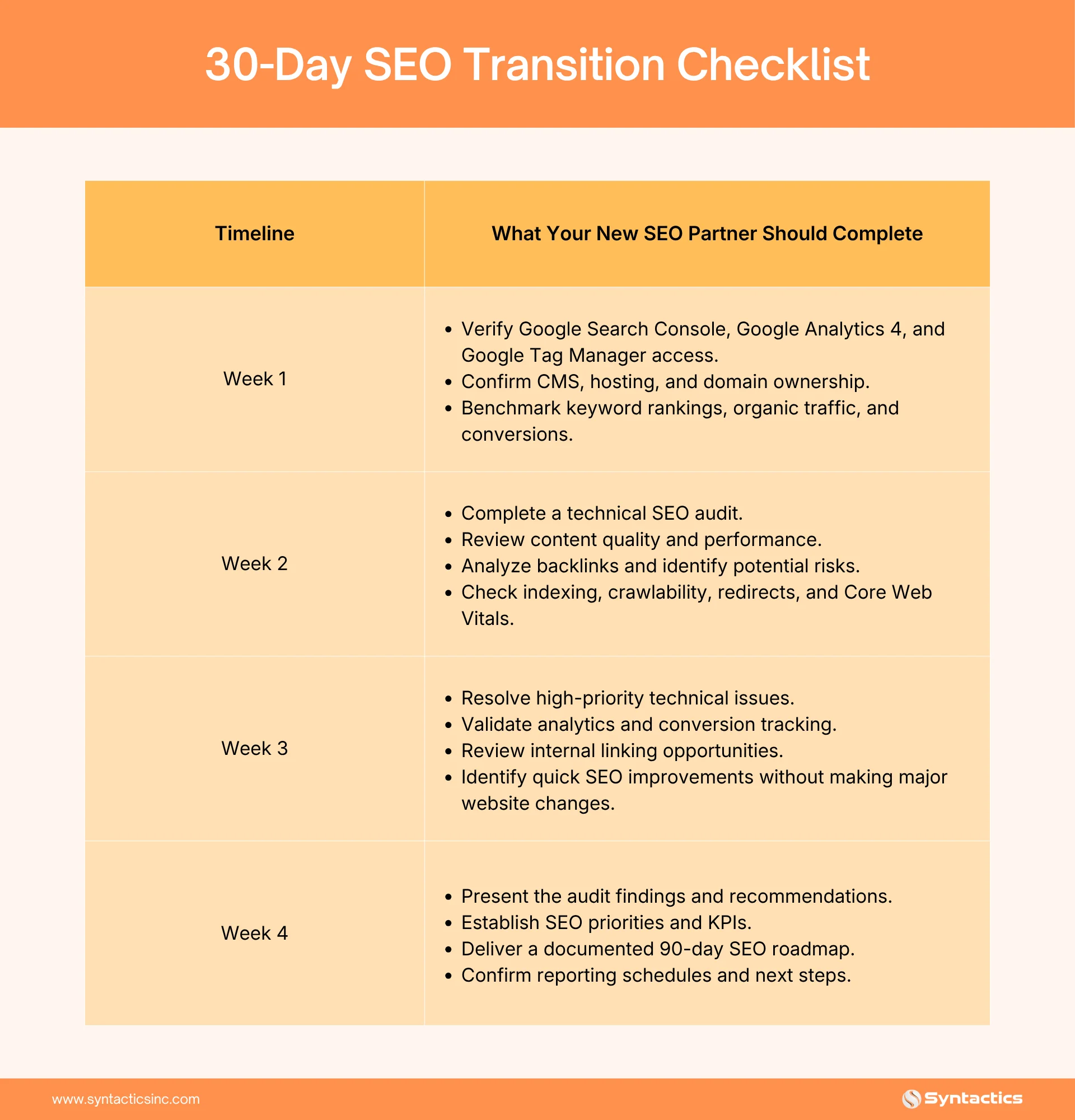
30-Day SEO Transition Checklist
A structured onboarding process helps ensure nothing is overlooked during the transition.
What to Expect During the First 90 Days
Knowing what happens after switching to a new SEO agency helps you set realistic expectations and measure progress effectively.
Days 1 to 30: Assessment and Stabilization
Your new partner focuses on understanding your website, validating historical performance, correcting technical issues, and preserving existing rankings. Small ranking fluctuations are normal during this period while search engines recrawl updated pages.
According to Google Search Console, Search performance data becomes available within approximately 48 hours after it’s collected. Meanwhile, Search Console reports retain up to 16 months of historical data. Reviewing this historical performance early in the transition helps your new SEO agency establish accurate benchmarks before implementing significant optimizations.
Days 31 to 60: Optimization
After establishing a stable baseline, the agency begins optimizing priority pages, improving internal linking, refining metadata, and addressing content gaps based on audit findings.
Days 61 to 90: Growth
With the technical foundation in place, your SEO strategy shifts toward sustainable growth through content optimization, authority building, performance monitoring, and continuous improvements.
Whether you work with an experienced SEO specialist in the Philippines or a larger agency, expect a thoughtful transition built on research, measurement, and continuous optimization rather than immediate ranking changes.
Conclusion
Switching providers doesn’t have to mean sacrificing your search visibility. By securing your website assets, following a structured handoff process, and setting realistic expectations, you can transition to a new SEO agency while protecting the rankings you’ve already earned.
At Syntactics, Inc., we understand that every SEO transition requires careful planning. As a trusted SEO agency in the Philippines, we provide comprehensive audits, transparent reporting, and strategic onboarding to ensure your website maintains its momentum. Our SEO services in the Philippines are designed to build on your existing performance while creating a sustainable roadmap for long-term growth.

FAQs About Switching SEO Agencies
What is an SEO agency?
An SEO agency helps improve your website’s visibility in search engine results through technical optimization, content strategy, and ongoing performance monitoring. Its goal is to increase organic traffic, improve keyword rankings, and support your long-term business growth.
Will changing SEO agencies affect my Google rankings?
Minor ranking fluctuations can happen, but a structured transition significantly reduces the risk of long-term losses. Consistent monitoring helps identify and resolve issues quickly.
Should I pause my SEO campaign while changing agencies?
No. Maintaining continuous SEO efforts helps preserve your website’s visibility and allows your new agency to build on existing performance instead of starting over.

About Jalou Batilong
Related News:

Outsourcing Model: A Business Solution To COVID-19










Comment 0