


Breaking Barriers Between Online and Offline Retail Growth
In today’s market, the number of Offline Retail stores varies compared to Online ones, but the gap is steadily narrowing. Since 2020, eCommerce has maintained consistent growth compared to traditional commerce. This prompts business owners to engage a professional Retail Website Developer to establish a stronger digital presence.
Although physical stores remain essential for many retail categories, the sustained shift towards online shopping cannot be ignored. Online transactions continue to outpace offline ones every year. For instance, according to How Many People Shop Online?, there are 2.77 billion digital buyers worldwide this year.
Additionally, Mobile Commerce Statistics reports that 81% of customers shopped on their mobile devices in 2026, reinforcing the importance of responsive, mobile-first eCommerce platforms. With the help of a professional eCommerce website developer from the Philippines, you can build a scalable online shop designed for your digital-first consumers.
Is Online Retail More Important Than Offline?
The superiority of online retail over offline retail depends on various factors. In fact, both play significant roles in the business.
However, the choice a customer makes — whether they choose Online or Offline Retail — depends on the following:
- Your business’ nature;
- The products you offer;
- Current trends;
- Customers’ preferences;
- Geographical location;
- How do you want to connect with customers, and
- Market dynamics.
Each has pros and cons, but consumers’ preferences do not directly dictate the importance of a channel.
The Pros of Online Retail
With widespread internet connectivity, businesses increasingly consider establishing an online store. Online retail allows customers to browse and purchase products from the comfort of their homes, making the overall experience more appealing and efficient. Ordered goods are delivered directly to customers, often within days.
Technology enables businesses to stay relevant to a digitally driven generation of buyers. As a result, many retailers have transitioned to eCommerce platforms like Shopify and WooCommerce.
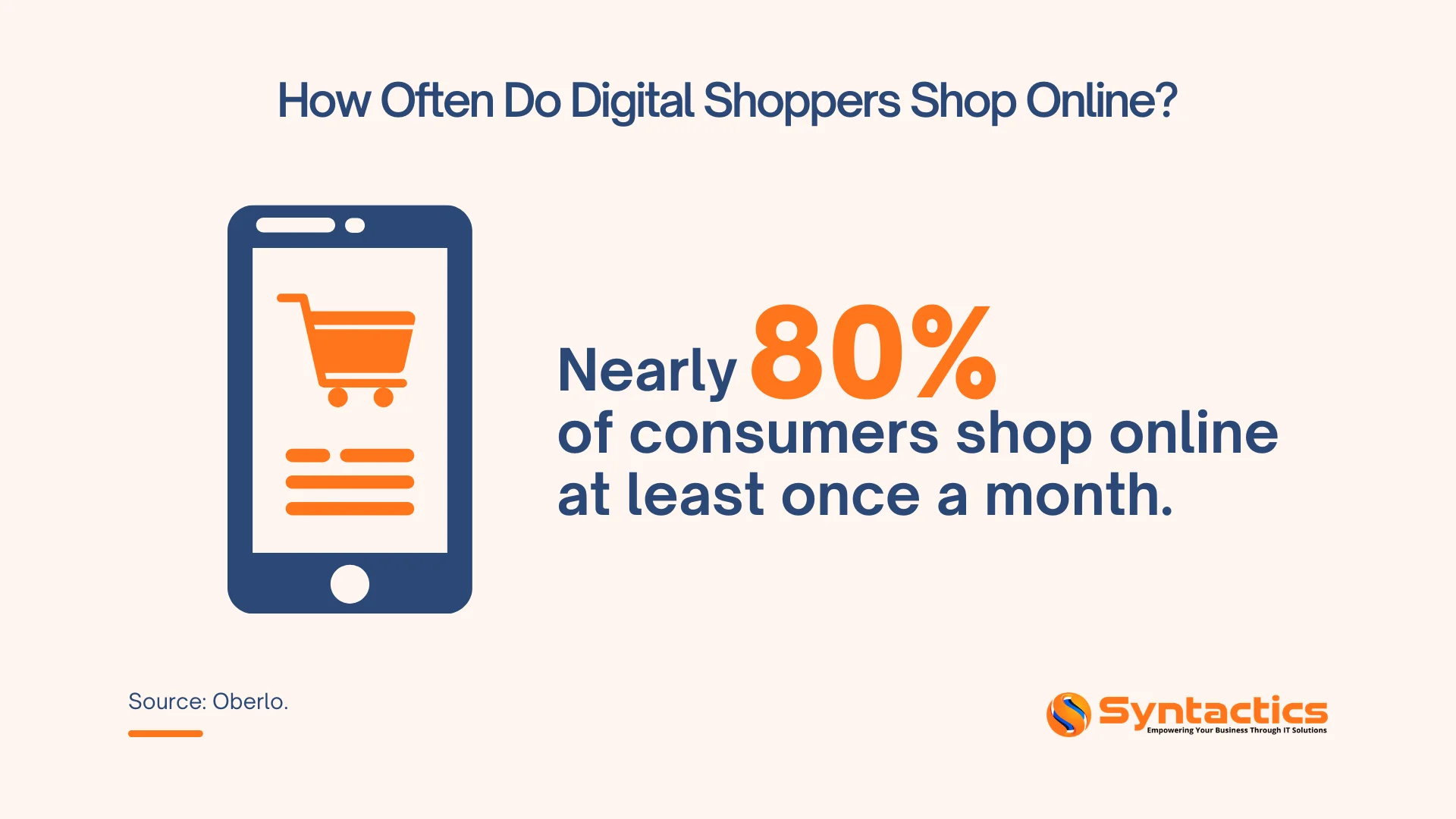
Retail websites offer various advantages, such as accessibility, convenience, and security. According to Oberlo, a staggering 79% of online shoppers make purchases once a month, so you need an attractive platform to accommodate them all.
Source: Oberlo.
Here are the common reasons why Online Retail works:
Greater Convenience
Online Retail allows consumers to browse products on their own time and gives them the freedom to buy from home. Other aspects of convenience that add to the organic growth of online shopping are:
- A broader range of products for consumers;
- The opportunity to pay through digital wallets and other online payment methods, and
- Reliable logistics facilities that deliver packages to customers.
An eCommerce store crafted by a Retail Website Developer will make the process even customer-friendly.
24/7 Accessibility
Accessibility is a key reason for increased purchases by online shoppers. With a retail website, your business is available to consumers around the clock. Customers can shop at convenient times for them!
High Price Discounts
Discounts are another reason why people make online purchases. In order to drive sales, many eCommerce websites add special offers like discounts and coupons to product pages.

Greater Global Reach
Online Retail sites allow businesses to spread their reach to a global audience by having multiple physical storefronts in different locations. Many developed countries are connected via the Internet, which significantly broadens the customer base!
Cost Savings
Online store operations often involve lower overhead costs compared to brick-and-mortar establishments. It results in greater cost savings for your business and may be passed to customers or used to increase profit margins.
Personalization
Businesses can use analytics and algorithms for personalization. With this, retail websites can improve the shopping experience. With the help of a website, it can provide product recommendations based on customer preferences and behavior. In addition, it can increase your conversion rates on your Online Retail Website.
Robust Security
Online Retail websites have advanced security measures to protect shoppers’ data and financial transactions. Retailers and consumers must remain vigilant against cyber threats. Fortunately, eCommerce sites are strong against security concerns, as they’re outfitted with the following features:
- SSL encryption
- PCI DSS compliance
- Two-Factor Authentication
- Fraud detection systems
- Tokenization
- Secure payment gateways, etc.
With the help of a trusted eCommerce website developer in the Philippines, you can set up robust security measures for your online store. Additionally, they can outfit it with other measures to protect your transactions and payment information.
How About Offline Retail?
Despite the advantages of online retail, offline commerce remains necessary. It is because online shoppers can’t touch or try products before purchasing, which is critical to getting their money’s worth.
Also, customers don’t get the immediate satisfaction of bringing home their purchases with online shopping. After all, they often have to contend with shipping costs and delivery times.
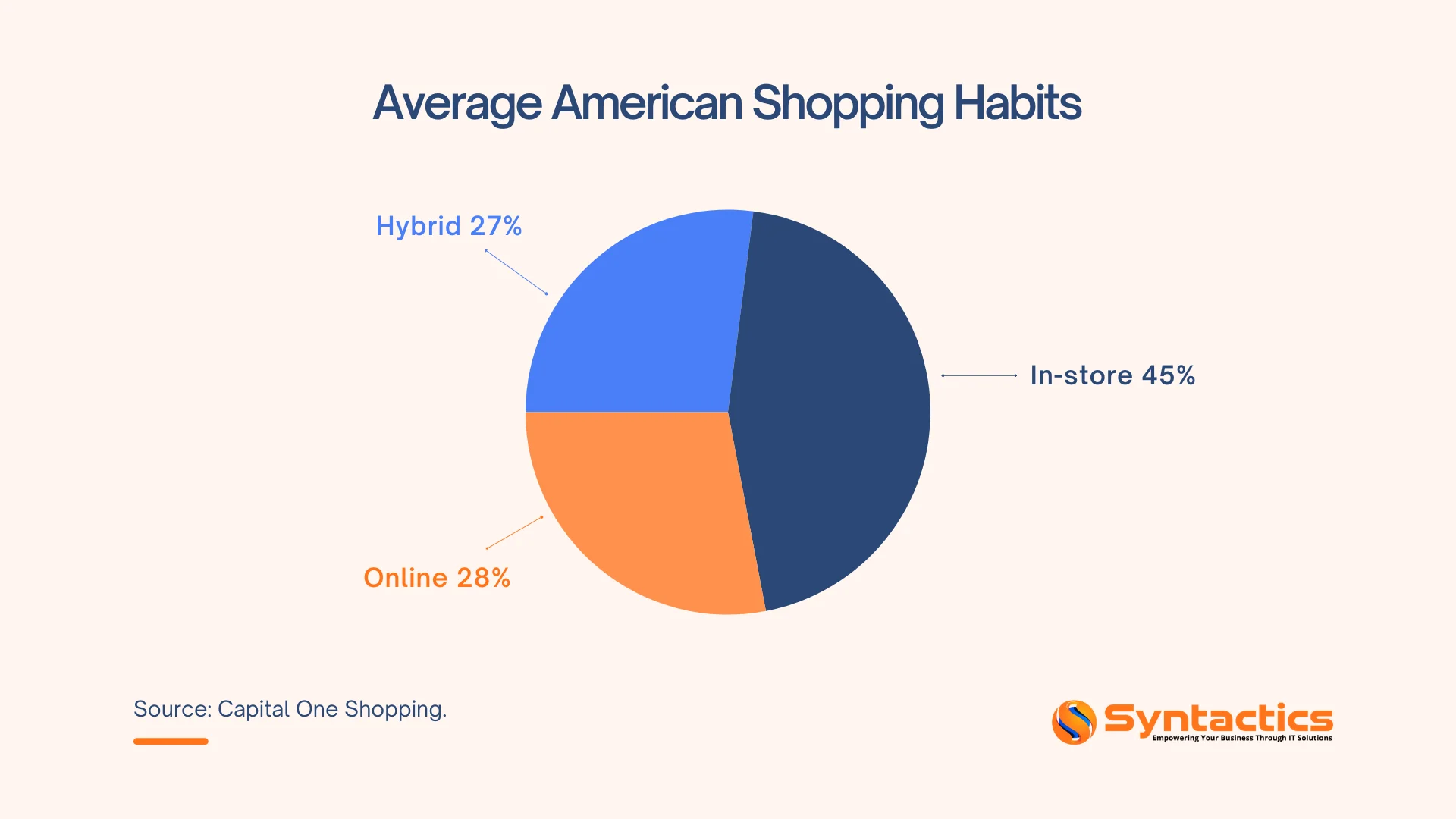
It’s no wonder that many people — around 45% — still prefer in-person/in-store shopping compared to 28%.
Source: Capital One Shopping.
What makes traditional stores the primary shopping alternative for people?
The Pros of Offline Retail
Product Tangibility
Offline Retail offers consumers the opportunity to physically interact with products. In addition to gaining an excellent in-store experience, customers receive immediate satisfaction by taking purchases home instantly. It is a key difference from Online Retail, often associated with shipping and delivery times.
No Shipping Fees and Easier Returns
With Offline Retail, consumers don’t have to worry about additional shipping costs. Thus, the total cost of their purchases is more transparent. In addition, returning items is more streamlined since customers can bring products directly back to the physical store.
Face-to-Face Engagement
There is no face-to-face engagement in Online Retail, making it harder to create positive relationships with customers. So, as an offline retailer, you’ll go the extra mile to ensure your customers have confidence in your shop. Thus, social interactions can foster trust with them.
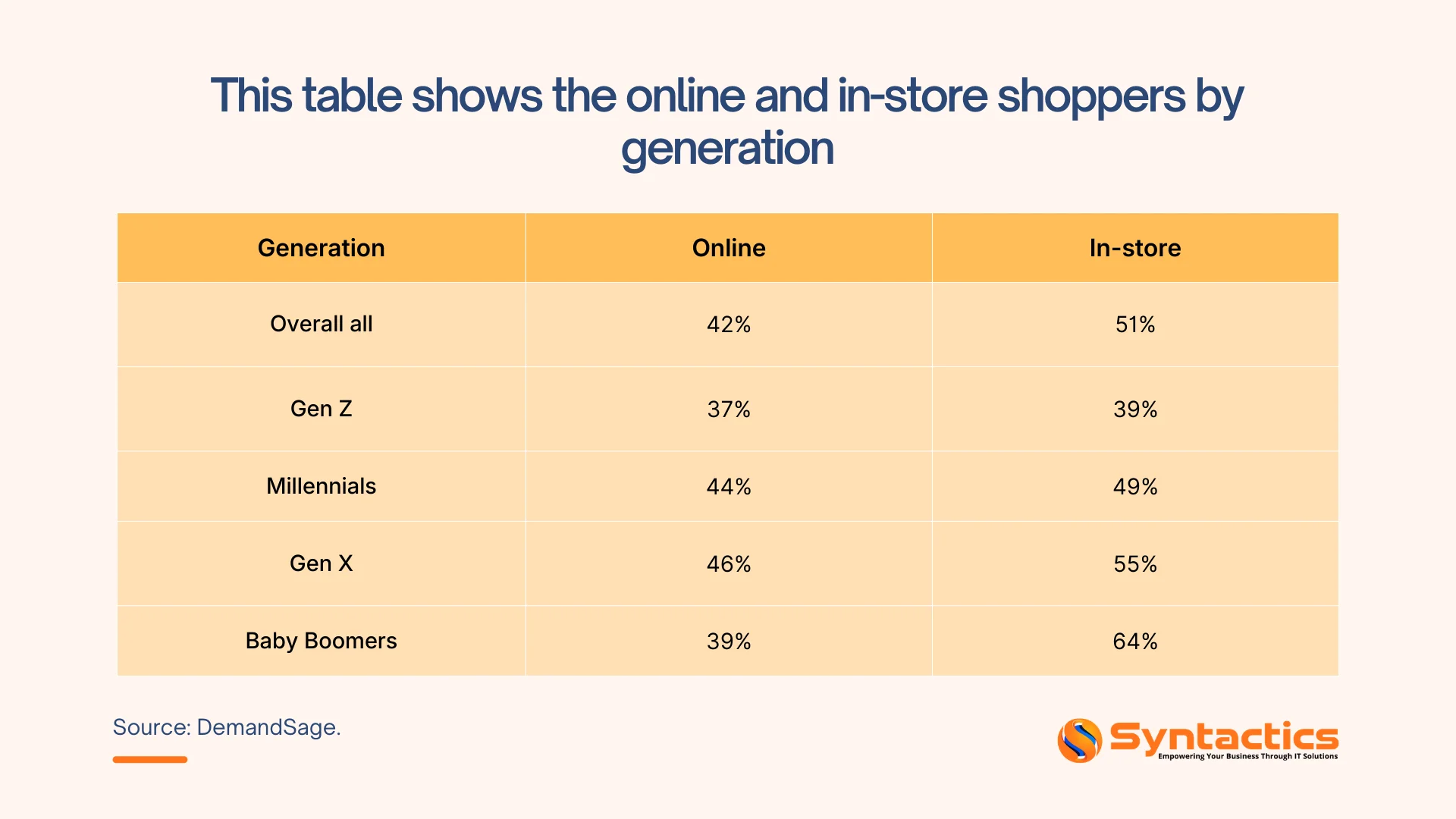
Consumers who belong to older demographics may have confidence issues with online shopping. Once they have seen the items physically, they may continue to purchase them.
Source: DemandSage.
Walking to a physical store means communicating with culture and society away from the digital space. Malls and shopping centers tend to flourish when people make in-person transactions. As a result, shopping offline is a more social and community-oriented activity.
Face-to-Face Customer Service
With Offline Retail, in-store staff can provide immediate assistance and answer questions. Additionally, they can offer personalized product recommendations. This results in a more engaging and customized shopping experience.
Both Are Equally Important For Retail Business Development
Online and offline retail are both critical components of sustainable retail growth. Rather than competing channels, they complement each other within a well-executed omnichannel strategy, allowing businesses to address diverse customer needs and expectations.
Retailers must continuously adapt to evolving consumer behavior and balance their digital and physical presence, especially as the boundaries between both channels continue to blur. Customers now expect flexibility — the option to research online, purchase in-store, or vice versa.
An omnichannel approach provides shoppers with multiple purchasing and fulfillment options while giving marketers broader opportunities to engage customers across touchpoints. The key lies in delivering a seamless experience across channels.
Physical stores strengthen brand recognition, foster trust, and support community engagement. Online stores, on the other hand, enable 24/7 access and remove geographic limitations. When these channels are aligned strategically, they reinforce each other rather than operate in silos.
Most importantly, integrating data from both online and offline interactions allows businesses to make informed decisions, optimize inventory, refine marketing efforts, and identify the right balance between channels for long-term success.

Final Thoughts
Some businesses assume physical stores are becoming irrelevant as more retailers move toward eCommerce platforms. However, this perspective overlooks the continued value of in-store experiences.
When customers can access detailed product information or complete purchases online, they should also have the option to engage with your brand physically. An effective omnichannel strategy strengthens both touchpoints rather than replacing one with the other.
Retailers can enhance integration by:
- Building and customizing a high-performing eCommerce site with professional development support to ensure strong brand identity and functionality.
- Maintaining consistent branding and design across digital and physical channels to prevent brand confusion.
- Creating seamless cross-channel experiences, such as in-store pickup for online orders or allowing customers to explore products in-store before completing purchases online.
Ultimately, long-term success lies in aligning online and offline retail into a unified system. By partnering with an experienced eCommerce website developer from the Philippines, build a secure, scalable, and conversion-driven platform that supports omnichannel growth.
When both channels work together strategically, retailers maximize marketing impact and deliver a more satisfying customer experience.

This article was updated on March 04, 2026.
Frequently Asked Questions
Why should businesses maintain both online and offline retail channels?
Both channels complement each other. Offline stores build brand trust and allow tactile experiences, while online channels provide convenience, 24/7 accessibility, and wider reach. An integrated omnichannel strategy maximizes customer satisfaction and sales potential.
Does online retail make physical stores obsolete?
No. Physical stores remain important for product exploration, brand presence, and customer engagement. Omnichannel integration ensures that online and offline touchpoints reinforce each other rather than compete.
How can small businesses compete in both online and offline markets?
By prioritizing mobile-friendly eCommerce platforms, offering flexible fulfillment options like in-store pickup, and keeping branding consistent across channels, small businesses can effectively reach and retain customers across both spaces. Contact our ecommerce development experts for tailored solutions.

About Xenia Labis
Related News:



CSS Coding Standards for WordPress: A Guide








Comment 0