

White-Label vs. In-House Marketing: A Cost, Capacity, and Control Framework
Marketing agencies may face a recurring challenge: clients want more services, faster delivery, and measurable results. Meanwhile, their internal teams could lack the time or expertise to keep up with every demand.
In these situations, businesses decide between expanding their workforce, hiring specialists, or partnering with white label online marketing services. The right approach relies on total costs, workload consistency, strategic control, quality assurance, and client expectations.
For instance, you might want to start offering SEO services to your clients but lack the expertise needed. Hiring your own specialists may cost you more, considering the subscriptions and tools needed. In addition, businesses spend roughly $500 to $10,000 for an SEO retainer (Semrush).
An informed comparison helps you choose the right marketing delivery without sacrificing the quality of service you offer.
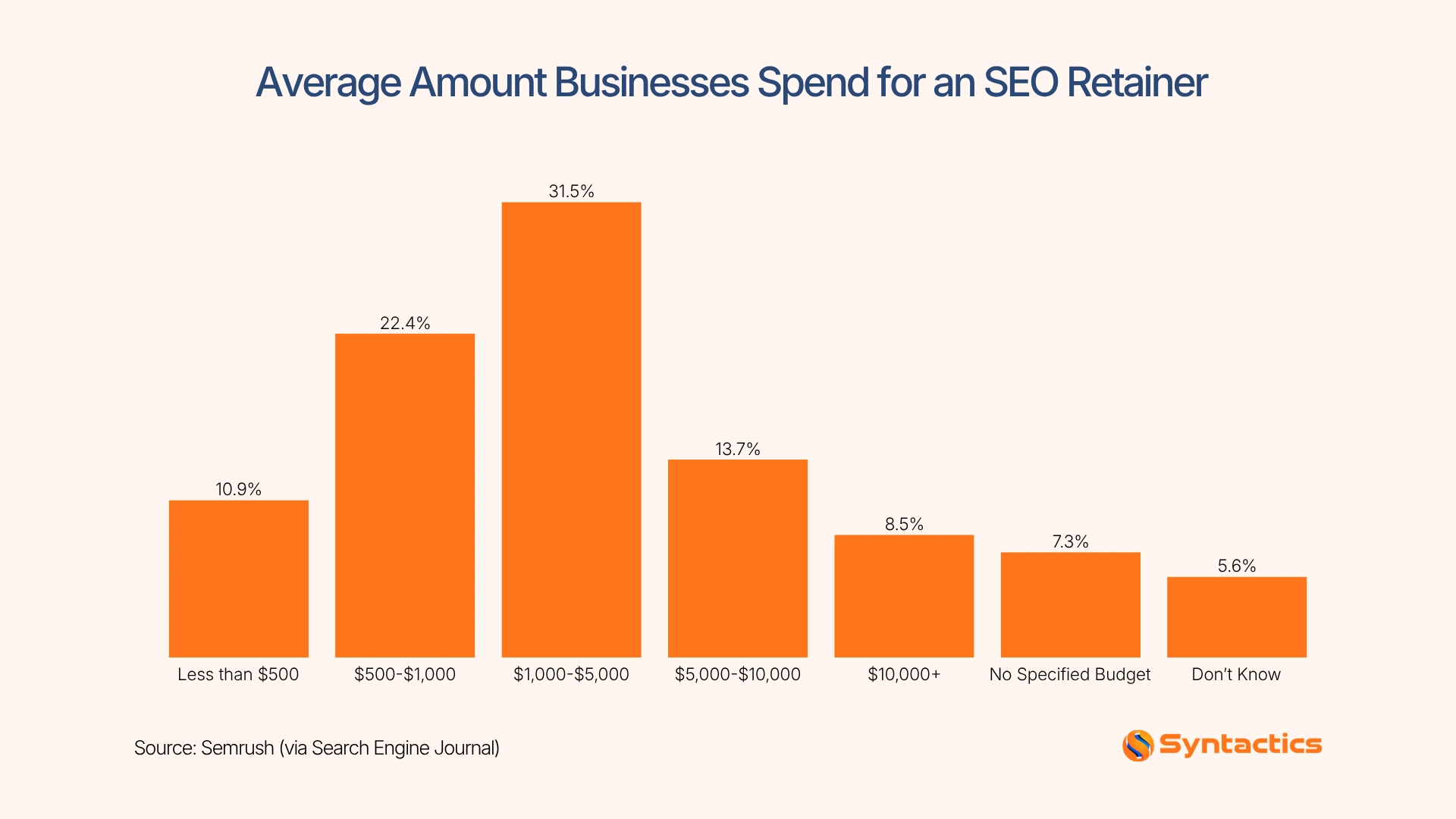
Source: Semrush (via Search Engine Journal)
Key Takeaways
- Enterprises spend roughly between $500 and $10,000 for an SEO retainer. (Semrush)
- White-label marketing lets agencies outsource specialized services while keeping the client relationship and reputation.
- Building an in-house team involves costs such as salary, including benefits, tools, training, and management.
- In-house marketing works well when agencies need direct control, deep client knowledge, and consistent demand.
- White-label marketing can help agencies expand capacity, add services, and manage fluctuating workloads.
- Agencies should evaluate expertise, demand, client access, costs, security, and partner reliability before choosing an in-house, white-label, or hybrid model
What a White-Label Partnership Actually Means
A white label partnership refers to a specialist provider completing online marketing work under an agency’s name. The scope of agreement may cover content creation, search engine optimization (SEO), paid advertising, social media, and other specialized services.
It does not remove the agency’s responsibility for quality and client outcomes. However, the agency still needs clear project briefs, confidentiality agreements, review procedures, and communication protocols. Therefore, agencies have to establish who approves deliverables, owns client data, handles revisions, and resolves quality concerns before work proceeds.
To further illustrate, here’s how the concept of how white label servicing works:
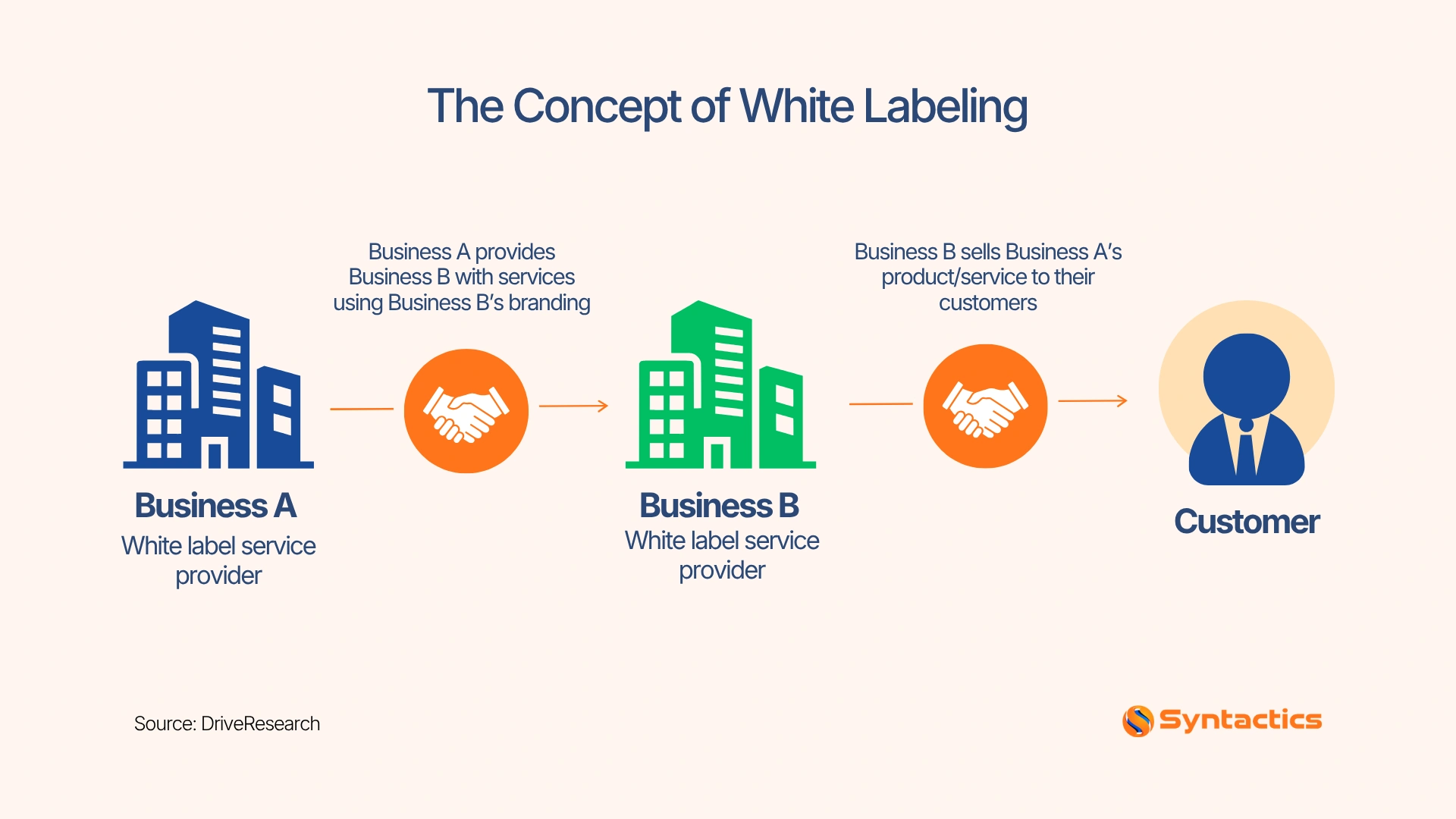
Source: DriveResearch
The True Cost of Building In-House Teams
Hiring an internal marketing specialist gives you direct access to talent. However, the salary represents only one part of the investment. Recruitment, onboarding, employment conditions, training, software subscriptions, and quality assurance also affect operational costs.
Hypothetical Cost of Hiring a Marketing Specialist in the Philippines
Assume a marketing agency in the Philippines hires one full-time marketing specialist with an average salary of ₱23,317 or $369.98 per month (Indeed).
| Cost Component | Hypothetical Annual Cost |
| Base compensation (₱23,317 × 12) | ₱279,804 ($4,437.80) |
| 13th-month pay | ₱23,317 ($369.98) |
| Employer statutory contributions and benefits | ₱40,000 ($634.42) |
| Software, hardware, and marketing tools | ₱60,000 ($951.63) |
| Training and professional development | ₱15,000 ($237.91) |
| Management and quality assurance allocation | ₱60,000 ($951.63) |
| Illustrative Total | ₱478,121 ($7,583.37) |
Note: This model is hypothetical and does not represent actual market costs. Agencies are advised to replace the assumptions with their actual recruitment costs, utilization rates, compensation structure, and software requirements.
Apart from operating costs, capacity is also another factor to consider. If client demand fluctuates, an employee may have unallocated time during slower periods. Conversely, high demand requires additional hires before the agency has predictable revenue to support them.
When In-House Marketing Makes the Better Choice
Internal delivery makes sense when a service directly defines the agency’s positioning, requires deep client knowledge, or depends on frequent collaboration. Stable demand also justifies hiring employees because predictable workloads support consistent utilization.
For example, a digital marketing company in the Philippines retains their strategic planning and senior client consulting internally. Meanwhile, its team maintains direct access to decision-makers, institutional knowledge, and confidential business information.
However, agencies are also expected to assess whether every production task requires internal employment. In that case, a hybrid model preserves strategic ownership while allowing external specialists to handle repetitive or technically demanding work. This is especially useful when the agency needs to protect its client-facing relationships while increasing execution capacity.
When White Label Online Marketing Is the Better Choice
White-label delivery may suit agencies that manage fluctuating demand, offer new digital marketing services, or handle specialized tasks. It can provide access to additional expertise without immediately committing to a permanent headcount.
A white-label partnership also supports faster capacity expansion, flexible staffing, and service diversification. However, agencies have to account for potential risks, including provider dependency, margin pressure, inconsistent quality, and communication delays.
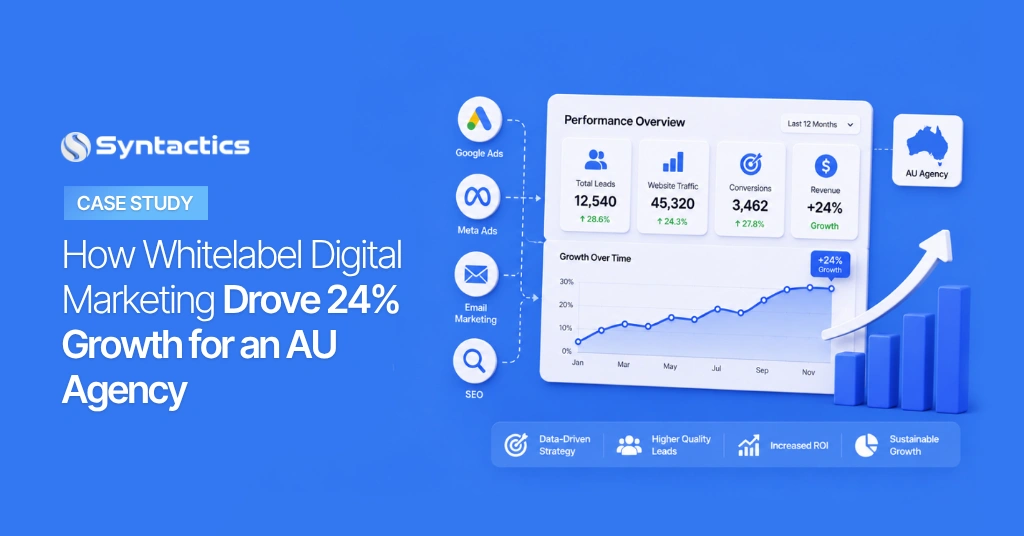
For more practical insights, here’s our case study on our white label digital marketing:
4 Questions to Ask Before a Decision
Here are four practical questions you can ask when evaluating digital marketing agencies offshore or in the Philippines:
- Is the service strategically important? Retain capabilities that define the agency’s competitive positioning or client experience.
- Does the team have the required expertise? Consider existing skills, training requirements, and the complexity of the work.
- Is demand consistent? Compare recurring workload with projected revenue and utilization.
- Does the client need direct access to the delivery team? Identify services that require daily collaboration, rapid decisions, or sensitive information.
Once these queries get answered, conduct a financial and risk review before finalizing a partnership. Compare total internal employment costs with partner fees, management time, expected margins, security requirements, and potential service interruptions.
How to Evaluate a White-Label Partner
Selecting a partner needs a structured process that assures operational compatibility, security, and delivery reliability for top-notch digital marketing. Here are the following criteria to consider when choosing a white label service provider:
- Technology Compatibility: Confirm that the provider uses tools compatible with your project management, analytics, and reporting workflows.
- Pricing Transparency: Clarify retainer, project-based, or hourly billing, including overage charges, revisions, and scope changes.
- Data Security: Review relevant certifications, access controls, data retention practices, and applicable compliance standards. A confidentiality clause alone does not establish comprehensive security.
- Time Zone Coverage: Confirm working hours, urgent-request coverage, and expected turnaround times.
- Live-Brief Assessment: Request a paid sample task using a realistic brief to evaluate execution quality and adherence to instructions.
- Service Level Agreement: Establish defined response times for urgent concerns, missed deadlines, and quality issues.
- Weighted Scorecard: Score each criterion numerically based on its importance to your agency. For example, security and quality assurance process may receive higher weights than presentation quality.
- Limited Paid Pilot: Test the relationship with a defined scope before transferring major client accounts.
A scorecard supports consistent comparisons, while a pilot reveals practical delivery issues that a sales presentation may not show.
Partner With Us for Scalable White-Label Marketing Delivery
An in-house team provides you direct control and deeper client collaboration. Meanwhile, outsourcing helps you manage fluctuating demand, expand service offerings, and allocate resources more efficiently. Lastly, a hybrid approach allows you to retain strategic direction while delegating suitable production tasks to experienced specialists.
At Syntactics, Inc., we support agencies with white label online marketing solutions such as SEO, PPC, social media, content, and email marketing. As a trusted digital marketing agency in the Philippines, your agency can manage repetitive or specialized tasks while retaining client trust. To see how we can assist you, get in touch with us today.
Elevate Your Brand In the Digital Landscape!

Frequently Asked Questions (FAQs)
What is white label digital marketing?
A white-label digital marketing involves a specialist provider delivering marketing services under another agency’s brand. The agency manages the client relationship while the provider handles agreed-upon marketing tasks.
How can agencies protect client relationships when outsourcing marketing work?
Agencies can retain control of client communication, approvals, and strategic decisions. Clear responsibilities, quality checks, and regular updates help maintain client trust.
What contract terms should agencies review before starting a white-label partnership?
Payment terms, intellectual property ownership, NDA, data security, service-level agreements, and termination conditions should be reviewed before sign-ups. It’s also important to clarify revision policies, liability, and dispute resolution.

About Jalou Batilong
Related News:

UCD vs CCD: Choosing Where To Center Your Design


WordPress Hero Banner Setup: A Tutorial

Top 10 Common Types of Business Software







Comment 0