

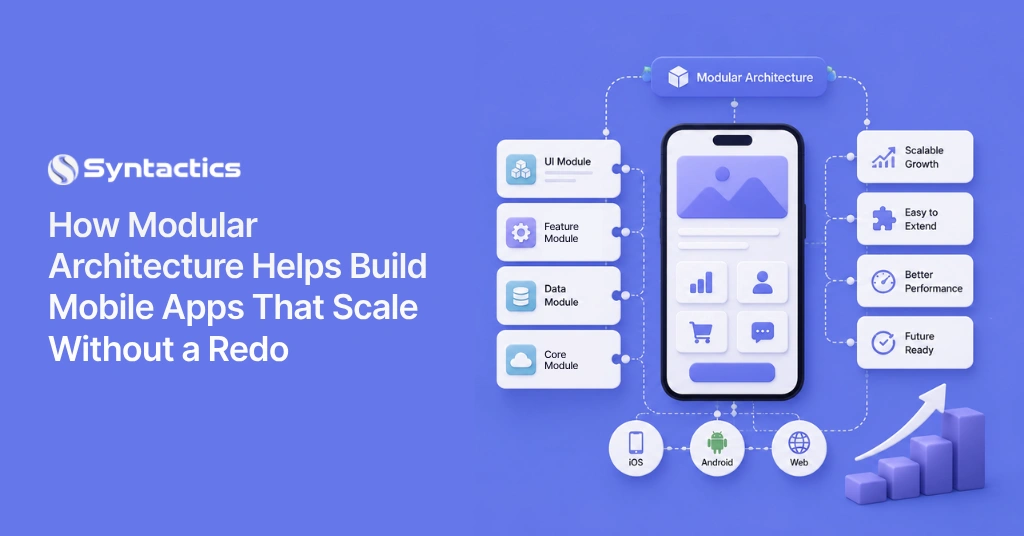
How Modular Architecture Helps Build Mobile Apps That Scale Without a Redo
Most mobile apps begin with a simple codebase that works well in its early stages. As features accumulate, however, development timelines get slower, and maintenance costs increase. It also quickly becomes difficult for teams to manage connected code, recurring bugs, and delayed update release.
According to Research and Markets, the mobile application market is projected to reach $543.87 billion by 2030. As user expectations continue to rise, you need a modular software architecture that scales. Dividing an application into independent, reusable components helps reduce technical complexity. In this article, you’ll learn how this architecture essentially works and why development teams adopt it.
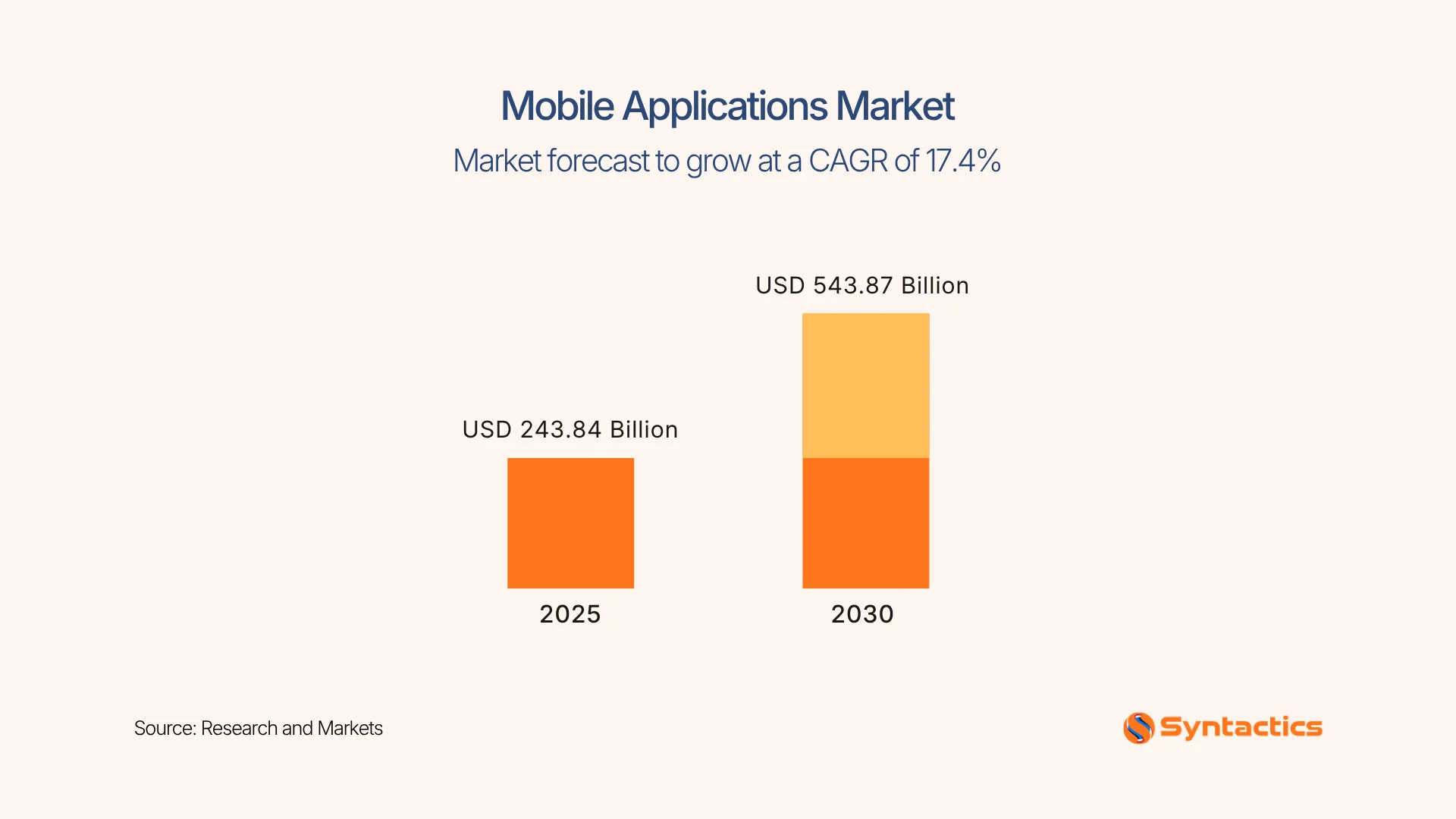
Source: Research and Markets
Key Takeaways
- The mobile app development market is dominated by Android and iOS, with over 5 billion active smartphone users combined. (Adapty)
- Modular architecture splits an app into smaller, self-contained parts rather than relying on a single large, rigid codebase.
- While the idea behind modular architecture is the same, how it is used on Android and iOS is different.
- Mitigating technical debt and inefficiencies annually costs developers about 20 lost workdays and $8,000 in losses. (IT Pro)
- Modular architecture is very helpful for growing teams and adding features, but simple apps with basic features don’t need it right away.
What is Modular Architecture in Mobile App Development?
Modular architecture is a way of building apps by splitting them into smaller, self-contained modules. Each module has its own job and can be changed independently. This is different from a traditional app, where most features share a single codebase, so a change in one part can accidentally affect others.
Development teams often begin considering modularization when:
- Feature development starts slowing down
- Multiple teams work on the same application
- Technical debt becomes difficult to manage
- Release cycles become longer and riskier
As your mobile app functions grow, maintaining them becomes increasingly complex. For this reason, teams use modular software architecture to organize codes into clearly defined components. This advantage enables parallel development and supports long-term growth.
Core Building Blocks of Modular Architecture
To grasp the concept of a modular app architecture, it helps to know its foundational modules. Here’s what each module entails:
Feature Modules
Feature modules focus on customer-facing capabilities that define how users interact with the app. Common elements present in this module include:
- User authentication
- Messaging systems
- Payment processing
- Customer profiles
By keeping these features separate, teams can update or expand one area without affecting unrelated parts of the application.
Core Modules
Core modules contain the shared logic that supports the entire app. It encapsulates business rules, utility functions, configuration settings, and security services. Centralizing these responsibilities helps you maintain consistency and reduce rework across different features.
User Interface (UI) Modules
UI modules group reusable design elements that shape how the app looks and feels. It is typically composed of the following:
- Content taxonomy
- Shared buttons and forms
- Reusable screens
- Navigation patterns
Managing these components in one place helps teams deliver a consistent interface and update the user experience more efficiently.
Data Modules
Data modules manage how information moves through the app by handling APIs, databases, repositories, and synchronization services. Separating these responsibilities makes data access easier to control and helps maintain a cleaner, more reliable flow of information.
To demonstrate, here’s a simple flow chart on how data modules work:
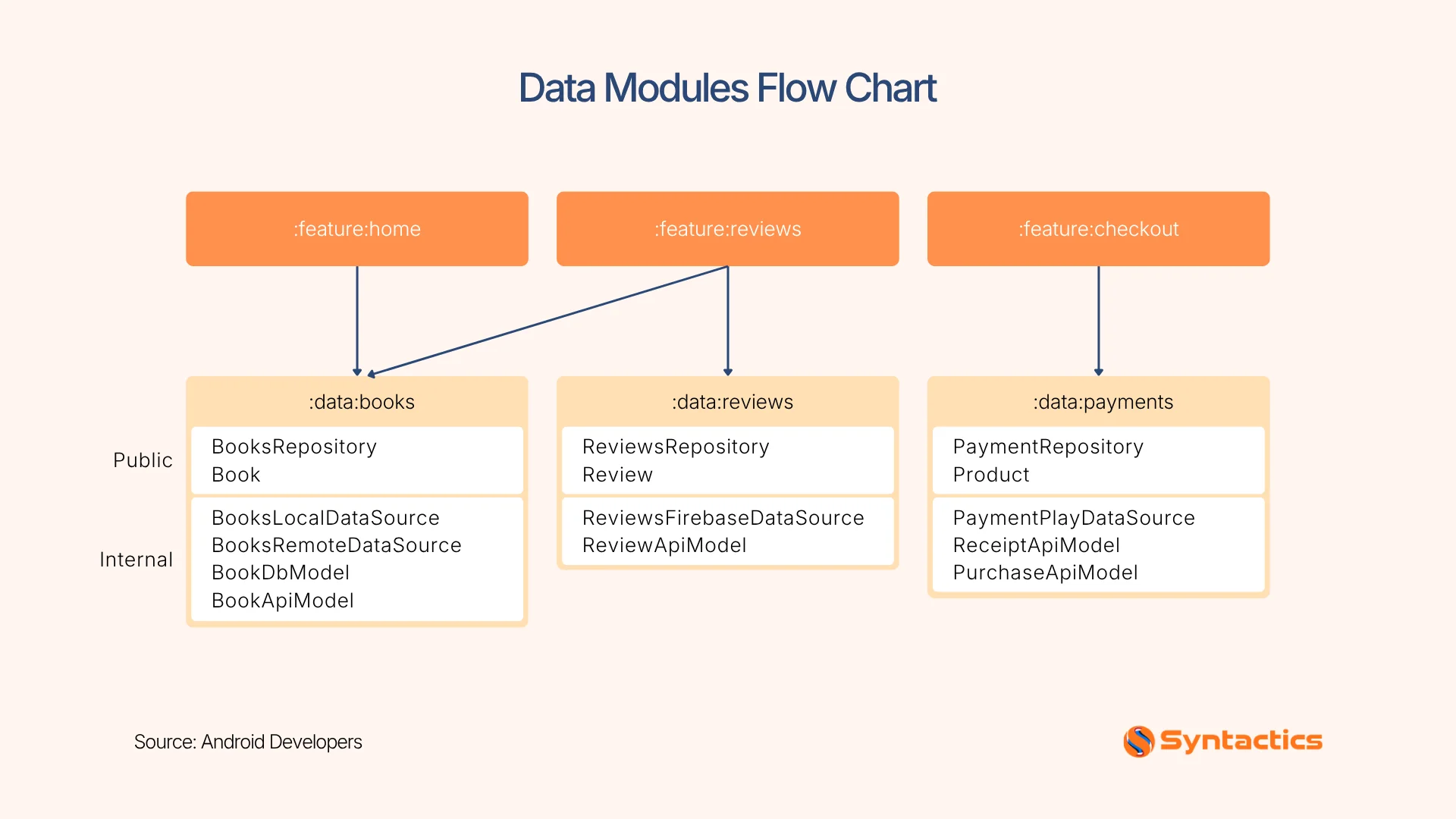
Source: Android Developers
Modular Architecture on iOS and Android
According to Adapty, Android and iOS dominate the mobile app development market with over 5 billion active smartphone users combined. The concept of modular software architecture remains the same in these platforms. However, the implementation of this blueprint differs among the aforementioned operating systems.
To learn more about their differences, here’s a simple table for a quick review:
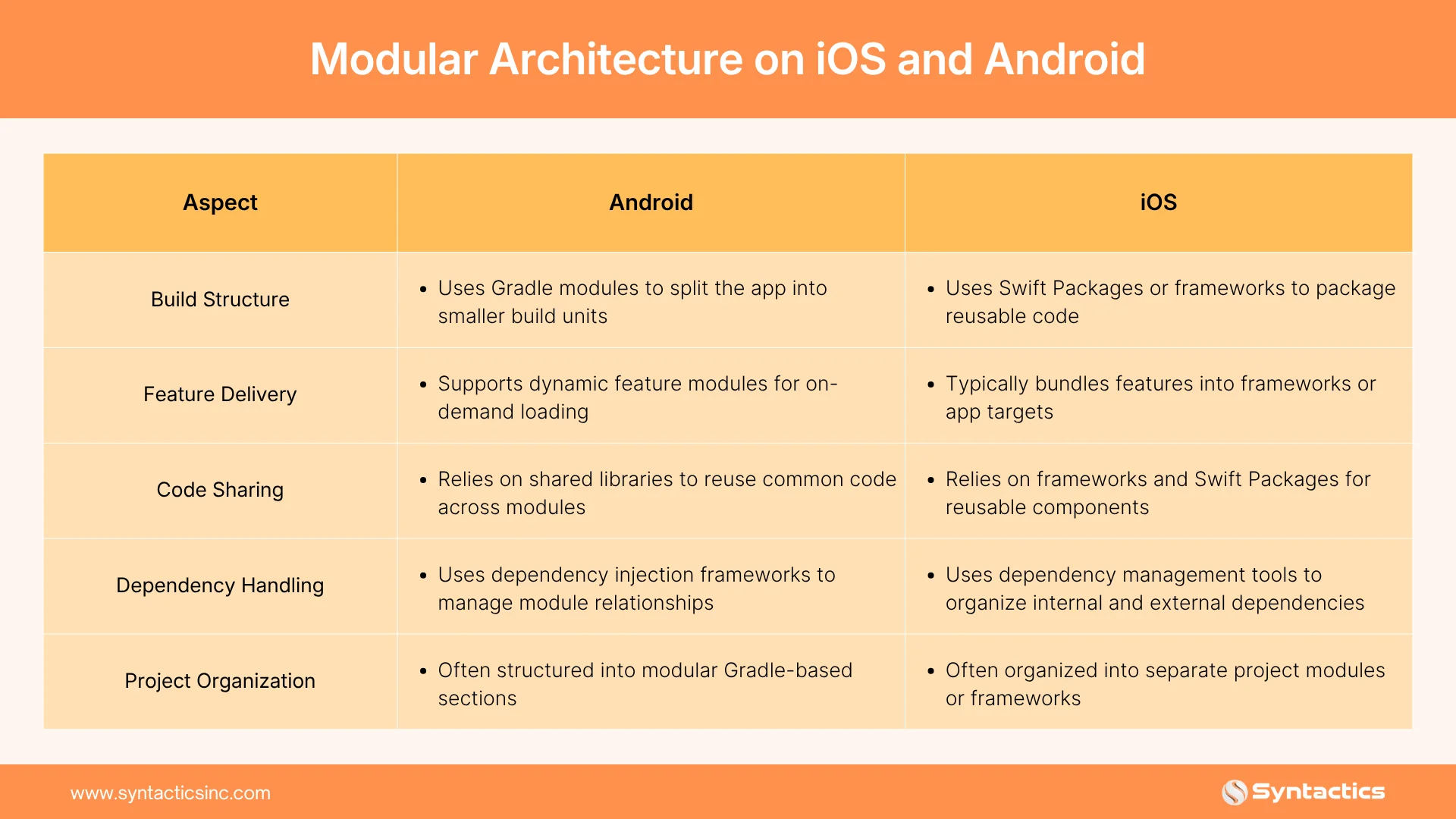
Both platforms support independent module development and testing. This flexibility is especially important in developing apps users can’t live without. For organizations in the Philippines and around the world, working with a mobile app developer structures your app to scale since day one.
Why Development Teams Adopt Modular App Architecture
As your mobile applications grow, operational challenges become harder to ignore. According to IT Pro, developers lose around 20 workdays due to technical inefficiencies. These costs are estimated at $8,000 per developer each year.
To address these challenges, an app developer in the Philippines and around the globe implements modular architecture. Here’s why they prefer this approach:
Faster Development and Feature Delivery
Parallel development is one of the biggest advantages of modular architecture. Instead of waiting for one team to finish a specific task, multiple teams can work on separate modules simultaneously. This reduces bottlenecks and accelerates the project management timeline.
Convenient Testing and Maintenance
Modular systems can isolate their functionality. When a bug occurs, developers can identify and resolve issues within a specific module rather than going through the entire application. This advantage simplifies unit testing, regression testing, quality assurance processes, and feature validation. As a result, teams can deploy updates with lower risk and greater confidence.
Improved Scalability for Growing Applications
Scalability is among the primary reasons organizations adopt a modular software architecture in their apps. Instead of rebuilding an application when requirements change, teams can just integrate new features while preserving its existing structure.
Better Team Collaboration and Onboarding
Large applications often involve multiple development teams. Modular architecture allows organizations to assign ownership of specific modules to dedicated teams. This reduces conflicts, improves accountability, and accelerates onboarding.
Mistakes to Avoid When Developing a Modular App Setup
Modular architecture delivers substantial benefits when implemented correctly. However, without clear project management, it can create unnecessary complexity rather than reduce it.
Here are common mistakes to refrain from during app development:
- Creating Too Many Modules: It overcomplicates the codebase and increases maintenance overhead.
- Allowing Circular Dependencies: This makes testing, debugging, and future updates more challenging among teams.
- Failing to Establish Clear Module Boundaries: It overlaps modules in function, weakening the app structure.
- Ignoring Dependency Injection and Shared Standards: This can lead to tight coupling and inconsistent development practices.
These mistakes can quickly undermine the benefits of modular architecture if not addressed. Establishing clear rules and keeping module design intentional helps your developers maintain flexibility without adding unnecessary complexity.
Is Modular Architecture Right for Your App?
Not every application requires a modular architecture immediately. An application with straightforward features and a small development team can operate efficiently thanks to its simpler structure. Modular architecture only becomes necessary when you notice the following:
- Growing development teams
- Expanding feature roadmaps
- Longer release cycles
- Rising technical debt
- Increasing maintenance costs
If these challenges sound familiar, your application may have outgrown its original architecture. For this reason, organizations partner with a mobile app development company in the Philippines or worldwide to address these challenges.
Conclusion
An established app architecture influences how your mobile apps grow, adapt, and remain competitive. Organizations that invest in scalable foundations today can avoid expensive rebuilds and reduce long-term maintenance challenges. With that, businesses adopt modular software architecture for greater flexibility in development and maintenance.
If your mobile application is no longer meeting demand, now is the time to audit its structure. For organizations seeking technical app expertise, Syntactics Inc. helps you assess, design, and implement scalable mobile architectures. As a trusted mobile app developer in the Philippines, we help your brand fuel retained engagement with intuitive applications. Let’s build the ideal app for your business today!

Frequently Asked Questions (FAQs)
How does modular architecture enhance scalability?
Modular architecture allows teams to add or update features without affecting the entire application. This makes it easier to scale functionality while keeping the codebase manageable.
How long does it take to transition an existing app to a modular architecture?
The project timeline depends on the app’s size, complexity, and existing code quality. Most organizations adopt a phased approach that can take several weeks to several months.
Can modular architecture support cross-platform development?
Yes, modular architecture works well with both native and cross-platform frameworks. Teams can reuse shared business logic while maintaining platform-specific features where needed.

About Ladymieh Naallatan
Related News:


Social Media Schedulers: a Step-By-Step Guide


How Agentic Commerce Is Changing Online Shopping

Why Responsive Web Design is Good for SEO








Comment 0