

reCAPTCHA Version 3: How to Hide the Badge (and Stay Compliant in 2026)
You can hide the reCAPTCHA v3 badge without breaking Google’s rules. You now also need to check whether your site meets Google’s updated 2026 compliance requirements, since the rules around reCAPTCHA changed this year.
A CAPTCHA stands for “Completely Automated Public Turing test to tell Computers and Humans Apart.” It stops bots from spam-submitting your forms. Most site owners rely on Google’s version.
Unlike its predecessors, reCAPTCHA v3 never interrupts your visitors with a puzzle. It runs quietly in the background. The trade-off is a badge that sits in the corner of every page, and that badge cannot simply disappear.
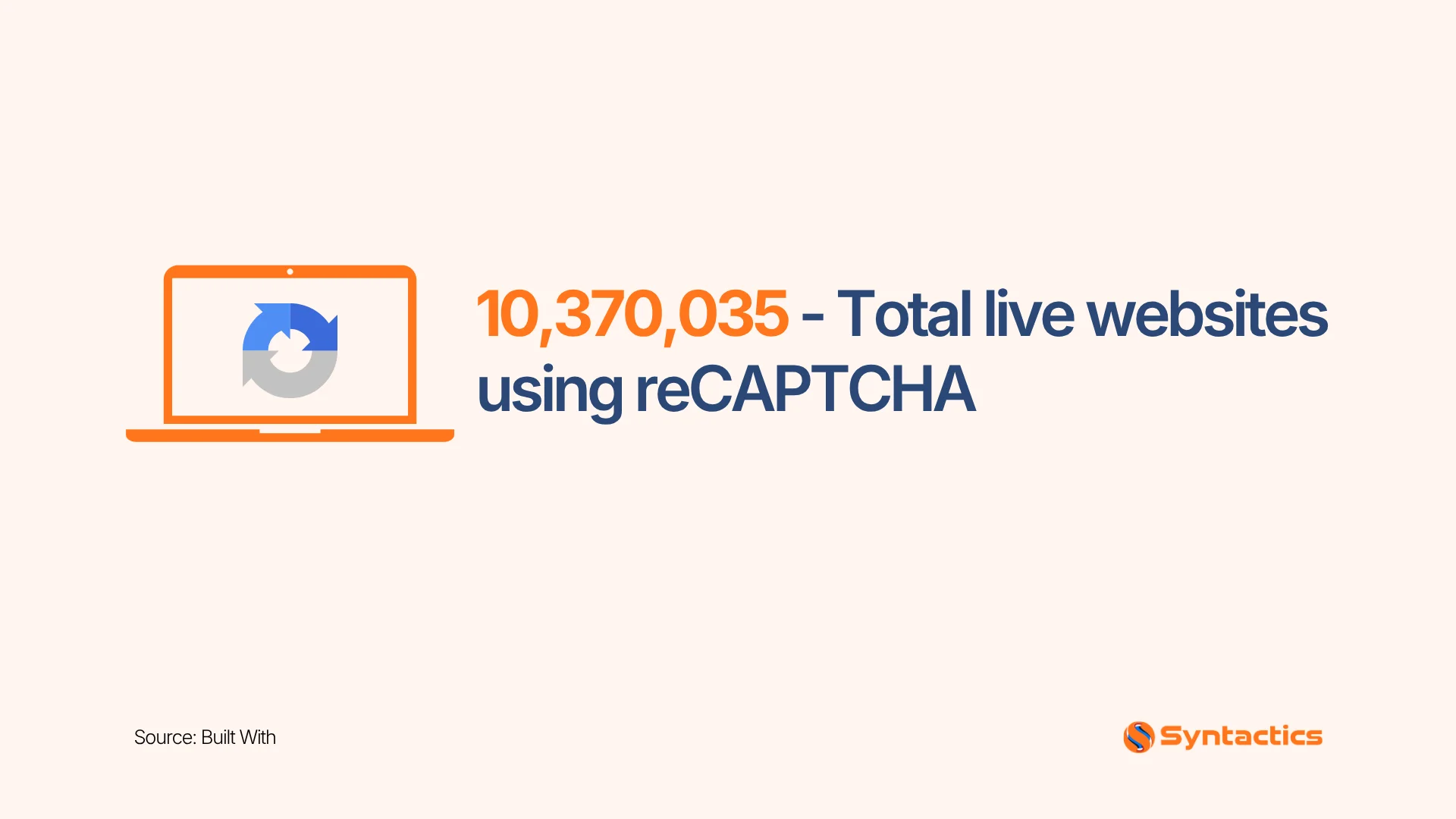
Source: Built With
What does Google’s reCAPTCHA version 3 do?
Google’s v1 reCAPTCHA asked users to type distorted letters from an image or audio clip. Google shut down v1 in March 2018. v2 replaced it and asked users to pick images from a grid, sometimes two or three times in one session.
reCAPTCHA v3 removes that step entirely. It analyzes mouse movement, typing rhythm, and browsing behavior, then returns a score from 0.0 to 1.0 for each visitor. A low score signals a bot. A high score signals a human. Your team decides what to do with that score: allow the request, ask for extra verification, or block it.
The downsides of reCAPTCHA version 3
reCAPTCHA v3 runs invisibly and skips the puzzle step, but the badge still needs attention. A Google logo sits in the bottom right corner of every page, signaling that the form is protected.
That badge affects your User Experience. A responsive website matters, and so does a badge that matches your brand colors, which this one rarely does.
Many sites also place a Back to Top button in that same corner. The badge crowds that space and blocks the button visitors expect to find there. Site owners hide the v3 badge for exactly this reason.

The good news
You can relocate the v3 badge, as long as you leave it unaltered. Google’s terms allow this, but the form must still reference Google.
The badge stays visible by default so visitors can see that spam protection is active. Visitors who never fill out a form don’t need to see it.
A casual visitor might assume the protection covers the whole page. The protection only covers the form.
Your Compliance Checklist Just Got Longer
Google merged reCAPTCHA into Google Cloud, and every account moved its keys into the Google Cloud Console by the end of 2025. The classic standalone reCAPTCHA admin page is gone.
A bigger shift landed on April 2, 2026. Google switched from data controller to data processor for reCAPTCHA, and that change moves GDPR compliance responsibility onto you, the site owner.
A legacy reCAPTCHA setup carries that compliance gap. Hiding the badge takes five minutes with CSS. Confirming your data handling meets the new rules takes more time.
How to hide the reCAPTCHA badge
Google’s terms carry real requirements, so follow them closely to keep your form protected and compliant. Add a note indicating Google’s involvement, and keep the reCAPTCHA branding visible somewhere in the user flow.
Google outlines exactly what text qualifies. Include this text near your form to hide the badge safely.
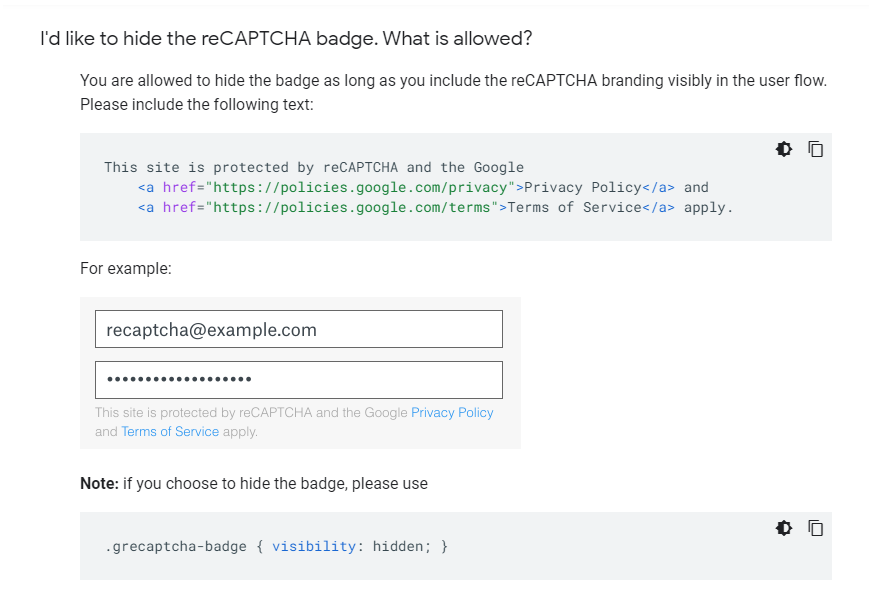
Source: reCAPTCHA FAQs, Google.
Use CSS to hide the badge, but avoid display: none. That property removes reCAPTCHA protection along with the badge, and opens your form back up to spam.
BONUS: Hiding the v3 reCAPTCHA badge in WordPress
reCAPTCHA v3 works on WordPress sites too, and Google’s terms apply there as well. Follow these steps if your site runs Contact Form 7.
Add this code to your theme’s CSS file: .grecaptcha-badge { visibility: hidden; }
Two paths get you there. Go to Appearance, then Theme Editor, and paste the code into the Stylesheet. Or go to Appearance, then Customize, then Additional CSS.
v3 reCAPTCHA cuts down on spam, but it could use a bit of adjustment.
reCAPTCHA verifies whether a visitor is human, and that matters because bots send spam that costs site maintainers real time. v2 relies on image puzzles. v3 skips that friction and lets visitors move through your site without a test.
User Experience explains why so many site owners hide the badge. The badge can crowd buttons depending on your layout, and Google’s terms allow you to hide it.
Preparing your site for v3 involves more than a CSS fix in 2026. A website design and development team can migrate your reCAPTCHA setup to Google Cloud and hide the badge correctly. That same team can confirm your site meets the current compliance rules.
Get Design and Functionality
Specific to your Brand!
- Build a website that's mobile-friendly and responsive.
- Custom designs aligned with your brand.
- Optimized for SEO and user experience.
- Scalable and feature-rich solutions.

This article was updated on September 09, 2026.
FAQs About reCAPTCHA Version 3
What is reCAPTCHA v3?
reCAPTCHA v3 is a Google service that helps protect websites from spam and abuse by bots. It typically operates entirely in the background without requiring users to solve puzzles or click checkboxes. It also assigns a score to each user interaction based on their behavior, allowing site owners to decide how to handle suspicious traffic.
How does reCAPTCHA v3 work?
reCAPTCHA v3 analyzes user behavior, such as mouse movements, browsing patterns, and interaction timing, to generate a risk score between 0.0 (likely a bot) and 1.0 (likely a human). This score is returned to your server, where you can use it to take appropriate action. This includes blocking, requiring additional verification, or allowing the request.
Can I combine reCAPTCHA v3 with other security measures?
Yes, and it’s highly recommended. Combine it with rate limiting, WAFs (Web Application Firewalls), 2FA (Two-Factor Authentication), and behavioral analytics for stronger protection.

About Xenia Labis
Related News:


Elevate Your Brand with Dedicated Web Designers











Comment 0