

Top 10 Common Types of Business Software
Managing a company can be challenging, especially when dealing with logistics. Successful business owners use common types of business software to streamline operations, such as creating accessible, well-structured documentation.
Many organizations integrate automation software to increase productivity and efficiency in their workplace. Some even partner with a trusted custom software development company to build systems or applications tailored to business needs.
Key Takeaways
- Business software helps companies automate routine tasks, reduce errors, and make data-driven decisions.
- Common categories include ERP, CRM, project management, accounting, HRM, inventory, POS, marketing automation, collaboration tools, and business intelligence software.
- Choosing the right software depends on your industry, business size, and specific operational needs.
- Custom software development can address gaps that off-the-shelf solutions can’t fill.
Source: Statista.
What Are the Common Types of Business Software?
Today, companies have access to a variety of tech solutions that streamline operations and boost productivity to stay competitive in this digital era.
Choosing the right software solution requires a thorough understanding of organizational goals and industry-specific requirements. Crucial factors like the market and a business’ products and services can significantly influence software specifications.
For instance, a detailed record of client interactions and stock rotation can help you determine which business software best fits your organizational needs.
Such information is also helpful when hiring a professional software development company to create a custom system or app.
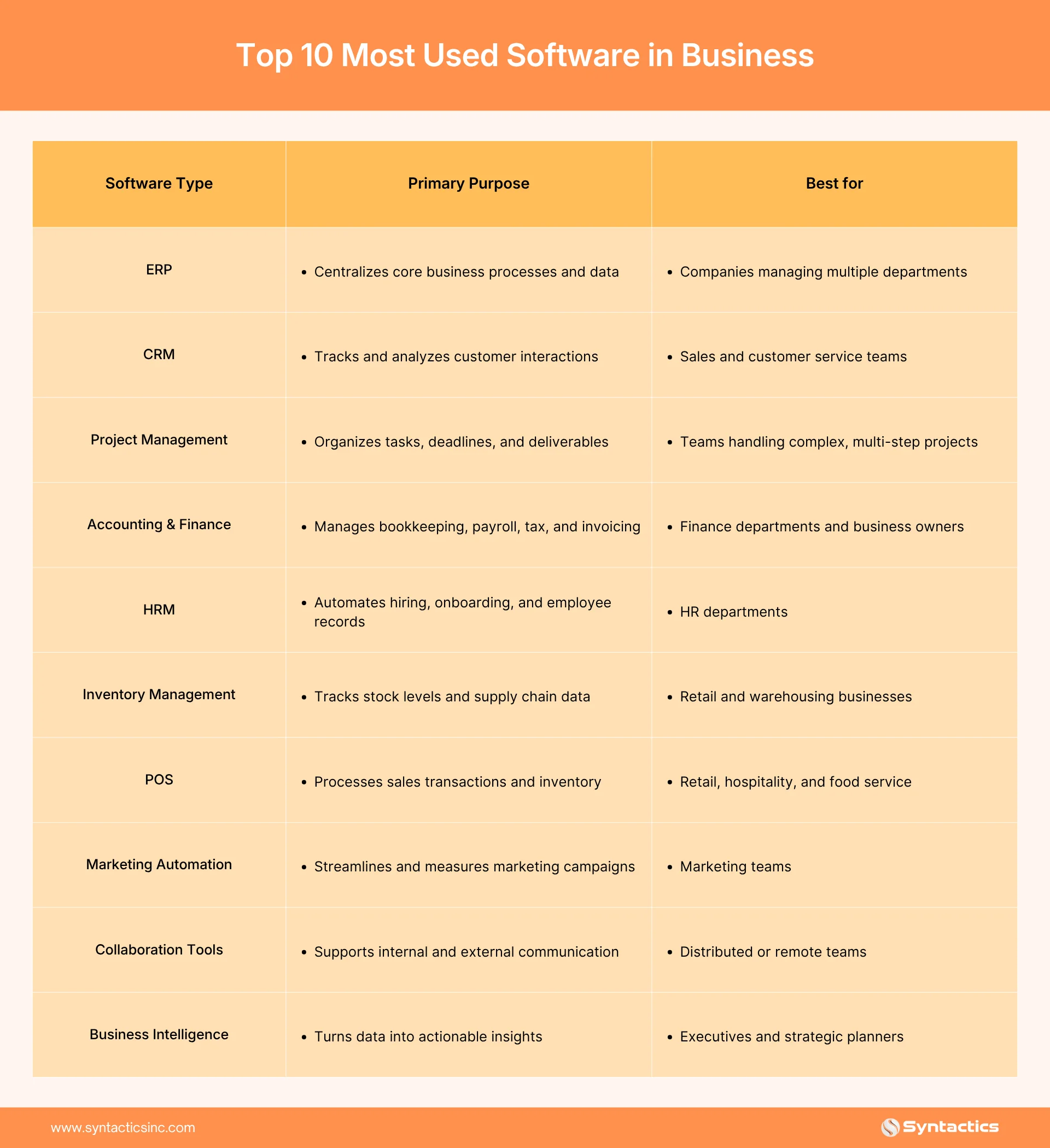
Top 10 Most Used Software in Business
Here are common types of software that companies can use to improve routine operations:
1. Enterprise Resource Planning (ERP) Software
By automating routine yet critical processes, ERP software can streamline workflows and enhance an organization’s operational excellence. Improved efficiency helps businesses stay competitive in their industries.
ERP solutions benefit businesses by reducing redundant tasks, improving decision-making, and enhancing operational efficiency. They often integrate core business processes like accounting, inventory, and Customer Relationship Management (CRM).
Key characteristics allow organizations to centralize data management, ensuring all departments can access accurate, up-to-date information.
As a result, users can gain real-time analytics across departments, improving collaboration. This enables stakeholders to make data-driven decisions.
ERP software can also help reduce costs by optimizing resource allocation and minimizing waste.
2. Customer Relationship Management Software
As a business owner, it’s crucial to listen to customers by implementing Customer Relationship Management software. This software lets users analyze customer interactions.
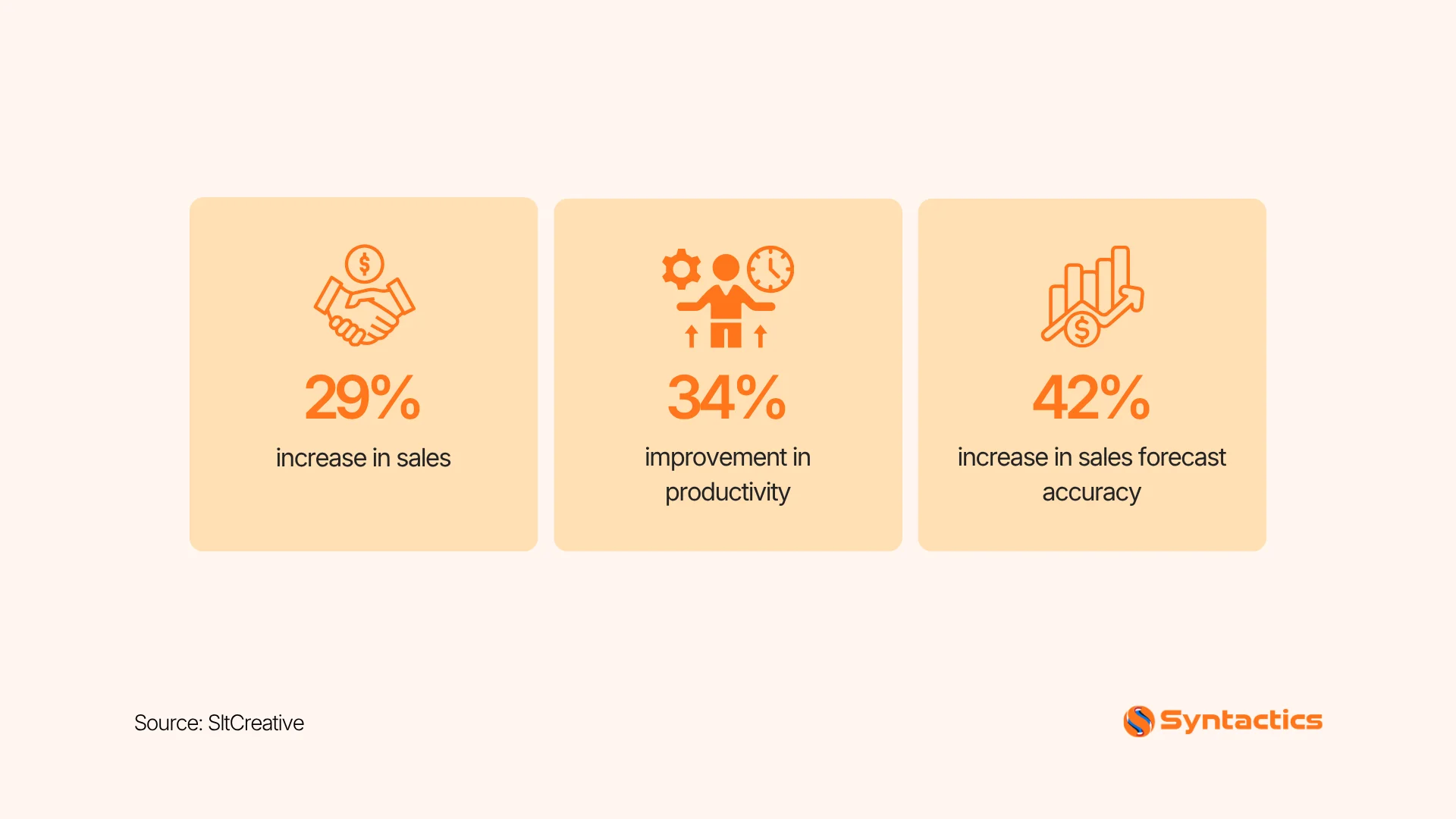
With this software, business owners can gain valuable insights to increase customer retention and sales.
Beyond helping businesses stay in touch with existing customers, CRM software can also help expand their reach. By interacting and engaging with target markets, business owners can learn how best to drive growth.
Source: SltCreative.
3. Project Management Software
A common way to organize complex tasks is to break them into individual segments. Project management tools follow this principle, allowing users to see a detailed overview of a project and who’s assigned to which tasks.
With this software, a project manager can see what deliverables are expected and their deadlines.
This software informs business owners about where, why, and how resources are used to complete the project. It also lets clients see how teams complete projects in a timely, organized manner.
4. Accounting and Finance Software
Accounting and finance-related solutions simplify financial management for business owners. As a result, they can focus more on running their organization instead of navigating complicated accounting processes.
For example, streamlined, easy-to-use bookkeeping solutions can help you run a business efficiently. Readily available, organized bookkeeping information is essential for decision-making.
Payroll software is another key accounting system that can accurately manage and process payroll, payslips, payments, bonuses, etc. Business owners can use it to track how much they’re paying their workers.
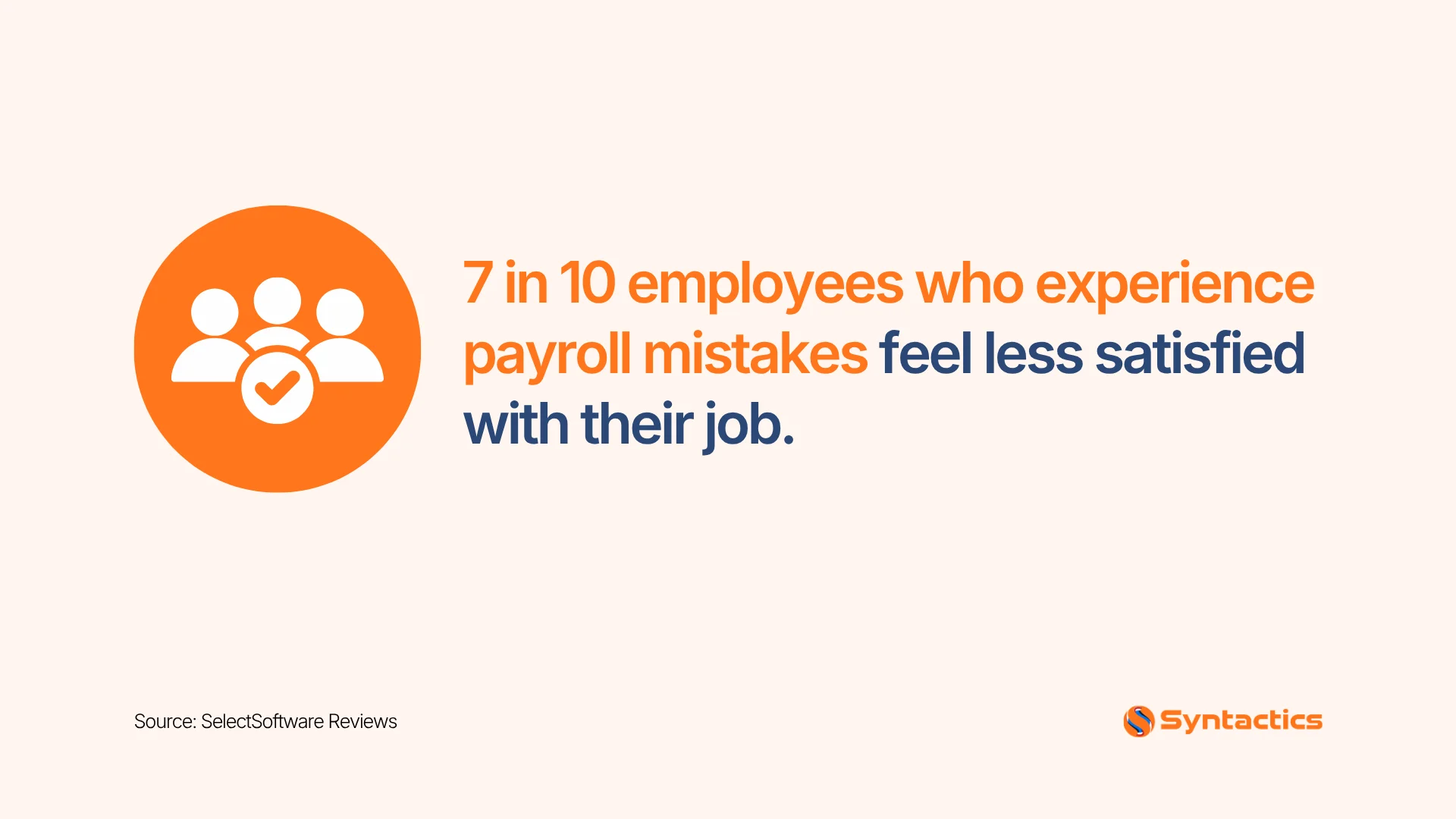
Quality payroll systems can streamline routine operations while ensuring that employees are paid accurately and on time. Effective pay management keeps morale high and improves employee satisfaction.
Source: SelectSoftware Reviews.
Tax software is another accounting-related solution that businesses can rely on. It enables companies to properly handle their local tax system’s complex processes and requirements.
This type of software helps protect a business’ integrity by enabling users to determine the best tax outcome for their organization. This way, enterprises can comply with the complexities of various international tax regulations.
Another example of this business solution is e-invoicing software, which can efficiently create and send invoices. Integrating dedicated small business invoice software saves time and reduces manual errors, particularly in high-volume transactions.
E-invoicing solutions are especially helpful in fast-paced environments or companies that serve many clients or customers.
5. Human Resource Management (HRM) Software
HRM software streamlines human resource processes, enabling business owners to manage their workforce efficiently. As such, it can significantly boost employee engagement.
They automate the following processes, reducing administrative workload and human error:
- Hiring;
- Onboarding;
- Employee records;
- Performance evaluation;
- Payroll;
- Benefits and compliance.
One example of HRM software is a recruitment and onboarding system for managing job postings, applicant tracking, and interview scheduling. It helps HR staff facilitate a smooth onboarding process for new hires.
Another example of an HRM solution is an employee information database. It allows HR staff to store and manage employee profiles, contact details, job roles, and employment history for easy access.
Time is an essential resource in business, so it’s critical to understand how staff use it. Time-tracking apps are another HRM solution that help organizations monitor staff work hours effectively.
With this software, business owners can calculate employees’ payroll depending on the time spent at work.
By maintaining the necessary reports and documentation, businesses can ensure compliance with labor regulations.
A custom software development company can add specialized features based on a business’ needs.
6. Inventory Management Software
Inventory management software helps manage inventory stock levels, orders, and storage.
This type of software is a critical asset for optimizing supply chain efficiency. It’s especially beneficial for businesses that need to efficiently control inventory levels, manage orders, and oversee sales and deliveries.
By leveraging the software’s powerful features, businesses can automate stock management tasks and boost operational efficiency. These systems also minimize stock discrepancies and provide predictive analytics for future demand.
They also help reduce errors and support informed decisions through data-driven insights.
7. Point of Sale (POS) Software
POS software facilitates transactions and tracks sales, especially in the retail, hospitality, and food service industries. It serves as a crucial tool for streamlining sales transactions, managing inventory, and enhancing customer engagement.
As an organization’s central hub of sales operations, a POS solution optimizes both front- and back-end business processes. It reduces manual errors and speeds up transactions, improving customer satisfaction.
Overall, POS software automates transaction processing and inventory tracking while improving accuracy and ensuring smooth operations for businesses of all sizes.
8. Marketing Automation Software
Marketing automation solutions help streamline and measure marketing workflows. It automates repetitive tasks like sending email blasts and posting on social media.
Marketing automation tools help analyze sales conversion data. Digital marketing experts can then make quick, meaningful changes to current strategies.
With this software, enterprises can run marketing campaigns more efficiently and maximize their budget. They can also track campaign performance in real time for better decision-making.
9. Collaboration and Communication Software
Effective internal and external communication is critical to business success, no matter the industry. According to Forbes, LinkedIn considers communication the most in-demand skill of 2024.
Therefore, organizations need communication software to help employees collaborate with other key personnel. It gives businesses a way to engage with internal teams, customers, and partners or stakeholders involved in their operations.
With this technology, staff can communicate with anyone no matter where they are in the world. It helps expand a business’ market and connect with other companies in the industry.
10. Business Intelligence (BI) Software
Business Intelligence software transforms raw business data into actionable insights through dashboards and reports.
With seamless visualization and detailed reporting, business owners can spot areas for improvement and make necessary changes immediately.
This helps them identify emerging trends or opportunities, adapt quickly to market changes, and stay ahead of the competition, supporting strategic planning and operational decisions. This allows employees to focus more on developing strategies and driving growth.
BONUS: Other Common Types of Business Software
Many other business solutions are crucial to an organization’s progress, depending on its needs and processes. Here are a few more business software examples:
Payment Transaction Software
Many organizations use payment transaction software to automate monthly invoicing and payments.
Automating and streamlining payment transactions can significantly improve a company’s overall workflow. This software also simplifies billing processes and expense tracking.
Therefore, using payment transaction software reduces billing workloads. It even shows account credits or customers who are behind on payments. By automating payments, businesses can help remind customers about their financial obligations.
Website Building Software
Businesses need to establish an online presence. One of the best ways to stand out is with an attractive, functional website that lets companies promote their brand, expand their market reach, and ultimately improve sales.
Professional web developers can utilize easy-to-use website-building software to quickly build and publish a site. They create engaging web pages that showcase compelling content and help them stand out from competitors.
Through this software, business owners can show potential customers why they need their products and services.
Final Thoughts
Implementing the right business software can drive significant results in work operations with remarkable efficiency.
Whether it’s improving customer engagement, managing finances, or enhancing collaboration, tailored solutions from a software development company in the Philippines can address an organization’s specific needs.
Start integrating business software to simplify operations, streamline workflows, and take the first step toward greater efficiency today.

This blog was updated on August 27, 2026.
Frequently Asked Questions About Business Software
What is meant by business software?
It refers to any computer program or application designed to help businesses perform specific tasks, improve productivity, or manage operations efficiently. Business software ranges from off-the-shelf solutions to custom apps tailored to unique organizational needs.
How do I find the right software for my business?
Here’s how you can find the right software for your business:
- Identify your requirements.
- Research your options and their respective features.
- Check customer reviews.
- Use free trials or demos.
- Consult with industry peers or experts for recommendations.
Is business software customizable?
Yes, many business software solutions are customizable, unlike off-the-shelf applications and systems. Fully tailored solutions can address unique processes and requirements, improving efficiency and user satisfaction.
What industries benefit from business software?
Almost every industry can benefit from business software. Key examples include:
- Retail and eCommerce
- Healthcare
- Manufacturing
- Finance and accounting
- Hospitality
- Education
- Real Estate

About Xenia Labis
Related News:

Why Outsource to the Philippines in 2022?

Facebook Ads in the AI Era: Cost vs. ROI

Expand Your Mailing List With These Simple Steps

Successfully Hosting Your Own Virtual Event


Comment 0