


Shopify vs WooCommerce: Which eCommerce Platform Fits You
Choosing the right eCommerce platform can make or break your online store. These platforms let customers explore and buy your products with ease, but not all platforms are created equal. From building hundreds of stores, our eCommerce developers have narrowed down the top two picks: Shopify vs WooCommerce.
Whether you go with Shopify or WooCommerce, a skilled eCommerce developer in the Philippines can help bring your vision to life. Let’s dive into what makes these platforms stand out, and which might be the best fit for your business.
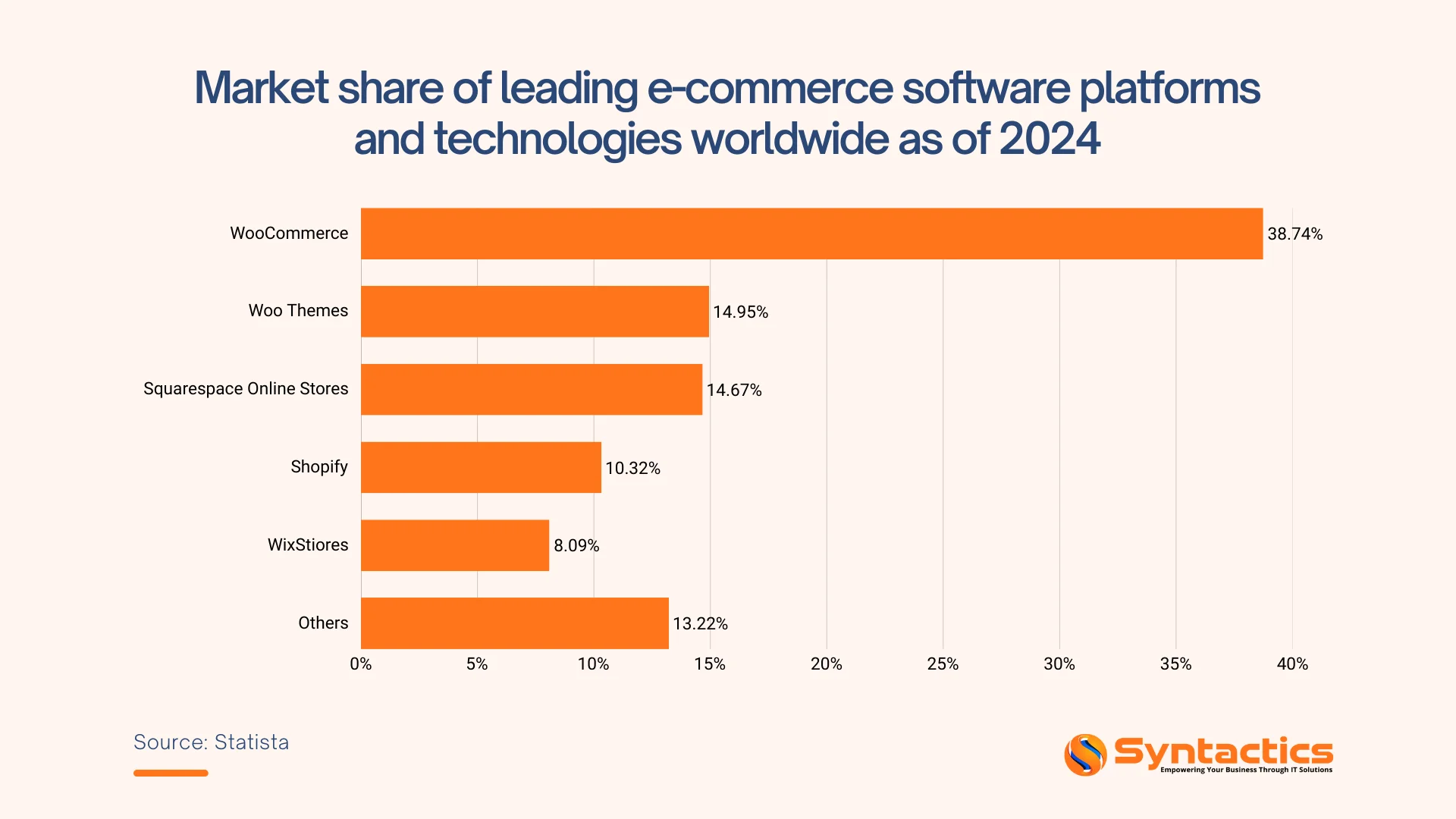
Source: Statista.
Shopify vs WooCommerce: An eCommerce Platform Comparison
Pricing and Cost
Shopify
Firstly, Shopify allows you to try it out for free for three days (no credit card details needed!) You can pay for its three plans (Basic, Shopify, and Advanced) monthly or annually. Here’s a breakdown of prices:
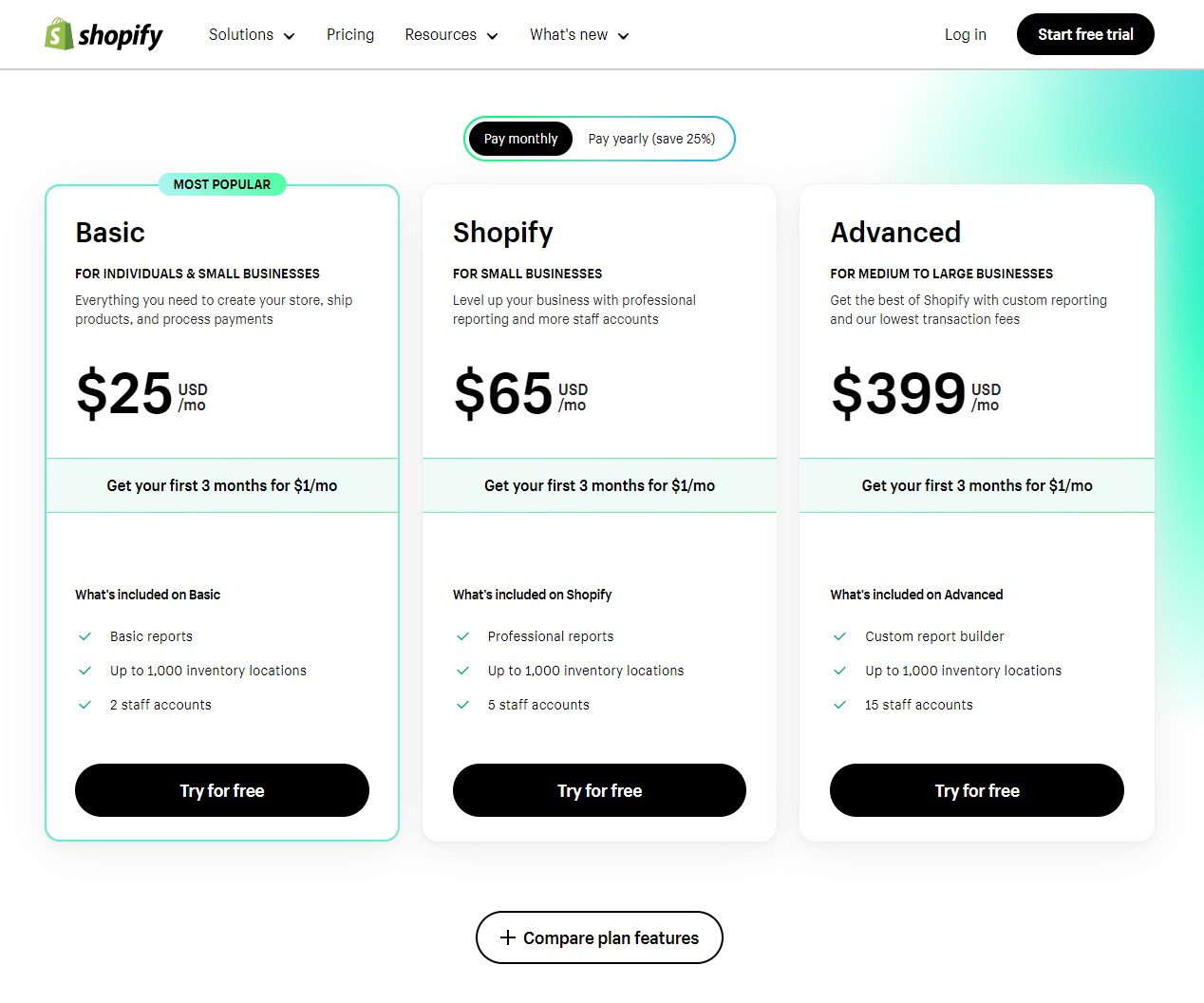
Source: Shopify.
WooCommerce
Next, WooCommerce is free to download as a plugin on WordPress. In fact, updates are also free. Users can manage online stores from their WordPress websites. Consider learning how to add short product details or descriptions, or create coupon codes.
However, it also offers Woo Express, giving you access to everything your eCommerce business needs for success. For the Essential and Performance WooCommerce plans, you can pay as little as $1 for the first three months. But for the former, which provides essential features for your online store, you pay $39 a month or $25 monthly if billed annually.
If you need higher-level features, consider the Performance plan, where you’ll pay $70 a month or $45 a month if billed annually. Lastly, there’s an Enterprise plan.
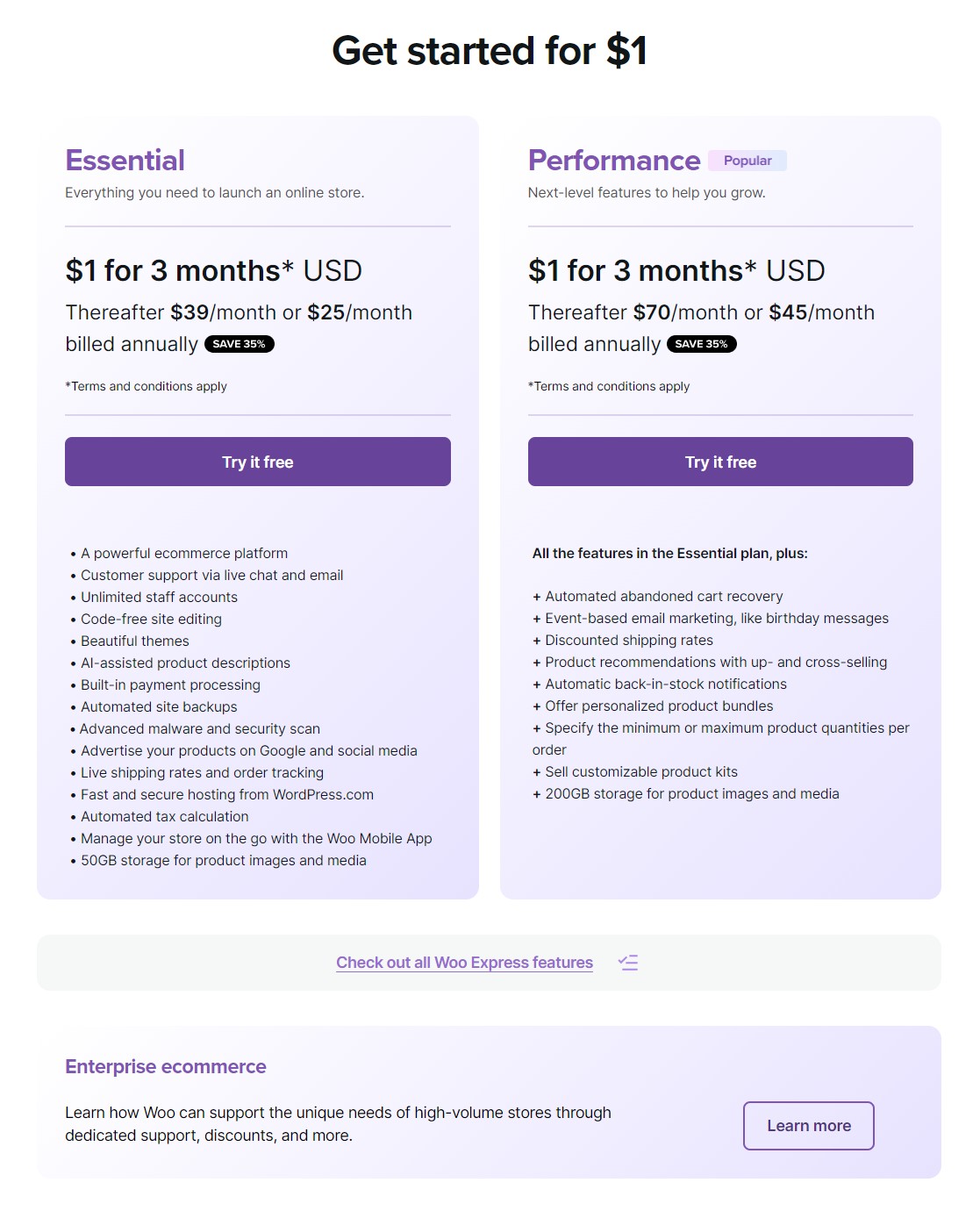
Source: WooCommerce.
Conclusion: Shopify wins in this category.
Popularity and Market Share
It’s always good to learn what your competitors are using so your eCommerce developers in the Philippines can build the right online store for you. In fact, a fair number of other eCommerce platforms are active today.
In an estimate, there are 4,806,002 live websites using Shopify, according to Shopify Usage Statistics. However, WooCommerce Usage Statistics states that a staggering 6,195,313 live websites are WooCommerce users.
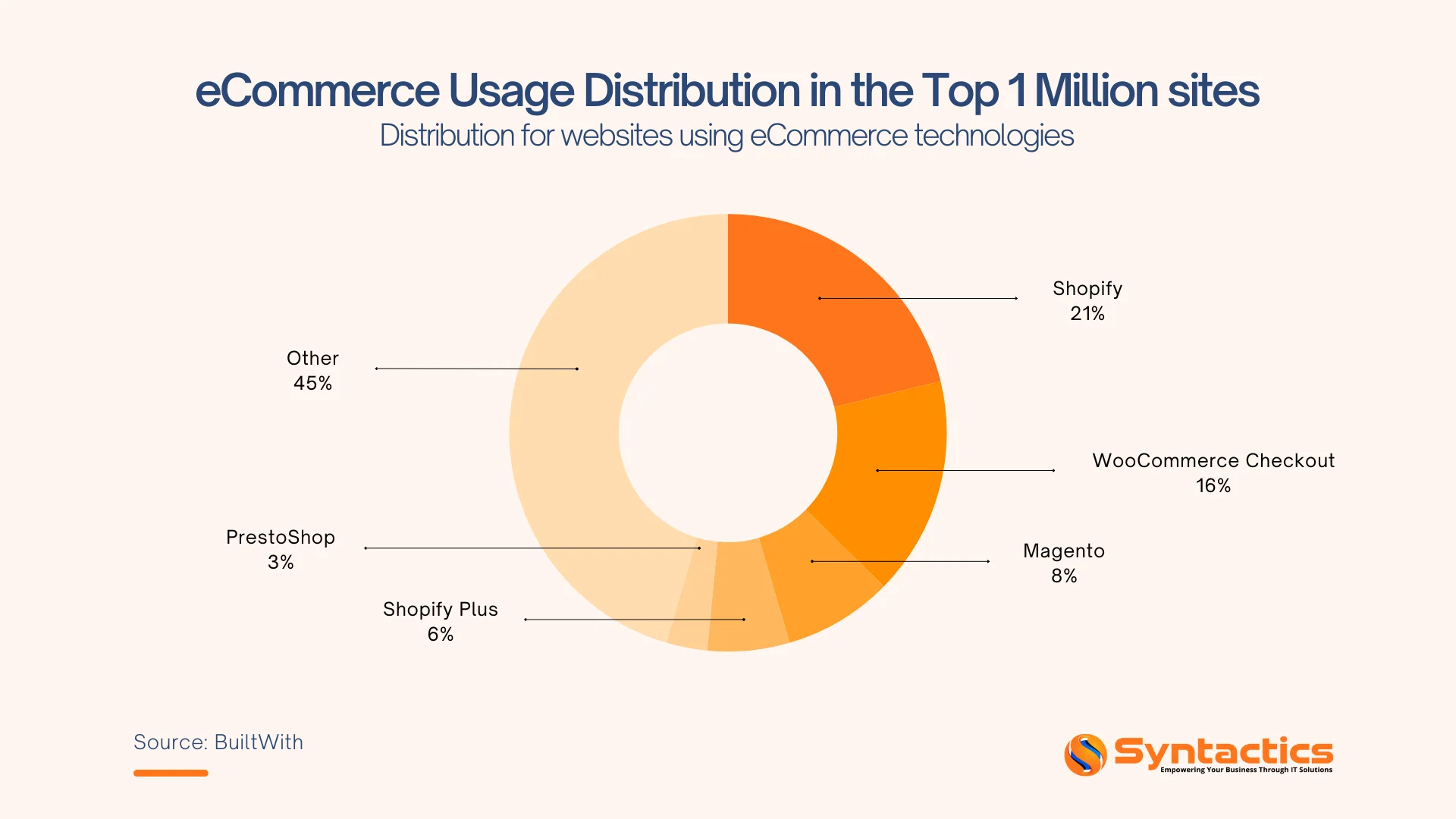
Source: BuiltWith.
However, based on recent statistics for market usage distribution in the top million websites, Shopify tops the list. Next up is WooCommerce.
Conclusion: Shopify wins this category with a 21% distribution.
User Experience
Shopify
Shopify doesn’t require significant technical knowledge to use. Skilled eCommerce website developers in the Philippines can use it to configure an online shop for you. Thus, the process of setting up a store is straightforward!
Business owners can easily manage products, orders, and customers through the centralized admin panel.
Additionally, Shopify has an app store that allows users and eCommerce developers to extend functionality and add features. It handles server management, security, and updates as a fully hosted solution.

WooCommerce
WooCommerce is integrated with WordPress sites. Thus, you can count on an expert WordPress developer to handle website setup for your eCommerce business.
In fact, WordPress and WooCommerce interfaces are similar, so developers don’t need to contend with a learning curve. Also, WooCommerce benefits from the vast WordPress plugin ecosystem and users can easily add various functionalities. That said, WooCommerce users have control over hosting costs so that it can be more cost-effective, especially for smaller businesses.
Conclusion: Shopify easily wins this category.
SEO Features
Beyond what these three top platforms can offer, the main drivers of an eCommerce website are marketability and searchability. According to WebFX’s SEO Statistics, around 93% of all internet activity starts with a search engine. Thus, you’ll need help running an online store if customers can’t find your website on search results.
There are a staggering 200 ranking factors for Search Engine Optimization. But the top eight are as follows:
- Quality Content
- Backlinks
- Technical SEO
- Keyword Optimization
- User Experience
- Schema Markup
- Social Signals
- Brand Signals
Here’s how SEO-Friendly each eCommerce platform is:
Shopify
Shopify has multiple advantages for SEO. It has built-in mobile responsiveness. You can edit page titles and descriptions and create 301 redirects. But most of all, this platform is built for blogging. You can use the right content strategies to get the attention of readers and search engines!
Here’s a quick rundown of Shopify’s crucial SEO features:
- Customizable SEO-friendly URLs for your online eCommerce store;
- Customizable titles and meta descriptions;
- Supports header tags and image alt text;
- Automatic XML sitemap generation;
- Mobile-friendly themes;
- Fast page load speeds;
- Secure Sockets Layer encryption;
- Blogging capabilities, and
- Supports product reviews.
WooCommerce
WooCommerce is an SEO-friendly WordPress plugin rather than a standalone platform. As a result, its SEO-friendliness is tied to the WordPress website itself. It offers the following advantages:
- Access to SEO plugins like Yoast SEO, etc.
- Control over product and category descriptions, meta tags, alt text, etc.;
- Custom URLs for your eCommerce website;
- Structured data markup;
- XML sitemap support;
- 301 redirects, and
- Support for customer reviews and ratings.

Conclusion: Shopify and WooCommerce are tied.
Community and Support
Shopify offers reliable 24/7 support for customers and eCommerce developers. It is available through live chat, email, and phone.
An extensive Shopify help center has documentation, guides, and tutorials. Thus, it has an active community for exchanging ideas and sharing experiences.
Automattic, the developer behind WooCommerce, provides limited customer support. However, they enable you to submit a support ticket to WooCommerce.com for any plugin-related issues. WooCommerce benefits, first and foremost, come from the vast WordPress community.
Users can find support for WooCommerce store setup and management through the following:
- Forums;
- Community discussions;
- Extensive documentation;
- Guides;
- Tutorials, etc.
With WooCommerce, users seek support from third-party eCommerce developers or agencies familiar with the WordPress ecosystem.
Conclusion: Shopify wins this category.
Check out this side-by-side comparison of Shopify vs. Woocommerce to help you see the differences at a glance:
| Category | Shopify | WooCommerce | Winner |
| Pricing | – free 3-day trial
– 3 plans (Basic, Shopify, Advanced) |
– free plugin on WordPress
– Woo Express offers Essential ($39/mo), Performance ($70/mo), Enterprise |
Shopify |
| Popularity | – 4.8M websites
– top in top-million site distribution |
– 6.1M websites
– second in top-million site distribution |
Shopify |
| User Experience | – easy to use
– no coding needed – hosted solution – app store |
– needs WordPress knowledge
– flexible hosting – plugin ecosystem |
Shopify |
| SEO | – mobile-friendly, customizable URLs/titles, XML sitemap, blogging, fast load | – SEO depends on WordPress
– supports plugins like Yoast, meta tags, XML sitemap |
Tie |
| Support and Community | – 24/7 support (chat, email, phone)
– extensive guides and tutorials |
– limited official support
– relies on WordPress community & third-party developers |
Shopify |
Conclusion
Shopify and WooCommerce are great tools. Both provide similar features for building the perfect online shop. Thus, the best choice just depends on what you’re looking for that suits your eCommerce website.
If you feel like you need more guidance and a dedicated team to help build your eCommerce website, you can always contact an eCommerce website developer in the Philippines. We are always here to assist you in your website needs and goals!
This article was updated on January 14, 2026.
FAQs About eCommerce Platforms
Is Shopify better than WooCommerce for small businesses?
Shopify often works well for small businesses that want a fast setup, predictable costs, and minimal technical involvement. WooCommerce can be a strong option if you already run a WordPress site and want more control over customization and hosting.
Which platform is more cost-effective in the long run?
WooCommerce may be more flexible cost-wise since you control hosting and plugins. Shopify offers simpler pricing but ongoing subscription and app fees. The better option depends on your growth plans and feature requirements. Contact us for custom-fit ecommerce solutions.
Which platform is better for SEO: Shopify or WooCommerce?
Both platforms are SEO-friendly. Shopify offers built-in SEO features, while WooCommerce relies on WordPress SEO plugins. With the right strategy, either can rank well in search results.

About Xenia Labis
Comment 1
1 Comments
Leave a comment
Related News:


How Agentic Commerce Is Changing Online Shopping

SEO Packages for Business: What You Need to Know

Google Analytics 4 Takeover: UA is Out, GA4 is In!









Vinay kumar
I simply wanted to thank you so much again.