

What are Business Applications or Software?
Companies rely on software programming to handle day-to-day business operations. They use business applications or software to streamline decision-making, improve collaboration among stakeholders, and support overall organizational success.
Business applications, also called business software, are programs designed to automate and optimize routine business processes. They handle tasks such as project tracking, communication, customer management, and resource planning, freeing employees to focus on higher-value work. This makes them indispensable to many enterprises, prompting business application developers to build in security measures that protect company networks and data.
Common examples of business software include:
- Project Management Software (PMS)
- Time Management Systems or Software (TMS)
- Human Resource Management (HRM) systems
- Communication tools
- Customer Relationship Management (CRM) tools
Key Takeaways
- Business applications automate routine tasks like project tracking, communication, customer management, and resource planning.
- Common types include Project Management Software, Time Management Systems, HRM systems, communication tools, and CRM tools.
- Ten major categories cover everything from ERP and BPM to sales, marketing, and productivity software.
- Security measures like data encryption, access levels, and Two-Factor Authentication protect sensitive business data.
- The right mix of business apps frees employees to focus on higher-value, strategic work.
Empowering Enterprises with the Right Software
Organizations thrive when equipped with systems that streamline operations and foster growth. Enterprise software enables teams to collaborate efficiently, manage tasks effectively, and achieve strategic goals.
Some users hesitate to implement software in their work operations, fearing it will take away their jobs. These tools aren’t meant to eliminate employment, though. Instead, business apps enable staff to accomplish higher-level tasks and provide quality deliverables, which lets them maximize their time and focus on more complex work.
Business apps or software often assist with managing sensitive information and customer records, which raises valid concerns for some about potential cybersecurity threats from malicious attackers. Fortunately, software developers, including those from the top software companies Philippines enterprises rely on, implement security measures such as data encryption, user access levels, and Two-Factor Authentication (2FA) to protect apps from cyber threats.
What Are Some Everyday Examples of Business Applications or Software?
Many business apps are commonly used by individuals, companies, and organizations today. Every application serves a distinct purpose and plays a vital role in ensuring greater efficiency. As a result, these tools cater to various industries and user needs, with some tailored to the unique workflows or requirements of specific businesses.
Here are some business apps that are crucial to enterprises today:
1. Project Management Software
This software helps with project planning and implementation while efficiently managing resources. It also assists with scheduling and assigning tasks, documenting progress, and reporting results. Small teams and large enterprises use these tools to manage projects smoothly from start to finish, enhancing project efficiency and success.
Project management software typically offers features for task management, resource allocation, time tracking, document sharing, and analytics or reporting.
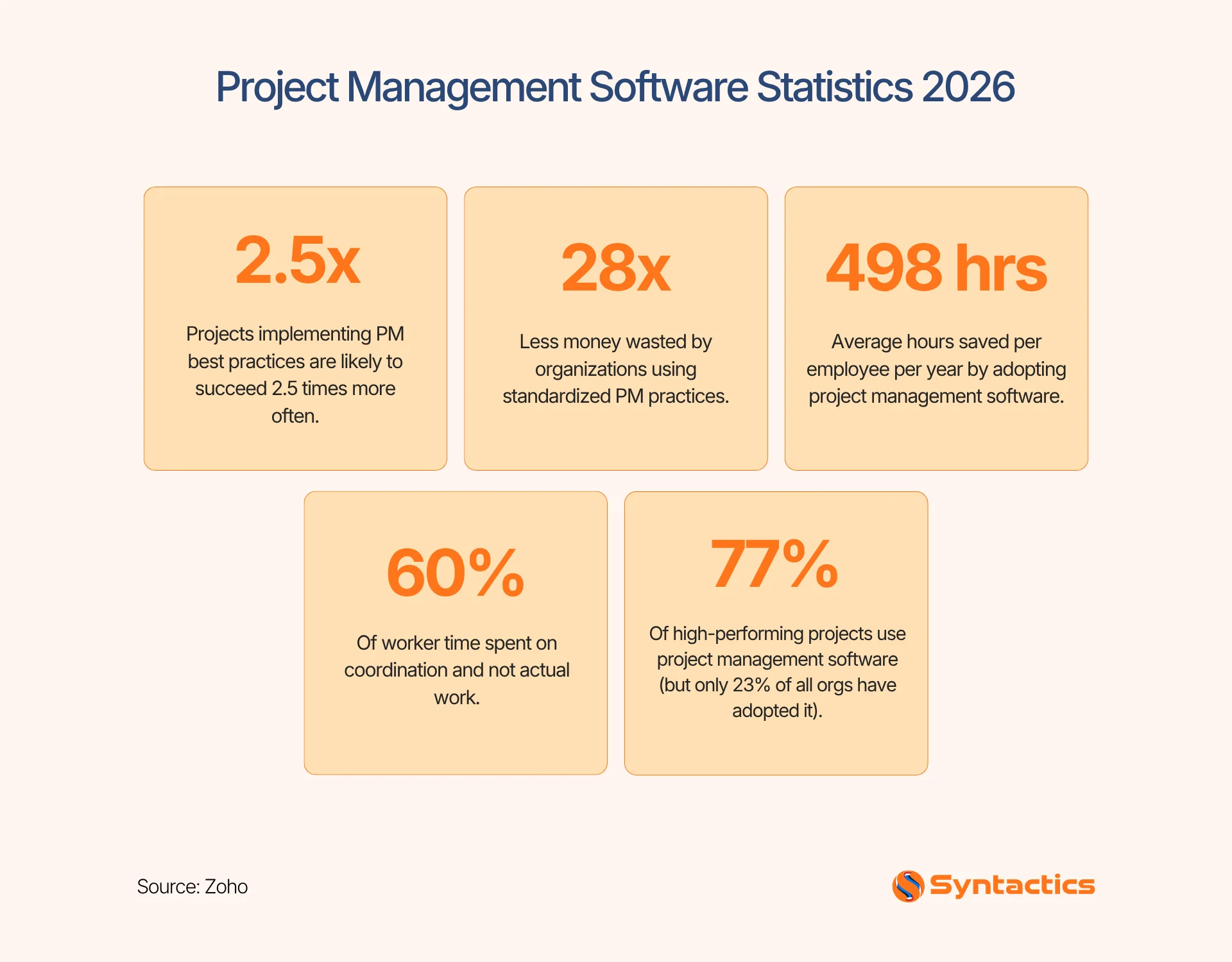
Source: Zoho.
Examples: Basecamp, Asana, Slack, and Bitrix.
2. Business Process Management Software
Business process management apps facilitate rapid development, automation, and streamlining of strategic processes. This type of app or software, usually optimized for mobile devices, monitors progress and identifies areas for improvement.
Business process management systems offer total visibility into a company’s operations and help manage and analyze complex data, content, and processes. This increases productivity and enhances customer satisfaction by helping organizations make data-driven decisions and optimize operations. It streamlines workflows through business process modeling and design, monitoring and control, integration, and collaboration.
Examples: Monday, SaaS BPM, and Wrike.
3. Communications Software
Communications software enables digital communication and collaboration through tools like:
- Instant Messaging (IM) applications
- Mobile messaging apps
- Voice and video calling apps
- Web conferencing applications or tools
- Email clients
- Remote collaboration platforms or software
This kind of software aids company and organizational growth via tools for internal and external communication. Apps like Zoom, Google Meet, Skype, and Twilio seamlessly connect people and businesses beyond physical boundaries.
4. Enterprise Resource Planning (ERP) Software
ERP software integrates various business processes into a unified platform. These business apps solicit, review, and analyze data from various work operations. Implementing an ERP system offers numerous benefits, including improved efficiency, data visibility, collaboration, and agility.
It features a centralized database, integrated business processes, real-time access to information, automation, customization, and scalability.
Examples: Oracle, Microsoft Dynamics 365, and SAP.
5. Resource Management Software
This type of software helps businesses facilitate project resource management in real time. It’s designed to help businesses plan, allocate, and utilize their resources. Key aspects of resource management software include resource usage planning and optimization, scheduling, team collaboration, tracking and monitoring, financial insights, and reporting or analytics.
This software is valuable for businesses of all sizes and industries, leading to increased productivity, reduced costs, and improved project outcomes. Online inventory systems are an excellent example of resource management software.

6. Productivity Software
Productivity software simplifies tasks and increases efficiency, especially in professional settings. This type of business app includes tools for creating, managing, and collaborating on various types of content, such as:
- Word processing software
- Spreadsheet applications
- Note-taking software or apps
- File or document management software
- Presentation software or tools
- Task and project management tools
- Collaboration platforms
- Email clients
- Calendar and time management apps
Overall, this software assists with document creation, database management, collaboration, and accounting. Microsoft 365 (or Microsoft Office) is a common productivity software, based on Incredible Productivity Statistics. Other examples include Trello, Flock, and MeisterTask.
7. Sales and Marketing Software
Sales and marketing software helps businesses manage customer relationships, automate marketing campaigns, and analyze performance. Efficiency and profitability in sales and marketing are vital for business organizations, and this software significantly benefits digital marketers with their work by streamlining processes and enhancing sales efforts, customer engagement, and business growth.
Common apps that fall under sales and marketing software include:
- Sales automation software or tools
- Marketing automation software
- Email marketing software
- Social media management tools
- Content Management Systems (CMS)
- Marketing analytics and reporting software
- Lead generation software
- Customer support and helpdesk software
Examples: Salesforce CRM, Marketo, Google Analytics, and HubSpot CRM.
8. Customer Relationship Management (CRM) Software
CRM software is a subtype of sales and marketing apps that helps businesses manage customer interactions and relationships more effectively. Through this software, users can manage client queries, requests, and reported issues. It assists with analyzing data while managing customer interactions, facilitating sales, and maintaining partner relationships.
By organizing and centralizing customer data, tracking interactions, and improving engagement, CRM systems help enhance customer satisfaction, loyalty, and retention. CRM software can lead to personalized interactions, exceptional experiences, and business growth. According to CRM Statistics 2026, CRM systems improve customer satisfaction and retention by up to 75%.
Common features of CRM software include centralized customer databases, lead and opportunity management tools, customer support and service management systems, and workflow automation features.
Examples: Intercom, Mailchimp, and ActiveCampaign.
9. Human Resource Software
Human resource software streamlines and optimizes HR-related processes. This business app helps manage employees, ensuring organizations maintain a happy and productive workforce. HR software reduces errors, improves efficiency, and enhances the employee experience, freeing HR professionals to focus on strategic initiatives and talent management.
Human resource software is widely used across businesses of all sizes to manage their workforce effectively, providing a centralized platform to manage HR functions, automate routine tasks, and enhance workforce management. Key types of human resource software include:
- Employee information databases
- Recruitment and applicant tracking tools
- Performance management software
- Payroll management systems
- Employee Self-Service (ESS) applications
Examples: BambooHR and Gusto HR. Time management applications are also a key example of this software type.
10. Time Management Software
Time Management Software (TMS) helps individuals and teams manage their time efficiently by organizing tasks, setting priorities, and tracking progress. It makes it easy to track an individual’s use of digital systems and monitor how much time a person spends on particular apps.
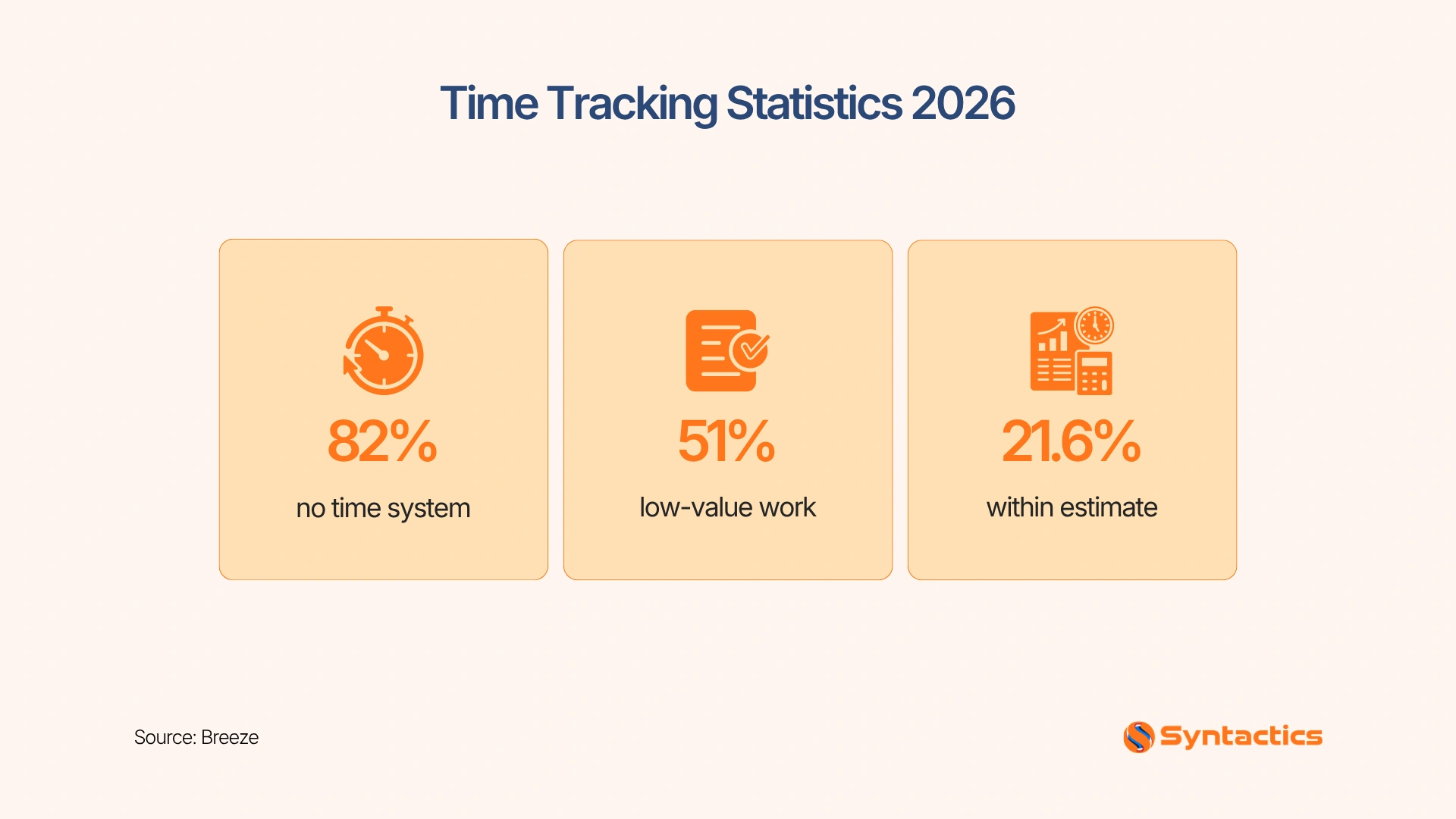
Source: Breeze.
This software improves personal productivity and enhances overall efficiency for teams and businesses. Key examples of TMS features include:
- Task and project management tools
- Time tracking or management software
- Calendar integrations
- Goal setting and progress tracking software
- Distraction-blocking or management tools
- Time analysis and reports software
Software or tools such as Tick, Timely, and Toggl help optimize users’ time, increasing productivity.
Achieve Maximum Work Efficiency with the Ideal Apps
The ultimate goal of business apps or software is to help individuals, companies, and organizations automate and streamline routine processes. They help business owners make calculated, evidence-based decisions and enhance collaborative work. Most importantly, they can foster overall business health by achieving maximum work efficiency and productivity.
Syntactics, Inc. is a trusted software programming company in the Philippines that delivers customized solutions to help businesses optimize processes, boost efficiency, and achieve long-term growth. Enhance operations and drive growth by integrating enterprise apps or software through professional business application development.

This blog was updated on September 16, 2026.
Frequently Asked Questions About Business Apps or Software
What is the difference between an application and software?
An application is a subset of software. It’s a specific tool designed to perform tasks for users, like word processors, spreadsheets, or business management tools. Software, meanwhile, is a general term that refers to programs and systems used to operate devices. Examples include system software (like operating systems) and apps.
What specific qualities or characteristics should a business app have to cater to Small or Medium-sized Enterprises (SMEs)?
Here are some qualities or characteristics a business app should have to cater to SMEs:
- Scalability
- User-friendliness
- Cost-effectiveness
- Customization
- Integration
- Security
Is it possible to customize business applications?
Yes, it’s possible to customize business apps, though this often depends on the software provider. Some developers offer built-in customization options, while others may not. Organizations can collaborate with a developer to build a custom app from scratch to ensure it aligns with their specific business requirements.
What are the latest trends in business app development that enhance productivity and efficiency?
The following are the latest business app development trends that enhance productivity and efficiency:
- Artificial Intelligence (AI) integration
- Augmented Reality (AR)
- Machine Learning (ML)
- Cloud-based solutions
- Low- or no-code platforms
- Mobile optimization
- Advanced data analytics

About Xenia Labis
Related News:


Restaurant Management Software for Your Business



Comment 0