

Facebook Ads for Small Business & Their Benefits
Through digital marketing, businesses can build brand awareness online and drive traffic to their websites and social media pages. So if you’re a small business, advertising on social media via Facebook ads offers several distinct benefits.
Facebook remains one of the most widely used social networks, with strong engagement even in emerging markets. Users spend significant time interacting with content and engaging in conversations on the platform, making it a strong opportunity to build brand recognition.
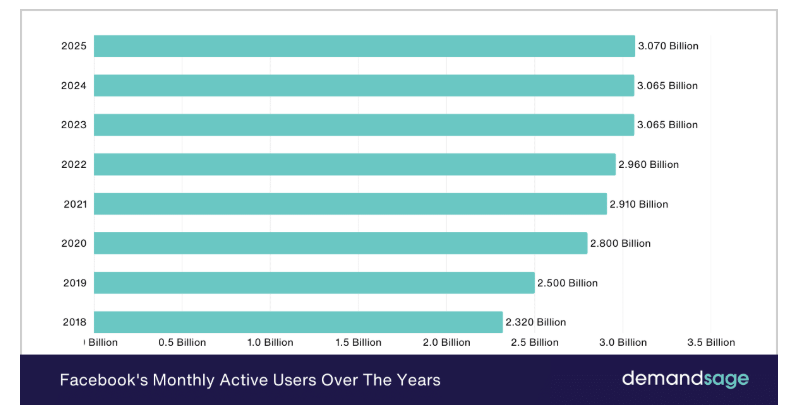
Source: DemandSage.
What Are the Benefits of Facebook Advertising for Small Businesses?
Facebook advertising gives small businesses precise targeting, flexible budgets, and measurable results, advantages that are harder to come by with traditional advertising channels. Here’s a closer look at each benefit.
Targeted Reach
Facebook’s precision targeting helps maximize exposure by showing your ads to users more likely to be interested in your products or services. With such a large user base, you get both broad geographic reach and the ability to narrow in on specific age groups, genders, interests, and behaviors.
That combination lets you target audiences with a level of specificity that traditional marketing channels simply can’t match. Small businesses working with a skilled Facebook advertiser in the Philippines can take full advantage of this targeting precision.
Cost-Effectiveness
Facebook advertising is relatively affordable for small businesses because you set and control your own ad spend. Actual costs vary depending on a few factors:
- Your specific advertising objectives
- The target audience
- Your industry
- Competitor activity
- Campaign budget allocation
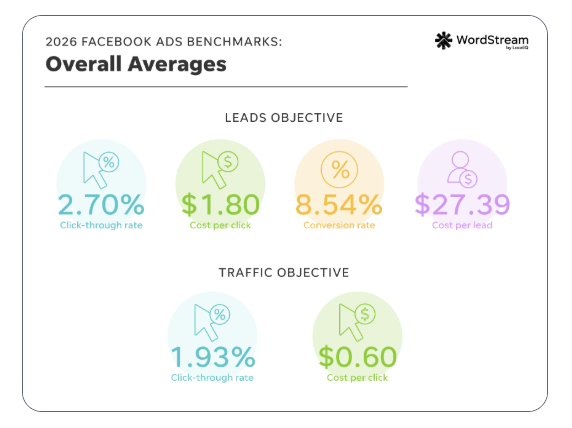
Source: WordStream.
Increased Brand Awareness
Facebook’s targeting capabilities also help boost brand awareness, but the ad content still has to do the heavy lifting. Any experienced Facebook advertiser in the Philippines will tell you that strong ad copy is what actually converts Facebook users, not just visibility. Fortunately, Facebook supports a range of ad formats that help businesses stand out:
- Image advertisements
- Video ads
- Carousels
- Slideshows
- Collection ads
- Instant Experience ads
These formats give businesses room to showcase their Unique Selling Proposition (USP) and capture user attention across a wider audience.
Enhanced Customer Engagement
Facebook advertising also opens the door for direct interaction with potential customers. Audiences can like, comment on, and share your ads, and 81% of businesses share videos on the platform, a format that tends to increase organic reach and spark social interaction.
Facebook Messenger and chatbots add another layer of engagement, letting users start conversations and ask questions about your products or services directly. Responding promptly and offering personalized assistance helps small businesses build stronger relationships with their audience over time.
Accurate Performance Tracking
Facebook’s analytics and reporting tools let you track how your ad campaigns are performing. The Facebook Pixel, for instance, collects marketing performance data from both your website and your Facebook ads, giving you real-time insight into campaign effectiveness.
Key metrics worth tracking include:
- Impressions — the number of times your ad is shown to users
- Reach — the total number of unique users who saw your ad during the campaign
- Click-Through Rate (CTR) — the percentage of users who clicked your ad after seeing it
- Conversion Rate — the percentage of users who completed a desired action after clicking
You can then use this data to make informed decisions and refine future campaigns. Facebook advertisers in the Philippines rely heavily on these metrics to optimize targeting and improve results over time.
Remarketing and Retargeting
Personalization pays off: 89% of marketers report that personalized ad campaigns drive positive ROI. Facebook’s remarketing and retargeting tools let you reconnect with people who’ve already shown interest in your brand, whether that’s past website visitors or contacts from your email list, all through custom audiences.
The two strategies work slightly differently. Retargeting serves ads to users who visited your website or took a specific action on it. Remarketing re-engages people who interacted with your content on Facebook or Instagram itself.
Both approaches target people who’ve already expressed interest, making the messaging feel more personal and boosting conversion rates.
How to Run Facebook Ads for Small Businesses: A Step-by-Step Guide
Running Facebook ads for a small business involves a series of steps that overlap with setting up any standard ad campaign, from defining goals to monitoring results. Here’s how to go from start to finish.
1. Define Your Objectives
Start by determining your campaign’s primary goal. Common objectives include increasing brand awareness, driving website traffic, generating leads, boosting sales, or promoting a specific offer.
2. Identify Your Target Audience
Understanding your audience is crucial to reaching the right people. Use Facebook’s targeting options to define your ideal audience based on demographics, interests, behaviors, and location.
3. Set a Budget
Decide on an ad budget that fits your overall marketing goals. You can choose between daily or lifetime budgets and adjust them as you monitor performance. An experienced Facebook advertiser from the Philippines can help you allocate spend strategically for the best results.
4. Choose the Right Ad Format
Select the format that best suits your brand, content, and audience, whether that’s image or photo ads, video, carousel, or slideshow formats.
5. Create Compelling Ad Content
Your ads need attention-grabbing copy that clearly communicates your brand message. Pair strong copy with high-quality visuals relevant to that message, or work with a professional content service if you need extra support.
6. Design a Landing Page
Once someone clicks your ad, they should land on a page built for conversion. Tailor your landing page to your campaign’s objective and optimize it for easy navigation. Landing page builders can simplify this step considerably.
7. Set Up a Facebook Business Manager Account
Before creating ads, you’ll need a Business Manager account. This centralized platform lets business owners manage multiple ad accounts, access analytics, and collaborate with team members or agencies. A Facebook advertiser in the Philippines will know how to make the most of this account.
8. Create and Set Up Your Ad Campaign
From your Business Manager, head to Ads Manager to build your campaign, following the objectives, audience, and budget decisions from steps 1 through 3.
9. A/B Test Your Ads
Testing different ad variations, different copy, visuals, or formats, helps you identify which elements perform best. Use these insights to refine your creative for maximum impact.
10. Monitor and Optimize Performance
Keep a close eye on campaign performance through Ads Manager, which displays real-time data on CTR, Conversion Rate, and Cost Per Result. Use this data to make ongoing, informed adjustments.
11. Retarget Engaged Audiences
Build custom audiences using website visits, page engagement, or previous customer data to re-engage people who’ve already interacted with your business.
12. Analyze Results and Adjust
Review your campaign’s performance regularly. Adjust targeting, budget, ad content, or landing pages based on what the data tells you, and keep refining.
Following these steps helps small businesses run Facebook ads tailored to their audience, boosting engagement and moving the needle on marketing objectives. Staying consistent, creative, and data-driven throughout the process separates campaigns that coast along from ones that deliver.
Final Thoughts
Facebook advertising benefits small businesses because the platform combines precise audience targeting with tools that improve brand awareness, engagement, and measurable ROI. You can remarket and retarget previous customers, track campaign performance accurately, and do it all cost-effectively.
Small businesses can reach a genuinely vast audience through Facebook advertising strategies; the key is using the platform’s tools deliberately to reach the demographics that matter most to your business.
If you want help getting there faster, reach out to Facebook ads management services in the Philippines to sharpen your brand reach and campaign strategy.

This article was updated on September 21, 2026.
Frequently Asked Questions
Are Facebook ads worth it for small businesses?
Yes. Facebook ads give small businesses precise targeting, flexible budgets, and detailed performance tracking, making it easier to reach the right audience without overspending compared to traditional advertising channels.
How much should a small business spend on Facebook ads?
There’s no fixed amount. Spending depends on your advertising objectives, target audience, industry, competition, and how you allocate your campaign budget. Facebook lets you set daily or lifetime budgets and adjust them as you go, so you can start small and scale based on results.
What’s the difference between retargeting and remarketing on Facebook? Retargeting serves ads to people who visited your website or took a specific action there. Remarketing re-engages people who interacted with your content directly on Facebook or Instagram. Both rely on custom audiences and aim to reconnect with people who’ve already shown interest in your brand.
Do I need a Facebook Business Manager account to run ads?
Yes. A Business Manager account is the centralized platform for managing your ad accounts, pages, analytics, and team access. It’s a required step before setting up campaigns in Ads Manager.

About Jalou Batilong
Related News:

Web Development Trends for 2024
Tips for an Efficient Quality Assurance Process
How to Set Up Your Kajabi Website
![[New] Syntactics - OMT - May - Visual Search & Tips for Optimizing Site Images (1)](https://www.syntacticsinc.com/wp-content/uploads/2023/05/New-Syntactics-OMT-May-Visual-Search-Tips-for-Optimizing-Site-Images-1-346x195.png)


Comment 0