


A Modern Business Guidebook to Full Stack Digital Marketing
Full-stack digital marketing unifies SEO, social, email, PPC, and analytics into one system. Unlike traditional multi-channel approaches, this model aligns every channel around a single measurable business objective. The result is consistent messaging, optimized spend, and scalable operations that support long-term growth.
According to Hostinger, global digital marketing spend is projected to continue rising over the coming years. As investment grows, businesses face increasing pressure to manage more channels, larger budgets, and stricter performance expectations within a single, accountable growth framework.
TABLE OF CONTENTS
Turning Full Stack Digital Marketing into a Growth Engine
Full stack marketing delivers measurable advantages when every channel works as a cohesive system. Key benefits include:
- Predictable lead flow: Integrated SEO, content, social, email, and PPC consistently attract qualified prospects.
- Faster performance optimization: Cross-channel data reveals what’s working and where to adjust without delay.
- Scalable execution: Campaigns expand without adding operational complexity or fragmented workflows.
- Brand consistency: Every touchpoint reinforces a unified message, strengthening trust and recall.
- Revenue alignment: Marketing efforts are directly tied to business goals, driving activity into measurable growth.
This benefits-focused approach shows why full-stack marketing is essential for agencies and businesses aiming to maximize ROI and scale with confidence.
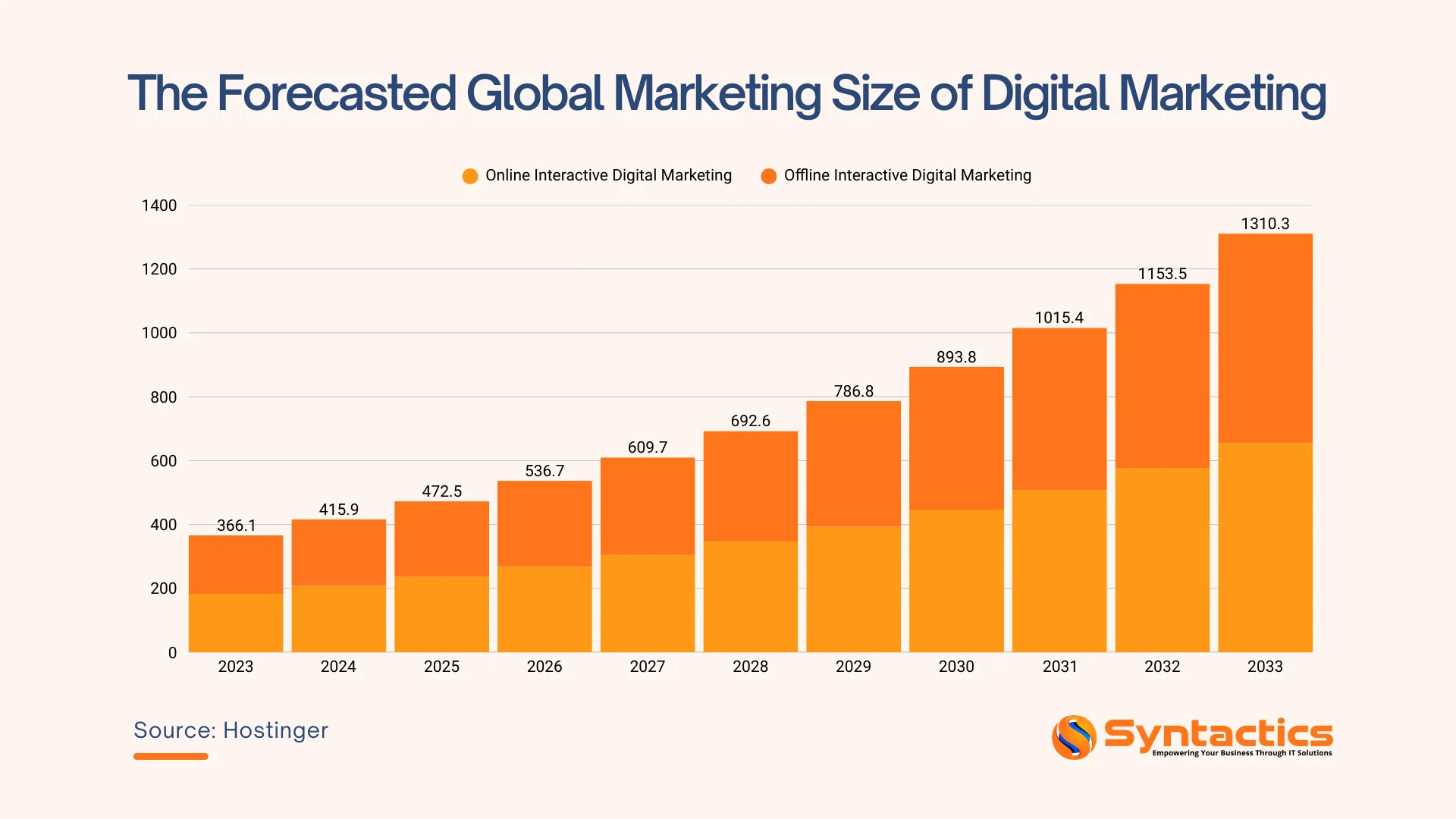
Source: Hostinger
Key Components That Drive Revenue in Full Stack Marketing
Full-stack marketing works because it addresses every phase of the marketing journey. Four interconnected pillars create a system where each component amplifies the others, driving compounding returns.
Market Research
Market research is often overlooked as a critical foundation. Understanding your audience’s pain points, competitive positioning, and messaging determines everything downstream. Get this wrong, and even flawless execution fails.
While you know your business well, an external perspective uncovers blind spots. That’s why collaborating with strategists helps develop positioning that maps customer challenges to your solutions and creates targeted messaging for each buyer journey stage.
Fun fact: AI-powered tools and review analysis have democratized market research. Small teams now extract customer insights in days, not months.
Traffic Generation
Traffic generation fuels your funnel with qualified prospects. In fact, Digital Marketing Statistics show that 97% of people check a business’ online presence before visiting the store.
With a skilled Growth Strategist, he or she orchestrates the optimal channel mix, timing, and investment to maximize returns. Regardless of platform, execution follows a four-step framework:
- Meet audiences where they are: Reach them on platforms where they research and buy.
- Segment precisely: Deliver relevant offers to specific segments.
- Break through noise: Use hooks that speak directly to their needs.
- Test relentlessly: Experiment with messages, formats, and audiences, then optimize based on data.
This process repeats across every channel. Each platform has unique targeting capabilities, interface nuances, and competitive dynamics that evolve constantly. With the help of channel specialists who manage multiple clients daily, they provide a major advantage over generalists trying to keep pace.
Conversion Optimization
Conversion Rate Optimization (CRO) maximizes the value of your traffic. It transforms browsers into buyers by removing friction and increasing motivation.
- Testing reveals the truth. A/B and multivariate testing show which headlines, layouts, and calls to action drive conversions, often through small but high-impact changes.
- User experience removes barriers. Clear navigation, optimized layouts, and mobile-first design make it easier for users to take action.
- Data guides decisions. Analytics expose behavior patterns, heatmaps reveal interaction points, and funnel analysis pinpoints drop-off locations. Evidence replaces guesswork.
- Personalization connects. Dynamic content adapts to visitor segments, making each user feel understood. Tailored experiences outperform generic ones.
At Syntactics, we use tools like Visual Website Optimizer (VWO) for rapid testing and Unbounce for audience-specific landing pages. The key to effective conversion optimization is not using every CRO technique, but knowing which tactics drive the most impact for your situation.
Learn what qualities to look for in a reliable digital marketing agency:
Analytics and Measurement
Data-driven marketing requires a robust tracking infrastructure. Platforms like Google Tag Manager, Google Analytics 4, and platform pixels capture comprehensive performance data across all touchpoints.
With proper analytics, it turns raw numbers into strategic insights. You track KPIs that matter, understand behavior patterns, and measure true marketing effectiveness. Without accurate measurement, optimization is impossible.
The four pillars work together: research informs targeting, traffic feeds optimization, conversions provide data, and analytics refines the system. This integrated approach is why full-stack marketing consistently outperforms siloed tactics.
To evaluate your campaign performance, check out our expert guide here:
Common Execution Gaps and How to Avoid Them
Even with a solid full-stack strategy, execution gaps can limit results. Knowing where these gaps occur helps businesses and agencies maintain momentum and protect performance.
Disconnected Channel Execution
Running campaigns in silos often leads to inconsistent messaging and missed opportunities. Avoid this by aligning goals, timelines, and KPIs across all marketing functions, so every channel supports the same growth objective.
Overemphasis on Traffic Without Conversion Focus
High traffic does not guarantee results. When conversion optimization is overlooked, acquisition costs increase while ROI suffers. But, prioritizing landing page performance, user experience, and funnel optimization ensures traffic translates into measurable outcomes.
Limited Use of Data and Insights
Collecting data without acting on it reduces its value. That’s why teams should focus on performance insights that influence decisions, such as conversion trends, channel efficiency, and attribution signals. Regular analysis helps refine strategies and improve results over time.
Execution Bottlenecks and Resource Constraints
Delays often occur when execution depends on too many handoffs or specialized roles. Streamlining workflows and enabling cross-functional execution allows teams to move faster, adapt quickly, and scale without operational friction.
By identifying and addressing these gaps early, full stack digital marketing stays efficient, focused, and aligned with business goals, supporting consistent growth and stronger ROI.
When to Invest in Full Stack Digital Marketing
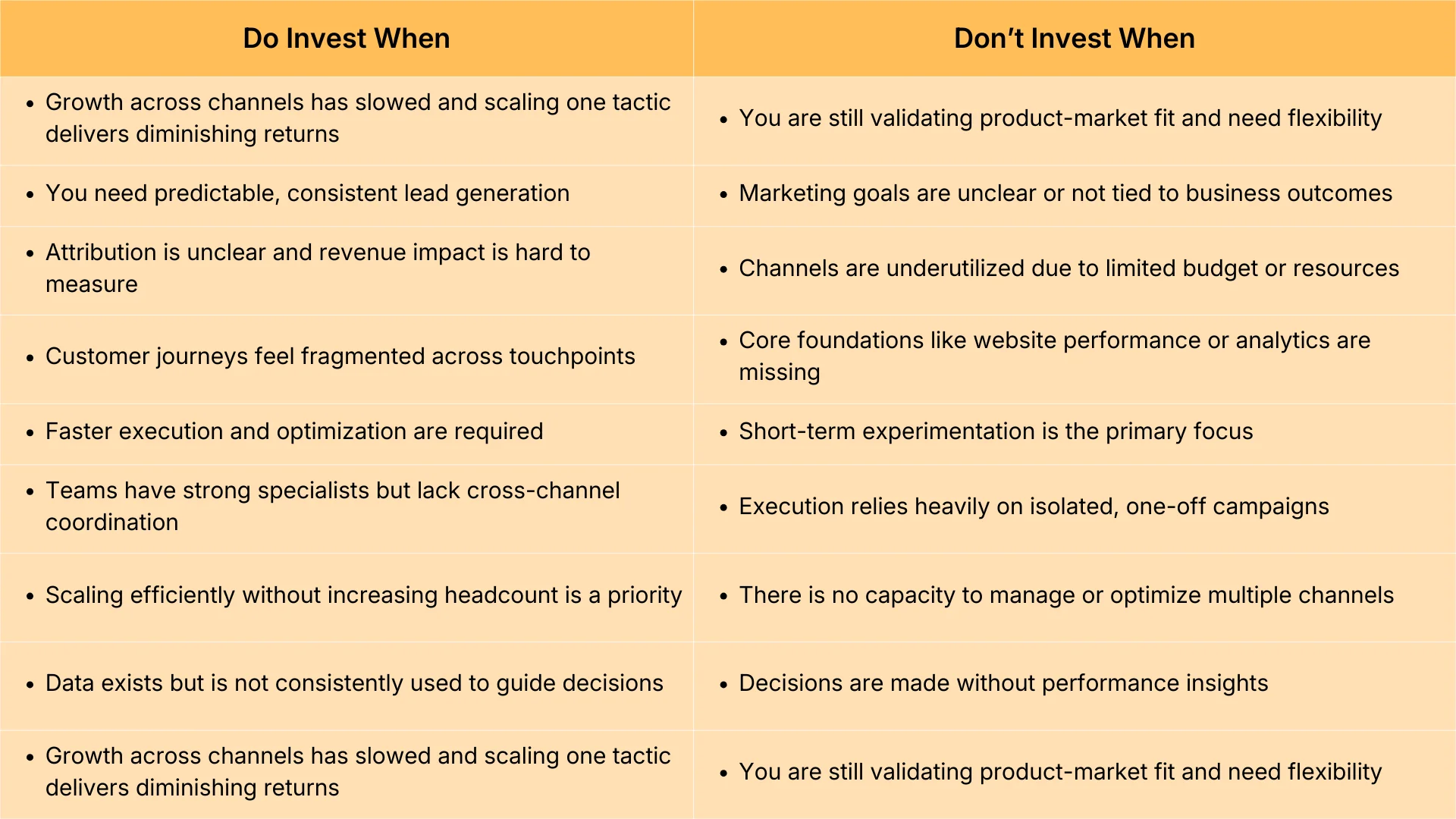
Knowing when to invest in full stack digital marketing is just as important as understanding how it works. This approach delivers the most value when businesses reach a certain level of growth maturity and execution complexity.
The table below outlines key indicators to help assess whether full-stack digital marketing is right at this stage.
Full Stack Marketing as a Growth Lever
Digital marketing has evolved rapidly and become more competitive. Full stack digital marketing is a modern approach that unifies every aspect of your marketing into a single, connected system. It streamlines complex processes, improves efficiency, enhances performance, and maximizes the impact of your marketing strategy.
Implementing full stack digital marketing requires the right systems, expertise, and execution discipline. By working with a trusted digital marketing agency in the Philippines, it lets you turn strategy into a scalable, performance-driven growth system without increasing internal complexity.
Elevate Your Brand In the Digital Landscape!

Frequently Asked Questions
What is full stack digital marketing?
Full stack digital marketing is SEO, content, social media, email, PPC, and analytics into a single, coordinated system. It ensures every channel works together to drive growth, optimize performance, and improve ROI.
How does full stack marketing benefit my business?
It delivers predictable lead generation, consistent messaging, scalable operations, and data-driven optimization. Businesses gain clearer visibility into results and can execute campaigns more efficiently across multiple channels.
Who should invest in full stack digital marketing?
Businesses and agencies aiming for measurable growth, efficient multi-channel execution, and higher ROI benefit most. It works best for organizations ready to move beyond siloed campaigns and adopt a unified marketing system.

About Jalou Batilong
Related News:

Timing Your Emails For Maximum Open Rates
Project Management Tools for Efficient Workflows
Digital Marketing Lessons Learned from 2020








Comment 0