


Keyword Cannibalization in SEO and How to Fix It
When creating blog posts, optimizing for particular Search Engine Results Pages (SERPs) is essential. But if multiple articles target the same or similar terms, your content may end up competing with itself, which is commonly called keyword cannibalization. This issue prevents your pages from ranking effectively and can dilute your SEO efforts.
To safeguard your visibility. It’s essential to identify and fix keyword overlaps. Using organic Keyword Research Tools like Moz, Ubersuggest, and AnswerThePublic helps minimize cannibalization and maximize organic reach.
What is Keyword Cannibalization?
Keyword Search Intent is one consideration for an SEO strategy. First, you need a focus keyphrase to optimize your content. So when you have a large content pool on your blog or website, perhaps more than one article talks about a particular topic. Those articles might rank for the same search query on SERPs.
Are the topics too similar? Maybe you used the exact keyphrase — perhaps the difference is only a few letters off. Keyword Cannibalization is one of the more significant problems SEO experts constantly try to avoid. So, start by examining your website for any SEO issues.
You need to check if your content pool is cannibalizing itself or not. After all, Google is ranking your articles on its SERPs. Cannibalization can affect websites of any size, so it’s vital to watch out.
Why is Keyword Cannibalization Detrimental to SEO?
If posts have been optimized for search queries that are too much alike, they will fight each other for a spot on the first page of search results. When it comes to Google, it shows only a handful of results for a single domain looking to rank for a particular query.
For many domains, it caps out at two, but if you’ve got good domain authority or have high authority, you can get away with three results. So if you have more than two or three articles ranking for the same query, you sabotage your chances for potential rankings.
Keyword Cannibalization means that, in addition to your competitors, you’re also competing for the top spot on SERPs with your own content. This happens because Google can’t tell which article should rank higher.
In addition, Google has 200 ranking factors that we know of, including Domain Authority, Content Length, Backlinks, etc. So let’s say some posts suffer from Keyword Cannibalization. Although they have decent backlinks and other such factors, they’ll be splitting CTR, links, content, and (often) conversions. As a result, they rank lower than expected.

The Effects of Keyword Cannibalization on SERPs
There are plenty of Cannibalization red flags you can find on search results. So, your rankings might fluctuate or stay stagnant. As a result of Keyword Cannibalization, a URL that was never intended to rank reaches the first page of SERPs. Before we check out the steps or methods to fix Keyword Cannibalization, here is each effect summed up:
- URLs’ ever-changing rankings. Cannibalization in SEO can cause your search results ranking to change. Plus, if you observe this particular effect, Google is conflicted and confused about which page should rank over the other.
- Fluctuating positions in rankings. If results rankings fluctuate too much, then there are conflicting intents and content quality. As a result, your site traffic will also fluctuate.
- Ranking keywords are struggling to progress. If your site rankings seem to be stagnant despite all your great backlinks and the most valuable content. With Keyword Cannibalization, your page authority gets spread around between two or more URLs. So, no page is ranking as well as it should.
- The wrong URL is ranking. You might check the rankings for a query you’re ranking on to find that the incorrect URL has taken its place. When this happens, Google has found that the wrong URL is more relevant than what you intended.
How to Fix Keyword Cannibalization
A simple search can confirm if you believe your site may be suffering from Keyword Cannibalization. Additionally, if you apply things like the WordPress Yoast plugin, you can check the warnings for optimizing content for a keyword you’ve used previously.
If you need to check search results, there’s a format to it. So type: site:[site or domain name].[website suffix], “keywords.” These keywords should include the query you suspect might be cannibalized.
In our case, we Googled ‘site:syntacticsinc.com content marketing.’ This is what a Keyword Cannibalization check might look like:
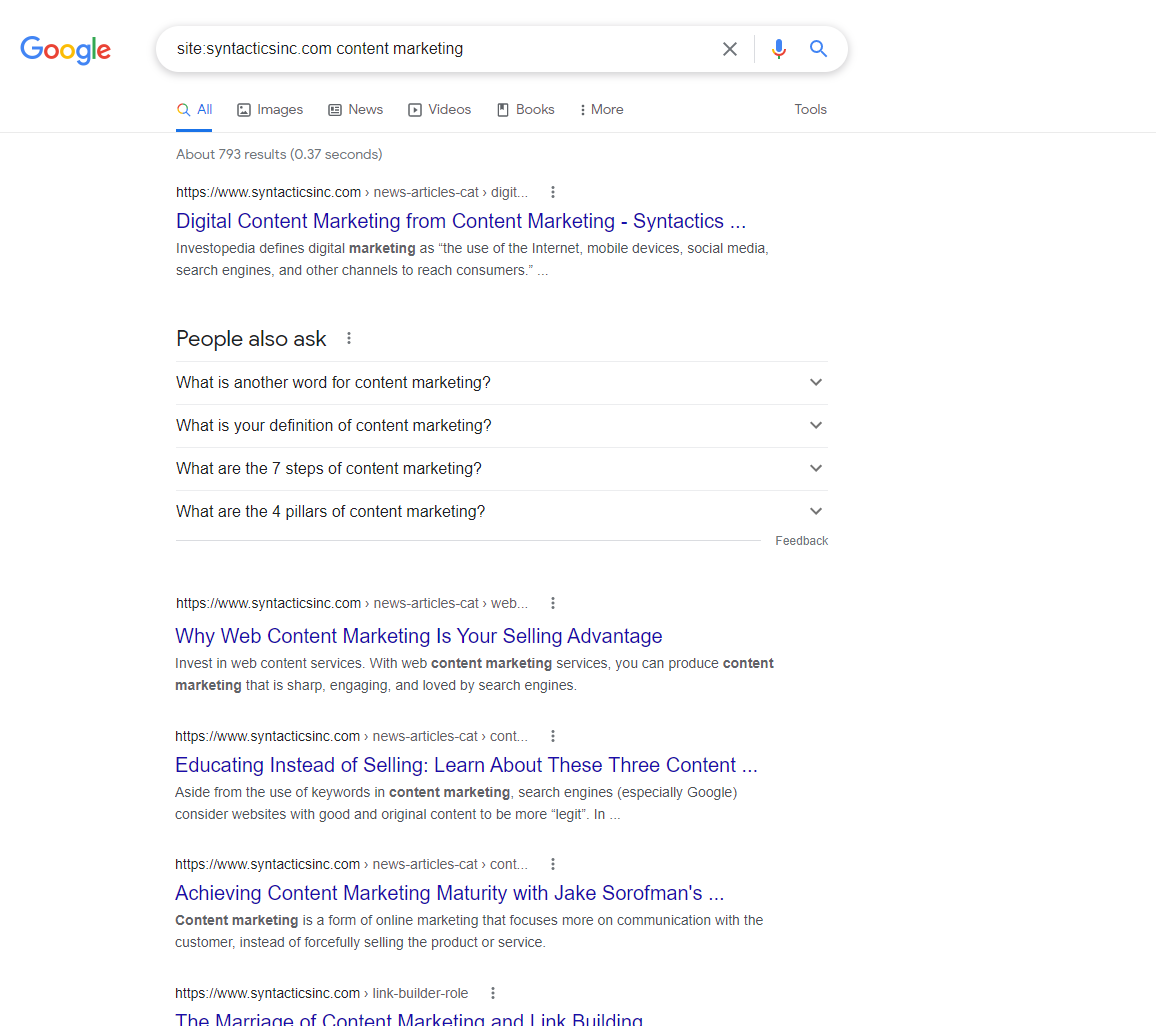
Next, check your pages’ positions. Are two of them in the top two spots? Then your results are not suffering from Keyword Cannibalization. But if your content is in other positions, you need to fix the issue.
Follow these steps to fix Cannibalization:
Do a content audit.
Examine your content well and check which ones suffer from Keyword Cannibalization, as it’s vital to see how your posts perform on SERPs. You can use Semrush’s Position Tracking Tool to detect Cannibalization:
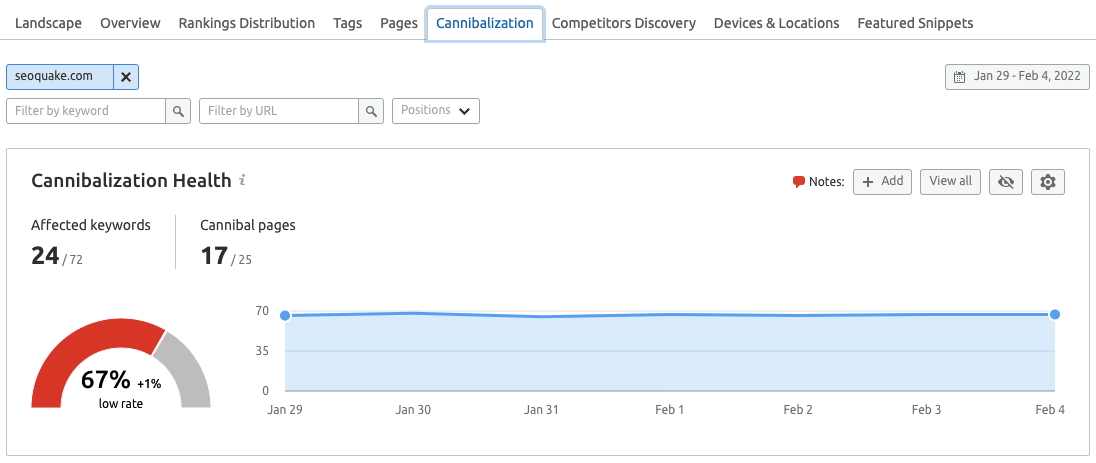
Source: Semrush.
There’s also Yoast, which detects whether you’ve used the exact focus keyphrase or keywords before:
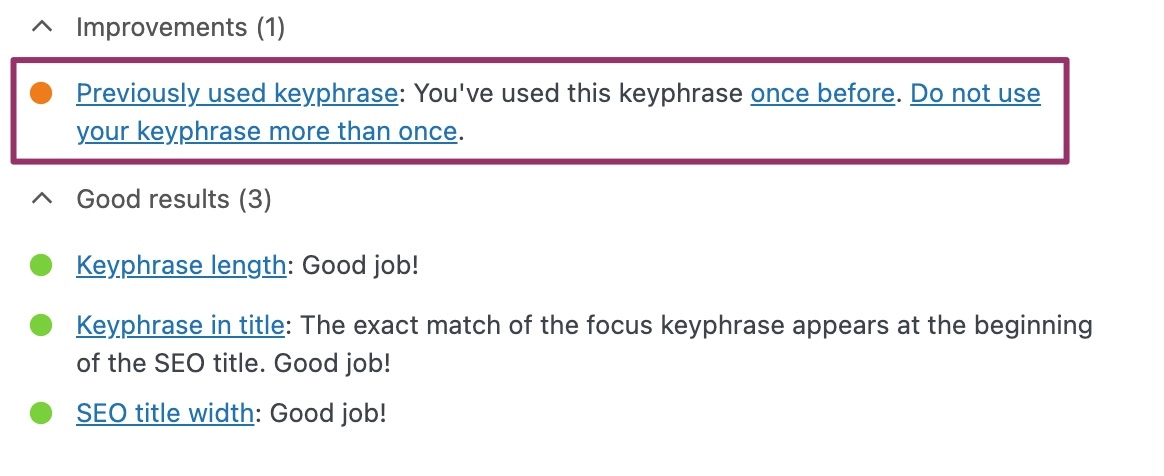
Source: Yoast.
So, you have to be thorough to ensure that you find any articles that need merging or deleting. Then, decide which pieces are and aren’t worth keeping. This content audit will help you with the following step.
You can merge similar articles.
Once you’ve got the measure of your content, you’ll need to decide between keeping, merging, or deleting them. So if you have plenty of content for one topic, consider combining some posts, especially if one doesn’t do as well as another. Merging can even improve your Internal Linking! After all, Google rewards longer content.
Rely on your Internal Linking structure.
Search engines will appreciate a well-structured Internal Link profile that helps them find your most important articles. This is where Internal Linking strategies come in. Also, remember to link less essential posts to the important ones, so Google knows which one should appear in SERPs.
Be careful with products from online stores.
Online shops tend to suffer from Keyword Cannibalization, especially when they’ve optimized for similar products. Links are crucial for solving this dilemma.
So, link back from each product to a designated category page. The latter is what should rank, not the various product pages. Plus, you must watch out for older product pages that might cannibalize the new pages.
Change up your keyword set.
One easy fix is changing your focus keywords to not conflict with your other articles. Plus, if a specific piece has been around for a while, you can add more keywords. So if you’re updating your content or making your content evergreen, you can apply this step! Also, remember to use Long-tailed keywords in your content.
Use a 301 redirect.
If a URL doesn’t get enough attention and negatively affects a page’s ranking, you can always use a 301 redirect. With this, you indicate that one page is more relevant than another. So to avoid Cannibalization in search results, a 301 redirect can help you send traffic from one duplicate page to a more popular, relevant page.
Use a noindex tag to indicate value.
However, if you want to keep two pages because they’re equally valuable, a noindex tag can help better than a redirect! This Keyword Cannibalization fix helps because block search indexing prevent most search engine web crawlers from indexing a page on your site. Thus, the page gets crawled, but it doesn’t appear in SERPs.
The canonical tag can also help!
What if two pages share the same topic and have a near-exact focus keyphrase, but one page is more valued than the other? To let search engines know, use a canonical tag.
This step is best if you want to keep both pages due to value. You don’t lose pages but instead, indicate importance. So instead of using the same keyword for content, have canonical tags link back to the most relevant page.
Monitor your website content, especially if it’s new.
When your website is still new, you may not be in danger of Keyword Cannibalization on SERPs. However, your chances will increase as your site grows and adds to its content pool.
So, monitoring and tracking content topics and keywords they rank for is vital. Additionally, it’s recommended to do a quick search to double-check if your content is cannibalizing itself or not.

Keep your Search Engine Optimization Efforts Focused!
Keyword Cannibalism can happen if two or more posts are optimized for similar keywords. Upon creating your content, you may think that everything about it is in tip-top shape. Still, it’s good to be doubly sure that your content isn’t competing for a spot on pages. If Google finds that more than one page covers the same topic, your rankings will suffer.
To avoid these setbacks, regularly audit your content and address keyword overlaps. Partnering with an SEO company in the Philippines ensures your content is strategically optimized, helping you resolve cannibalization issues and maximize search visibility.

This article was updated on September 16, 2025.
FAQs About Keyword Cannibalization
What is an example of keyword cannibalization?
Keyword cannibalization happens when two blog posts target the same keyword, such as “best project management tools.” Instead of boosting rankings, both posts compete against each other. This splits traffic, reduces visibility, and prevents either page from securing a stronger ranking position in search engine results.
How to detect cannibalization?
You can detect cannibalization by auditing your content with SEO tools like SEMrush, Ahrefs, or Google Search Console. Look for multiple pages ranking for the same keyword. If search engines struggle to determine which page is most relevant, it signals that keyword cannibalization is occurring on your site.
Why is keyword cannibalization bad in SEO?
Keyword cannibalization is harmful because it confuses search engines, weakens domain authority, and reduces your chances of ranking well. Instead of one strong, authoritative page, you end up with several competing ones. This can lower click-through rates, weaken backlinks, and cause significant traffic and conversion losses.

About Axel May Rivera
Related News:

Handling a Data Breach Using Data Privacy Laws

Comparing Beaver Builder and Elementor for WordPress











Comment 0