


Why Social Media Isn’t Generating Leads for Your Business
Likes, followers, and impressions may indicate that people are seeing your content, but they rarely tell you whether your social media efforts are generating real business results. Without proper tracking, it’s difficult to determine whether your campaigns are producing social media leads or simply driving engagement.
According to Sprout’s 2026 Social Media Marketing Statistics, 90% of consumers use social media to keep up with trends and cultural moments, highlighting the important role social platforms play throughout the customer journey. Yet many businesses still struggle to connect engagement with revenue because default analytics fail to capture the complete path to conversion.
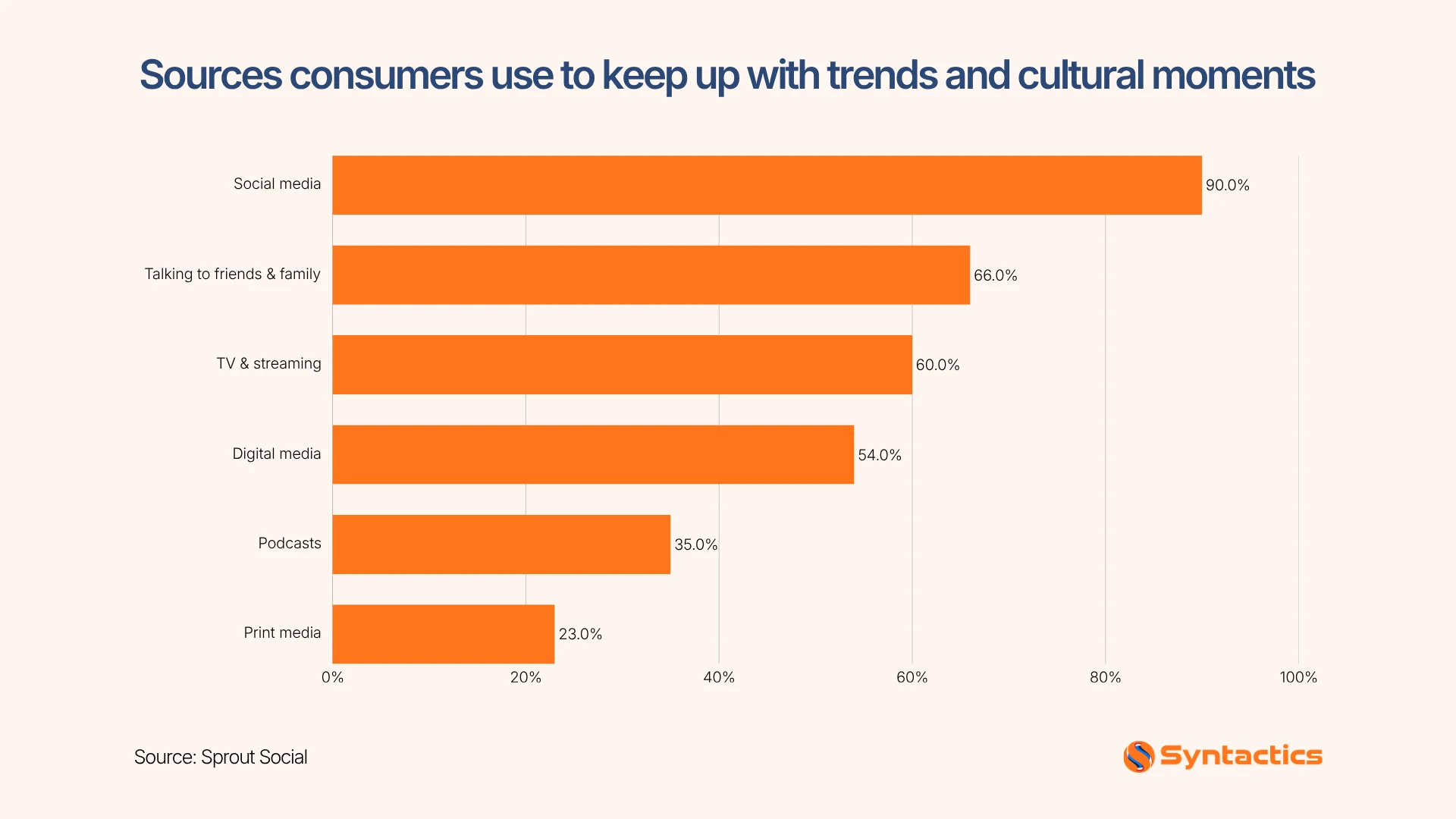
Source: Sprout Social.
Key Takeaways
- 67.1% of U.S. marketing organizations are responsible for lead generation, while 94.4% are responsible for brand management. (CMO Survey)
- Default social analytics rarely capture the complete customer journey.
- Platform-specific landing pages and UTM parameters provide clearer insights.
- Lead generation requires different content than brand awareness campaigns.
- Meaningful reporting should connect social activity to pipeline and revenue instead of engagement alone.
Why Social Media Leads Are Difficult to Track With Default Analytics
Before improving your campaigns, you first need to understand why attribution fails. Most businesses assume social media isn’t generating leads when, in reality, those leads are simply being credited to another marketing channel. That said, these factors contribute to this problem:
Dark Social Sharing
According to Media Marketing, 84% of outbound sharing by publishers and brands occurs through private channels such as messaging apps, email, and text messages rather than public social networks. Because these shares often omit referral information, they can appear as direct traffic in analytics platforms, making it harder to accurately attribute social media leads.
Multi-Touch Buyer Journeys
Few customers convert immediately after discovering your business on social media.
Instead, they may:
- Discover your brand on Instagram.
- Read your blog through Google Search.
- Return through a branded search.
- Complete a purchase days or weeks later.
Without proper attribution modeling, your Customer Relationship Management (CRM) may credit only the final interaction instead of recognizing social media’s contribution.
According to a Gartner survey, B2B buyers use an average of 7 information sources when making a recent purchase. This demonstrates that buying decisions typically involve multiple touchpoints rather than a single interaction. As such, accurate attribution is essential for understanding how social media contributes to lead generation throughout the customer journey.
Inconsistent UTM Tagging
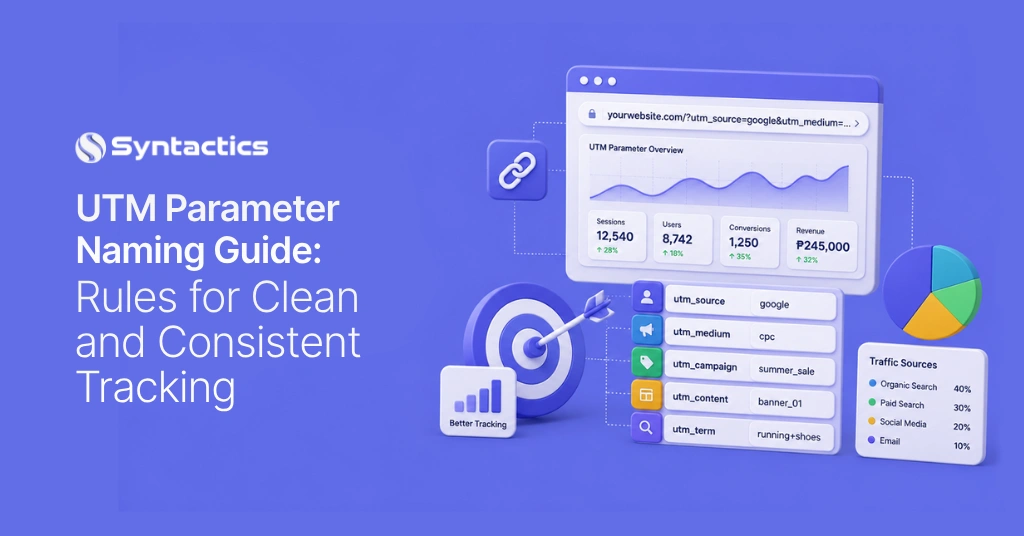
One missing campaign parameter can prevent analytics platforms from correctly identifying traffic sources. When UTM conventions differ across campaigns, reports become inconsistent and difficult to analyze.
CRM Data Inconsistency
Even if your website tracks visits correctly, incomplete CRM data can hide valuable insights. If sales representatives manually enter lead sources differently or skip required fields, reporting becomes unreliable across your organization.
The Tracking Setup That Closes the Attribution Gap
Fortunately, you don’t need expensive software to improve attribution. You need a disciplined tracking framework that captures every important interaction across your marketing channels. Start by implementing the following best practices:
1. Standardize UTM Parameters
Create a consistent naming convention for every campaign.
For example:
- Source
- Medium
- Campaign
- Content
Using standardized UTM parameters prevents fragmented reporting and makes campaign comparisons significantly easier.
2. Build Dedicated Landing Pages
Instead of sending every visitor to your homepage, create landing pages tailored to each platform and campaign.
Dedicated landing pages allow you to:
- Measure conversions more accurately
- Personalize messaging
- Improve user experience
- Compare platform performance

3. Maintain CRM Source Discipline
Require every new lead to include a verified source before it is entered into your CRM. Automated source mapping reduces manual errors while improving reporting accuracy across marketing and sales teams.
4. Ask Every Customer How They Found You
Even advanced analytics can’t capture every interaction. Include a simple question such as:
“How did you first hear about our business?”
This provides valuable attribution data that complements your digital analytics.
5. Audit Your Tracking Regularly
Tracking is never a one-time setup. Review these every month to identify broken tracking before it affects your reporting:
- UTM parameters
- Landing pages
- CRM integrations
- Conversion events
- GA4 reports
- Form submissions
If you work with a digital marketing company in the Philippines, confirm that it implements consistent UTM tagging, CRM integration, and attribution reporting instead of relying solely on platform analytics. A strong tracking framework gives you greater confidence in your campaign data and supports better marketing decisions.
Once your tracking foundation is in place, you’ll gain greater visibility into which campaigns generate qualified prospects and which need improvement. More importantly, you’ll finally understand how your social media leads contribute to your overall sales pipeline, rather than relying solely on likes, shares, and impressions.
What A Lead-Generation-Focused Social Strategy Looks Like vs. A Brand-Awareness One
Once your tracking framework is in place, the next step is evaluating whether your social media strategy is designed to generate leads or simply increase visibility. While both objectives are valuable, they require different content, calls to action, and success metrics.
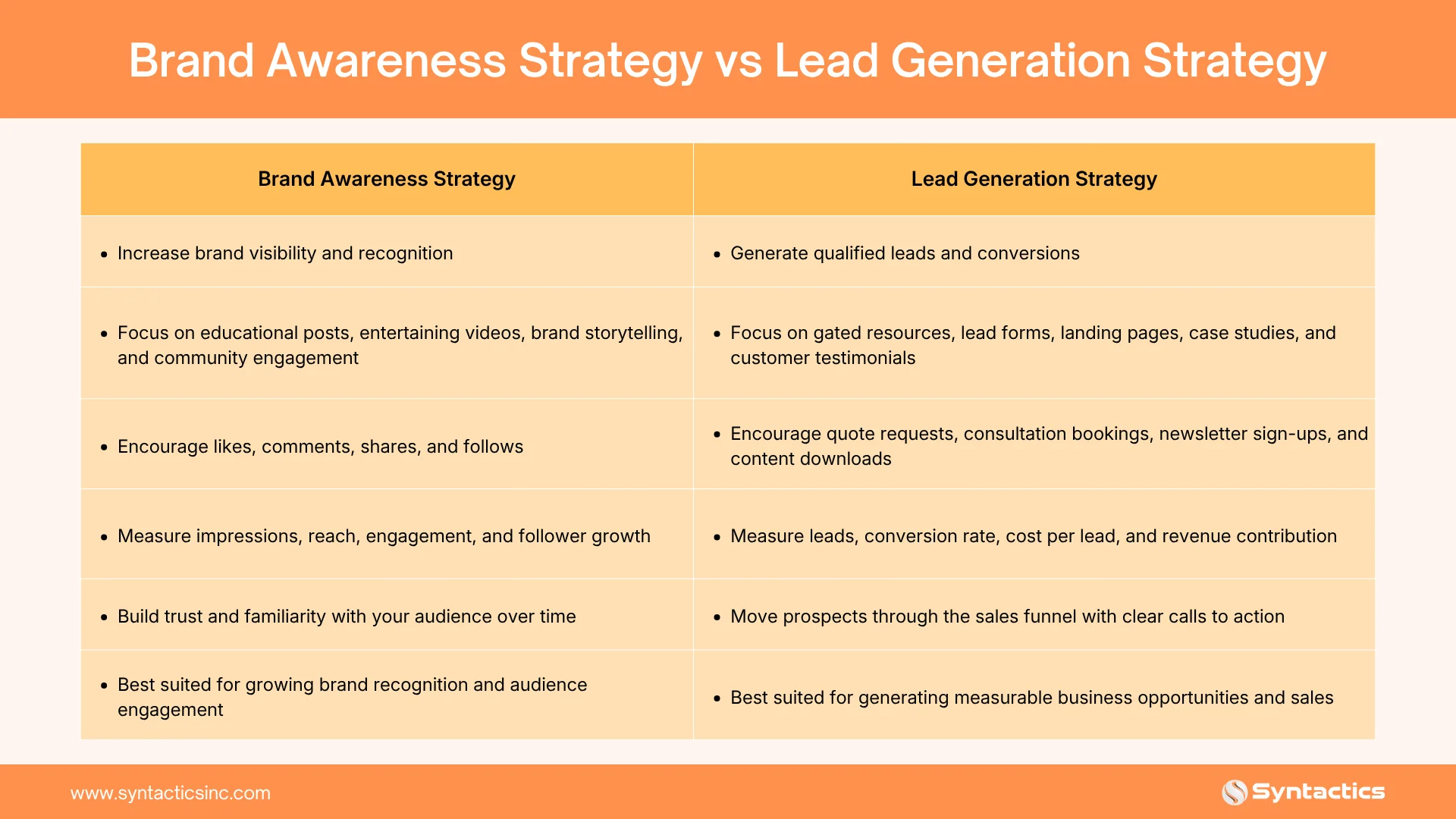
According to the 2026 CMO Survey, 67.1% of U.S. marketing organizations are responsible for lead generation, while 94.4% are responsible for brand management. These findings show that today’s marketing teams are expected to balance both brand awareness and revenue generation. As such, it’s important to create social media content that builds recognition while guiding prospects toward conversion.
With that in mind, businesses looking for social media marketing services in the Philippines need to prioritize providers that build campaigns around measurable conversions rather than engagement alone. A strategic content plan should guide prospects from awareness to action while supporting your broader sales objectives.
What a Results-Accountable Social Media Management Engagement Includes
Generating consistent social media leads requires more than publishing content every week. It also requires disciplined tracking, continuous optimization, and reporting that connects marketing activities to business results.
A results-focused social media management engagement should include:
- Campaign planning aligned with business goals
- Audience and competitor research
- Conversion-focused content calendars
- Consistent UTM tagging across campaigns
- Dedicated landing page recommendations
- CRM source mapping
- Monthly attribution reporting
- Lead quality analysis
- Performance optimization based on conversions instead of engagement
According to HubSpot’s State of Marketing Report 2026, almost 20% of marketers say data-driven marketing strategies have the biggest impact on their overall success. This reinforces the importance of tracking, attribution, and performance reporting that measure conversions and pipeline contribution instead of relying solely on engagement metrics.
If you’re evaluating a social media marketing company in the Philippines, ask how they measure campaign success. A trustworthy partner should explain how leads are tracked, how attribution is validated, and how reporting connects social media activity to your overall sales pipeline.
Conclusion
Social media can be a powerful driver of business growth when you measure the right metrics and build campaigns around conversion rather than engagement. By improving your attribution setup, maintaining disciplined tracking, and creating content designed to move buyers toward action, you’ll gain better visibility into how social media leads contribute to your revenue.
At Syntactics, Inc., we combine strategic content creation, lead attribution, and performance reporting to help businesses generate measurable results from social media. As a trusted social media marketing agency in the Philippines, we build campaigns that connect engagement with business outcomes through data-driven strategies, conversion-focused content, and transparent reporting.

FAQs About Social Media Leads
How to get leads from Facebook?
Create content with clear calls to action that direct users to a dedicated landing page, lead form, or booking page. Combine consistent posting with targeted Facebook Ads and accurate tracking to attract and measure qualified leads.
How long does it take to generate leads from social media?
The timeline depends on your industry, audience, and campaign strategy. Consistent content, proper tracking, and ongoing optimization typically produce better results over time.
Should I focus on organic or paid social media for lead generation?
Both approaches work best when used together. Organic content builds trust and brand awareness, while paid campaigns help you reach targeted audiences and accelerate lead generation.

About Jalou Batilong
Related News:

Keyword Cannibalization in SEO and How to Fix It

Web Development Mistakes Developers Should Avoid

Why Use Multiple Search Forms in WordPress Websites








Comment 0