


Using Memes for your Business: Your Ultimate Viral Strategy Guide
Using humor and memes in your marketing strategy is one of the more direct ways to get attention on social media. Done right, memes lower the barrier between a brand and its audience, and they can drive real engagement that static promotional content rarely achieves.
If you want a social media marketing strategy that actually connects with people scrolling past dozens of posts a day, memes are worth understanding.
Memes In Your Digital Marketing? It’s More Likely Than You Think.
Oxford Languages defines a meme as a humorous image, video, or piece of text that spreads rapidly online, often with variations. In practice, memes are compressed cultural references: anyone who gets the source material understands the joke immediately, regardless of language.
Now, memes may not be as important as Social Media Infographics in terms of knowledge, but they’re nonetheless important.
Furthermore, Memes may not carry the informational weight of a well-designed infographic, but humor has measurable effects on conversion rates. The audience is there, too. Younger generations, particularly those between 18 and 34, make up a substantial share of active internet users.
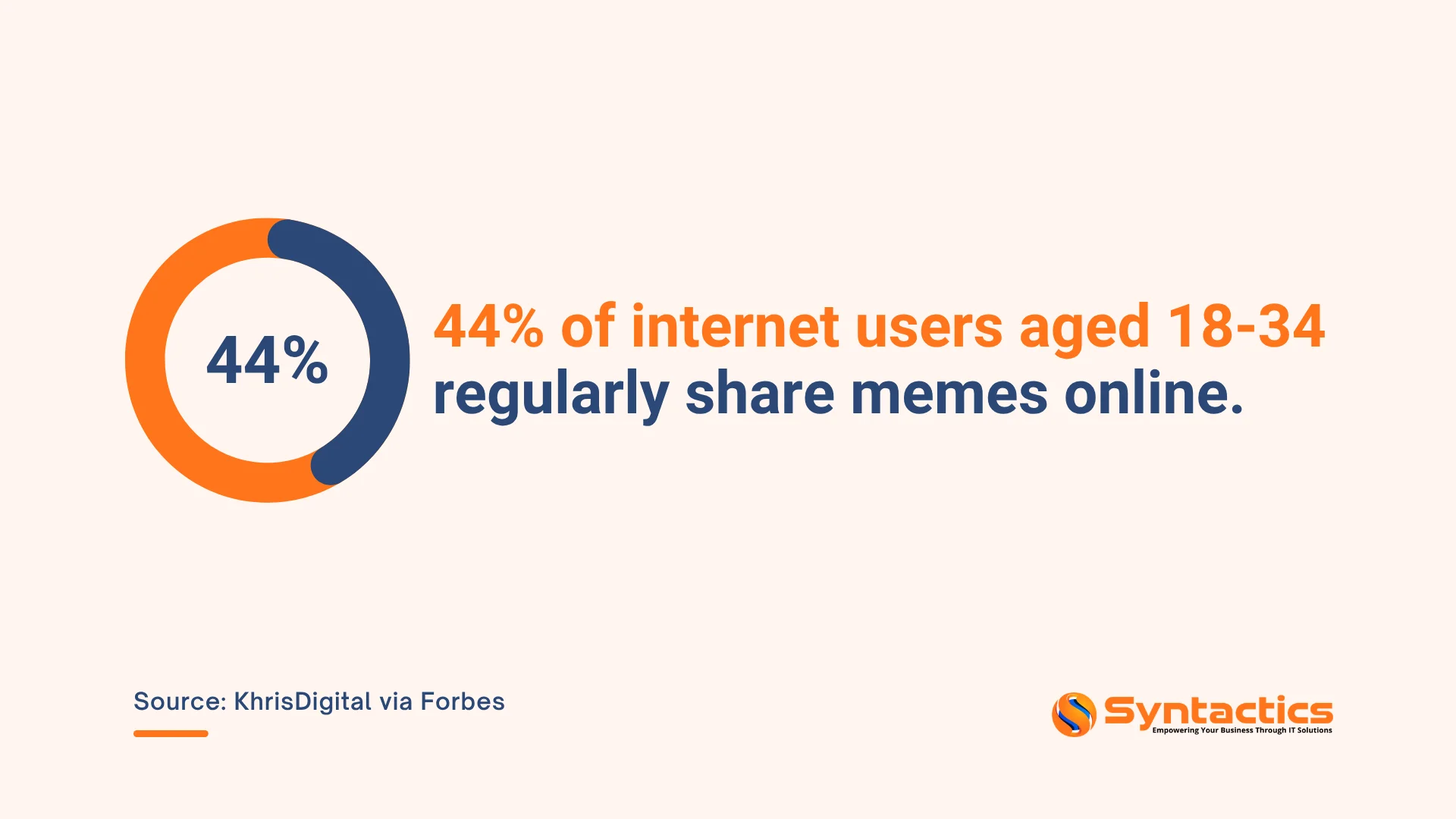
Source: KhrisDigital via Forbes.
Using Memes in Marketing 101
Effective meme marketing requires knowing the material. You cannot pull a random image, write a product caption, and expect results. Memes work because they reference something the audience already understands, a shared cultural moment, a recognizable format, a feeling everyone has had. That semiotic layer is what makes them travel.
Here are the core advantages of meme marketing:
Applicability and Universality
A good meme crystallizes a moment or feeling that a wide audience recognizes. That recognition is the fuel. When your brand taps into it accurately, the content feels less like advertising and more like a contribution to the conversation.
The Old Spice “man on a horse” era is one of the cleaner examples of a brand understanding the absurdist humor that drives meme culture and running with it rather than sanitizing it.
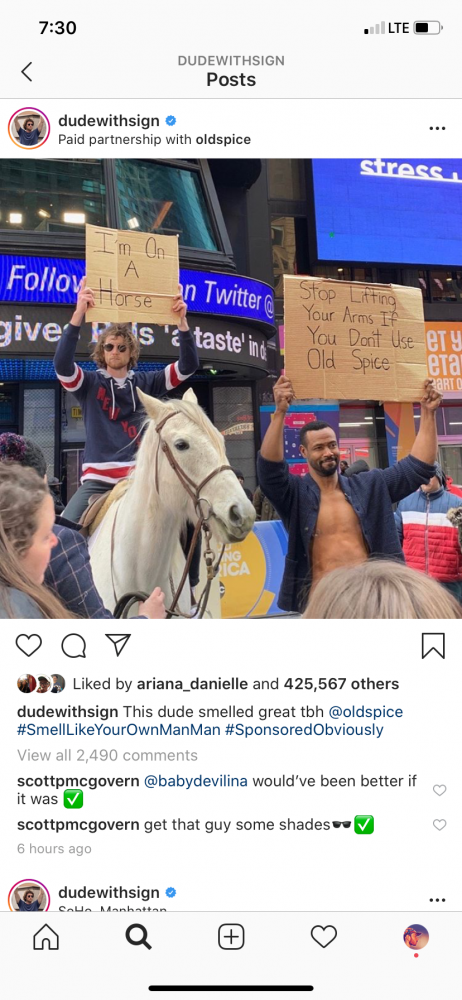
Source: Medium.com.
Ease (and Cheapness) of Creation
Memes are cheap to make, and that is still true. Basic tools like Meme Generator work fine for static image formats. But in 2026, a large share of high-performing branded memes are video-first.
CapCut templates, in particular, have become a standard starting point: a trending audio track, a simple text overlay, and a relatable premise can outperform a produced video ad on TikTok or Instagram Reels.
But, hand-crafting your marketing memes in-house, rather than just recycling existing formats, gives you more control over branding and tone. The difference now is that “in-house” increasingly means someone who knows which audio clips are trending this week and can turn a format around in 30 minutes.
Relatability
Meme marketing signals that there are actual people behind your brand who pay attention to what is happening online. A perfectly composed brand post says “marketing team.” A well-timed meme says “someone here gets it.”
That distinction matters more with Gen Z and Gen Alpha audiences, who are more skeptical of obviously produced content than previous generations were.
The brands that do this well tend to avoid forcing the connection to their product. The meme lands first. The brand association comes second, often just from the handle in the corner.
Netflix, for example, does this consistently. They post memes about their own shows that feel like something a fan account would share, not something a marketing team approved in a committee meeting.
Elicits (Generally Positive) Emotion
Not every meme is designed to make someone laugh out loud. Many work because they put language to something the audience has felt but not articulated. That kind of resonance is what turns a casual follower into someone who shares your content.
If meme posting becomes a regular part of your strategy, consider using a Social Media Content Calendar. It will help you plan timing around trending formats rather than scrambling to post reactively.

Things to Remember Before Jumping into Memes
Keep an Eye on Meme Trends.
The risk with meme marketing is not using them. It is using them wrong or too late. A brand that posts a meme that peaked three weeks ago reads as out of touch, which is worse than not posting it at all. This is especially true with Gen Z audiences, who have a finely tuned radar for brands trying too hard.
Tracking meme trends is a real skill. It means monitoring TikTok’s trending audio and text formats, watching what is spreading on X and Reddit, and having someone on your team with enough cultural familiarity to know when a format is rising versus when it is already on the way out.
It Takes 15 minutes of Fame… Give or Take.
Meme shelf life is short. A format can go from ubiquitous to tired in under two weeks. The window for brands is narrower still, because you need approval, copy, and visuals, all while the format is still relevant.
A team that executes meme marketing well tends to have a short internal approval chain specifically for this kind of reactive content.
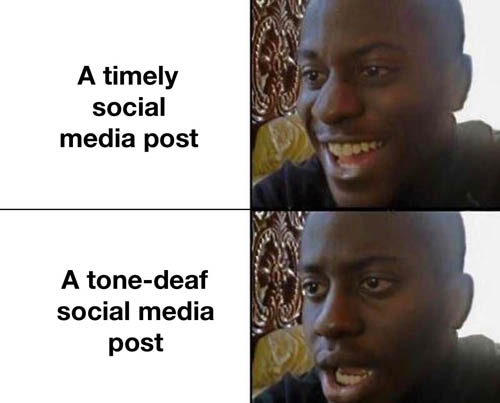
Source: DigitalMarketer.
You Can “Mutate” a Meme to Better Fit Your Branding.
This is memejacking: taking a recognized format and adapting it to your brand’s context. Done well, it borrows the cultural currency of the original while making the reference specific enough to feel creative rather than lazy.
Memejacked content can work across channels beyond social: email subject lines, blog post headers, and campaign landing pages can all benefit from a well-timed format reference, provided the tone fits.
AI in Memetic Marketing
One practical development worth paying attention to is how AI tools have changed the content production side of meme marketing.
Image generation tools can now produce custom visuals for a specific meme format in seconds, removing the dependency on sourcing or screenshotting existing assets.
For businesses that want to produce hyper-local or niche-specific meme content, this is useful: instead of adapting a generic format, you can generate an image that fits your exact context from the start.
Beyond image generation, AI-assisted social media tools can monitor trending formats in real time. It can also flag when a specific audio clip or visual template is accelerating in engagement, and suggest copy variations.
For a small team managing multiple social channels, that kind of signal can make the difference between posting a meme during its peak window and missing it entirely.
The format is still decided by humans. AI tools are better at production speed and trend detection than at knowing whether a specific joke is actually funny for your specific audience. That judgment call still belongs to the person who understands your brand and your community.

Final Thoughts
Memes work because they compress a shared understanding into a single image or clip. That compression is what makes them spread. When a brand gets the format right, the content does not feel like marketing. It feels like something worth passing along.
The core rules have not changed much since memes entered the marketing toolkit. Know the format, time it right, and make the brand connection feel natural rather than forced.
What has changed is the audience and the tooling. Gen Z and Gen Alpha respond differently to brand content than millennials did, and the production cycle for video-first meme formats is faster and more platform-specific than it was for static image memes.
Build a content program that includes memes, reactive content, and longer-form strategy. Get expert social media marketing services in the Philippines.

This article was updated on May 5, 2026.
Frequently Asked Questions
What is meme marketing?
Meme marketing is the use of trending internet formats, such as images, videos, or text templates, to promote a brand in a way that feels native to social media rather than promotional. Instead of pushing a product directly, meme marketing borrows a familiar cultural reference and adapts it to a brand’s context.
The goal is content that audiences engage with and share because it is genuinely funny or relatable, not because it looks like an ad.
What makes a meme effective for business?
Three things: timing, accuracy, and restraint. Timing means posting while the format is still trending, not after it has peaked. Accuracy means understanding what the meme actually means before adapting it, since using a format incorrectly is more damaging than not using it at all. Restraint means letting the meme land on its own without over-explaining the connection to your product.
Which platforms work best for meme marketing?
The right platform depends on where your target audience is most active.
TikTok and Instagram Reels currently produce the highest engagement for video-based meme formats. X (formerly Twitter) remains strong for text and image memes, particularly for brands with a sharp or witty voice. Facebook skews toward older audiences and tends to reward nostalgic or widely recognizable formats over niche ones.

About Axel May Rivera
Related News:

Maximize ROI with Google’s Performance Max Campaigns
Digital Marketing Lessons Learned from 2020



Comment 0