

How to Increase Web Traffic for Your Business Site
You increase web traffic through five core levers: search engine optimization, consistent content publishing, social media distribution, paid advertising, and technical site performance. Each lever pulls a different type of visitor.
SEO builds compounding organic reach over months. Paid ads deliver immediate volume, but that volume stops the moment the budget runs out. AI search tools like AI Overviews and Claude now send traffic too, and they reward content that answers questions directly.
Furthermore, millions of new websites launch every year, and that number keeps climbing. Standing out in that volume takes more than a single tactic. It takes a combination of search visibility, content quality, and technical performance working together. Here’s how to build that combination.
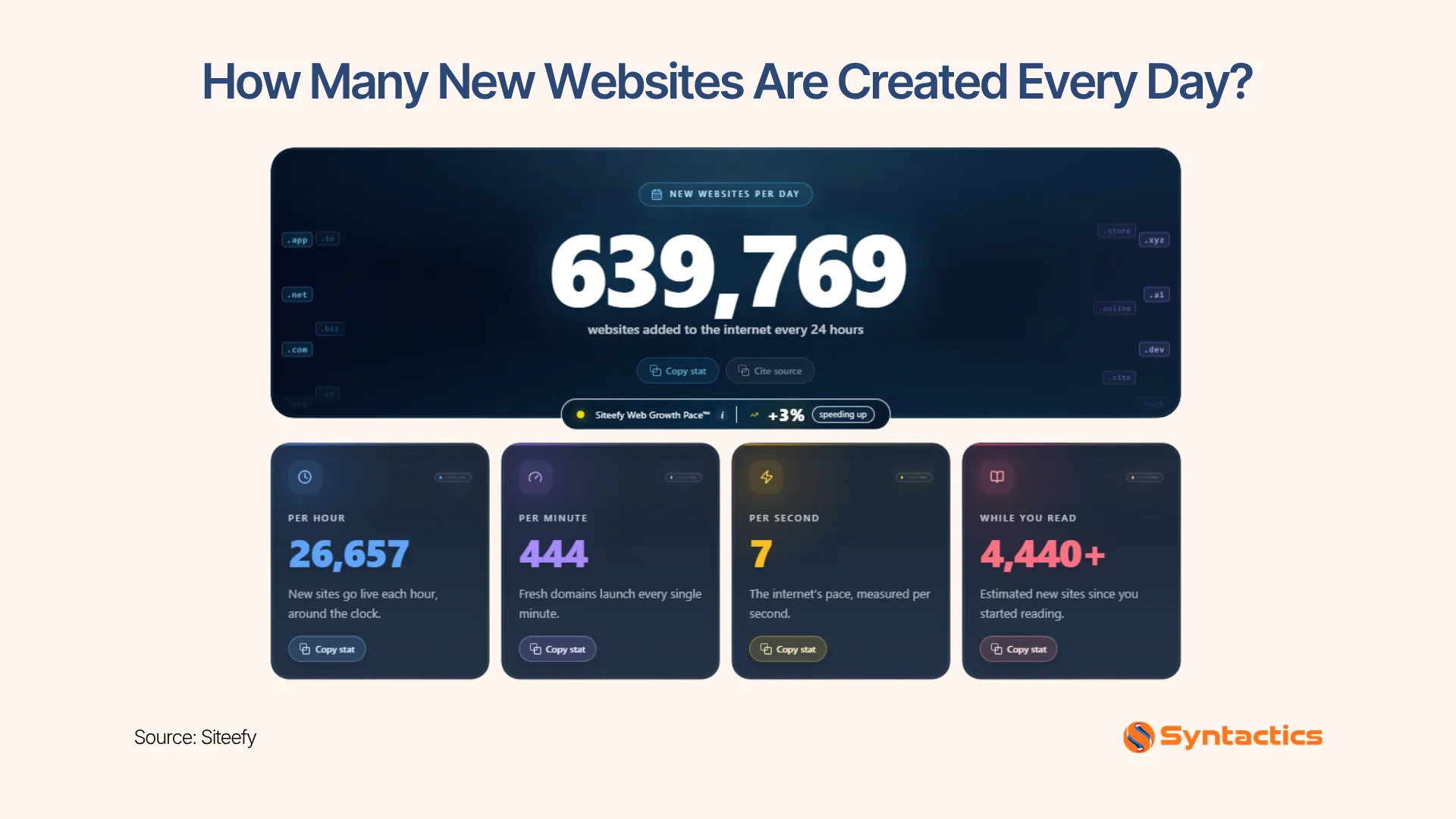
Source: Siteefy.
Methods and Measures for Increasing Web Traffic
Before you invest in any traffic channel, get your site’s foundation right. A slow, poorly designed site will undercut every other effort on this list. Review your web design principles first, then apply the methods below.
Use Advertising and Content Distribution to Increase Web Traffic
Social Media Marketing
Social media drives traffic by putting your content in front of people who aren’t actively searching for you yet. Pick two or three platforms that match where your audience spends time; trying to maintain a presence everywhere spreads your effort too thin.
Different content types perform differently across platforms, so test formats before committing to one. Memes work well for engagement on the right platforms. A social media calendar keeps your posting schedule consistent, which matters more for traffic growth than any single viral post.

Email Marketing
Email marketing remains one of the most direct ways to bring repeat visitors back to your site. Segment your list by interest or behavior, and send at times when your audience is most likely to open and click. A well-timed email campaign can produce a measurable traffic spike within hours of sending.
Video Marketing
Video content converts attention into clicks faster than plain text in most cases. Include video where it fits your topic: product demonstrations, explainer clips, or short social cuts that link back to full articles. Webinars work well for B2B audiences specifically, since they combine education with direct lead capture. YouTube and LinkedIn both function as traffic sources in their own right, not just distribution channels for your existing content.
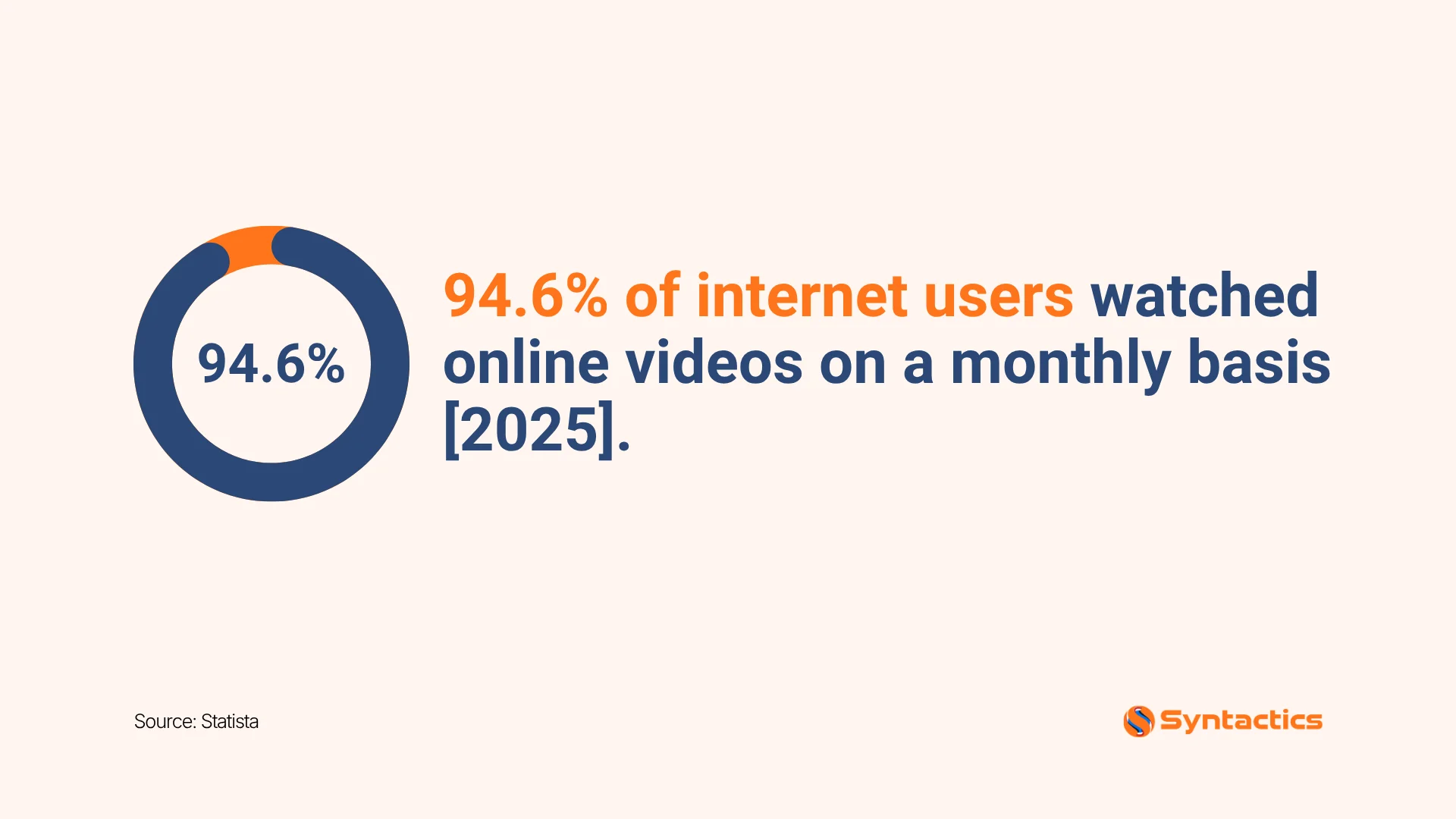
Source: Statista.
Guest Blogging
Guest blogging works two ways: writing for other sites, or hosting guest posts on yours. Either approach can build referral traffic, but standard guest post placement (a bio link at the bottom) underperforms because readers rarely scroll that far with intent to click. Place relevant links throughout the body of the post instead of only at the end.
This keeps the connection to your site visible while the reader is still engaged with the content. Look for opportunities to involve industry influencers in your guest content; their audience becomes your audience.
Revamp Your Content to Make It Evergreen
Evergreen content stays relevant long after publication, so it continues to attract traffic without ongoing promotion. Review your existing library and update anything with outdated statistics, broken links, or superseded advice. Add new information, correct errors, and link out to newer, related articles.
A content refresh rarely produces the traffic spike of a brand-new post, but it compounds over time and signals freshness to search engines. Republishing updated content on LinkedIn further extends its reach.
Build a Strong Internal Link Structure
Getting visitors to your site solves only half the problem; keeping them there solves the other half. Internal links guide visitors from one relevant page to the next, increasing time on site and reducing bounce rate. Group related content together so a reader who lands on one article has an obvious next step.
This structure also helps search engines understand which pages on your site are most important.
Create Top-Quality, Long-Form Content
Longer content generally holds visitor attention better than short posts, since it has more room to answer a question completely. Content over 1,000 words tends to perform well for competitive topics, though shorter content still has a place for quick, specific queries.
It’s also ideal to use lists and subheadings to break up long sections; they make content easier to scan and easier for search engines and AI tools to extract. Write headlines that state the topic clearly instead of teasing it. A headline that summarizes the content accurately earns more clicks than one built on curiosity alone.
Use Traffic-boosting Keywords
Keyword strategy still matters, and long-tail keywords are one of the most efficient places to start. These are phrases of three or more words with lower search volume and less competition, which makes them easier to rank for.
Pair them also with LSI (Latent Semantic Indexing) keywords, terms closely related to your main topic that help search engines understand context. Neither approach requires stuffing keywords into every sentence; natural placement across a well-structured page performs better than forced repetition.

Study Your Competitors
Competitor analysis shows you what’s already working in your space. Identify which channels your competitors use and which topics get the most engagement from their audience. Use that information to plan future content, not to copy existing content directly. Dedicated competitor analysis tools can automate much of this research.
Keep Your Website Fast and Responsive
Slow load speeds drive visitors away before they see your content. Site speed is one of the five factors of website health, and it directly affects both traffic retention and search ranking. Check that files, plugins, and page elements load without unnecessary delay, and remove anything that’s slowing the site down without adding value.
Build Trust With Your Audience
A site that keeps a steady stream of traffic usually has a community behind it, not just a content calendar. Comment sections give visitors a way to engage directly with your content and with each other. Respond to comments and questions; visitors return to sites where they feel heard.
Optimize for Mobile
Google indexes and ranks primarily based on the mobile version of your site, so your mobile experience needs to match your desktop experience in quality. Check navigation, load speed, and readability specifically on mobile devices, not just as an afterthought to desktop design.
Optimize for AI Search Engines
AI search tools like AI Overviews, Perplexity, and Claude now send meaningful traffic to well-structured content. These tools extract and cite answers rather than ranking pages the way traditional search does, which changes what “optimized” content looks like.
Structure your content in clear question-and-answer formats, apply FAQ and Article schema markup, and state key facts within the first two sentences of each section. Content that leads with the answer gets cited more often than content that builds up to it.
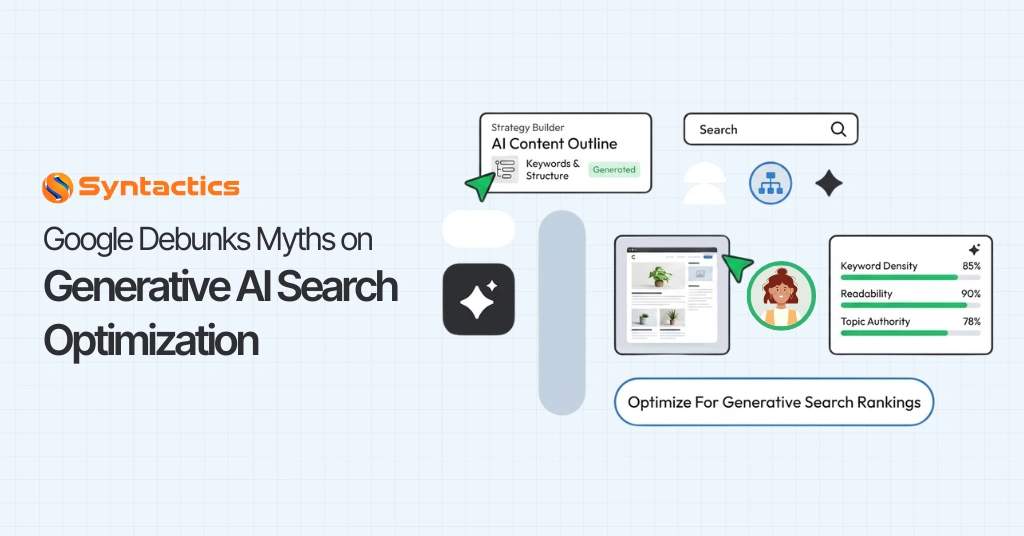
This is a fast-growing traffic channel, and sites that adapt early have an advantage over those that wait. Check out Google’s guide for AI optimization.
More Ways to Increase Web Traffic
- Get yourself on some business podcasts!
- Get your content to go viral.
- Take advantage of Referral Traffic.
- Don’t forget On-Page SEO!
- Check on your analytics.
- Consider holding giveaway contests to drum up interest.
- Interview leading experts in your industry or even related industries.
- Use schema or microdata to help search engine bots find you!
- Check out and submit your content to related aggregator sites.
Bringing It All Together
Increasing web traffic takes more than one tactic working in isolation. Your site needs a solid technical foundation: fast load times, clean internal links, and a mobile experience that matches desktop quality. Layer digital marketing on top of that foundation through social media, email, and paid channels.
Strong content ties it together, and structuring that content for both traditional and AI search further extends its reach. If you’d rather hand this off, professional SEO services can build and manage this strategy for you.

This article was updated on July 09, 2026.
Frequently Asked Questions
How long does it take to increase website traffic?
SEO-driven traffic growth typically shows measurable movement within three to six months. Paid campaigns produce results within days, since they buy visibility rather than earn it. A realistic traffic strategy combines paid channels for near-term volume with SEO and content for durable long-term growth.
What’s the difference between organic and referral traffic?
Organic traffic comes from unpaid search engine results. Referral traffic comes from links on other websites, such as guest posts, directories, or partner sites. Both count toward overall visibility, but organic traffic tends to convert better since it reflects active search intent.
Do I need long-form content to increase traffic?
Long-form content ranks well for competitive, informational keywords because it covers a topic in depth. Short-form content still has a place for quick-answer queries and social distribution. The right length depends on the search intent behind the keyword, not on word count as a rule.
Does social media directly improve SEO rankings?
Social signals aren’t a direct Google ranking factor. Social media still drives traffic, builds backlinks when content gets shared and linked, and increases brand visibility, all of which support SEO indirectly.
How do I optimize a site for AI search engines like AI Overviews or ChatGPT?
Structure content in clear question-and-answer formats, apply FAQ and Article schema, and state key facts in the first two sentences of each section. AI search tools extract and cite content that directly answers a query, so front-loaded, well-structured pages are picked up more often than dense narrative paragraphs.

About Axel May Rivera
Related News:


Timing Your Emails For Maximum Open Rates
How to Update WordPress to Latest Version

Mastering iOS and Android App Development





Comment 0